Quick Answer: How to Change Oil on a Craftsman Riding Lawn Mower
Warm the engine for 2 minutes, shut it off, disconnect the spark plug wire, then place a drain pan under the engine and remove the drain plug. Let the old oil drain fully, replace the oil filter, reinstall the drain plug, and add the correct oil — SAE 30 or 10W-30 — until the dipstick reads full (typically 48–64 oz depending on your engine). Dispose of used oil at a certified recycling location and repeat the process every 50 operating hours or once per season.
What You Need Before You Start (Tools, Oil, and Safety)
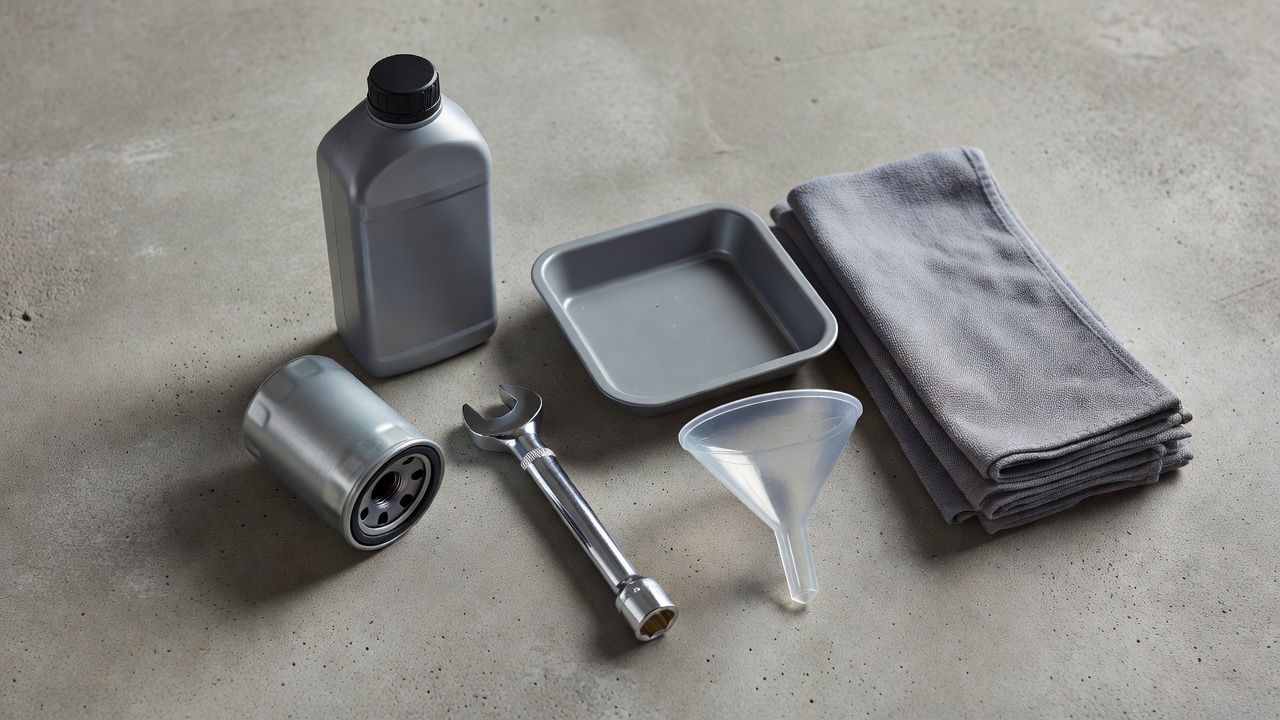
Gathering everything before you begin prevents mid-job trips to the garage and reduces the risk of leaving the mower in an unsafe state. This guide covers a full drain-and-replace oil change, not a top-off.
Tools and Supplies Checklist
- Drain pan (at least 2-quart capacity)
- Socket wrench or adjustable wrench (for the drain plug)
- Oil filter wrench (if your engine has a spin-on filter)
- Funnel
- Clean rags or shop towels
- New oil filter (cross-reference your engine model number)
- Correct motor oil (see oil type guidance below)
- Sealable container for storing used oil before recycling
Which Oil Does a Craftsman Riding Mower Take?
Oil type depends on your engine brand and operating temperature. Check the engine shroud label to identify whether you have a Briggs & Stratton, Kohler, or Kawasaki engine, then match the oil specification below.
| Temperature Range | Recommended Oil | Notes |
|---|---|---|
| Above 40°F (4°C) | SAE 30 motor oil | Standard warm-season choice for most Craftsman engines |
| Variable or below 40°F | 10W-30 motor oil | Better cold-start protection; acceptable across a wider range |
| Sub-freezing starts | Synthetic 5W-30 | Flows readily in cold; approved by Briggs & Stratton and Kohler for all-season use |
Briggs & Stratton and Kohler both approve SAE 30 for temperatures above 40°F and 10W-30 for variable climates — consult your engine’s owner’s manual for the exact viscosity chart tied to your model. Synthetic 5W-30 is acceptable in all Briggs & Stratton engines built after 2009 and most current Kohler Command series engines.
Oil Capacity Range
Craftsman riding mower engine oil capacity typically falls between 48 oz (1.5 qt) and 64 oz (2 qt), depending on engine displacement. Do not rely on a universal figure — check your owner’s manual or the engine manufacturer’s specification sheet for your exact model. Overfilling damages seals and causes oil burning.
Safety Prerequisites
- Work on a flat, level surface to ensure complete oil drainage and accurate dipstick readings.
- Disconnect the spark plug wire before working near the engine — this prevents accidental startup.
- Allow the engine to cool for at least 5 minutes after the warm-up run before touching the drain plug area. Hot oil causes burns.
- Keep open flames and smoking materials away — hot oil vapors are flammable.
- Engage the parking brake and remove the ignition key.
How to Find Your Engine Type and Drain Plug Location
Craftsman riding mowers are not built with a single engine. Sears has sourced engines from Briggs & Stratton, Kohler, and Kawasaki across different model years. The drain plug location differs by engine brand, so identifying your engine first prevents a failed attempt at the wrong spot.
How to Identify Your Engine Brand
Look at the top or side of the engine shroud (the plastic cover over the engine). The brand name — Briggs & Stratton, Kohler, or Kawasaki — is cast or printed directly on the shroud alongside a model and type number. Record that number; you will need it to cross-reference the correct oil filter part number.
Drain Plug Location by Engine Brand
- Briggs & Stratton: The drain plug is typically located at the base of the engine block on the underside. On some models it is a standard hex bolt; on others it is a drain valve with a short hose. Tilt the mower deck slightly forward (with the air filter side up) on older single-cylinder models to improve drainage access.
- Kohler (Command and Courage series): The drain plug or drain valve is usually on the side of the engine block near the bottom. Many Kohler engines on Craftsman T-series mowers use an extended drain tube or a drain valve accessed from below the right side of the deck.
- Kawasaki: The drain plug is on the bottom of the engine block. Kawasaki-equipped Craftsman models (typically higher-displacement units) may require removing a lower engine guard for clear access.
What If Your Mower Has No Accessible Drain Plug?
Some older Craftsman models (notably certain LT1000-era units) have a drain plug positioned in a location that is difficult to reach without lifting the mower. In these cases, an oil extractor pump inserted through the dipstick tube is a practical alternative. The extractor draws old oil up and out without requiring drain plug access. This method does not replace filter changes — you still need to access and replace the filter separately if your engine has one.
Common Model Reference
- Craftsman T110 / T130: Briggs & Stratton engine, drain plug at base of block, 48 oz capacity.
- Craftsman T2400 / T3200: Kohler engine, side-mounted drain plug or valve, 56–64 oz capacity.
- Craftsman LT1000 (older): Briggs & Stratton, plug access can be tight — extractor pump recommended if restricted.
Always verify specifications against your specific owner’s manual. Model numbers are printed on a sticker under the seat or on the frame near the left rear wheel.
Step-by-Step: How to Change the Oil on a Craftsman Riding Lawn Mower
The full procedure takes approximately 20–30 minutes. Follow the steps in order — skipping the warm-up or the spark plug wire disconnect are the two most common errors that cause injury or incomplete draining.
- Warm the engine for 2 minutes. Start the mower and let it idle for two minutes. Warm oil flows faster and carries more suspended contaminants out of the engine than cold oil. Do not run it longer — the oil will become dangerously hot.
- Park on level ground and shut off the engine. Turn the ignition key to off. Engage the parking brake. Level ground ensures all old oil drains from the sump and gives you an accurate dipstick reading after refilling.
- Disconnect the spark plug wire. Pull the rubber boot off the spark plug tip and tuck it away from the plug. This is a non-negotiable safety step — it prevents the engine from firing while your hands are near moving parts or hot surfaces.
- Wait 5 minutes, then position the drain pan. Allow the engine to cool slightly so the oil is warm but not scalding. Slide the drain pan under the engine directly below the drain plug.
- Remove the drain plug. Using the correct socket or wrench, turn the drain plug counterclockwise to loosen. Note: some Kohler drain valves turn and pull rather than threading out — consult your engine manual if the plug does not respond to standard counterclockwise rotation. Once loose, remove the plug by hand and let the oil drain fully. Complete drainage takes 5–10 minutes. Do not rush this step — residual old oil left in the sump dilutes your fresh oil.
- Remove and discard the old oil filter. If your engine has a spin-on oil filter (standard on most Briggs & Stratton and Kohler engines found on Craftsman riders), use an oil filter wrench to loosen it counterclockwise. Have a rag ready — the filter holds residual oil. Discard the old filter; do not attempt to clean and reuse it.
- Prepare and install the new oil filter. Dip your finger in fresh oil and run a thin film around the rubber gasket on the top of the new filter. This lubrication prevents the gasket from tearing during installation and ensures a proper seal. Hand-tighten the new filter until the gasket contacts the engine surface, then turn an additional three-quarter turn. Do not use a wrench to tighten — over-tightening deforms the gasket.
- Reinstall the drain plug. Thread the drain plug back in clockwise by hand first to avoid cross-threading, then snug it firmly with a wrench. The standard torque for most small engine drain plugs is 14–18 ft-lb — if you do not have a torque wrench, firm hand-tight plus a quarter turn with a wrench is the practical equivalent. Do not overtighten; aluminum engine blocks strip easily.
- Add fresh oil through the fill tube. Locate the oil fill cap on top of the engine (marked with an oil can symbol). Remove it and insert your funnel. Add approximately three-quarters of your engine’s rated oil capacity first, then check the dipstick. Add oil in small increments — 2–3 oz at a time — until the dipstick reads in the full range. Refer to your owner’s manual for the exact capacity; overfilling causes foaming and seal damage.
- Check the dipstick. Remove the dipstick, wipe it clean with a rag, reinsert it fully, then pull it out again and read the oil level. The oil film should fall between the two marks on the dipstick — at or near the upper mark is ideal. Add or remove oil as needed.
- Reinstall the oil fill cap. Ensure it is seated and tight before proceeding.
- Reconnect the spark plug wire. Press the rubber boot back firmly onto the spark plug until you feel it seat.
- Start the engine and check for leaks. Turn the key and let the engine run for 30 seconds. Watch the drain plug and oil filter area for any drips. A minor seep at the filter usually means the gasket needs a quarter turn more — shut the engine off before touching the filter. If the oil pressure warning light is present on your model, confirm it extinguishes within 5 seconds of startup.
- Shut off, wait 2 minutes, and recheck the dipstick. Oil distributes through the new filter during the first run, which can drop the level slightly. Top off if needed.
Oil Change Interval, Seasonal Timing, and Oil Viscosity by Climate
Recommended Change Interval
Craftsman recommends — and both Briggs & Stratton and Kohler engine documentation confirm — an oil change interval of every 50 operating hours or once per season, whichever comes first. For most homeowners mowing a typical suburban lot, 50 hours equates to roughly one full mowing season. Riders used on large acreage or run in dusty conditions should track hours directly and change oil at the 50-hour mark regardless of season.
Break-In Oil Change for New Engines
New Craftsman riding mowers with new engines require a break-in oil change after the first 5 hours of operation. This is specified in Briggs & Stratton and Kohler new-engine documentation. Manufacturing residue and microscopic metal particles from the engine break-in period contaminate the initial oil charge rapidly. Skipping this early change accelerates engine wear. After the 5-hour break-in change, revert to the standard 50-hour interval.
Before or After Winter Storage?
Change the oil before winter storage, not after. Used oil contains combustion byproducts — acids, moisture, and carbon particles — that corrode engine internals if left sitting for 3–5 months during the off-season. Fresh oil provides a protective film over metal surfaces throughout winter. Begin the next season with clean oil already in the engine; there is no need for an additional change at spring startup unless you skipped the pre-storage change.
Viscosity by Operating Temperature
- SAE 30: Use when ambient temperatures consistently stay above 40°F (4°C). Optimal film strength at warm operating temperatures.
- 10W-30: Use when temperatures vary or occasionally dip below 40°F. The wider viscosity range protects during cold morning starts without sacrificing high-temperature performance.
- Synthetic 5W-30: Use for sub-freezing starts or year-round single-oil simplicity. Full synthetic oils meet or exceed the specifications of conventional SAE 30 and 10W-30 at all temperature ranges and extend the effective protection window between changes.
Do not use 10W-40 or heavier multi-grade oils unless explicitly specified by your engine manufacturer — heavier oils do not flow correctly through the small passages of air-cooled small engines and can cause oil starvation at startup.
How to Dispose of Used Lawn Mower Oil Safely and Legally
Used motor oil — including oil drained from a lawn mower — is classified as hazardous waste by the U.S. Environmental Protection Agency. It cannot be poured down a drain, dumped on the ground, mixed with household trash, or burned. One quart of used oil can contaminate up to 250,000 gallons of drinking water. Disposal is straightforward once you know the options.
How to Store Used Oil Before Recycling
- Pour the used oil from the drain pan into a clean, sealable container — the original oil bottle works perfectly.
- Do not mix used oil with gasoline, antifreeze, brake fluid, or other fluids. Contaminated oil is rejected by most recycling programs and becomes significantly more difficult to process.
- Label the container “Used Motor Oil” and store it upright in a cool location away from heat sources until you can transport it.
Where to Drop Off Used Oil
- AutoZone: Accepts used motor oil at no charge at most locations. Confirm availability at your local store before visiting.
- O’Reilly Auto Parts: Accepts used motor oil at the parts counter. Policies are consistent chain-wide but verify your local store’s current policy.
- Advance Auto Parts: Accepts used motor oil at most locations — verify with your local store.
- Municipal hazardous waste facilities: Most counties operate periodic or permanent household hazardous waste collection events. Search your county government website for the nearest location and schedule.
- Certified oil recyclers: Use the Earth911 recycling locator (search “used motor oil” plus your ZIP code) to find additional certified drop-off points near you.
Used lawn mower oil is chemically identical to used automobile motor oil and is accepted at all the same recycling locations. There is no distinction in the recycling process.
Frequently Asked Questions
How often should you change oil on a Craftsman riding lawn mower?
Every 50 operating hours or once per mowing season, whichever comes first. New engines require an additional break-in change after the first 5 hours of use. Mowers used in dusty or high-heat conditions benefit from changes closer to the 25–30 hour mark.
Where is the oil drain plug on a Craftsman riding lawn mower?
Location depends on the engine brand. Briggs & Stratton engines place the drain plug at the base of the engine block, typically accessible from below. Kohler engines use a side-mounted drain plug or drain valve on the lower engine block. If plug access is restricted on your model, an oil extractor pump inserted through the dipstick tube is an accepted alternative.
Can I use synthetic oil in a Craftsman riding lawn mower?
Yes. Synthetic 5W-30 is approved for use in Briggs & Stratton and Kohler engines found in Craftsman mowers. Synthetic oil provides better cold-start protection and maintains viscosity longer than conventional oil. You still follow the same 50-hour or once-per-season change interval — synthetic oil does not extend the recommended interval for small air-cooled engines.
What happens if I overfill the oil on a Craftsman riding mower?
Overfilling causes the crankshaft to whip the excess oil into foam, which does not lubricate effectively and leads to oil starvation, overheating, and blown seals. If you overfill, remove oil in small amounts using a turkey baster or oil extractor pump inserted through the dipstick tube until the level falls within the correct range on the dipstick.