Quick Answer
Match blower power to your yard size, since small lots need far less airflow than large properties. Cordless models suit small jobs, while gas or backpack units suit acreage and heavy debris. Wet leaves need more airflow and airspeed than dry leaves. Choose a handheld for light weight and a backpack for larger yards, and check the weight before buying.

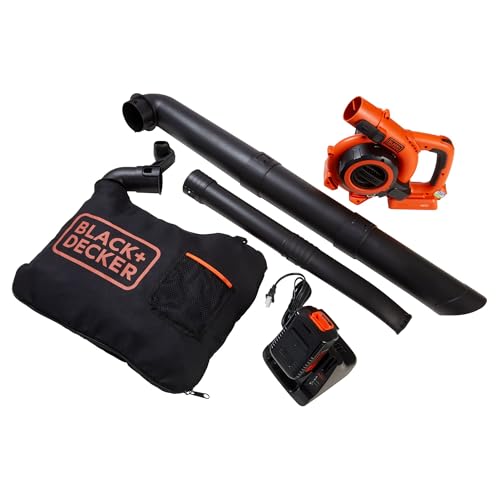
Pros
- Features a high-output Strato-Charged engine
- AutoTune carburetor provides automated fuel management
- Padded harness with waist belt and ventilated back pad
- LowVib technology helps minimize operator vibration
- Integrated service port enables quick maintenance access
Cons
- Gas engine requires routine upkeep and fuel mixing
- Bulkier footprint compared to smaller handheld units

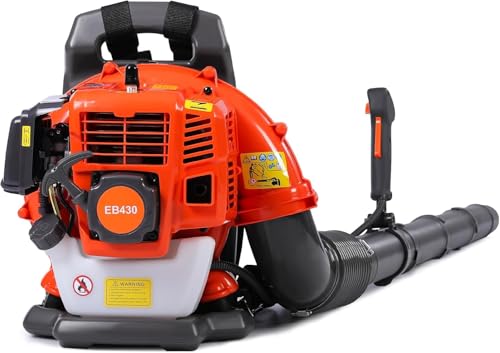
Pros
- High-output clearing power with a rated 88 m/s maximum blowing force
- Efficient Stihl 4-MIX engine designed for large-area clearing
- Integrated Stihl anti-vibration system reduces operator strain
- Adjustable blow tube and soft-grip handle
- Wide, padded shoulder straps enhance comfort during long jobs
Cons
- Substantial total weight of approximately 23.8 pounds
- Requires ongoing small-engine fuel mixing and routine upkeep

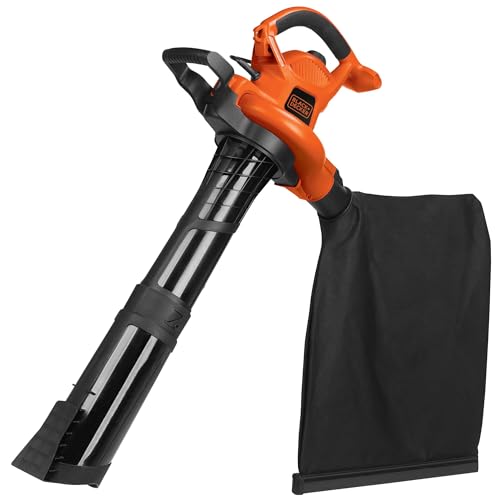
Pros
- Cordless mobility without battery runtime limitations
- Sturdy construction suited for tough yard and property clearing
- Standard handheld configuration
Cons
- Gas engine requires manual fuel mixing and regular maintenance
- Weighs 11 pounds, which is heavier than most cordless alternatives
Choosing a leaf blower is a physics problem before it is a shopping problem. Air volume moves leaves; air speed breaks them loose from wet surfaces and lifts them over obstacles. Confuse the two numbers and you will buy the wrong machine. This guide breaks down the exact airflow (CFM), airspeed (MPH), and nozzle-velocity math, then maps it to your property size, debris type, and local noise rules so you can diagnose the right blower class in minutes.
Understand the Two Numbers That Actually Matter
Every blower spec sheet lists CFM (cubic feet per minute) and MPH (miles per hour). They measure different things, and manufacturers often publish them at different nozzle points to make weak machines look strong. For additional operational safety benchmarks, see our published testing notes on how to choose a leaf blower.
CFM: The Volume That Moves the Pile
CFM measures how much air the impeller moves per minute. Think of it as the width of the air column. A 400 CFM blower with a round nozzle produces a column roughly 4 to 6 inches in diameter at the tip. That column is what displaces leaves from the ground and carries them forward. For general residential cleanup, 350 to 450 CFM handles dry leaves on hard surfaces. Wet, matted leaves or gravel driveways need 600 to 700 CFM because the debris has more mass and more surface friction to overcome.
MPH: The Speed That Breaks the Bond
MPH measures air velocity at the nozzle. High velocity is what peels a wet leaf off concrete or lifts thatch out of turf. The trade-off is physics: for a fixed power input, narrowing the nozzle raises velocity but reduces volume. This is why a flattened nozzle tip feels “stronger” on a single leaf but moves a pile more slowly than a round tip. Look for blowers rated at 150 to 200+ MPH at the nozzle for mixed residential debris.
The Velocity-at-the-Work-Surface Rule
Published MPH is measured at the nozzle, not at the ground. Air velocity drops roughly with the square of distance from the tip. At 6 inches from the nozzle, effective velocity is often 40 to 60% of the published figure. This means technique matters as much as specs: keep the nozzle 4 to 8 inches above the surface and sweep in overlapping passes rather than holding the tube high and hoping.
Match Blower Class to Property Size
Use this sizing matrix as your primary diagnostic. If your property falls between categories, buy for the larger size, underpowered blowers waste time and fuel.
| Property Size | Debris Load | Recommended Class | CFM Target | Runtime / Fuel Need |
|---|---|---|---|---|
| Under 1/4 acre (patios, small lots) | Dry leaves, grass clippings | Cordless handheld, 40V-60V | 350 to 450 CFM | 2 to 4 batteries or 1 charge |
| 1/4 to 1/2 acre | Mixed leaves, light wet debris | Cordless handheld, 56V-80V, or corded electric | 450 to 600 CFM | 2 batteries minimum |
| 1/2 to 1 acre | Heavy leaf fall, some wet patches | Backpack battery or 2-stroke gas handheld | 600 to 750 CFM | 3 to 4 batteries or 1 tank per session |
| 1 to 2 acres | Dense canopy, mixed debris | Backpack gas, 60 to 80cc class | 700 to 900 CFM | 2 to 3 tanks per cleanup |
| 2+ acres or commercial | Heavy, wet, or gravel-embedded debris | Walk-behind or tow-behind blower | 1,000+ CFM | Large tank, sustained duty |
For a deeper dive into runtime trade-offs and battery platform strategy, see our guide to cordless leaf blowers.
Power Source Diagnostics: Gas, Corded, or Battery
Each power source has a failure mode. Diagnose yours before buying.
2-Stroke Gas: Maximum Power, Maximum Maintenance
Gas blowers deliver the highest sustained CFM and are unaffected by battery runtime limits. The costs are weight (8 to 12 lb handheld, 15 to 25 lb backpack), vibration, noise (often 70 to 80+ dB at the operator), and fuel mixing. A 2-stroke engine requires a 50:1 or 40:1 fuel-oil mix; using straight gas will seize the engine within one tank. If you choose gas, budget for ear protection, a spare spark plug, and annual carburetor cleaning.
Corded Electric: Unlimited Runtime, Limited Range
Corded blowers are the lightest and cheapest option and never run out of power. The constraint is the extension cord. A 14-gauge cord is acceptable up to 50 feet for a 12-amp blower; beyond that, use 12-gauge or step down to 10-gauge for runs over 100 feet. Undersized cords cause voltage drop, which reduces motor speed and torque, the blower will sound weak and move less air. If your cleanup zone exceeds 100 feet from an outlet, corded is the wrong class.
Battery Electric: The Balanced Default
Modern 56V-80V brushless blowers now reach 600 to 700 CFM, enough for most residential properties. Runtime is the limiting factor: a 4.0 Ah 56V battery typically delivers 15 to 25 minutes at full throttle, less in cold weather. Lithium-ion capacity drops 20 to 30% below 40°F, so plan for shorter sessions in late fall or keep batteries warm indoors before use. Match battery voltage within a single brand ecosystem to avoid buying duplicate chargers.
For a full side-by-side comparison of these three power sources, read our gas or electric leaf blower comparison.
Handheld vs. Backpack vs. Walk-Behind: The Ergonomic Decision
Power class matters, but so does how the weight sits on your body. Wrong ergonomics cause fatigue long before the battery or fuel runs out.
Handheld: Under 7 lb, Under 30 Minutes
Handheld blowers are ideal for driveways, patios, and small lawns. Look for a balanced center of gravity near the handle, a variable-speed trigger (not just on/off), and a cruise-control lock for extended sweeping. If the blower exceeds 8 lb fully fueled, your forearm will fatigue before the job is done.
Backpack: Weight on the Hips, Not the Arms
Backpack blowers transfer 15 to 25 lb to your hips and shoulders, freeing your arms for the tube. This is the correct class for properties over half an acre. Look for padded hip belts, adjustable shoulder straps, and a flexible tube that does not force your wrist into an awkward angle. A properly fitted backpack blower can run 2 to 3 times longer than a handheld before fatigue sets in.
Walk-Behind: For Flat, Open Lots
Walk-behind blowers move 1,000+ CFM and are the fastest way to clear large flat areas like sports fields or long driveways. They are impractical on slopes, around landscaping beds, or anywhere you need to lift the nozzle. If your property is under an acre with obstacles, a walk-behind is overkill.
For a detailed breakdown of weight distribution and harness fit, see our backpack vs handheld blowers comparison.
Debris Type Diagnostic Matrix
Match the blower to what you are actually moving, not just the square footage.
| Debris Type | Weight / Adhesion | Minimum CFM | Nozzle Tip | Technique |
|---|---|---|---|---|
| Dry leaves on concrete | Light, low adhesion | 350 CFM | Round | Wide sweeps, 6 to 12 in. above surface |
| Dry leaves in turf | Light, moderate entanglement | 400 CFM | Round | Low angle, push toward pile |
| Wet leaves on hard surface | Heavy, high adhesion | 600+ CFM | Flat | Close nozzle (2 to 4 in.), slow passes |
| Gravel or pine needle beds | Heavy, abrasive | 500 CFM | Flat, low throttle | Feather throttle to avoid moving stone |
| Grass clippings (wet) | Heavy, clumping | 550 CFM | Round | High volume, moderate speed |
| Snow (light, dry) | Variable | 500+ CFM | Round | Wide, low-angle passes |
Nozzle Geometry: Round vs. Flat Tips
Nozzle shape changes the air column without changing motor power. A round nozzle preserves volume and is the correct default for moving piles. A flat nozzle concentrates velocity into a narrow blade of air, which is better for peeling wet debris off surfaces or clearing cracks in pavement. Many premium blowers ship with both; if yours does not, flat-tip attachments are inexpensive and worth adding.
Practical rule: start with the round tip to move the bulk of the material, then switch to the flat tip for the final detail pass along edges and corners. This two-tip workflow is faster than trying to do both jobs with one nozzle.
Noise Regulations and Community Rules
Many municipalities restrict leaf blower use by time of day, decibel level, or emissions tier. Before purchasing, check your local ordinances. Battery blowers typically operate at 60 to 65 dB at the operator’s ear; gas blowers often exceed 70 to 75 dB. If your neighborhood has a noise rule, battery is usually the only compliant option. For context on workplace and equipment safety standards, review OSHA equipment safety regulations.
Safety and Personal Protective Equipment
At minimum, wear eye protection and hearing protection when operating any blower above 80 dB. A dust mask or N95 respirator is advisable in dry, dusty conditions, as blowers resuspend particulates, pollen, and mold spores. Never point the nozzle at people, pets, windows, or open flames. Be aware that high-velocity air can kick up gravel, nails, or other sharp debris at dangerous speeds.
Maintenance Intervals for Longevity
Proper maintenance extends blower life significantly and keeps performance consistent. Use this schedule as a baseline.
| Component | Interval | Action |
|---|---|---|
| Air filter (gas) | Every 10 to 15 hours or weekly in dusty conditions | Clean or replace; foam filters can be washed and re-oiled |
| Spark plug (gas) | Annually or every 100 hours | Replace with OEM-spec plug; check gap |
| Fuel system (gas) | Every 30 days if stored | Drain stale fuel; run stabilizer through the carburetor before storage |
| Battery contacts | Monthly | Wipe with a dry cloth; check for corrosion |
| Impeller / intake screen | After every use | Clear leaves, twigs, and debris to prevent overheating |
| Extension cord (corded) | Before each season | Inspect for nicks, exposed wire, and loose plugs |
| Vibration mounts (gas) | Annually | Inspect for cracks; replace if engine vibration has increased |
For a deeper dive into outdoor power equipment maintenance, including chainsaw and multi-tool care, see our guide to chainsaw and outdoor tool maintenance.
Step-by-Step: How to Choose Your Leaf Blower
- Measure your property. Use a plat map or pacing to estimate square footage. Under 1/4 acre, 1/4 to 1/2 acre, 1/2 to 1 acre, or 1+ acre.
- Assess debris type. Dry leaves on hard surfaces need the least power. Wet leaves, gravel, or heavy thatch need the most.
- Check local noise and emissions rules. If your area restricts gas blowers or decibel levels, battery is your primary option.
- Decide on ergonomics. Under 30 minutes of runtime, handheld is fine. Over 30 minutes or over half an acre, choose backpack.
- Set your CFM floor. Use the debris matrix above. Never buy below the minimum CFM for your heaviest debris type.
- Verify nozzle options. Confirm the blower includes or supports both round and flat tips for two-pass cleanup.
- Factor in total cost of ownership. Gas requires fuel, oil, filters, and spark plugs. Battery requires spare batteries and chargers. Corded requires quality extension cords.
- Buy for the larger job. If your property is near a category boundary, step up. An underpowered blower is a false economy.
Our Final Editorial Take on How To Choose Leaf Blower
For most homeowners with a quarter to half-acre lot and mixed dry-to-damp leaves, a 56V-80V cordless handheld blower rated at 500 to 600 CFM with both round and flat nozzles is the correct default. It balances power, weight, noise compliance, and zero fuel maintenance. Step up to a backpack class only when your property exceeds half an acre or your debris is consistently wet and heavy. Step down to corded only if your cleanup zone is within 50 feet of an outlet and your debris is light. Match the machine to the physics of the job, and the cleanup becomes predictable instead of frustrating.
Simple Steps for Blower Selection
A short shopping process helps: decide where the blower will run, how often it will be used, and who will operate it. Then compare power, noise and handling across two or three models. Broader safety resources for blowers are available at American National Standards Institute (ANSI).