How to Start a Briggs & Stratton Lawn Mower
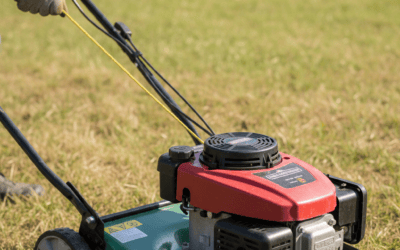
To start a Briggs & Stratton lawn mower, first perform pre-start checks: ensure the fuel tank has fresh gasoline, the oil level is correct, and the air filter is clean. For a cold start, set the choke to ‘Full’ or ‘Start’ and the throttle to ‘Fast’ or ‘High’. Engage the safety bail (the metal bar against the handle). Pull the starter rope firmly and quickly. Once the engine sputters, move the choke to ‘Half’ or ‘Run’ and pull again until it starts.
Understanding the Briggs & Stratton Starting Process
Before you pull the cord, it’s important to understand the basic components and principles that govern the starting process for most Briggs & Stratton engines found on walk-behind lawn mowers. This knowledge will help you troubleshoot if the mower doesn’t start on the first try.
Key Components to Identify
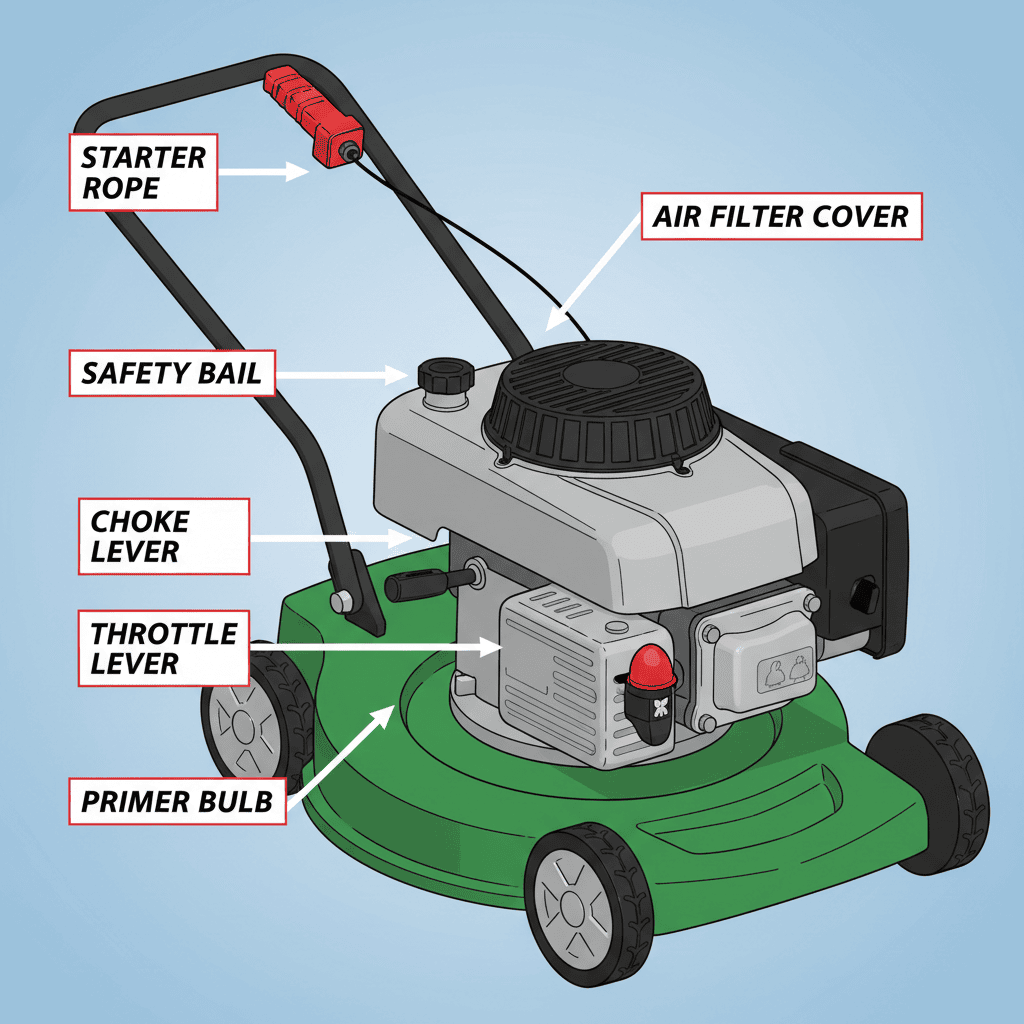
Locate these parts on your mower’s engine:
- Starter Rope (Pull Cord): The rope you pull to crank the engine.
- Safety Bail (Operator Presence Control): A metal bar or lever on the handle that you must hold against the handle to keep the engine running. Releasing it stops the engine.
- Choke Lever: A small lever or knob that restricts air flow to enrich the fuel mixture for cold starts. Positions are typically labeled ‘Full’, ‘Half’, ‘Run’, or ‘Off’.
- Throttle Lever: Controls engine speed. For starting, it’s usually set to ‘Fast’ or ‘High’.
- Primer Bulb (on some models): A small, soft rubber bulb you press several times to manually pump fuel into the carburetor, replacing the choke function on some engines.
- Fuel Cap & Oil Dipstick: For checking fluids.
Cold Start vs. Warm Start
The starting procedure differs slightly based on the engine’s temperature:
- Cold Start: The engine has been sitting for several hours or overnight. It requires a richer fuel mixture (more fuel, less air) to ignite, which is why the choke is used.
- Warm Start: The engine was run recently and is still warm. It requires a leaner mixture, so the choke is typically set to ‘Off’ or ‘Run’.
Essential Pre-Start Safety and Maintenance Checks
Performing these checks before every use ensures safe operation, prevents engine damage, and makes starting much easier.
1. Check Fuel Level and Quality
Open the fuel cap and visually inspect the tank. Use fresh, clean, unleaded gasoline with the octane rating recommended in your owner’s manual (usually 87). Old or stale fuel (older than 30 days) is the leading cause of starting problems. If the fuel looks dark or smells varnished, drain the tank and carburetor and refill with fresh gas.
2. Check Engine Oil Level
Place the mower on a flat, level surface. Unscrew the oil dipstick, wipe it clean, reinsert it fully without screwing it in, then remove it again to check the level. The oil should be between the ‘ADD’ and ‘FULL’ marks. Use the oil type specified in your manual (often SAE 30 or 10W-30). Running the engine with low oil can cause catastrophic damage.
3. Inspect the Spark Plug and Air Filter
- Spark Plug: Ensure the spark plug wire is firmly connected to the plug. A loose or corroded connection can prevent spark. If the plug is fouled with oil or carbon, or the electrode is worn, it may need cleaning or replacement.
- Air Filter: A clogged air filter restricts air flow, making the engine hard to start. Locate the air filter cover (usually a plastic box on the side of the engine), remove the cover, and inspect the filter. Tap it gently to remove loose dirt or replace it if it’s very dirty or oily.
4. Locate and Understand the Safety Bail
The safety bail is a critical safety feature. You must hold this metal bar against the mower’s main handle while you start the engine and while it runs. If you release it, the engine will stop immediately. This prevents the mower from being left running unattended.
Step-by-Step Starting Procedure for a Walk-Behind Mower
Follow this sequence for a standard push mower with a Briggs & Stratton engine.
For a Cold Start (Engine hasn’t run for hours)
- Position the Mower: Place the mower on a flat, level surface in an open, well-ventilated area away from people, pets, and obstacles.
- Set Controls:
- Move the throttle lever to the ‘Fast’ or ‘High’ position.
- Move the choke lever to the ‘Full’ or ‘Start’ position.
- Engage the Safety Bail: Firmly press and hold the safety bail (metal bar) against the mower’s handle.
- Pull the Starter Rope: While holding the bail, grasp the starter rope handle. Pull the rope firmly and quickly in a smooth, straight motion. Do not let the rope snap back; guide it back slowly to prevent tangling.
- Adjust Choke and Continue: If the engine sputters but doesn’t fully start, or starts and then dies, move the choke lever to the ‘Half’ or ‘Run’ position. Pull the rope again. The engine should now start and continue running.
- Warm-Up: Let the engine run for a minute or two to reach operating temperature before engaging the blades or beginning to mow.
For a Warm Start (Engine was recently running)
- Set the throttle lever to ‘Fast’ or ‘High’.
- Set the choke lever to ‘Off’ or ‘Run’.
- Engage the safety bail and pull the starter rope firmly. The engine should start without needing the choke.
Key Variations and Troubleshooting Common Issues
Not all Briggs & Stratton engines are identical. Here are common variations and solutions.
Starting with a Primer Bulb
Some models use a primer bulb instead of a manual choke. If your engine has a red or black rubber bulb:
- Set the throttle to ‘Fast’.
- Press the primer bulb 3 to 5 times firmly until you see fuel moving through the clear fuel line or the bulb feels firm. Do not over-prime, as this can flood the engine.
- Engage the safety bail and pull the starter rope.
What to Do If the Engine Won’t Start
- Check for Spark: Remove the spark plug, reattach the wire, and hold the plug’s metal tip against a bare metal part of the engine. Have someone pull the rope. You should see a bright blue spark. No spark indicates a faulty plug, wire, or ignition coil.
- Flooded Engine: If you smell strong gasoline, the engine may be flooded (too much fuel). Set the choke to ‘Off’, set the throttle to ‘Fast’, and pull the rope several times to clear the excess fuel. Wait a few minutes before trying again.
- Check Fuel Flow: Ensure the fuel shut-off valve (if equipped) is in the ‘On’ position. A clogged fuel line or carburetor jet can also prevent fuel from reaching the engine.
Starter Rope Issues
- Hard to Pull: This can be caused by a blade obstruction (check under the deck), a seized engine (rare, often from running without oil), or a problem with the starter recoil mechanism.
- Rope Won’t Retract: The recoil spring may be broken or the rope may be tangled. This often requires repair or replacement of the starter assembly.
Frequently Asked Questions
What is the correct sequence for starting a Briggs & Stratton mower?
The standard sequence is: 1) Perform pre-start checks (fuel, oil, filter). 2) Place mower on level ground. 3) Set throttle to ‘Fast’. 4) For a cold start, set choke to ‘Full’. 5) Hold the safety bail against the handle. 6) Pull the starter rope firmly and quickly. 7) Adjust choke to ‘Half’ or ‘Run’ once the engine sputters, then pull again if needed.
Why does my Briggs & Stratton mower start but then die immediately?
This is often caused by releasing the safety bail too soon. Ensure you hold the bail firmly against the handle until the engine is running smoothly. Other causes include a dirty air filter, old fuel, or a clogged carburetor.
How many times should I press the primer bulb?
For engines equipped with a primer bulb, press it firmly 3 to 5 times. Pressing it too many times can flood the engine with fuel, making it difficult to start.
Can I use starting fluid to help start my mower?
While a small spray of starting fluid into the air filter intake can help diagnose a fuel delivery problem, it is not recommended as a regular starting aid. It can wash oil from the cylinder walls, causing engine wear, and can be dangerous if used excessively. Focus on fixing the underlying issue, such as fresh fuel or a clean carburetor.