Direct Answer: How to Start a Riding Mower
To start a riding mower, sit in the seat to engage the safety switch, disengage the blade/PTO, and set the parking brake. For a cold engine, move the throttle to the choke position, insert the key, and turn it to the start position. Once the engine runs, release the choke and adjust the throttle to a mid or fast setting. For a warm engine, skip the choke and start directly.
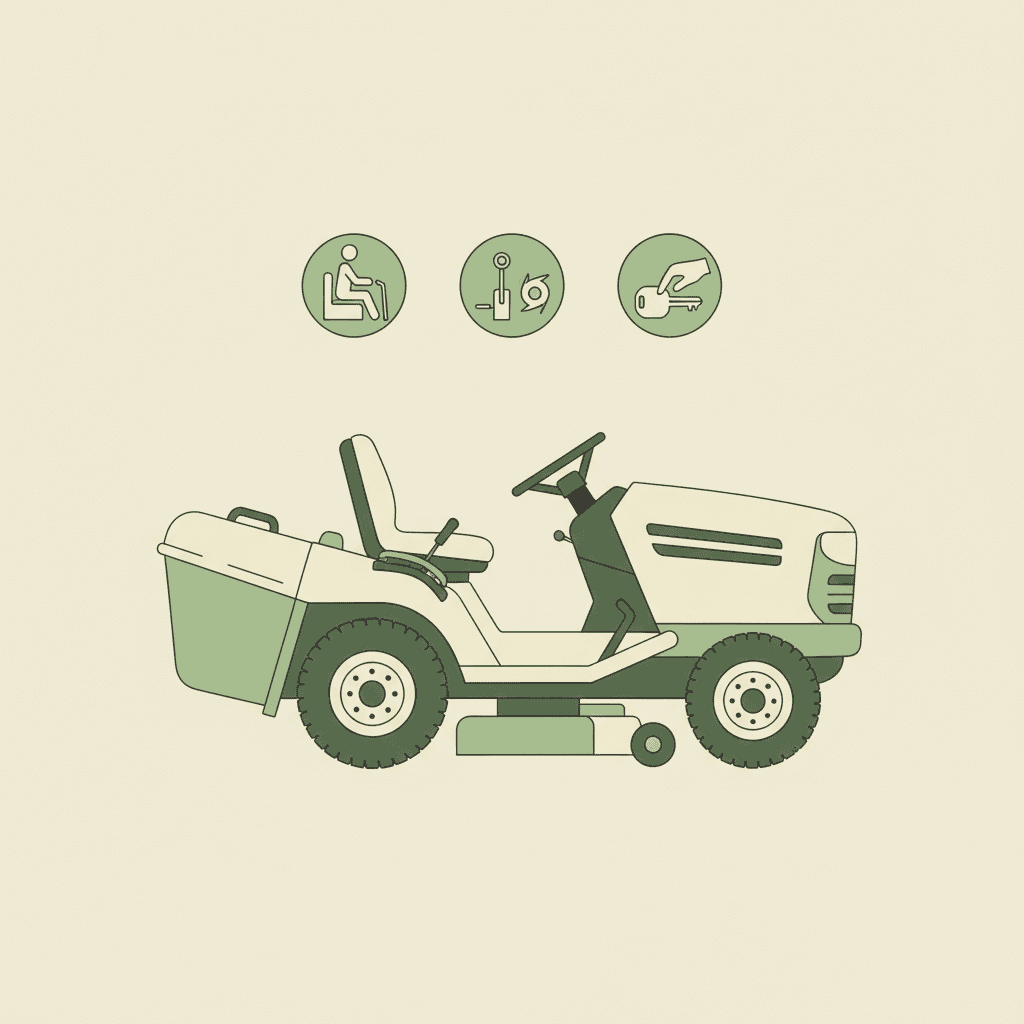
This guide walks you through every step in detail so you can start your mower confidently and safely, whether it is your first time or you just need a refresher.
Understanding How to Start a Riding Mower
Starting a riding mower is a straightforward process, but it involves more than simply turning a key. Modern riding mowers are equipped with safety interlocks that prevent the engine from starting unless specific conditions are met. Understanding these conditions is the key to a smooth start and to avoiding frustration when the mower refuses to crank.

Pros
- 23.5HP Kawasaki FX730 V-Twin OHV engine
- 726cc displacement per listing
- 60-inch cutting width in the product name
Cons
- No features, description, or reviews to verify performance
- Listed weight of 930 pounds complicates transport

Pros
- Brushless motor system delivers gas-equivalent power without emissions or excessive noise
- High-capacity battery kit enables cutting coverage of up to 4.4 acres per charge set
- Durable 10-gauge steel deck and constant high blade tip speed handle dense grass effectively
- Premium seating and lighting features support comfortable extended operation
- 4-year warranty provides strong protection for the investment
Cons
- Runtime tops out around 4.4 acres depending on conditions, requiring recharges for bigger properties
- Electric design depends on charging infrastructure and battery management rather than simple refueling
- Height adjustment is noted only basically without extensive position details in available specs
The Greenworks 60V MaximusZ Zero Turn Riding Lawn Mower is a commercial-grade electric machine built for large lawns. Its primary construction centers on a heavy-duty 60-inch 10-gauge fabricated steel deck that prioritizes durability and airflow, paired with premium comfort elements including an adjustable suspension seat with lumbar support and foldable armrests for a solid first impression of quality and user focus.
Performance shines through an intelligent brushless motor system offering power equivalent to a 31HP gas engine with zero emissions. Three high-torque brushless hub motors sustain a constant 17,900 FPM blade speed, while SmartCut Technology auto-adapts to prevent bogging in thick or wet grass. The complete kit supplies (2) 20.0Ah suitcase batteries plus (4) 8.0Ah batteries and a 1.5kW fast charger for up to 4.4 acres of cutting. Additional capabilities include a 4-in-1 deck for mulching, bagging, rear and side discharge, 300 lb towing capacity with front/rear hitch, dual LED headlights, and an LCD display.
Drawbacks and considerations include the practical need to recharge the battery set after maximum runtime, which can interrupt work on properties exceeding 4.4 acres. Being fully electric means reliance on power sources for recharging instead of fuel, and height adjustment is referenced only in basic terms without more granular position data in the specifications.
In verdict, the Greenworks 60V MaximusZ delivers the most value to homeowners and professionals managing medium-to-large properties who want quiet, emission-free commercial power, versatile cutting options, and the security of a 4-year warranty in a comfortable zero-turn package.

Pros
- Commercial-grade electric performance with instant torque and no gas engine maintenance.
- Large included battery package and fast charger improve runtime and turnaround time.
- Heavy-duty 54-inch fabricated deck is built for durability and wider coverage per pass.
- Comfort-focused operator features are better than many basic riding mowers in this class.
- Backed by a 4-year limited warranty for added purchase confidence.
Cons
- At 848.78 pounds, it is very heavy and will be difficult to move manually or transport without proper equipment.
- The large footprint, with dimensions of 76.77 x 73.23 x 56.3 inches, requires substantial storage space.
- The premium feature set and battery system may be more than many small-yard owners need.
Overview & Design: The Greenworks 80V 54" MaximusZ Zero Turn Riding Lawn Mower is a commercial-style electric mower built for large residential properties. Its 54-inch 10-gauge fabricated steel deck, zero-turn layout, and premium operator seat give it a serious, heavy-duty feel right away.
Performance & Key Features: This model is positioned as a 41HP gas-equivalent machine with instant torque, a constant 17,900 FPM blade speed, and SmartCut technology that adapts to changing grass conditions. The included battery kit with (2) 16.0Ah and (4) 6.0Ah batteries is designed to support up to 4+ acres per charge, while the 1.5kW fast charger helps reduce downtime.
Drawbacks & Considerations: The mower is extremely heavy at 848.78 pounds, so it is not easy to move or store in tight spaces. It is also a major investment and may be excessive for smaller yards or users who do not need the runtime and power of a large battery-electric zero-turn.
Verdict: This is a strong fit for homeowners with large lawns who want powerful, low-maintenance mowing performance and premium comfort features. Buyers who need a wide cutting deck, long runtime, and electric operation will likely get the most value from it.
Pros
- Robust 26HP Kohler engine provides ample power for demanding mowing tasks and thick vegetation
- Large 60-inch fabricated steel deck enables faster coverage of extensive lawn areas
- Durable 3-blade fabricated construction enhances deck longevity and resistance to wear
- Zero-turn capability offers precise control and reduced mowing time in complex layouts
Cons
- Large 60-inch deck and overall zero-turn size demand significant storage space and may not suit smaller properties
- Base specifications lack details on accessories such as mulching kits or baggers, which may need separate purchase
- High-powered engine setup could increase fuel use during long sessions relative to lower-horsepower models
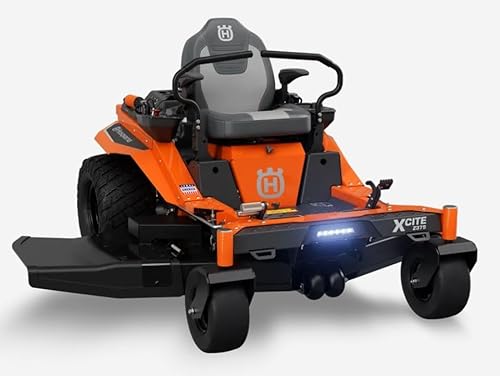
The Husqvarna Xcite Z375 is a zero-turn riding lawn mower engineered for large-scale residential and light commercial mowing. It combines a solid fabricated steel build with a capable Kohler power plant, creating an immediate impression of durability and purposeful design suited to expansive properties.
Performance centers on the 26HP 747cc Kohler V-Twin engine that supplies strong, consistent power for thick grass and varied terrain, paired with the 60-inch 3-blade fabricated steel deck. This setup delivers a wide, clean cut that covers ground efficiently and maintains quality across long sessions.
Considerations include the substantial footprint of the 60-inch deck and zero-turn frame, which requires ample storage and may feel oversized for compact yards. Available data also omits specifics on add-ons or comfort options, so buyers should confirm full feature sets independently.
The Husqvarna Xcite Z375 delivers the most value for owners of large lawns or light commercial operators who prioritize raw cutting power, deck durability, and zero-turn efficiency over compact size or extensive accessory packages.
This guide covers the basic operation of starting a riding lawn mower. It is not a full troubleshooting guide for a mower that will not start, although we do include a short section on the most common no-start causes. If you need in-depth diagnostics, look for a dedicated guide on why a riding mower will not start. Likewise, this article is about riding mowers, not push mowers, which have a different starting procedure (typically a recoil cord pull).
Why the Starting Procedure Matters
Riding mowers are powerful machines with sharp blades under the deck. The safety systems built into them are designed to protect you and anyone nearby. For example, most mowers will not crank if the parking brake is off, if the blade is engaged, or if nobody is sitting in the seat. Learning the correct sequence means you work with these safety systems instead of fighting them.
Keep your owner’s manual handy. While the general procedure is similar across brands such as John Deere, Husqvarna, Craftsman, Troy-Bilt, and Cub Cadet, the exact location of controls and the behavior of the safety switches can vary by model.
Pre-Start Safety Checks and Control Positions
Before you even sit down, take a minute to prepare the mower and the area. This reduces risk and makes the starting sequence much easier.
1. Clear the Area
- Remove toys, rocks, sticks, hoses, and debris from the mowing area.
- Make sure children and pets are indoors or well away from the mower.
- Open the garage door or move the mower outside if it has been stored indoors, to avoid exhaust buildup.
2. Check Fuel and Oil
- Verify there is fresh fuel in the tank. Stale fuel is one of the most common reasons mowers fail to start.
- Check the oil level using the dipstick, and top up if needed. Many mowers have a low-oil sensor that prevents starting.
3. Sit in the Seat
Almost all modern riding mowers have a seat safety switch that detects the operator’s presence. The engine will not crank (and on many models will shut off) if the seat is not occupied. Sit down fully and stay seated while starting.
4. Disengage the Blade / PTO
Locate the blade engagement lever or the PTO (power take-off) switch. It is usually a knob or lever on the dash or fender. Make sure it is in the OFF or disengaged position. Starting the engine with the blades engaged is dangerous and most mowers will not allow it.
5. Set the Parking Brake
Engage the parking brake. This is often a separate lever or pedal, and on many models it must be engaged for the starter to work. If your mower has a brake latch, make sure it clicks into place.
6. Position the Throttle and Choke
- Cold engine: Move the throttle lever to the choke position (often marked with a choke symbol or the word CHOKE). Some mowers have a separate choke knob or pull.
- Warm engine: Set the throttle to about half or fast position and skip the choke.
If you are unsure where the choke position is, check the owner’s manual. On many mowers, pushing the throttle lever fully forward engages the choke; pulling it back reduces choke. To compare alternative configurations, check our hands-on review of marshall stanmore iii vs harman kardon onyx studio 8.
Step-by-Step: Starting a Riding Mower
Once your pre-start checks are complete, follow this sequence. The exact order matters because of the safety interlocks.
Cold Start (Engine at Ambient Temperature)
- Sit in the seat and stay seated.
- Confirm the blade/PTO switch is OFF.
- Engage the parking brake.
- Move the throttle to the choke position.
- Insert the ignition key and turn it to the START position.
- Release the key as soon as the engine fires; it should spring back to the RUN position.
- Gradually move the throttle out of choke to a mid or fast setting.
- Let the engine run for a few seconds to warm up before engaging the blades.
Warm Start (Engine Already Run Recently)
- Sit in the seat, confirm the blade/PTO is OFF, and engage the parking brake.
- Set the throttle to about half or fast.
- Turn the key to START and release it once the engine runs.
- Adjust the throttle as needed.
What to Do After the Engine Starts
- Check that the oil pressure and battery/charging indicator lights (if equipped) go out.
- Listen for smooth, steady running; if the engine sputters or dies, it may need more choke or a few seconds to warm up.
- Only engage the blade/PTO once you are seated, the engine is running smoothly, and you are ready to mow.
- Release the parking brake before moving.
If the Engine Does Not Crank
Do not keep turning the key. Re-check the basics: are you seated, is the brake set, is the blade off? On many mowers, a small dash light indicates which safety interlock is preventing the start. If everything looks correct, move on to the troubleshooting section below. Users looking for related component recommendations can explore our dyson v8 cyclone vs bissell featherweight stick breakdown.
Key Factors and Controls Explained
Understanding what each control does will make you more confident and help you diagnose problems.
| Control / Component | What It Does | Typical Position for Starting |
|---|---|---|
| Ignition key | Controls the electrical system and starter. Turn to START to crank the engine. | START, then release to RUN |
| Choke | Enriches the fuel mixture by restricting air intake, helping a cold engine start. | CHOKE for cold start; OFF/RUN when warm |
| Throttle | Controls engine speed. Higher settings spin the blades and drive faster. | Choke position or mid/fast |
| Parking brake | Locks the mower in place and is part of the safety interlock circuit. | ENGAGED |
| Blade engagement / PTO | Engages the mower deck blades via a belt or electric clutch. | OFF / DISENGAGED |
| Seat safety switch | Detects the operator; prevents cranking (and sometimes shuts off the engine) when the seat is empty. | Occupied |
| Battery | Supplies power to the starter and ignition. | Charged (12V) |
| Starter | Electric motor that cranks the engine when the key is turned. | Activated by key |
| Fuel | Gasoline supply; stale or empty fuel prevents starting. | Fresh, adequate level |
What Does the Choke Do?
The choke restricts the air entering the carburetor, which creates a richer fuel-air mixture. Cold engines need this richer mixture to fire because fuel does not vaporize as easily at low temperatures. Once the engine warms up, leaving the choke on will cause rough running, black smoke, or stalling, so always release it after the engine starts. Before finalizing equipment decisions, refer to our comprehensive bissell crosswave hydrosteam vs shark stainforce comparison.
Why Is the Seat Safety Switch Important?
The seat safety switch prevents the engine from starting (and often from running) when no operator is in the seat. It is a critical safety feature: if you were to fall off or step away while the blades are spinning, the engine shuts down instead of continuing to drive the mower. Never bypass or disable this switch.
Why Must the Blades Be Off to Start?
Starting with the blades engaged is dangerous and places a heavy load on the engine and starter. The interlock system prevents this combination, protecting both you and the mower’s drivetrain.
Common Starting Issues and Quick Checks
If your mower does not start, work through these quick checks before assuming a major problem. This is not a full troubleshooting guide, but it covers the most frequent causes.
Engine Does Not Turn Over (No Crank)
- Safety interlock not satisfied: Confirm you are seated, the parking brake is engaged, and the blade/PTO is OFF.
- Dead or weak battery: Turn on the headlights (if equipped) or listen for a clicking sound. Charge or replace the battery if needed.
- Corroded or loose battery cables: Clean the terminals and tighten the connections.
- Blown fuse: Check the fuse(s) under the dash or near the battery and replace if blown.
- Faulty starter or solenoid: If the battery is good but nothing happens, the starter solenoid or starter motor may need attention.
Engine Turns Over but Will Not Start
- Empty or stale fuel: Add fresh gasoline. If the fuel has been sitting for more than a few weeks, drain it and refill.
- Choke not used (cold engine): Try starting with the choke engaged.
- Clogged fuel filter or carburetor: A dirty carburetor is a common cause; clean or service it.
- Fouled spark plug: Remove the plug, inspect it, and replace it if it is black, oily, or damaged.
- Low oil: Many engines have a low-oil shutdown; check the dipstick.
If the mower still will not start after these checks, consult a dedicated troubleshooting guide or a qualified small-engine technician.
Everything You Need to Know: How To Start Riding Mower FAQ
Do I need to use the choke every time I start my riding mower?
No. Use the choke only when the engine is cold. If the engine has been running recently and is still warm, you can usually start it without the choke by setting the throttle to half or fast and turning the key. Using the choke on a warm engine can flood it, making starting harder.
Why won’t my riding mower start even though the battery is good?
The most common cause is an unsatisfied safety interlock: the seat switch, parking brake, or blade/PTO switch is not in the correct position. Other frequent causes include stale fuel, a fouled spark plug, a clogged fuel filter, or a dirty carburetor. Check the interlock conditions first, then move on to fuel and spark checks.
Is it safe to start a riding mower while standing next to it?
No. You should always sit in the seat to start the mower. The seat safety switch is part of the starting circuit, and starting while standing bypasses the intended safety design. Sitting in the seat also keeps you in control of the mower the moment the engine fires.
Should I let my riding mower warm up before mowing?
Yes, briefly. Let the engine run for 15 to 30 seconds (or until it runs smoothly) after releasing the choke before engaging the blades. This allows oil to circulate and the engine to reach a stable idle, which reduces wear and prevents stalling when you engage the deck.
Riding Mower Startup Safety Reading
Before starting a riding mower, confirm that any seat switch or operator presence control is working, the blade is disengaged, and nobody stands in front of the machine. Broader safety information for riding equipment can be found at American National Standards Institute (ANSI).