Quick Answer: Pressure Washer Nozzle Color Guide Diagnostic & Solution
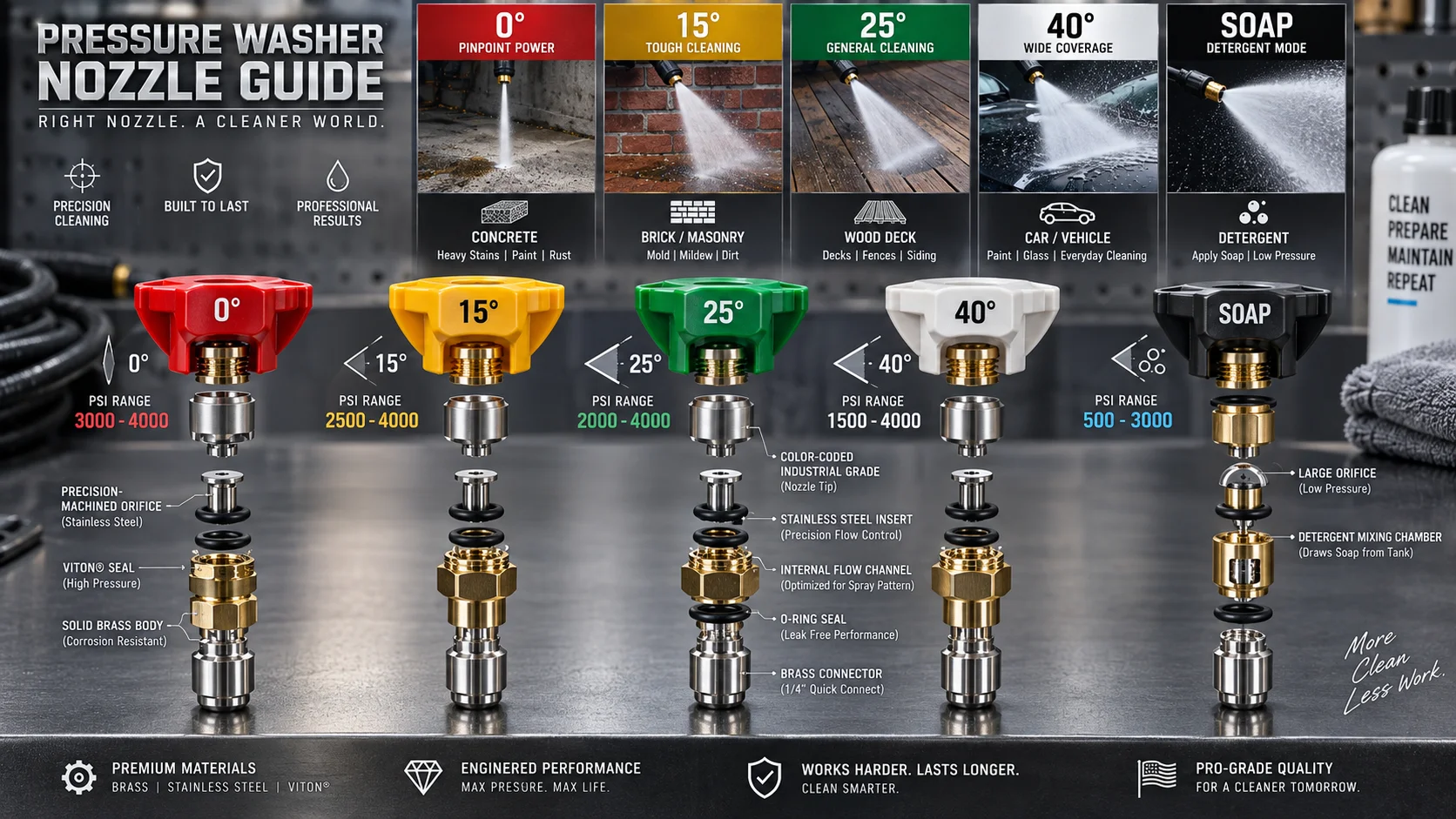
Pressure washer nozzles are color-coded by spray angle to match specific cleaning tasks. The standard color system is: Red (0°) for intense blasting, Yellow (15°) for chiseling heavy deposits, Green (25°) for general flushing, White (40°) for broad washing, and Black (Soap) for low-pressure detergent application. Always match the nozzle to your surface to prevent damage and ensure optimal cleaning…

Pros
- Three different nozzles named in the product title
- Hose quick connectors listed in the title
- Listed for car, patio, pet, and window cleaning
- Black color variant listed
Cons
- Pressure and durability claims are unverified in this data
Pressure Washer Nozzle Color Chart and Diagnostic Matrix
Understanding the physics behind the pressure washer nozzle color guide allows you to clean faster and safer. When water exits the orifice at high velocity, the angle dictates the surface area covered and the impact force. This section details each specific nozzle type.
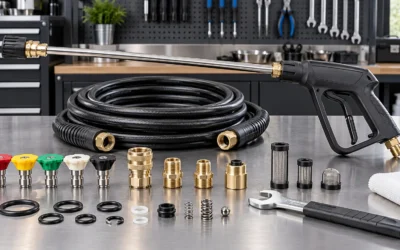
Red 0 Degree Blast Nozzle
The red 0 degree blast nozzle is the most aggressive tool in your arsenal. It projects a concentrated, pencil-point stream of water. Because the water is not spread out, it retains 100% of the pressure delivered by the machine right up to the point of impact.
- Best Use: Removing rust stains from concrete, clearing mud from tractor tires, or blasting insect nests from hard-to-reach crevices.
- Warning: Never use this nozzle on wood, car paint, glass, or siding. The high concentration of force will instantly splinter wood and strip paint.
- Technique: Keep the nozzle at least 6 to 12 inches from the surface to prevent surface etching.
Yellow 15 Degree Chisel Nozzle
Often referred to as the “chisel” because it acts like a water-borne scraper, the yellow 15 degree chisel provides a narrow, powerful fan. It is the preferred choice for heavy-duty stripping jobs where the 0-degree nozzle is too small and the 25-degree is too weak.
- Best Use: Preparation for painting (removing loose paint), cleaning heavy mildew from masonry, or removing gum from sidewalks.
- Safety: Can damage soft surfaces like cedar siding or asphalt driveways if held too close. Maintain a distance of 12 to 18 inches.
Green 25 Degree Flushing Nozzle
The green 25 degree flushing nozzle is widely considered the “general purpose” tip. It strikes a balance between cleaning power and surface safety, creating a fan wide enough to cover a decent area while retaining enough force to dislodge dirt.
- Best Use: Cleaning wooden decks, vinyl siding, removing leaves from gutters, and general driveway maintenance.
- Technique: Use long, sweeping motions. This nozzle is highly effective for “flushing” dirt out of porous surfaces like concrete.
White 40 Degree Wash Nozzle
The white 40 degree wash nozzle is your go-to for delicate surfaces. It fans the water out into a wide arc, significantly reducing the impact pressure while covering a large surface area quickly. This is the safest nozzle for variable surfaces.
- Best Use: Washing cars, rinsing windows, cleaning boat hulls, and washing painted surfaces.
- Benefit: It acts as a powerful rinse aid and is excellent for “sheeting” water off windows to prevent streaking.
Black Low Pressure Soap Nozzle
The black low pressure soap nozzle has the largest orifice size. This design restricts water flow, creating the low pressure required for the pump’s siphon tube to draw detergent from the tank. If you use a colored nozzle to apply soap, the siphon will fail because the pressure inside the machine is too high to allow air intake.
- Best Use: Coating vehicles with car shampoo, applying deck cleaner, or pre-treating siding with mildew remover.
- Process: Apply soap from bottom to top (to prevent streaking), let it dwell for 3 to 5 minutes, then switch to a 25 or 40-degree nozzle to rinse.
Recommended Hardware & Essential Equipment
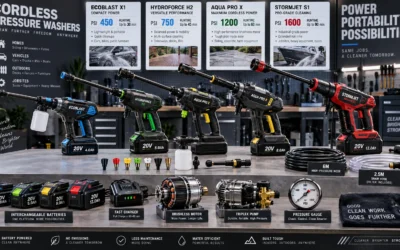
Selecting the right washer is just as critical as selecting the right nozzle. The equipment below is chosen specifically because it pairs high-pressure output with the versatility required to use the full range of nozzles effectively. These units offer the reliability needed for both automotive detailing and heavy masonry work, ensuring the pressure rating matches the requirements of the 15 and 25-degree nozzles discussed above.
Step-by-Step Surface Selection Guide
To ensure you do not damage property, follow this step-by-step decision tree when selecting your nozzle. This guide assumes you are using a standard electric or gas pressure washer operating between 1500 and 3000 PSI. Users looking for related component recommendations can explore our how to replace string trimmer head breakdown.
Step 1: Identify the Surface Material
Is the surface soft (wood, plastic, glass, car paint) or hard (concrete, brick, stone, metal)?
Step 2: Determine the Soil Level
Are you rinsing light dust (use White), removing caked mud (use Green), or stripping adhered substances like paint or gum (use Yellow)? Before finalizing equipment decisions, refer to our comprehensive cleaning a wood deck with a pressure washer comparison.
Step 3: The Spot Test
Before committing to a full clean, test your selected nozzle on a small, inconspicuous area. If the water creates “zebra stripes” on concrete or lifts wood fibers, step up to the next wider angle (e.g., move from Yellow to Green).
Step 4: The Soap Sequence
If the dirt does not come off with the 25-degree nozzle alone, switch to the black low pressure soap nozzle first. Apply your chemical cleaner, let it sit, and then rinse with the Green or White nozzle. Chemical action is always safer than mechanical force. For broader ecosystem context, read through our operational guide on battery powered cordless pressure washer.
Common Questions on Pressure Washer Nozzle Color Guide Answered
What is the most dangerous pressure washer nozzle?
The red 0 degree blast nozzle is widely considered the most dangerous. Because the water stream is so concentrated, it can cause severe injury, inject water under the skin (water jet injection), or completely destroy soft materials like wood or glass in seconds. It should only be used by experienced operators on hard surfaces.
Why won’t my soap dispenser work?
If you have a black low pressure soap nozzle installed and soap is not dispensing, check the siphon tube inside your detergent tank to ensure it is submerged and free of air bubbles. Additionally, ensure you are using a soap specifically formulated for pressure washers; dish soap is often too thick and will clog the intake valve.
Can I use the white 40 degree nozzle on my deck?
While the white 40 degree wash nozzle is safer, it may not be powerful enough to clean deep into wood grain if the deck is very dirty. It is best to start with the green 25 degree flushing nozzle at a distance. If the green nozzle is too aggressive and starting to “fuzz” the wood, switch to the white nozzle.
What is the difference between the yellow and green nozzles?
The yellow 15 degree chisel is a stripping tool meant for removing material. The green 25 degree flushing nozzle is a cleaning tool meant for removing loose debris. The yellow nozzle covers less area but hits harder; the green nozzle covers more area with less risk of damage.
How do I prevent the “zebra stripe” pattern on concrete?
Zebra striping happens when the high-pressure edge of a yellow 15 degree chisel or green 25 degree flushing nozzle overlaps during a pass. To prevent this, overlap each pass by 25% and keep the wand moving at a consistent speed. Alternatively, switch to a white 40 degree wash nozzle, which produces a much softer edge gradient.
Nozzle Color Reading Guide
Nozzle colors indicate spray angle on many machines, though the chart varies between brands. Pool owners who want another angle on equipment choices can read the robotic pool cleaner comparison guide. The cordless stick vacuum buyer guide covers a different cleaning task, and general industry context on pressure tools is at American National Standards Institute (ANSI).