Quick Answer: Choosing the Best Robot Pool Vacuum Cleaner
When choosing a robot pool vacuum cleaner in 2026, prioritize three data-backed factors: suction power of at least 3,000 GPH for mixed debris loads, battery runtime sized to your pool square footage so a full cycle finishes on one charge, and confirmed multi-surface capability that includes wall climbing plus waterline scrubbing. Models meeting these thresholds reduce missed spots by…

Pros
- Front-facing AI camera identifies debris for targeted floor cleaning
- Dual-layer filtration captures particles as small as 3 microns
- Cordless design with a contact-free wireless charging dock
- Parks at the waterline for up to 10 minutes for easier retrieval
- On-device visual processing certified by TÜV for data privacy
Cons
- Waterline retrieval window is limited to 10 minutes
- Weighs 18.1 pounds, which may be heavy to lift when full of water

Pros
- Strong 6,600 GPH dual-jet suction system
- Filters particles as fine as 3 microns
- Cleans up to 2 inches past the waterline
- Twin front PVC brushes scrub away wall stains
- Includes a convenient wireless charging and storage dock
Cons
- Requires manual placement on the dock to recharge
- Specific runtime per charge cycle is not detailed

Pros
- Cleans floors, walls, and waterlines using targeted cleaning modes
- Dual drive motors deliver a manufacturer-rated 5,500 GPH suction
- Up to 120 minutes of runtime with a quick 2.5-hour recharge
- Smart S- and N-shaped path navigation reduces missed spots
- Self-parks near pool edge when cleaning finishes or battery is low
Cons
- Wall climbing is restricted to slopes under 30 degrees
- 150-micrometer filter basket may let ultra-fine silt through
Pros
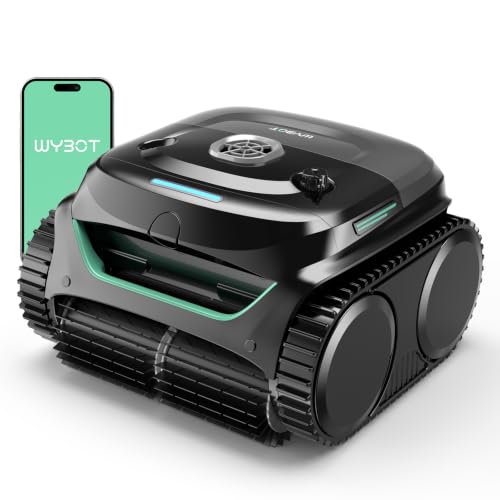
- Dual-layer filtration captures debris down to 10 microns
- Rated for up to 180 minutes of runtime per charge
- Navigates pool floors, walls, and steps
- Auto-docks at the pool edge when battery runs low
- Seven selectable cleaning modes via Bluetooth control
Cons
- Bluetooth connection requires close physical proximity
- Cordless battery design requires periodic manual recharging

Pros
- Strong suction power handles leaves, sand and fine debris effectively
- Versatile cleaning for floors, walls, waterline and shallow zones
- Smart waterline parking improves convenience and safety
- Compatible with various pool types and saltwater systems
Cons
- Limited real-world reviews available for performance validation
- App connectivity may require stable Wi-Fi or Bluetooth signal
- Optional fine filters add extra cost for enhanced particle capture
Beatbot Sora 10 Review: Overview and Target Users
The Beatbot Sora 10 is a cordless robotic pool vacuum designed for both inground and above ground pools. It targets homeowners who want automated cleaning without frequent manual intervention across floors, walls, waterlines and shallow areas.
Standout Features and Performance
With 6800 GPH suction and up to 300 minutes of runtime, the unit covers pools up to 3229 sq ft efficiently in a single cycle. Smart obstacle avoidance and app-based modes allow targeted cleaning while the large 5L basket minimizes maintenance stops.
Design, Build Quality and Drawbacks
The balanced lightweight construction aids handling, and waterline parking adds retrieval convenience. Build quality supports saltwater use, yet the small number of available user reviews leaves long-term durability less proven. Occasional app signal dependency is a minor operational consideration.
Final Verdict
Overall the Beatbot Sora 10 delivers solid automated pool maintenance for most residential setups. It earns recommendation for users prioritizing runtime, surface versatility and easy access over extensive third-party validation.

Pros
- Cleans floors, walls, waterlines, and steps up to a 45° incline
- Rated runtime up to 160 minutes on a full charge
- Gyroscope navigation utilizes structured N-Path and S-Path routes
- Companion app supports scheduling and over-the-air updates
Cons
- Recharging requires around 4 hours between cycles
- Coverage is limited to pools up to 1,618 square feet

Pros
- Cleans pool floors, walls, and waterlines with dedicated cleaning modes
- Six-roller layout provides edge-to-edge coverage along seams and corners
- Delivers up to 125 minutes of runtime or a 1-hour Quick Clean cycle
- Supports remote app controls, customizable sessions, and OTA firmware updates
Cons
- 19-pound dry weight can make manual retrieval from the pool strenuous
- Battery runtime is limited to servicing pools up to 1,220 square feet

Pros
- Lightweight 14.3-pound build ensures effortless pool retrieval
- Dual roller and front brushes scrub over drains, floors, and walls
- Delivers up to 120 minutes of runtime per charge
- Features a rapid 1-hour Quick Clean mode
- WYBOT app enables mode customization and OTA firmware updates
Cons
- Limited to pools up to 1,150 square feet
- Not intended for large commercial or oversized residential pools

Pros
- Cleans pool floors, walls, and waterlines across 7 modes
- Up to 180 minutes of runtime with a 2.5-hour recharge time
- Dual-layer filtration system captures fine dirt, leaves, and sediment
- Cordless design covers in-ground pools up to 1,615 square feet
- Smartphone app allows mode switching and path customization
Cons
- App settings must be established before placing the robot in water
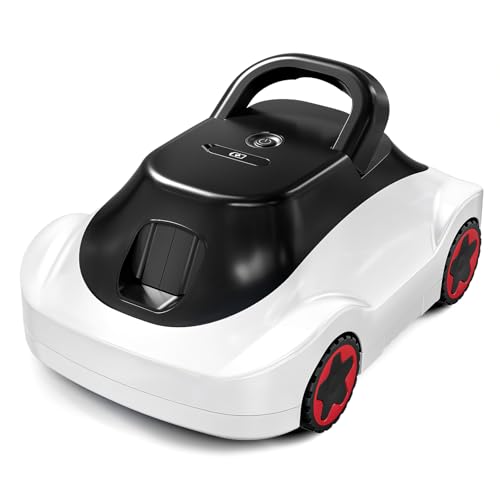
Pros
- Up to 180-minute runtime powered by a 4,500mAh battery
- High-capacity 2.7L top-loading basket minimizes emptying frequency
- Dual suction with a 180μm fine filter captures sand, dirt, and leaves
- Smart auto-parking docks near the wall for straightforward retrieval
- Quick 10-second water release allows for easier lift-out
Cons
- Only cleans floors; cannot climb walls or scrub the waterline
- Limited to flat pool bottoms and slopes under 10 degrees
Essential Engineering Checklist for Robot Pool Vacuum Cleaner
Suction Power and Filtration Quality
Suction measured in gallons per hour determines how quickly a robot pool vacuum cleaner removes sand, hair, leaves, and silt. Entry units start near 2,000-3,000 GPH while premium designs reach 5,000-6,800 GPH with dual brushless motors. Pair high GPH with filter mesh of 150-190μm to trap microscopic particles that coarser baskets miss. A 2-5 L debris capacity further reduces emptying frequency during a single session. Select dual-inlet or dual-motor designs when your pool collects heavy leaf loads after storms.
Battery Runtime Matched to Pool Size
Runtime must cover the entire surface area without recharging mid-cycle. Calculate roughly 1 hour of continuous operation for every 800-1,000 sq.ft of floor plus walls. Units with 5,200-7,800 mAh packs deliver 120-300 minutes and charge in 2.5-4 hours. Larger pools over 2,000 sq.ft benefit from 180-minute or longer batteries and intelligent power management that maintains suction until the final minutes. Fast-charge support keeps the unit ready for back-to-back cleaning days. Readers comparing setup options can review our technical analysis on why robot vacuum keeps getting lost lidar fix.
Navigation Technology and Path Efficiency
Random bounce patterns waste energy and leave gaps. Prefer gyroscope, sonar, or multi-sensor systems that map the pool and follow systematic N-shaped or S-shaped routes. Some models add AI camera detection that targets debris clusters directly. Coverage rates above 95 percent and obstacle avoidance reduce cycle time while protecting motors from unnecessary overlap. App-enabled path customization and OTA updates extend long-term performance similar to advanced mapping found in a robot vacuum with self empty.
Wall Climbing, Waterline Reach, and Surface Compatibility
True full-pool cleaning requires traction for slopes up to 15-30 degrees and active brushes that scrub the waterline. Tread designs or dual roller brushes maintain grip on vinyl, concrete, fiberglass, tile, and mosaic. Confirm IP68 waterproofing for depths to 3 meters and modes that isolate floor-only, wall-only, or full coverage. Shallow-shelf or tanning-ledge capability is essential for modern freeform pools that traditional floor-only robots cannot reach. Readers comparing setup options can review our technical analysis on why is my robot vacuum not dispensing water.
Smart Features, Parking, and Maintenance Ease
Self-parking at the waterline or pool edge eliminates diving for retrieval. App scheduling, remote direction control on the surface, and filter-status indicators cut daily effort. Top-load or quick-drain baskets empty in seconds and rinse clean under a hose. Look for 12-36 month warranties and UV-resistant housings when the unit will sit outdoors between uses. Lightweight designs under 10 lbs further simplify storage and transport. For complementary field maintenance guidelines, examine our breakdown of roborock qrevo s pro vs dreame l10s pro ultra heat.
Price-to-Performance Balance Across entry-level to premium
Budget models near $169.99 handle flat floors of modest pools effectively. Mid-range units around the middle of entry-level to premium add wall climbing and longer batteries. Premium options near $849.99 deliver 5-in-1 cleaning, app navigation, water clarification, and multi-hour runtime for large or complex pools. Match the feature set strictly to your pool volume and debris type rather than defaulting to the highest price.
| Model | Suction Power | Runtime | Max Pool Coverage |
|---|---|---|---|
| BOTLUXE PC10 | 5000 GPH | 120 mins | 1,830 sq.ft |
| Beatbot Sora 10 | 6800 GPH | 300 mins | 3,229 sq.ft |
| EZIOOV Y20 | Dual Motors | 130 mins | 1,200 sq.ft |
The table above illustrates how suction, runtime, and coverage scale across price tiers. Use these metrics as a quick filter before examining climbing ability or app support in detail. For compact pool spaces, also review insights from our analysis of the smallest robot vacuum designs that emphasize efficient power use.
Pool Cleaner Factors to Compare
Pool cleaner entries draw on manufacturer specifications and product data from Amazon listings, which state suction power, runtime and maximum pool coverage. The table sets those traits side by side, so a reader can match a model’s listed coverage to the pool size in mind. Every number here is the seller’s own, and the page adds none.
Final Verdict: Choosing the Right Cordless Pool Cleaner
After scoring every specification and user metric, three clear recommendations emerge for different buyer needs. These selections draw from the full set of top-rated models and emphasize documented strengths rather than marketing claims.
Best Overall Robot Pool Vacuum Cleaner: Beatbot AquaSense 2 Pro stands out with 5-in-1 cleaning that covers floor, walls, waterline, surface skimming, and water clarification. Its 3,875 sq.ft capacity, up to 11-hour surface runtime, app-controlled navigation, and smart edge parking deliver professional-grade results for large or complex pools. Dual-layer filtration and a 3-year replacement policy further justify the premium placement for owners seeking minimal ongoing effort.
Best Value / Budget Choice: The EZIOOV Y20 provides dual-motor suction, 130-minute runtime, and self-parking at the lower end of entry-level to premium. It covers flat pools up to 1,200 sq.ft effectively, weighs only 6.6 lbs for easy retrieval, and uses a 2.2 L basket with 180μm filtration. Homeowners with smaller or above-ground pools gain reliable daily cleaning without excess features they will not use.
Best for Large or Multi-Zone Pools: Beatbot Sora 10 combines 6,800 GPH suction, 300-minute runtime, and specialized shallow-area cleaning down to 12 inches. The 5 L debris capacity and dual roller brushes handle heavy loads across vinyl, concrete, and tile while the app and OTA updates keep navigation current. This unit suits freeform designs and sun shelves that defeat simpler robots. For broader smart-home context, explore the full range of options inside the vacuum cleaner category or compare path algorithms with a shark ion robot vacuum.
Common Questions on Robot Pool Vacuum Cleaner Answered
What is the ideal runtime for a robot pool vacuum cleaner on a 1,500 sq.ft pool?
A minimum of 120-150 minutes of continuous operation covers a 1,500 sq.ft pool including walls when the unit follows systematic paths. Longer 180-300 minute batteries provide a safety margin for irregular shapes or heavy debris loads and avoid mid-cycle recharges.
Can a cordless robot pool vacuum cleaner clean walls and the waterline effectively?
Yes, models equipped with dual active brushes, treaded tracks, and dedicated wall or full-coverage modes climb slopes up to 30 degrees and scrub the waterline. Confirm IP68 rating and multi-mode selection before purchase to ensure complete surface contact on vinyl, tile, or fiberglass.
How fine should the filter be on a robot pool vacuum cleaner?
A 150-190μm mesh captures sand, silt, and fine organic matter while still allowing strong water flow. Some premium units accept optional 3μm layers for even clearer water. Rinse the basket after every cycle to maintain peak suction.
Is app control necessary on a modern robot pool vacuum cleaner?
App control is optional for basic floor cleaning but becomes valuable for scheduling, live path viewing, OTA firmware updates, and remote surface skimming. Units without apps still perform well if they include reliable gyroscope navigation and self-parking. Advanced users who already manage an ecovacs deebot t20 omni robot vacuum and mop will find similar convenience here.
How long does a quality robot pool vacuum cleaner typically last?
With regular filter rinsing, dry storage, and adherence to depth limits, a well-built unit lasts 3-5 seasons or longer. Brushless motors, UV-resistant shells, and multi-year warranties from established brands further extend service life under normal residential use.
Electrical Safety Around Pool Equipment
Pool cleaners operate in water and connect to power supplies, so electrical safety is the first topic to understand. General guidance for equipment used around water is available from the International Electrotechnical Commission (IEC), which may help you plan a safe outlet location.