What a Lawn Mower Carburetor Looks Like (Direct Answer)
A lawn mower carburetor is a small, boxy or barrel-shaped metal component roughly the size of a clenched fist — typically 2 to 4 inches across. It is cast from aluminum or zinc alloy die casting, giving it a silver, dull gray, or slightly weathered metallic appearance. It mounts directly onto the engine block, sandwiched between the air filter housing on one side and the engine intake port on the other. From the outside, the most immediately recognizable features are a round central throat (the air passage), a dome- or bowl-shaped chamber hanging off the bottom or side (the float bowl), and several small brass or metal screws protruding from the body. Fuel and air lines connect to it at distinct ports, and a network of thin metal linkage rods attach to its exterior for throttle and choke control.
Key External Parts You Can See on a Lawn Mower Carburetor
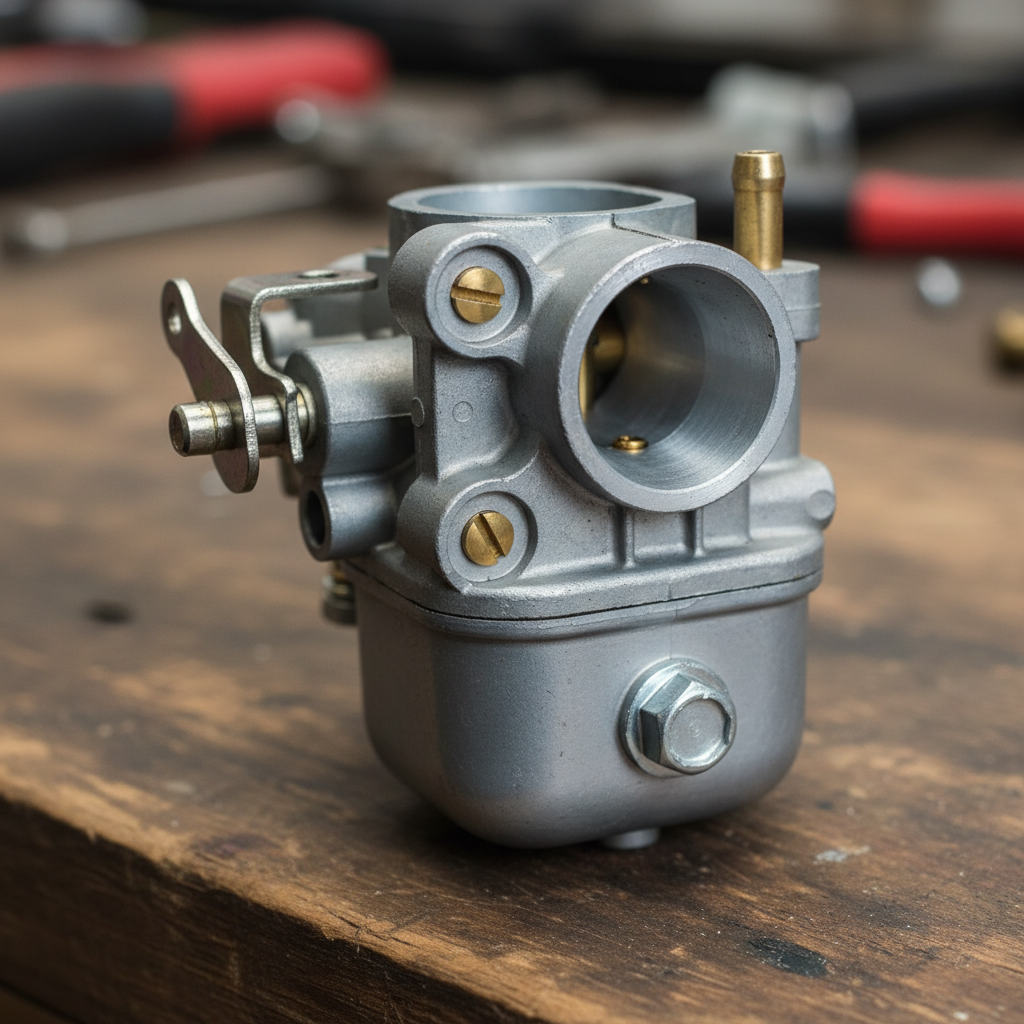
Once you locate the carburetor on your mower engine, several external features are immediately visible. Understanding what each part looks like helps you identify the carburetor with confidence and diagnose basic problems on sight.
Air Intake Throat (Venturi)
The air intake throat, also called the venturi, is the central round or oval opening running through the carburetor body from front to back. It is the passage through which air flows into the engine. On most push mower carburetors, this opening is roughly 0.5 to 1 inch in diameter. Looking directly into it, you can see the flat circular disc of the throttle plate or choke plate across the bore. The venturi narrows at its center — that narrowing is what accelerates airflow and draws fuel in from the jets.
Float Bowl
The carburetor float bowl is one of the most visually distinctive features. It is a rounded, dome-shaped or cylindrical cup — usually 1 to 2 inches in diameter — that attaches to the bottom or lower side of the carburetor body with a single bolt or a bail-style clip. It is typically the same aluminum or zinc alloy as the main body, though some float bowls are made of clear or translucent plastic on certain modern designs. The float bowl holds a small reserve of fuel. A single large bolt at the very bottom center secures it and also serves as the main jet passage.
Adjustment Screws
On the exterior of the carburetor body, you will see one or two small slotted screws — often with a brass or plated finish — threaded into recessed ports. These are the fuel mixture adjustment screws (idle mixture and sometimes high-speed mixture). They are typically 1 to 2 inches long but only a few millimeters of the head is visible when installed. Some carburetors have a limiter cap — a small plastic cap — covering these screws to prevent tampering.
Choke Linkage and Throttle Linkage
Thin metal rods and small clips form the choke linkage and throttle linkage attached to the sides of the carburetor. These rods connect the carburetor’s internal choke plate and throttle plate to the engine governor and the operator’s speed control lever. They are visible as fine wire or stamped-metal arms pivoting on small posts or pins on the carburetor’s exterior. On Briggs & Stratton engines, the governor arm and throttle link are prominent on the side of the carburetor facing away from the air filter.
Fuel Inlet Port
A small barbed nipple or threaded inlet port protrudes from the side of the carburetor body — this is where the fuel line from the tank connects. It is typically 1/4-inch in diameter. On float-bowl carburetors, a needle valve seat is recessed just inside this port. On diaphragm carburetors, the fuel inlet connects to a primer bulb system or a pulse fitting.
Internal Components and What They Look Like Inside
When a carburetor is disassembled for cleaning or rebuilding, additional components become visible. These are the parts most often clogged, worn, or damaged.
Float and Needle Valve
The float is a small, hollow pontoon — usually made of brass or black nitrile-coated plastic — about 1 to 1.5 inches long. It sits inside the float bowl and pivots on a thin metal hinge pin. When fuel rises to the correct level, the float pushes up a needle valve — a slender brass or composite pin roughly 1 inch long with a rubber or synthetic tip — to shut off fuel flow. The needle valve seats into a brass insert in the carburetor body. These two components together regulate fuel level in the bowl.
Main Jet and Pilot Jet
Jets are tiny brass fittings — often no larger than a pencil eraser — threaded into passages in the carburetor body or float bowl bolt. The main jet has a precisely drilled hole (often 0.020 to 0.060 inches in diameter) through its center. The pilot jet, when present, is even smaller. Both are a shiny brass color when new. When clogged, the jet hole is either partially or fully blocked by dark brown or yellowish varnish residue. Removing the float bowl bolt on many small engine carburetors exposes the main jet directly.
Throttle Plate and Choke Plate
Inside the venturi bore, two flat circular discs sit on shafts perpendicular to airflow. The throttle plate (closer to the engine) and the choke plate (at the air inlet end) are typically made of stamped aluminum or steel, roughly matching the bore diameter. When fully open, they align with the airflow and are nearly invisible edge-on. When closed, they block the bore like a valve. Both are secured to their shafts with tiny screws.
Emulsion Tube and Passages
Running through the carburetor body are small drilled passages and sometimes a removable emulsion tube — a thin brass tube with tiny holes along its length — that mixes air into fuel before it enters the venturi. These passages are not visible from outside but become apparent when holding a disassembled carburetor up to light and looking through the body.
How Carburetor Appearance Differs by Lawn Mower Type
Not all lawn mower carburetors look identical. The engine type and mower design determine which carburetor style is fitted.
Float Bowl Carburetor vs. Diaphragm Carburetor
| Feature | Float Bowl Carburetor | Diaphragm Carburetor |
|---|---|---|
| Fuel reservoir | Visible bowl hanging below body | No external bowl; flat and compact |
| Shape | Taller with dome bottom | Flatter, more rectangular profile |
| Typical use | Walk-behind and riding mowers (level operation) | Handheld equipment, mowers operated at angles |
| Visible identifier | Bowl bolt at bottom center | Flat gasket plates on one face; primer bulb nearby |
| Material | Aluminum or zinc alloy body and bowl | Aluminum body with rubber diaphragm layers inside |
Float bowl carburetors are the standard design on most walk-behind push mowers and riding mowers because these machines operate on level or near-level ground. They have the recognizable bowl hanging below the main body. Diaphragm carburetors use a flexible rubber membrane instead of a float bowl to regulate fuel flow, making them tolerant of tilting angles — they appear noticeably flatter and more compact, with no external bowl, and are identified by layered gasket plates or a pulse line fitting on the body face.
Briggs and Stratton Carburetor Appearance
Briggs & Stratton carburetors — found on a large share of North American push mowers — have a distinctive vertical or horizontal float bowl depending on engine orientation. The Briggs & Stratton float bowl carburetor typically has a stamped steel or cast body, a prominent round bowl secured by a single center bolt, and a choke-a-matic linkage system on the side that connects choke operation to the throttle cable in a single-lever design. The body is often marked with a part number stamped into the metal.
Honda Lawn Mower Carburetor Appearance
Honda small engine carburetors — common on Honda HRX and HRR series mowers — have a more refined and compact aluminum casting with a bottom-mounted float bowl. Honda carburetors tend to have cleaner casting lines, a precisely machined bowl with an O-ring seal rather than a gasket, and a primer bulb in some models integrated near the air intake. The main jet is accessible by removing the float bowl bolt, identical in principle to Briggs & Stratton but with a slightly different body profile and port layout.
Riding Mower Carburetor vs. Push Mower Carburetor
Riding mower carburetors are physically larger to match the larger displacement engines (typically 344cc to 700cc versus 140cc to 190cc on push mowers). The overall shape is similar — float bowl, venturi throat, adjustment screws — but the bore diameter is wider, the float bowl is larger, and the linkage system is more complex due to the engine governor and separate throttle/choke controls on the dashboard. Twin-cylinder riding mower engines may use two carburetors or a single larger dual-throat unit.
How to Locate the Carburetor on Your Lawn Mower
Follow these steps to find the carburetor on a standard walk-behind push mower:
- Disconnect the spark plug wire before accessing any engine components. Pull the rubber boot off the spark plug and move it aside.
- Locate the air filter housing. On a push mower, this is a plastic or metal box — usually black or gray — mounted on one side of the engine, often with a wing nut or snap clip securing its cover. It is typically 3 to 5 inches across.
- Remove the air filter cover and filter. The rectangular or circular foam or paper filter element pulls out. Set it aside.
- Look at the component immediately behind the air filter mounting plate. The metal component the filter housing bolts onto is the carburetor inlet. The carburetor body extends from that face back toward the engine block.
- Trace the fuel line. A small rubber or plastic fuel line runs from the fuel tank to one side of the carburetor — following this line leads directly to the fuel inlet port on the carburetor body.
- Identify the float bowl. With the air filter removed, look downward below the carburetor body — the round bowl hanging at the bottom confirms you are looking at the carburetor.
On a riding mower, the carburetor is accessed by opening the engine hood. It sits atop or alongside the engine block, again directly behind the air filter assembly. The fuel line from the tank and the throttle cable from the dashboard both route to it.
Visual Signs That a Lawn Mower Carburetor Has a Problem
The carburetor’s appearance reveals a great deal about its condition. These are the visible indicators that cleaning or replacement is needed.
Varnish and Gum Buildup
Old or ethanol-blended fuel left in the carburetor evaporates and leaves behind a yellowish, brown, or dark amber sticky residue — commonly called varnish or gum. Ethanol in fuel is a known contributor to this type of deposit, as it attracts moisture and degrades faster than pure gasoline, leaving behind residue that coats internal passages and jet holes. Inside the float bowl, this looks like a dark film coating the bowl walls and float. Inside the jets, it appears as a partial or complete blockage of the tiny metering hole.
Clogged Jets
Holding a removed jet up to light and looking through the center hole reveals whether it is clear. A clogged jet shows no light passing through, or only partial light if partially blocked. The exterior of a clogged jet may appear discolored — greenish from fuel additive residue or dark brown from varnish.
Fuel Leaking from the Float Bowl
A wet ring of fuel staining around the base of the float bowl or drips of fuel below the carburetor indicate a leaking float bowl gasket or O-ring, an improperly seated needle valve, or a cracked float bowl. The bowl exterior may show a white mineral crust or fuel-darkened streaks running down from the bowl seam.
Cracked or Damaged Carburetor Body
Physical cracks in the aluminum or zinc body appear as thin dark lines in the casting, often near bolt holes or at the bowl mating surface. Zinc alloy carburetors (pot metal) can also develop a white, powdery corrosion on the exterior called zinc pest or white corrosion — this is a sign of material degradation and usually means the carburetor body has become structurally compromised.
Dirty or Corroded Exterior
A carburetor that has been in service for several seasons typically shows oil residue, grass debris, and surface oxidation — a dull, darker gray compared to a new carburetor’s brighter silver finish. Heavy black soot around the air intake throat can indicate a rich fuel condition (too much fuel, not enough air) running through it.
Frequently Asked Questions
Where exactly is the carburetor on a lawn mower engine?
The carburetor sits between the air filter housing and the engine intake port on virtually all small lawn mower engines. Remove the air filter and its backing plate, and the carburetor throat is the opening directly behind it. The float bowl hangs below the main carburetor body, and the fuel line connects to the side. It is mounted directly to the engine block with two bolts in most push mower designs.
What is the bowl at the bottom of the carburetor?
That is the carburetor float bowl. It stores a small, regulated amount of fuel ready for the engine to draw in. Inside the bowl is a hollow float that rises with the fuel level and triggers a needle valve to shut off incoming fuel when the correct level is reached. The single bolt at the bowl’s base secures it and also contains the main jet passage — removing this bolt drains the bowl and exposes the jet for cleaning.
How do I tell a diaphragm carburetor from a float bowl carburetor just by looking?
A float bowl carburetor has a visible rounded bowl hanging below or beside the main body, secured by a bolt. A diaphragm carburetor has no external bowl — it is flat and compact, often with one or two flat cover plates on the face of the carburetor body that are secured by multiple small screws. Those plates sandwich the rubber diaphragm inside. A primer bulb is also commonly found near or integrated into diaphragm carburetor systems.
What does varnish buildup inside a carburetor look like?
Varnish appears as a sticky, lacquer-like coating ranging from pale yellow to dark amber or brown, depending on how long the fuel has been sitting. It coats the inside walls of the float bowl, the float itself, and the tiny passages and jet holes in the carburetor body. In severe cases, the jet hole is completely sealed and appears as a solid plug of dark material. Fresh varnish is tacky; older varnish hardens into a shellac-like film that requires carburetor cleaner solvent to dissolve.