Quick Answer: What Does Cfm Mean In Leaf Blowers
CFM means cubic feet per minute: the volume of air a blower moves each minute. Handheld blowers range 350 to 700 CFM, backpack units 600 to 1,000+, commercial tube blowers 750 to 1,200. CFM moves debris volume; MPH moves debris weight. For most yards, prioritize CFM above 500, then match MPH 150 to 250 to your debris type.

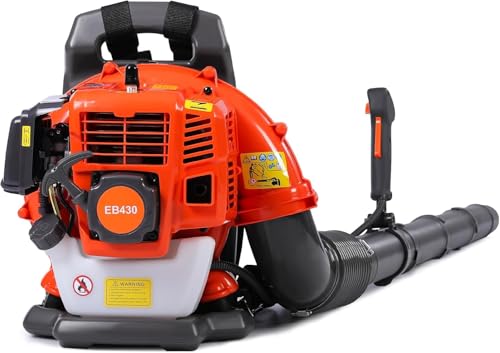
Pros
- Features a high-output Strato-Charged engine
- AutoTune carburetor provides automated fuel management
- Padded harness with waist belt and ventilated back pad
- LowVib technology helps minimize operator vibration
- Integrated service port enables quick maintenance access
Cons
- Gas engine requires routine upkeep and fuel mixing
- Bulkier footprint compared to smaller handheld units

Pros
- High-output clearing power with a rated 88 m/s maximum blowing force
- Efficient Stihl 4-MIX engine designed for large-area clearing
- Integrated Stihl anti-vibration system reduces operator strain
- Adjustable blow tube and soft-grip handle
- Wide, padded shoulder straps enhance comfort during long jobs
Cons
- Substantial total weight of approximately 23.8 pounds
- Requires ongoing small-engine fuel mixing and routine upkeep

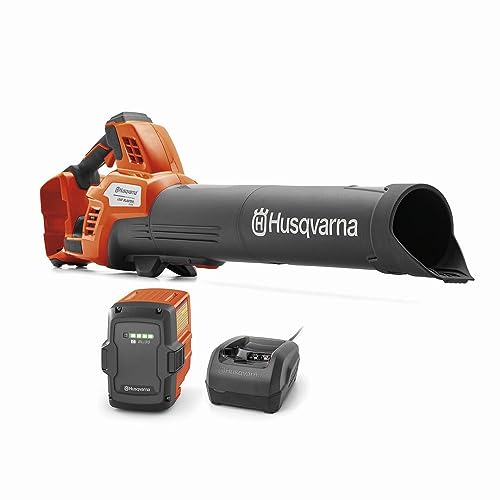
Pros
- Cordless mobility without battery runtime limitations
- Sturdy construction suited for tough yard and property clearing
- Standard handheld configuration
Cons
- Gas engine requires manual fuel mixing and regular maintenance
- Weighs 11 pounds, which is heavier than most cordless alternatives
CFM vs. MPH: The Two Numbers That Define Every Leaf Blower
Every leaf blower sold in 2026 carries two performance ratings stamped on the box, the spec sheet, or the manufacturer’s product page: CFM and MPH. These are not marketing fluff. They are the two independent variables that determine whether a blower clears your yard in 20 minutes or two hours. Understanding what each measures, and how they interact, is the single highest-leverage piece of knowledge you can bring to a purchase.
CFM (cubic feet per minute) measures air volume. It answers the question: how much air is this machine moving per minute? Think of it as the width and depth of the air stream. A higher CFM blower throws a wider, deeper column of air, which means it can push a larger pile of leaves, a broader swath of grass clippings, or a wider path of gravel in a single pass.
MPH (miles per hour) measures air velocity. It answers the question: how fast is that air leaving the nozzle? MPH determines the impact force on a single piece of debris. A higher MPH blower can dislodge wet, matted, or stuck material, think damp oak leaves plastered to a driveway, or pine needles wedged in a gutter.
The relationship between the two is not additive; it is multiplicative in effect. Air volume times air velocity equals the total work the blower can do. A blower with high CFM but low MPH moves a lot of air gently, excellent for dry, light debris on a large flat lawn. A blower with high MPH but low CFM hits hard but covers little ground, better for targeted, stubborn debris. The best all-around blowers balance both.
The Physics: Why CFM and MPH Are Not Interchangeable
To understand why you cannot simply compare two blowers by one number, you need the underlying physics. Airflow from a leaf blower is governed by the same principles that govern any fluid moving through a nozzle.
The Continuity Equation
The fundamental relationship is the continuity equation for incompressible flow:
Q = A × V
Where Q is volumetric flow rate (CFM), A is the cross-sectional area of the nozzle opening (square feet), and V is the velocity of the air at the nozzle (feet per minute). This equation tells you something critical: for a given CFM, narrowing the nozzle increases velocity proportionally, and widening the nozzle decreases velocity proportionally.
This is exactly why manufacturers offer interchangeable nozzles. A round concentrator nozzle reduces the exit area, which spikes MPH at the cost of coverage width. A flat or wide-sweep nozzle increases the exit area, which spreads the CFM over a broader path and drops MPH. The blower’s internal fan and motor determine the total CFM; the nozzle geometry determines how that CFM is distributed between velocity and coverage.
Why High CFM Does Not Guarantee High MPH
Because CFM and MPH are linked through nozzle area, a blower engineered for maximum CFM will typically have a wider exit path, which caps its MPH. Conversely, a blower engineered for maximum MPH will have a narrow exit, which limits how much air volume can pass through. This is why commercial tube blowers, the long, straight, high-velocity units used by landscaping crews, often post lower CFM numbers than backpack blowers, yet still move heavy debris effectively: their velocity is concentrated.
When you see a blower advertised at “765 CFM / 200 MPH,” that pairing represents a deliberate engineering compromise. The manufacturer has chosen a nozzle diameter and fan design that delivers both numbers simultaneously. A different nozzle on the same motor might yield 600 CFM / 250 MPH. Neither is objectively better; they serve different tasks.
Air Density and Real-World Derating
Manufacturer CFM and MPH ratings are typically measured at the nozzle under standard test conditions, sea level, still air, room temperature. In real yard conditions, several factors reduce effective output:
- Altitude: At 5,000 feet, air density drops roughly 17%. A blower rated 600 CFM at sea level may deliver closer to 500 CFM of actual mass flow at elevation, because there are fewer air molecules to move per cubic foot.
- Temperature: Hot summer air is less dense than cool autumn air. A blower tested at 70°F will move slightly more mass on a 45°F morning.
- Humidity: Water vapor is lighter than dry air. Very humid conditions marginally reduce mass flow, though the effect is small compared to altitude.
- Backpressure: Clogged intake filters, debris-packed turbine housings, or a partially blocked nozzle all restrict flow and reduce both CFM and MPH below rated values.
For practical purposes, treat published ratings as a ceiling. A well-maintained blower operating in cool, dense air at low altitude will perform close to spec. A neglected blower operating at elevation on a hot day will not.
CFM Ranges by Blower Category: What the Numbers Actually Look Like
Raw CFM numbers are meaningless without context. A 400 CFM rating is excellent for a handheld blower clearing a patio and inadequate for a commercial crew clearing a parking lot. The table below maps typical CFM and MPH ranges to blower categories and the yard tasks each is designed for.
| Blower Category | Typical CFM Range | Typical MPH Range | Best Suited For |
|---|---|---|---|
| Compact handheld (battery) | 250 to 400 | 100 to 160 | Patios, decks, driveways under 500 sq ft, light dry debris |
| Standard handheld (battery or gas) | 400 to 650 | 140 to 200 | Suburban lawns up to 1/4 acre, mixed dry leaves and clippings |
| High-performance handheld | 600 to 800 | 180 to 250 | Lawns up to 1/2 acre, moderate leaf volume, some wet debris |
| Backpack blower | 600 to 1,000+ | 150 to 250 | 1/2 acre to 2 acres, heavy leaf drop, extended runtime |
| Commercial tube blower | 750 to 1,200 | 200 to 300+ | Large properties, commercial routes, wet/heavy debris, gravel |
| Walk-behind blower | 1,500 to 3,000+ | 150 to 200 | Large flat paved areas, sports fields, parking lots |
Notice the pattern: as you move up in category, CFM scales dramatically while MPH scales more modestly. This reflects the physics, moving more air volume requires larger fans and wider exits, which naturally limits velocity. The exception is the commercial tube blower, which achieves both high CFM and high MPH through raw motor power and optimized aerodynamics.
Matching CFM to Your Yard: A Practical Sizing Framework
Choosing the right CFM is not about buying the biggest number. An oversized blower wastes battery or fuel, generates excessive noise, and can damage delicate plants or blow mulch out of garden beds. An undersized blower forces multiple passes, increasing fatigue and runtime. Use this framework:
Step 1: Measure Your Clearing Area
Walk your property and estimate the total square footage you clear regularly. Include the lawn, driveway, walkways, and any gravel or paved areas. For most residential properties:
- Under 2,000 sq ft (patios, small urban lots): 250 to 400 CFM is sufficient.
- 2,000 to 10,000 sq ft (typical suburban lot): 400 to 650 CFM handles most conditions.
- 10,000 to 40,000 sq ft (large residential or small acreage): 600 to 900 CFM, often in backpack form.
- Over 40,000 sq ft (acreage, commercial): 900+ CFM, commercial-grade equipment.
Step 2: Assess Debris Type and Moisture
CFM handles volume; MPH handles weight. Adjust your selection based on what you actually blow:
| Debris Type | Primary Metric Needed | Recommended Minimum |
|---|---|---|
| Dry, light leaves (maple, birch) | CFM | 400+ CFM, 140+ MPH |
| Wet, heavy leaves (oak, sycamore) | MPH + CFM | 500+ CFM, 180+ MPH |
| Pine needles, thatch | MPH | 160+ MPH with concentrator nozzle |
| Grass clippings (dry) | CFM | 350+ CFM |
| Grass clippings (wet) | MPH + CFM | 500+ CFM, 170+ MPH |
| Gravel, small stone | MPH | 200+ MPH, tube-style nozzle |
| Snow (light, powdery) | CFM | 600+ CFM |
| Hard-packed dirt, mud | MPH | 220+ MPH, often gas-powered |
Step 3: Factor in Runtime and Ergonomics
Higher CFM blowers draw more power. On battery platforms, a blower running at maximum CFM may deplete a 40V or 60V battery in 15 to 20 minutes. If your yard requires 45+ minutes of continuous blowing, either step up to a higher-capacity battery, choose a gas-powered unit, or select a blower with a variable-speed trigger that lets you dial back CFM for lighter sections of the yard.
Weight matters more than most buyers expect. A 900 CFM backpack blower distributes weight across your shoulders and hips, making extended use far less fatiguing than a 700 CFM handheld unit that you carry entirely in one hand. If your clearing session regularly exceeds 20 minutes, the backpack vs handheld blowers trade-off becomes decisive.
Diagnostic Matrix: Troubleshooting Low CFM Performance
If your blower feels weaker than it did when new, moving fewer leaves per pass, struggling with debris it used to handle, the problem is almost always a restriction in the airflow path, not a failing motor. Work through this matrix systematically.
| Symptom | Likely Cause | Diagnostic Test | Corrective Action |
|---|---|---|---|
| Noticeable drop in air volume across all speeds | Clogged air filter or intake screen | Remove filter; hold to light. If light does not pass through, it is blocked. | Clean with compressed air or replace. Check every 5 to 10 hours of gas blower use. |
| Blower runs but air output is weak at full throttle | Cracked or loose impeller housing, debris in turbine | Disconnect spark plug (gas) or battery. Spin impeller by hand; listen for scraping or grinding. | Clear debris from housing. Replace impeller if blades are chipped or cracked. |
| Good airflow at nozzle but poor debris movement | Wrong nozzle for the task; worn nozzle tip | Compare current nozzle to the concentrator or flat nozzle that shipped with the unit. | Swap to the appropriate nozzle. Replace nozzles that are warped or cracked. |
| CFM drops noticeably after 10 to 15 minutes of use | Battery voltage sag (cordless) or carburetor heat soak (gas) | Check battery charge level mid-session. On gas units, check for vapor lock or fuel starvation. | Rotate batteries. For gas, clean carburetor, check fuel line routing away from exhaust. |
| Blower vibrates excessively and loses power | Impeller imbalance from debris impact or bearing wear | Spin impeller; check for wobble. Inspect bearing for play. | Replace impeller and/or bearings. Do not operate with a damaged impeller. |
| Airflow is fine but blower stalls under load | Dirty spark plug, clogged fuel filter, or failing ignition (gas) | Remove spark plug; inspect electrode. Check fuel filter in tank. | Replace spark plug and fuel filter. Clean or rebuild carburetor if needed. |
Maintenance Intervals to Protect Rated CFM
A leaf blower that is maintained on schedule will hold its rated CFM for years. A neglected one can lose 20 to 30% of its airflow within a single season. Follow these intervals:
Every Use (Before and After)
- Visually inspect the intake screen and nozzle for packed debris, wet leaves, or foreign objects.
- Empty the collection bag (if equipped), a full bag creates backpressure that reduces CFM.
- Wipe down the exterior to prevent grit from migrating into seams and fasteners.
Every 5 to 10 Operating Hours
- Clean or replace the air filter. This is the single most common cause of CFM loss.
- Inspect the spark plug (gas units). Replace if the electrode is eroded or fouled.
- Check all housing screws and clamps for looseness. Vibration loosens fasteners, and air leaks at the housing reduce effective CFM.
- Inspect the impeller for chips, cracks, or embedded debris.
Every 25 to 50 Operating Hours or Annually
- Replace the air filter regardless of appearance (gas units).
- Drain and replace fuel, or stabilize fuel for storage. Old fuel degrades carburetor performance and reduces power.
- Inspect fuel lines for cracking or softening.
- For battery units, check battery contacts for corrosion and store batteries at 40 to 60% charge in a climate-controlled space.
- Lubricate or inspect the throttle cable and trigger mechanism for smooth operation.
For a deeper dive into maintaining the cutting and blowing components of outdoor power equipment, see our guide to chainsaw and outdoor tool maintenance, which covers the same principles of airflow, filtration, and impeller care that apply to blowers.
CFM, MPH, and Power Source: How Battery, Gas, and Electric Compare
The power source directly influences what CFM and MPH figures are achievable, and at what cost in weight, noise, and runtime.
Battery-Powered (Cordless)
Modern 40V and 80V lithium-ion platforms have narrowed the gap with gas significantly. Top-tier cordless handheld blowers now reach 650 to 750 CFM and 175 to 200 MPH. Backpack cordless units push past 900 CFM. The advantages are zero emissions, low noise (often under 65 dB), instant start, and minimal vibration. The trade-offs are runtime per battery charge and the upfront cost of the battery platform. If you already own a 40V or 60V tool ecosystem, a blower from the same brand is usually the most economical path. See our tested picks for the cordless leaf blowers that deliver the best CFM-per-dollar ratio in 2026.
Gas-Powered
Gas blowers still dominate commercial use because they offer unlimited runtime (as long as you carry fuel), the highest peak CFM and MPH figures, and no battery degradation over time. Two-stroke engines require mixing fuel and oil; four-stroke engines run on straight gasoline and are generally cleaner and quieter. The downsides are noise (often 70 to 80+ dB), emissions, vibration, and maintenance complexity. For a detailed breakdown of when gas still wins, read our gas or electric leaf blower comparison.
Corded Electric
Corded electric blowers are the lightest and cheapest option, typically rated 300 to 450 CFM. They are limited by cord length and require a GFCI-protected outlet. They are best for small, fixed-area tasks, a patio, a single flower bed, a garage apron, where the cord does not become a tripping hazard or a restriction on movement.
Nozzle Geometry: The Hidden Variable Behind CFM and MPH
Two blowers with identical CFM and MPH ratings can perform very differently depending on the nozzle attached. Nozzle geometry determines the shape of the air stream, which determines how effectively the CFM and MPH are applied to the debris in front of you.
Round Concentrator Nozzle
Narrows the exit path, increasing velocity and focusing the air into a tight, high-impact stream. Best for dislodging wet leaves from crevices, clearing pine needles from gutters, and moving gravel. Reduces effective coverage width.
Flat or Wide-Sweep Nozzle
Spreads the air across a broad, flat path. Maximizes the area cleared per pass, which is exactly what you want for dry leaves on an open lawn. Reduces velocity at the edges of the sweep.
Rounded or “Rounded-Tip” Nozzle
A compromise shape that provides moderate concentration with a slightly wider pattern than a pure concentrator. Good general-purpose choice for mixed debris.
Variable-Speed Trigger and Turbo Button
Most modern blowers include a variable-speed trigger that lets you modulate CFM in real time, low for delicate flower beds, high for heavy leaf piles. A turbo or boost button delivers maximum CFM and MPH for short bursts, useful for stubborn debris but draining to batteries and hard on the operator’s grip if used continuously.
Noise, Vibration, and Safety: The Metrics Spec Sheets Omit
CFM and MPH tell you how well a blower moves debris. They tell you nothing about how it affects the person operating it or the neighbors within earshot. Two additional metrics deserve attention:
Decibel Rating (dBA)
Many municipalities now enforce noise ordinances that restrict leaf blower use to specific hours or cap maximum decibel levels. Battery-powered blowers typically operate at 55 to 65 dBA at the operator’s ear; gas blowers often exceed 70 to 75 dBA. Before purchasing a gas blower, check your local regulations. The OSHA equipment safety regulations provide the federal framework for occupational noise exposure limits that commercial operators must follow.
Vibration and Ergonomics
Hand-arm vibration from gas blowers, used over hours, contributes to fatigue and, with long-term exposure, to vascular and neurological conditions in the hands. Look for anti-vibration mounts on the engine, a well-balanced tube angle, and a padded grip. If you operate a blower professionally, rotating between handheld and backpack units, or between different tools entirely, reduces cumulative strain.
Common CFM Myths, Debunked
The leaf blower market is crowded with misleading claims. Here are the most persistent ones:
Myth: “Higher CFM Always Means a Better Blower”
False. A 1,000 CFM blower is overkill for a 400 sq ft patio and will destroy mulch beds, strip bark from trees, and scatter gravel. CFM must be matched to the task. The right blower is the one whose CFM and MPH align with your debris type and clearing area, not the one with the largest number on the box.
Myth: “MPH Is the Only Number That Matters”
Also false. A blower with 250 MPH but only 200 CFM will hit a leaf hard but move very little air around it, so the leaf simply tumbles in place rather than being carried away. Velocity without volume is inefficient for bulk clearing.
Myth: “CFM Ratings Are Directly Comparable Across Brands”
Not always. Manufacturers measure CFM under different test conditions, some at the nozzle, some at the intake, some at a specified distance from the nozzle. A 600 CFM rating from one brand may not equal a 600 CFM rating from another. Where possible, compare ratings from the same testing standard, or rely on independent performance reviews rather than spec sheets alone.
Myth: “A Bigger Blower Clears Faster, Period”
Oversized blowers can actually slow you down. Excessive CFM scatters debris beyond the pile you are trying to form, forcing you to chase it. It also increases fatigue, noise complaints, and battery drain. Slightly undersized with good technique often beats oversized with poor technique.
Quick-Reference Decision Flowchart
Use this simplified decision path when you are standing in the store or browsing online:
- What is your clearing area? Under 2,000 sq ft → 250 to 400 CFM. 2,000 to 10,000 sq ft → 400 to 650 CFM. Over 10,000 sq ft → 600+ CFM, consider backpack.
- What debris do you clear most often? Dry and light → prioritize CFM. Wet, heavy, or stuck → prioritize MPH above 180.
- How long is a typical session? Under 20 minutes → handheld is fine. Over 20 minutes → backpack or high-capacity battery.
- What is your power source preference? Quiet, low-maintenance, small-to-mid yard → battery. Large area, commercial use, unlimited runtime → gas. Fixed small area → corded.
- Are there local noise restrictions? Yes → prioritize battery (under 65 dBA). No → gas is viable.
- Do you already own a battery platform? Yes → buy within that ecosystem to avoid buying a second battery.
Common Questions on What Does Cfm Mean In Leaf Blowers Answered
Is 400 CFM enough for leaf blowing?
For small patios, decks, and urban lots under 2,000 sq ft with dry, light debris, yes. For a typical suburban lawn with heavy autumn leaf drop, 400 CFM will require multiple passes and will struggle with wet leaves. Most homeowners find 500 to 650 CFM the practical minimum for a standard residential yard.
What CFM do professional landscapers use?
Commercial crews typically run backpack or tube blowers rated 700 to 1,200 CFM with MPH figures of 200 to 300+. These units are designed for all-day use, heavy debris, and large properties where time per site directly affects profitability.
Does CFM matter more than MPH for wet leaves?
Both matter, but MPH becomes more important as moisture increases. Wet leaves are heavier and adhere to surfaces, so you need velocity to break them loose. Once dislodged, CFM determines how quickly they are pushed into a pile. Look for a blower that pairs 500+ CFM with 180+ MPH for reliable wet-leaf performance.
Can I increase my blower’s CFM?
You cannot increase the motor’s rated CFM, but you can restore lost CFM by cleaning or replacing the air filter, clearing debris from the intake and impeller housing, sealing air leaks at the housing, and using the correct nozzle for the task. A well-maintained blower will perform at or near its rated CFM for years.
Why do two blowers with the same CFM perform differently?
Because CFM alone does not describe the air stream’s shape or velocity. Nozzle geometry, MPH rating, air stream concentration, and how the manufacturer measured CFM all differ between models. Always compare CFM and MPH together, and consider the nozzle options included.
<!– /For general background on voluntary safety standards, see the American National Standards Institute (ANSI).
Related Maintenance and Operating Guides
To keep your equipment running at peak operating efficiency, explore our related technical walkthroughs and maintenance tutorials:
- Consult our detailed breakdown on tolooc leaf blower.