What Is a Snow Blower? The Direct Answer
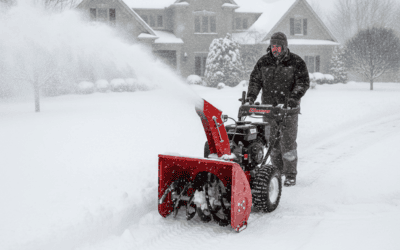
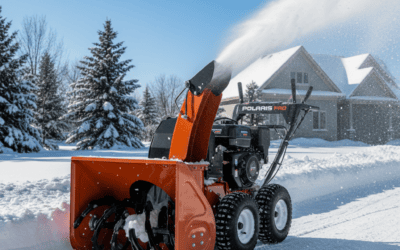
A snow blower is a machine used to remove snow from outdoor surfaces like driveways, sidewalks, and roads. It typically uses an auger to collect snow and a chute to discharge it away from the cleared area. Instead of relying on manual shoveling, a snow blower powers through snow and throws it to the side, clearing a path quickly and with far less physical effort.
If you live in an area that gets heavy winter snowfall, a snow blower can turn a 45-minute shoveling session into a 10-minute task. These machines come in a range of sizes, from lightweight electric models for small city stoops to large, self-propelled gas-powered units built for long gravel driveways. But regardless of the size, the core idea is the same: gather snow, move it, and discharge it out of the way.
Understanding the Snow Blower: Core Function and Mechanism
What Is the Primary Purpose of a Snow Blower?
The primary purpose of a snow blower is to remove accumulated snow from a surface so that it can be safely walked on or driven on. Snow left on driveways, sidewalks, and walkways becomes a slipping hazard, and heavy accumulation can block garage doors, mailboxes, and entry points. A snow blower clears these surfaces efficiently, moving snow laterally so the cleared area stays usable.
Beyond simple clearing, snow blowers also save the user from the physical strain of lifting heavy, wet snow. Repeatedly bending, scooping, and throwing snow with a shovel is a common cause of back injuries and even cardiac strain in winter months. A snow blower removes that burden by doing the heavy lifting mechanically.
How Does a Snow Blower Mechanically Work to Remove Snow?
A snow blower works through a simple mechanical sequence that repeats dozens of times per second:
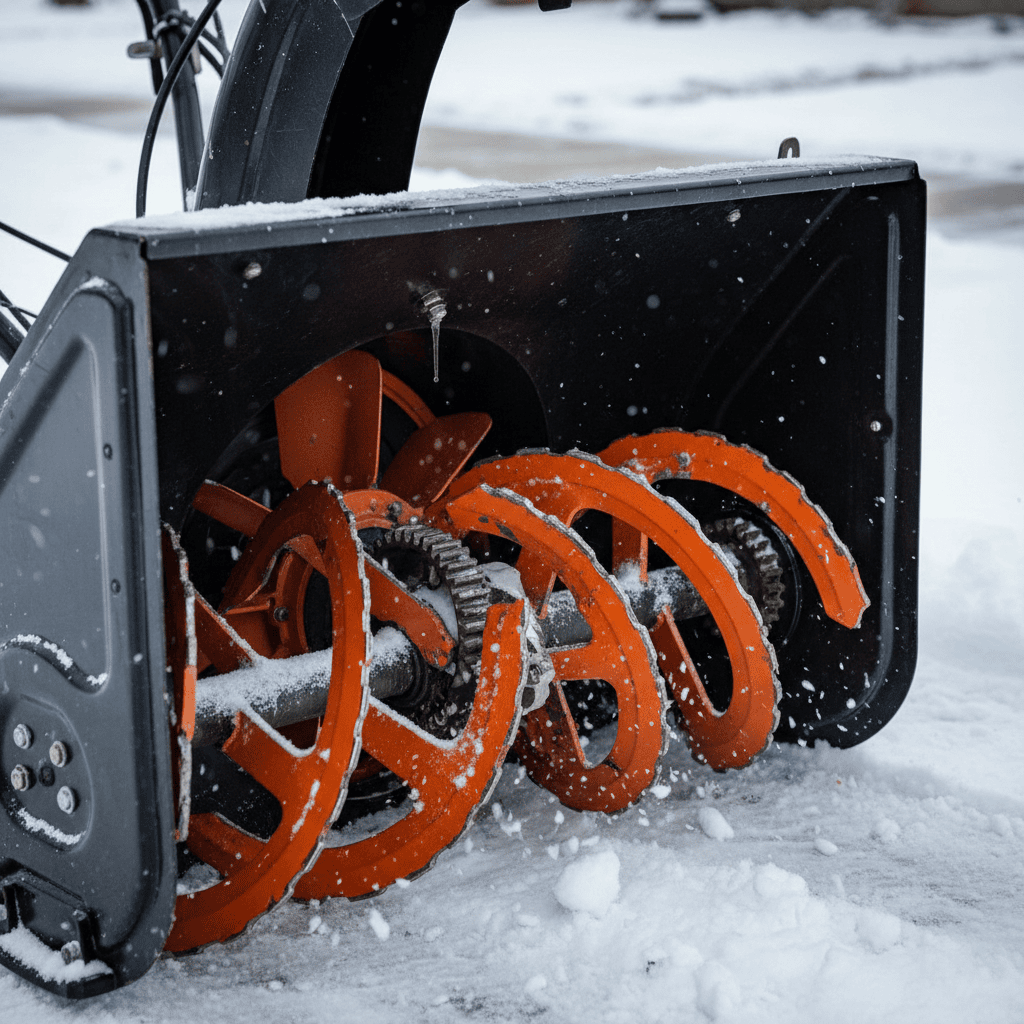
- Intake: The machine is pushed or self-propelled forward over the snow. A rotating auger at the front of the machine scoops snow up from the ground, much like the blade of a fan pulling in air.
- Transfer: The collected snow is moved toward the center of the auger housing. In two-stage and three-stage machines, an additional component called an impeller or accelerator takes the snow and spins it at high speed.
- Discharge: The high-speed snow is forced through a discharge chute, which is the tube that projects out the top or side of the machine. The chute can usually be adjusted to control the direction and distance of the throw, letting you aim snow to the left, right, or straight ahead.
The result is a continuous stream of snow being lifted, spun, and launched clear of the surface you are clearing. The machine’s power source—electric or gas—drives the auger and impeller, while the wheels or tracks propel the unit forward.
What Are the Key Components of a Snow Blower?
Understanding the components helps you evaluate any snow blower you consider, and it also helps with troubleshooting when something goes wrong. The main parts are:
- Auger: The corkscrew-shaped blade at the front that digs into the snow and pulls it inward. On single-stage machines, the auger touches the ground and does the throwing work as well.
- Impeller or accelerator: A high-speed fan or paddle inside the housing that flings the snow up and out through the chute. Found on two-stage and three-stage machines.
- Discharge chute: The tube through which snow is ejected. Most chutes rotate 180 to 200 degrees and can be angled to control throw direction.
- Chute control: A handle, crank, or joystick that adjusts the chute direction and sometimes the deflector angle (which controls how high and far the snow is thrown).
- Skid shoes: Wear-resistant pads on the sides of the housing that let you adjust the clearance height between the auger and the surface below.
- Auger housing: The curved shell that wraps around the auger and directs snow into the impeller.
- Drive system: The wheels, tires, tracks, or electric motor that move the machine. Self-propelled models use a friction disc or hydrostatic transmission to control speed.
- Primer and electric start: Features that help you start a gas engine in cold weather. Many modern gas models offer push-button electric start to avoid pulling a cord in freezing temperatures.
Snow Blower vs. Snow Shovel: Key Differences
The most direct comparison is between a snow blower and a manual snow shovel, because both exist to do the same job. The differences come down to effort, speed, cost, and the amount of snow each can handle.
Why Would Someone Choose a Snow Blower Over a Snow Shovel?
People choose a snow blower when the snowfall is too heavy, the surface is too large, or the physical effort is too demanding for a shovel. A standard 21-inch shovel moves only a few pounds of snow per scoop; a snow blower moves hundreds of pounds per minute. For a two-car driveway after an 8-inch snowfall, a shovel could take over an hour of strenuous work, while a snow blower can finish in 10 to 20 minutes.
A snow blower is also the practical choice for people who want to avoid the health risks of heavy shoveling. The American Heart Association and other health organizations frequently warn that shoveling snow, especially wet, heavy snow, can trigger heart attacks because of the sudden spike in blood pressure and heart rate. A snow blower eliminates nearly all of that exertion.
What Are the Main Advantages of Using a Machine for Snow Removal?
- Speed: A snow blower clears a surface several times faster than shoveling.
- Less physical strain: The machine does the lifting and throwing; the operator only guides it.
- Handles deep snow: Two-stage and three-stage models chew through snow depths that would be impossible to shovel.
- Consistent results: Machines clear closer to the pavement and leave a more even surface than a shovel.
- Wider clearing path: Most snow blowers cut a path of 21 to 45 inches wide, versus the 18 to 24 inches of a shovel blade.
| Feature | Snow Shovel | Snow Blower |
|---|---|---|
| Power source | Manual effort | Electric or gas engine |
| Time to clear a 2-car driveway | 45–90+ minutes | 10–25 minutes |
| Best for snow depth | Up to 4–6 inches of light snow | 6 inches to 3+ feet depending on type |
| Physical exertion | High | Low to moderate |
| Storage footprint | Minimal | Large, needs garage or shed space |
| Upfront cost | $30–$80 | $150–$2,500+ |
| Maintenance | None | Regular (engine, auger, shearbolts) |
That said, a shovel is still a better choice for a tiny balcony, a single doorstep, or areas where storing a bulky machine is impossible. Many homeowners keep both: a snow blower for the driveway and a shovel for steps, porches, and tight spaces.
Main Types of Snow Blowers
Snow blowers are classified by their number of stages, which refers to how many powered steps are used to move and throw the snow. This is the single most important specification to understand, because it determines what the machine can handle.
Single-Stage Snow Blowers
A single-stage snow blower uses one powered component: the auger. The auger both scoops the snow and throws it through the chute. Because there is no separate impeller, these machines are lighter, more compact, and less expensive than multi-stage models.
Single-stage machines are best suited to packed snow and depths up to about 8 inches on paved surfaces. The auger typically touches the ground, scraping the surface as it spins, which makes these units effective on driveways and sidewalks but not on gravel, where the auger would pick up and throw stones. Most single-stage units are powered by a standard 120-volt extension cord, though a few gas-powered single-stage models exist.
Two-Stage Snow Blowers
A two-stage snow blower adds a powered impeller that catches the snow from the auger and flings it through the chute at high speed. This design lets the machine throw snow much farther (typically 20 to 40 feet) and, crucially, lets the auger ride above the ground on skid shoes.
Because the auger is elevated, a two-stage machine can be used on gravel driveways without scooping up stones. The larger engine and wider auger allow it to handle 8 to 18 inches of snowfall easily. Most two-stage machines are gas-powered and self-propelled, with clearing widths from 24 to 32 inches. They are the most popular choice for homeowners with full-size driveways in snowy regions.
Three-Stage Snow Blowers
A three-stage snow blower takes the two-stage design and adds an accelerator, a second high-speed paddle that breaks up the snow before it reaches the impeller. This increases the machine’s intake speed and throwing distance.
Three-stage machines are the heavy-duty option, designed for deep, wet, or heavy snow and exceptionally long driveways. They clear wider paths (32 to 45 inches), move snow faster, and are built with the largest engines. They are also the heaviest and most expensive category, so they are generally only worth the investment for homeowners who face frequent heavy storms or very large clearing areas.
| Characteristic | Single-Stage | Two-Stage | Three-Stage |
|---|---|---|---|
| Number of powered stages | 1 (auger) | 2 (auger + impeller) | 3 (auger + accelerator + impeller) |
| Best snow depth | Up to 8 inches | 8–18 inches | 18 inches and deeper |
| Suitable surfaces | Paved only | Paved and gravel | Paved and gravel |
| Typical clearing width | 18–22 inches | 24–32 inches | 32–45 inches |
| Power source | Mostly electric | Mostly gas | Gas |
| Relative cost | $ | $$ | $$$ |
Snow Blower vs. Snow Thrower: What’s the Difference?
The terms “snow blower” and “snow thrower” are often used interchangeably, but they can refer to slightly different things. A snow thrower is typically a single-stage machine that uses a fast-spinning auger or paddle to throw snow in one motion. A snow blower, in the strictest sense, has an internal mechanism that blows snow through the chute using an impeller, which describes two-stage and three-stage machines. In everyday conversation, however, most people call any powered snow-clearing machine a snow blower, and manufacturers use the terms loosely in their marketing.
When you are shopping, pay attention to the stage count rather than the product name. A machine labeled a “snow thrower” will usually be a light-duty, single-stage unit, while a machine labeled a “snow blower” will usually be a heavier two-stage or three-stage model capable of handling deeper snow.
Common Uses and Ideal Surfaces
On What Types of Surfaces Is a Snow Blower Typically Used?
- Driveways: The most common use. Gravel driveways should be cleared with two-stage or three-stage machines that keep the auger elevated.
- Sidewalks and walkways: Single-stage electric machines excel here because they are narrow, light, and easy to maneuver.
- Patios, decks, and porches: Light electric models can clear these without damaging surfaces, as long as the auger height is set correctly.
- Parking lots and commercial lots: Large commercial-grade units clear wide paths across big paved areas.
- Farm paths and rural roads: Heavy-duty machines with tracks or extra-wide augers handle unimproved surfaces and deep drifts.
What Are the Most Common Scenarios for Using a Snow Blower?
The most common scenario is the morning-after snowfall: the driveway is buried in 6 to 12 inches of snow, and the homeowner needs to get to work or get the car out. A snow blower clears the driveway, walkway, and a path to the mailbox in a single session. Another common scenario is clearing an end-of-driveway snowbank left by a municipal plow; these banks are often packed, heavy, and taller than a person can shovel, but a two-stage or three-stage blower breaks them apart with ease.
Snow blowers also get frequent use during long winters with repeated small storms. A model that clears a 22-inch path can handle the constant “nuisance” snowfalls of 3 to 5 inches, while a wider machine reduces the number of passes needed and saves time across an entire season.
How to Choose the Right Snow Blower for Your Situation
Choosing a snow blower is not about finding the most expensive model; it is about matching the machine to your property and climate.
Factors to Consider
- Your region’s snowfall: If you get less than 12 inches a year, a single-stage electric model is plenty. If you regularly see storms over 8 inches, move to a two-stage machine.
- Surface type: Gravel or loose stone means you need an auger that rides above the ground, which points to a two-stage or three-stage machine.
- Driveway length: A long driveway (over 100 feet) benefits from a self-propelled two-stage unit. A short driveway or sidewalk can be handled by a lighter electric model.
- Physical ability: Electric single-stage machines are light (30–50 lb) and easy to start. Heavy two-stage units weigh 150–300 lb and need strength and space to maneuver.
- Power availability: Electric models need a nearby outdoor outlet and a heavy-gauge extension cord. Gas models are cord-free but require fuel, oil changes, and seasonal maintenance.
- Storage: Gas machines take up significant garage or shed space and require a level, ventilated storage area.
Gas vs. Electric: A Quick Comparison
| Factor | Electric | Gas |
|---|---|---|
| Best for | Small paved areas, light snow | Large areas, heavy/deep snow |
| Startup | Push button (instant) | Electric start or pull cord |
| Maintenance | Minimal | Oil changes, spark plugs, fuel stabilizer |
| Noise level | Low | High |
| Emissions | None at point of use | Gasoline exhaust |
| Run time | Limited by cord or battery | As long as fuel lasts |
Snow Blower Maintenance and Safe Operation Tips
A well-maintained snow blower starts easily and lasts for 10 to 15 years or more. The maintenance habits that matter most are straightforward:
- Check the auger and skid shoes: These parts wear against the ground. Replace them before they wear down to the housing.
- Use fresh fuel: Gas left in the tank over the summer degrades. Add fuel stabilizer or drain the tank before warm weather arrives.
- Change the oil annually: Gas machines use small engines that need regular oil changes, usually once a season.
- Clear the chute before starting: Snow stuck in the chute can clog the machine on startup.
- Never clear a clog with your hands: If the chute jams, turn the machine off and wait for the auger to stop completely before using a tool to clear the blockage.
- Shear bolts are your friend: When you hit a hidden object like a curb or ice chunk, the shear bolts snap intentionally to protect the auger. Keep spares on hand.
Frequently Asked Questions
Can a snow blower throw snow far enough to keep my driveway clear?
Yes. Single-stage electric models typically throw snow 10 to 20 feet, while two-stage and three-stage gas models launch snow 20 to 45 feet. If you need to clear a wide driveway into a lawn or bank, aim the chute downwind and use the deflector to control distance.
Can I use a snow blower on gravel?
You can, but only with a two-stage or three-stage machine. These models keep the auger elevated on skid shoes, so gravel stays put. A single-stage machine should only be used on paved surfaces because its auger scrapes the ground and will throw stones.
How much does a snow blower cost?
Entry-level electric single-stage models run from $150 to $400. Mid-range two-stage gas machines cost $600 to $1,500, and large three-stage units with wide clearing paths run $1,500 to $2,500 or more. Your choice should be driven by snowfall depth and clearing area, not just price.
Do I need a snow blower if I only have a small sidewalk?
Not necessarily. A snow shovel can handle short walks and light snow. But if you have a driveway over 30 feet, experience several 6-inch storms each winter, or want to avoid the physical strain of shoveling, a compact single-stage snow blower will save substantial time and effort.
Conclusion
So, what is a snow blower? In short, it is a powered machine that collects snow with an auger and discharges it through a chute, clearing driveways, sidewalks, and roads far faster and with much less physical effort than shoveling. The right choice for you depends on your property: a lightweight electric single-stage model for small paved areas and light snow, a self-propelled two-stage gas machine for standard driveways and gravel surfaces, or a wide, powerful three-stage unit for deep snow and large clearing jobs. Whichever type you choose, understanding the auger, chute, and stage system means you can pick a machine that matches your winter conditions and keeps your property clear all season.