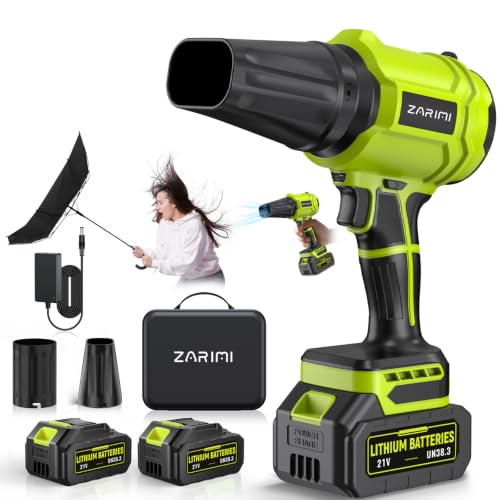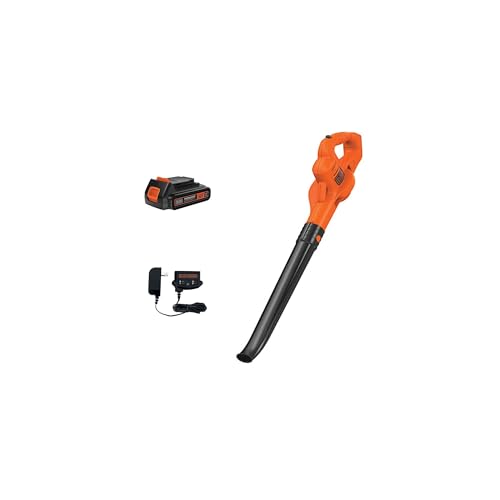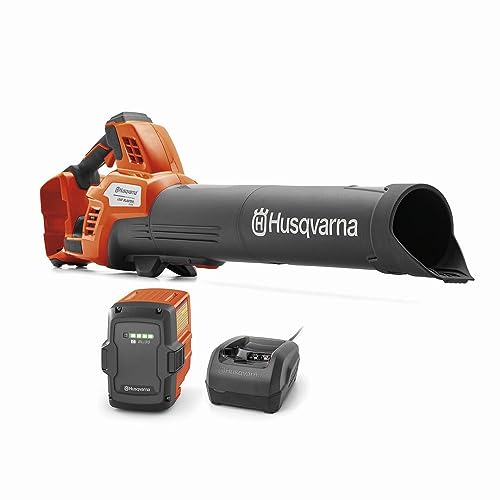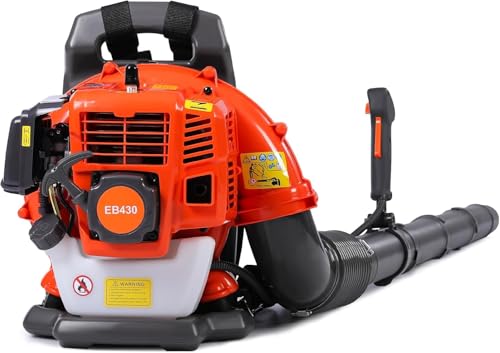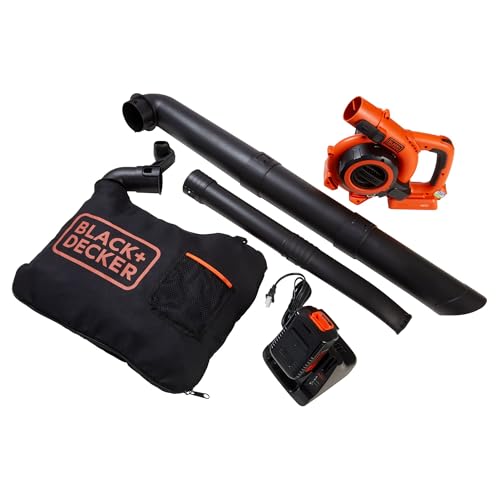
Quick Answer: What Is CFM On A Leaf Blower
CFM (cubic feet per minute) measures the volume of air a leaf blower moves per minute. Higher CFM means more air volume to clear larger debris piles. Typical residential ranges: 200–400 CFM for small yards, 400–700 CFM for medium yards, 800+ CFM for commercial use. CFM differs from MPH, which measures airspeed force.
Pros
- Produces up to a rated 765 CFM of blowing power
- Variable-speed trigger offers customizable air delivery
- Includes a 56V 5.0Ah battery and matching charger
Cons
- High-output operation can significantly reduce runtime per charge
- 5.0Ah battery adds noticeable weight for single-handed work
Pros
- M18 FUEL system utilizes dual battery power for high output
- Cordless design offers unrestricted portability across large areas
- Integrates with the Milwaukee M18 tool ecosystem
Cons
- Tool only; requires two M18 batteries and a charger sold separately
- Dual batteries increase overall handheld carrying weight
Pros
- Offers up to a manufacturer-rated 700 CFM air volume
- Brushless motor ensures efficient power delivery
- Includes a 4.0Ah battery and rapid charger
Cons
- The 60V battery pack adds weight during extended handheld use
CFM Definition and Core Physics
CFM stands for cubic feet per minute. It quantifies the volumetric flow rate of air expelled from your leaf blower’s nozzle in a single minute. When a manufacturer specifies “600 CFM,” they mean the blower displaces 600 cubic feet of air every 60 seconds under standard testing conditions.
The measurement operates independently of air velocity. A blower moving 600 cubic feet at low speed generates different clearing performance than one moving 400 cubic feet at high speed. CFM answers one specific question: How much air volume passes through the nozzle?
How CFM Is Measured
Manufacturers test CFM using an anemometer—a calibrated instrument that captures volumetric airflow at the nozzle exit. Testing occurs under controlled laboratory conditions with the blower at full throttle, nozzle unobstructed. Real-world performance may vary based on engine load, fuel quality, and air density.
CFM vs. MPH: The Critical Distinction
CFM and MPH measure different variables and cannot be converted between one another. Understanding this distinction prevents purchasing mistakes.
| Specification | Meaning | Best Use Case | Typical Range |
|---|---|---|---|
| CFM (Volume) | Air volume moving per minute | Clearing large leaf piles; covering wide areas | 200–3,000 CFM |
| MPH (Velocity) | Airspeed at nozzle exit | Dislodging wet, heavy, or stuck debris | 90–240 MPH |
Practical example: Blower A has 700 CFM at 150 MPH; Blower B has 500 CFM at 200 MPH. Blower A clears more total area per minute but may struggle with matted, wet leaves. Blower B concentrates force into a tighter stream, better for stubborn debris on smaller surfaces.
CFM Sizing Guide by Yard Type
Small Residential Yards (Under 1/4 Acre)
Recommended CFM: 200–400
- Suitable for light debris, gravel driveways, small patios
- Cordless models dominate this category
- Lower noise output (typically 75–85 dB)
- Lighter weight (4–8 lbs handheld)
Medium Residential Yards (1/4 to 1 Acre)
Recommended CFM: 400–700
- Handles dry to moderately damp leaves efficiently
- Covers larger surface areas in fewer passes
- Gas or premium cordless models recommended
- Suitable for driveways, patios, and lawn perimeters
Large Residential/Small Commercial (1+ Acre)
Recommended CFM: 700–1,200
- Required for high-volume fall cleanup
- Gas-powered backpack models standard
- Higher fuel consumption; 2–4 hour runtime typical
- Handles wet, matted debris with sufficient CFM + MPH balance
Commercial/Landscape Operations (Crews)
Recommended CFM: 1,000–3,000+
- Industrial-grade backpack and truck-mounted units
- Continuous operation across multiple properties
- Specialized air intake and engine cooling systems
- Fuel efficiency and weight management critical for daily crews
How CFM Impacts Real-World Performance
Air Volume and Coverage Area
Higher CFM enables faster ground coverage. A 700 CFM blower clears a 30-foot-wide swath in fewer passes than a 400 CFM unit on the same surface. This compounds over multiple properties—a landscaper using 1,000+ CFM reduces labor hours significantly.
Pile Consolidation Speed
CFM directly correlates to debris accumulation rate. High CFM pushes more leaves toward collection points. A 600 CFM blower consolidates a 20-foot leaf pile in 10–15 minutes; a 300 CFM blower requires 25–35 minutes on identical debris.
Debris Type Limitations
CFM alone does not guarantee performance on all debris types:
- Dry leaves: 400 CFM sufficient
- Wet/damp leaves: Require 600+ CFM plus 150+ MPH
- Pine needles/small twigs: 300+ CFM, lower MPH acceptable
- Matted, composted leaves: 800+ CFM + 180+ MPH recommended
- Heavy gravel/mulch: 600+ CFM required; risk of engine strain
Technical Factors Affecting Actual CFM Output
Engine Condition and Maintenance
- Air filter clogging: Reduces CFM by 10–25%; clean before each season
- Spark plug fouling: Causes incomplete combustion; replace annually (gas models)
- Fuel degradation: 30-day-old fuel loses octane; use fresh fuel in sealed containers
- Battery degradation (cordless): Cells lose 15–20% capacity per year; impacts power delivery
Environmental Conditions
- High altitude: Lower air density reduces CFM 2–5% per 1,000 feet above sea level
- Temperature: Cold air denser; hot air thinner; affects flow rates
- Humidity: Minimal direct impact; affects fuel combustion efficiency
Nozzle Design and Obstruction
- Nozzle diameter: Smaller nozzles concentrate flow; larger nozzles disperse
- Debris accumulation: Partial clogs reduce CFM 15–40%; inspect nozzle regularly
- Duct damage: Cracks or holes bypass air; repair or replace ducts
Maintenance Intervals to Preserve CFM
Choosing Between High CFM and High MPH
Prioritize CFM If:
- Your property has large leaf-fall volume (1+ acres)
- You work with primarily dry debris
- Speed of coverage matters more than stubborn debris removal
- Budget constraints limit you to one strong spec
- You own a cordless leaf blower with battery limitations
Prioritize MPH If:
- Your yard accumulates wet, matted, or heavy debris
- Debris removal (not consolidation) is the primary task
- You handle smaller surface areas but need aggressive clearing
- You work with gravel, mulch, or mixed debris types
Balanced Approach:
Most professionals recommend seeking blowers with both strong CFM (600+) and solid MPH (150+). This combination handles dry consolidation and wet debris removal. Check the gas or electric leaf blower comparison to evaluate fuel type trade-offs in CFM/MPH delivery.
CFM Comparison Across Blower Types
Diagnostic Matrix: When CFM Is the Problem
If your blower feels underpowered, use this matrix to isolate whether CFM decline is the cause:
Safety and Regulatory Considerations
Higher CFM blowers generate more noise and vibration, affecting operator safety and legal compliance:
- Noise levels: 200–400 CFM ≈ 75–80 dB; 700–1,200 CFM ≈ 85–95 dB
- Local ordinances: Many municipalities restrict blower use to 85 dB or enforce specific operating hours
- OSHA equipment safety regulations: Require hearing protection above 85 dB and operational training for commercial crews; see OSHA equipment safety regulations
- Vibration exposure: Extended use of high-CFM gas blowers may cause hand-arm vibration syndrome; rotate operators on large crews
Cost-to-CFM Efficiency Analysis
CFM-per-dollar varies significantly across market segments:
- Budget cordless (under $150): 1–2 CFM per dollar; short runtime
- Mid-range cordless ($200–$400): 1–1.5 CFM per dollar; balanced runtime
- Premium gas handheld ($300–$500): 1.5–2 CFM per dollar; fuel costs ongoing
- Commercial backpack ($1,000+): 0.8–1.2 CFM per dollar; durability and support factored in
For homeowners, mid-range cordless models (400–600 CFM) offer best value. For professionals, higher CFM density in backpack models justifies premium cost via faster job completion.
Maintenance of Outdoor Equipment Beyond Leaf Blowers
Understanding CFM principles applies to other outdoor tools. Proper maintenance of chainsaw and outdoor tool maintenance ensures peak performance across your equipment arsenal, similar to how air filter and fuel system care maximizes blower CFM.
To compare alternatives and performance metrics, read our evaluation of where can i buy a leaf blower.
Key Takeaways
- CFM (cubic feet per minute) measures air volume, not velocity or force
- Typical residential CFM ranges: 200–400 (small), 400–700 (medium), 700+ (large/commercial)
- CFM and MPH serve different functions; both matter for complete debris handling
- Air filter, fuel quality, and nozzle cleanliness directly impact real-world CFM output
- Maintenance intervals preserve CFM; neglect causes 10–40% performance loss
- High-CFM blowers require noise compliance verification and operator safety protocols
- Match CFM to yard size and debris type; balanced CFM + MPH outperforms either metric alone