Quick Answer
The most powerful battery leaf blowers are backpack models with high airflow and airspeed, since they move more debris per pass than handhelds. Runtime under heavy load matters too, so check how long a charge lasts on turbo mode. Compare airflow, airspeed, and battery platform before buying, and choose a model you can use comfortably for the full job.
Pros
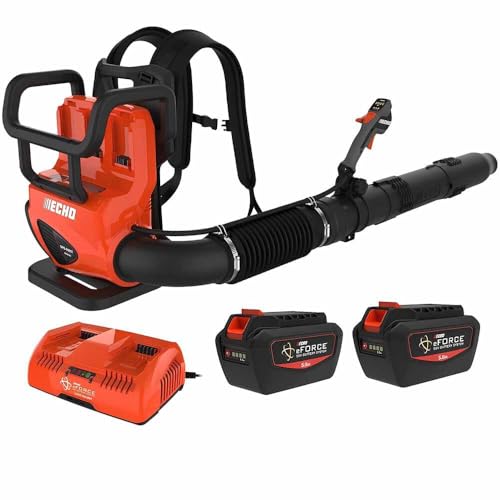
- Rated up to 195 MPH air speed and 795 CFM volume
- Includes two 56V 5.0Ah lithium-ion batteries
- Comes with a dual-port rapid charger
- Backpack layout with integrated tube throttle
Cons
- Bulky 12 x 31 x 23 inch frame requires ample storage space
- Heavier form factor compared to handheld blowers

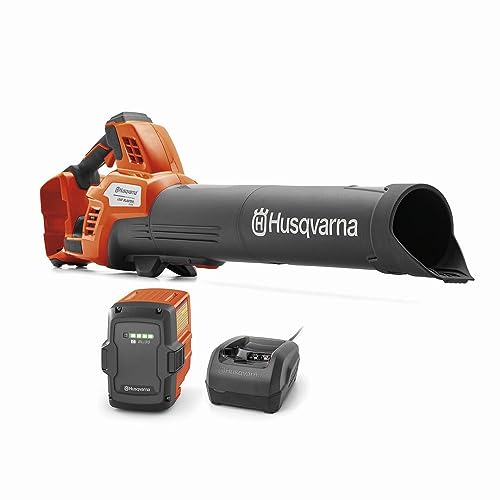
Pros
- Turbo mode delivers up to 600 CFM and 145 MPH
- Includes 56V 7.5Ah battery and charger
- Offers up to 180 minutes of runtime on low settings
- Quiet operation rated at 64 dB
- Variable speed control mounted on the handgrip
Cons
- Bulkier footprint than handheld blowers
Why “Most Powerful” Is a Physics Question, Not a Marketing One
Manufacturers quote three numbers, and shoppers routinely pick the wrong one. CFM (cubic feet per minute) measures air volume, how much leaf mass you can move per second. MPH (miles per hour) measures air velocity, how hard that air hits a wet, matted pile. Runtime determines whether you finish the yard or swap batteries at the curb. A blower rated 450 CFM at 130 MPH moves more leaves than one rated 700 CFM at 90 MPH, because leaf mass scales with volume, not speed.
The correct comparison metric is effective throw, which is why independent testers build “cannon” rigs that measure how far a standardized pile of material travels. That is the number that separates a patio sweeper from a driveway-clearing machine.
The Power Hierarchy: Where Battery Stands in 2026
Modern battery blowers have closed the gap with gas. High-end cordless units now match or exceed small-engine handhelds in airspeed and volume, without fuel mixing, carburetor cleaning, or pull-start fatigue. The remaining gas advantage is sustained runtime under load, a 2-stroke blower runs until the tank is empty; a battery blower derates as voltage sags.
Tier Breakdown by Measured Capability
| Tier | CFM Range | Airspeed | Best For |
|---|---|---|---|
| Pro Backpack (120V-class) | 750 to 1000+ | 200 to 250 MPH | Acre-plus lots, wet oak leaves, commercial routes |
| High-End Handheld (80V) | 600 to 750 | 150 to 180 MPH | Large suburban yards, driveway edges |
| Mid-Range Handheld (56V-60V) | 450 to 600 | 120 to 150 MPH | Typical 1/4 to 1/2 acre residential |
| Compact / Budget (20V-40V) | 250 to 400 | 90 to 120 MPH | Patios, decks, light debris |
The Physics of Air Movement: Why Nozzle Design Matters
Air leaving the nozzle obeys conservation of momentum. A narrower nozzle concentrates the same airflow into a smaller cross-section, raising velocity but reducing the swept area per pass. A wider “scraper” nozzle does the opposite, it lifts a broad mat of leaves at lower speed. The most powerful blower is therefore the one with both high CFM and a variable-speed trigger that lets you trade velocity for volume in real time.
Practical implication: if your yard has heavy, wet, interlocked leaves (maple, oak, sycamore), prioritize CFM and a flat scraper nozzle. If you have dry pine needles and gravel, prioritize MPH and a concentrator tip.
Diagnostic Matrix: Choosing the Right Power Class
| Symptom / Yard Condition | Root Cause | Required Power Class |
|---|---|---|
| Leaves won’t lift off wet grass | Insufficient CFM to break surface tension | 600+ CFM, 80V class |
| Blower “bogs down” mid-job | Voltage sag under load; undersized battery | Higher Ah battery or 2-battery backpack |
| Operator fatigue before job done | Weight + vibration, not lack of power | Backpack harness, tube-mounted controls |
| Debris scatters instead of moving | Too much MPH, too little CFM | Wider nozzle, lower speed setting |
| Neighbor complaints / HOA fines | Noise, not power | 60 to 68 dB rated unit on medium |
Runtime Math: Sizing the Battery for the Yard
Runtime is not a fixed number, it is a function of speed setting, ambient temperature, and battery chemistry. A blower rated “22 minutes on medium” may deliver 8 to 10 minutes on turbo. Turbo mode draws maximum current, which raises internal resistance losses and shortens effective runtime disproportionately.
Actionable sizing rule: Estimate your yard’s leaf volume in cubic yards. Divide by the blower’s effective clearing rate (roughly 1 CFM ≈ 0.0002 cubic yards per minute at residential settings). Add a 25% buffer for battery derating in cold weather. If the result exceeds one battery’s runtime, buy a second battery or step up to a backpack platform with dual packs.
Step-by-Step: Testing a Blower Before You Commit
Step 1, The Wet Leaf Test
Wait for a damp morning. Wet leaves are the honest benchmark. If the blower cannot lift a matted layer off turf at medium speed, it will not handle a real autumn yard.
Step 2, The Throw Distance Test
Mark distances at 10, 20, and 30 feet. Blow a standardized pile of dry leaves and record how far it travels before settling. This mirrors the “cannon” methodology independent testers use and exposes inflated CFM claims.
Step 3, The Runtime Under Load Test
Run the blower on turbo continuously with a stopwatch. Note when airflow visibly drops, that is the true usable runtime, not the manufacturer’s medium-setting figure.
Step 4, The Ergonomic Check
Hold the unit at working height for five minutes. Check trigger reach, battery balance, and whether the tube-mounted controls are reachable with gloves. Power is irrelevant if you quit at minute twelve.
Maintenance Intervals for Maximum Power Retention
| Interval | Task | Why It Preserves Power |
|---|---|---|
| Every use | Clear intake vents of dust and debris | Restricted airflow reduces CFM by up to 20% |
| Monthly | Inspect and clean the fan/impeller housing | Buildup unbalances the rotor and raises vibration |
| Seasonally | Check battery contacts for corrosion | Corroded terminals increase resistance and cause voltage sag |
| Storage (winter) | Store batteries at 40 to 60% charge, 50 to 77°F | Prevents capacity loss and extends cycle life |
| Annual | Replace worn scraper nozzles and tubes | Cracked nozzles leak air and reduce effective velocity |
For a deeper dive into keeping outdoor power equipment at peak output, see our guide to chainsaw and outdoor tool maintenance.
Handheld vs. Backpack: The Real Power Trade-Off
Handheld blowers have improved dramatically, but backpack units still win on sustained power because they carry larger battery packs and move the weight to your shoulders. If your property exceeds half an acre or you clear leaves weekly, a backpack platform is the correct engineering choice. For tighter spaces and quick jobs, a high-CFM handheld is more maneuverable.
We break down the full ergonomic and performance comparison in backpack vs handheld blowers.
Battery vs. Gas: The Honest Comparison
Battery blowers win on noise, emissions, maintenance, and cold-start reliability. Gas blowers still win on unlimited runtime and, in some cases, peak sustained CFM. For most homeowners, the maintenance-free ownership experience outweighs the runtime gap, especially as battery platforms expand. Our detailed breakdown covers fuel costs, noise ordinances, and long-term ownership in gas or electric leaf blower comparison.
Noise, Regulations, and Community Standards
Many municipalities now restrict gas blower usage by decibel level, time of day, or outright ban. California has banned sales of new gas-powered leaf blowers, and towns like Arlington, Massachusetts limit gas blowers to 30 minutes of operation with mandatory breaks. Battery blowers rated 60 to 68 dB on medium typically comply with the strictest ordinances. Always verify local rules before purchasing, a powerful blower you cannot legally operate is a wasted investment. Reference OSHA equipment safety regulations for workplace noise exposure limits if you operate commercially.
Related Maintenance and Operating Guides
To keep your equipment running at peak operating efficiency, explore our related technical walkthroughs and maintenance tutorials:
- Consult our detailed breakdown on stihl leaf blowers bg 50.
Final Verdict: Choosing the Right What Is The Most Powerful Battery Operated Leaf Blower
The most powerful battery-operated leaf blower is the highest-CFM unit your yard, budget, and local noise rules can support. For most homeowners, that means an 80V-class handheld in the 600 to 750 CFM range. For large properties and wet-leaf conditions, a 120V-class backpack blower rated 750 to 1000 CFM is the correct tool. Prioritize CFM over MPH, verify runtime under load, and invest in a second battery before you need one.
For a curated list of current top performers across every price tier, browse our full roundup of cordless leaf blowers.
Top Power in Cordless Blowers
Cordless blowers have improved in output, but the most powerful models still draw heavily on their battery packs. Power often trades off against runtime and weight. For a wider view on electrical safety with battery tools, consult American National Standards Institute (ANSI).