What Oil Should You Use for Your Lawn Mower?
For most small 4-stroke lawn mowers, SAE 10W-30 is the universal recommendation. This grade balances cold-start performance and high-temperature protection across most climates and seasons. However, always check your mower’s manual first—some equipment specifies 5W-30 (for cold climates), straight 30 (for older mowers), or other grades. Synthetic blends offer better durability and wider temperature ranges than conventional oil, but both work fine. The key is matching the SAE grade to your climate and engine type, then changing the oil every 50-100 hours of use.
Understanding SAE Oil Grades
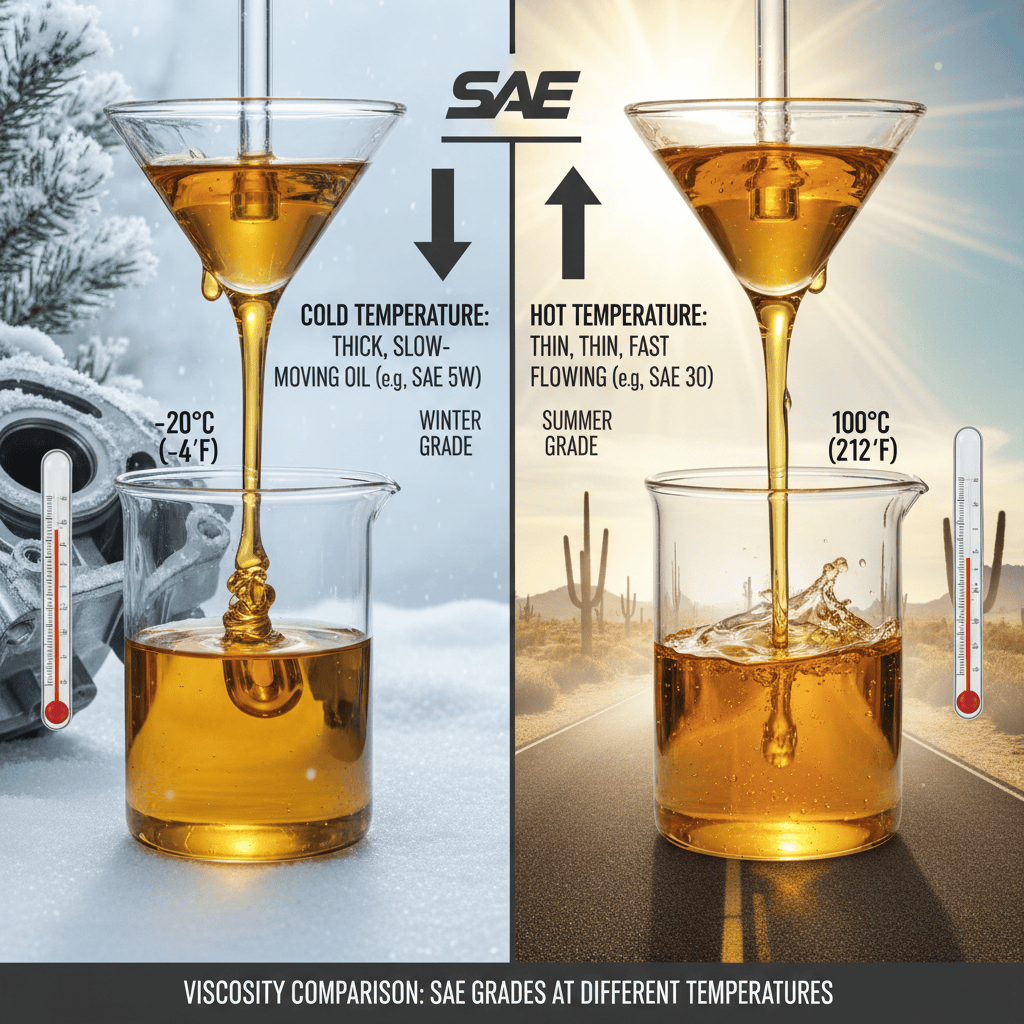
Oil grades are rated by the Society of Automotive Engineers (SAE) using a system that measures viscosity—how thick or thin the oil is at different temperatures. Understanding these numbers helps you select the right oil for your mower and conditions.
What the numbers mean:
- The “W” stands for Winter. The number before it (like the “10” in 10W-30) indicates how the oil flows in cold temperatures. Lower numbers flow better in cold weather, making cold starts easier.
- The number after the W (like the “30” in 10W-30) indicates viscosity at high engine temperatures. Higher numbers provide thicker films at heat, offering better protection under load.
- Straight grades (like 30 or 40) have only one viscosity rating and are typically found in older equipment or warm climates. These don’t perform well in cold weather.
Common lawn mower grades:
- 10W-30: The most versatile choice for small engines. Works in most climates from spring through fall.
- 5W-30: Better for cold climates and early spring starts. The 5W rating flows more easily in freezing conditions.
- SAE 30: Used in older mowers and equipment designed for warm climates only. Poor cold-weather performance.
- 0W-20: Rarely specified for lawn mowers but occasionally used in newer commercial equipment.
Why SAE grade matters: Using the wrong grade can cause hard starting in cold weather, inadequate lubrication at high temperatures, and premature engine wear. Your engine manual specifies the grade that balances these factors for your particular engine.
Oil Types: Conventional vs. Synthetic Blend
Beyond the SAE grade, oils come in two main categories that affect performance, cost, and longevity.
Conventional Oil
Conventional oil is refined from crude oil and contains only the natural additives present in the crude itself. For lawn mowers:
- Costs less upfront than synthetic options
- Works well for casual or seasonal mowing
- Requires more frequent changes (every 50 hours or at the start and end of season)
- Breaks down faster in high heat
- Adequate for most push mowers and occasional-use equipment
Synthetic Blend Oil
Synthetic blends mix conventional base oil with synthetic compounds to improve performance. They’re the practical middle ground:
- Cost moderately more than conventional but less than full synthetics
- Extend change intervals slightly (some reach 100 hours)
- Provide better temperature stability across seasons
- Offer improved protection in extreme heat or cold
- Recommended for riding mowers and commercial equipment
Can you mix conventional and synthetic? Yes, mixing is safe if you need to top off between changes. However, you lose some synthetic benefits. If you’ve been using conventional oil, you can switch to synthetic blend at your next change without flushing the engine.
How to Find Your Mower’s Oil Specification
The most reliable source for your mower’s exact oil requirement is the manufacturer’s manual. Here’s where to look:
In the manual:
- Check the Maintenance or Service section. Oil specifications are almost always listed here with capacity (how much oil the engine holds).
- Look for a table labeled “Recommended Fluids” or “Oil Type.”
- Some manuals include a decision tree that recommends oil based on your climate.
If you’ve lost the manual:
- Search the manufacturer’s website using your mower model number (usually on a decal under the seat or on the engine).
- Contact the manufacturer’s customer service directly—they can email or mail a manual.
- Check online manual databases like ManualsLib.com or the manufacturer’s PDF archive.
- As a safe fallback, SAE 10W-30 works for the vast majority of small 4-stroke engines.
Engine type matters: Two-stroke engines (common in older equipment, weed whackers, and chainsaws) use oil mixed with fuel and require completely different products—never use lawn mower oil in a two-stroke engine. Four-stroke engines (nearly all modern lawn mowers) use oil in the crankcase like car engines, and this is what the guide covers.
Choosing Oil by Climate and Equipment Type
Cold Climate Recommendations (Below 40°F)
In cold regions or early spring mowing, use 5W-30 or synthetic blend 10W-30. The lower “W” rating ensures the oil flows easily when the engine is cold, reducing strain on the starter motor and promoting faster lubrication. If temperatures drop below freezing, 5W-30 is preferable. Synthetic blends are worth the cost in cold climates because they resist thickening.
Warm/Tropical Climate Recommendations (Above 85°F)
In hot climates, straight SAE 30 or synthetic blend 10W-30 work well. The higher high-temperature viscosity (the “30” rating) maintains film strength in heat. Synthetic oils are particularly beneficial here because they resist thinning and breaking down under sustained high temperatures.
Temperate/Mixed Seasons (40°F to 85°F)
This is where 10W-30 shines as the universal recommendation. It handles spring, summer, and early fall mowing without compromise. If your region has dramatic seasonal swings, keep conventional 10W-30 in spring and switch to synthetic blend 10W-30 for year-round consistency.
Push Mower vs. Riding Mower vs. Commercial Equipment
- Push Mowers (4-stroke): Conventional 10W-30 is standard and sufficient. Casual users rarely need synthetic unless mowing in extreme cold.
- Riding Mowers: Check the manual—many specify 10W-30, but some larger engines prefer 15W-40 or 10W-40. Synthetic blend 10W-30 is a good upgrade for extended intervals.
- Zero-Turn Mowers: Follow manufacturer specs closely; many use 10W-30, but commercial-grade equipment sometimes uses heavier grades like 15W-40.
- Commercial or Heavy-Use Equipment: Often requires synthetic or full synthetic oil to handle longer intervals and sustained operation.
Oil Maintenance and Change Intervals
How often to change oil:
The standard recommendation is every 50 to 100 hours of mowing. For casual homeowners mowing weekly during season, this typically means:
- Once at the beginning of mowing season (spring)
- Once at the end of mowing season (fall)
- More frequently (every 50 hours) if you mow heavily or use a commercial mower
Check your manual for the specific interval—some older equipment recommends every 25-50 hours, while some newer synthetic-equipped mowers extend to 100 hours.
Checking and topping off oil:
- Check oil level before each mowing session when the engine is cold and on level ground.
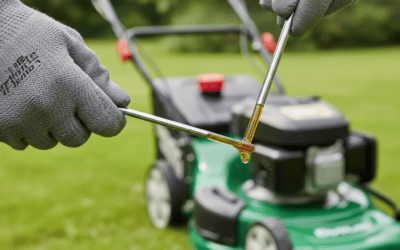
- Remove the dipstick, wipe it clean, reinsert it fully, then remove again to read the level.
- Oil should reach the “full” mark on the dipstick. If low, add the recommended grade slowly until it reaches the mark.
- Overfilling causes smoke, poor performance, and engine damage—don’t exceed the full mark.
- Top off between changes only if the level drops noticeably. Healthy engines shouldn’t burn oil.
What happens if you use the wrong oil grade?
- Too thin (like 5W-20 when 10W-30 is specified): Inadequate protection at high temperatures, increased wear, potential bearing damage.
- Too thick (like 15W-40 when 10W-30 is specified): Hard starting, poor cold-weather flow, incomplete engine lubrication, increased wear on cold starts.
- Wrong type (synthetic when conventional is specified, or vice versa): Rarely problematic, but may void warranties on older equipment.
Using the wrong grade can void your equipment warranty, so always match the manual specification.
Quick Decision Tree
I have a small push mower and don’t know the specification—what should I use?
Start with conventional SAE 10W-30. This is the most common specification for consumer push mowers made in the last 20 years. It handles most climates and seasons adequately. Once you find your manual or contact the manufacturer, adjust if needed.
I live in a cold region or it’s early spring—which grade?
Use 5W-30 conventional or synthetic blend 10W-30. The 5W rating flows better in cold, ensuring reliable cold starts. Synthetic blend is worth the premium if you mow frequently in temperatures below 50°F.
I have an older mower from the 1990s or earlier—does it need different oil?
Check your manual first. Many older mowers specify straight SAE 30, which is only suitable for warm weather. If the manual is unavailable, 10W-30 is a safe conservative choice that provides better cold-weather protection than original specs while maintaining adequate film strength. Some very old equipment specifies non-detergent oil, but detergent oil (the standard today) is generally compatible.
I mow commercially or heavily—should I use synthetic?
Yes. Extended use, sustained high temperatures, and longer intervals between changes benefit from synthetic blend or full synthetic oil. Synthetic oils maintain viscosity and protection longer, reducing wear on frequently used equipment.
Frequently Asked Questions
Q: Is synthetic oil worth the extra cost for a lawn mower?
A: For casual homeowners mowing once a week in moderate climates, conventional 10W-30 is sufficient and economical. Synthetic blend becomes worthwhile if you mow in extreme temperatures, have a riding mower, or want to extend intervals between changes. Full synthetic is overkill for most homeowner equipment but makes sense for commercial or heavy-use mowers.
Q: Can I use car oil in my lawn mower?
A: Yes, if it matches the SAE grade and viscosity specification. Car oil 10W-30 works in most lawn mowers. However, some lawn mower manufacturers specify detergent-free oil or other particular formulations, so check your manual. Automotive oil typically costs less and is fine for small engines, though it may not contain additives optimized for small-engine demands.
Q: What if my lawn mower uses a 2-stroke engine?
A: Two-stroke engines (found in some older mowers, weed whackers, and chainsaws) require completely different oil. Two-stroke oil is mixed with fuel before filling the tank and comes in ratios like 50:1 or 32:1. Never use four-stroke lawn mower oil in a two-stroke engine—it will cause carbon buildup and engine damage. Check whether your equipment is 2-stroke or 4-stroke before selecting oil.
Q: How do I know if I’m using the wrong oil?
A: Symptoms include hard cold starts, blue smoke from the exhaust, poor performance under load, or knocking sounds from the engine. If you suspect wrong oil, drain and refill with the correct grade. Document what you used and note any changes in performance. If problems persist, consult the manufacturer or a small-engine repair shop.