Direct Answer: The Spark Plug’s Typical Location
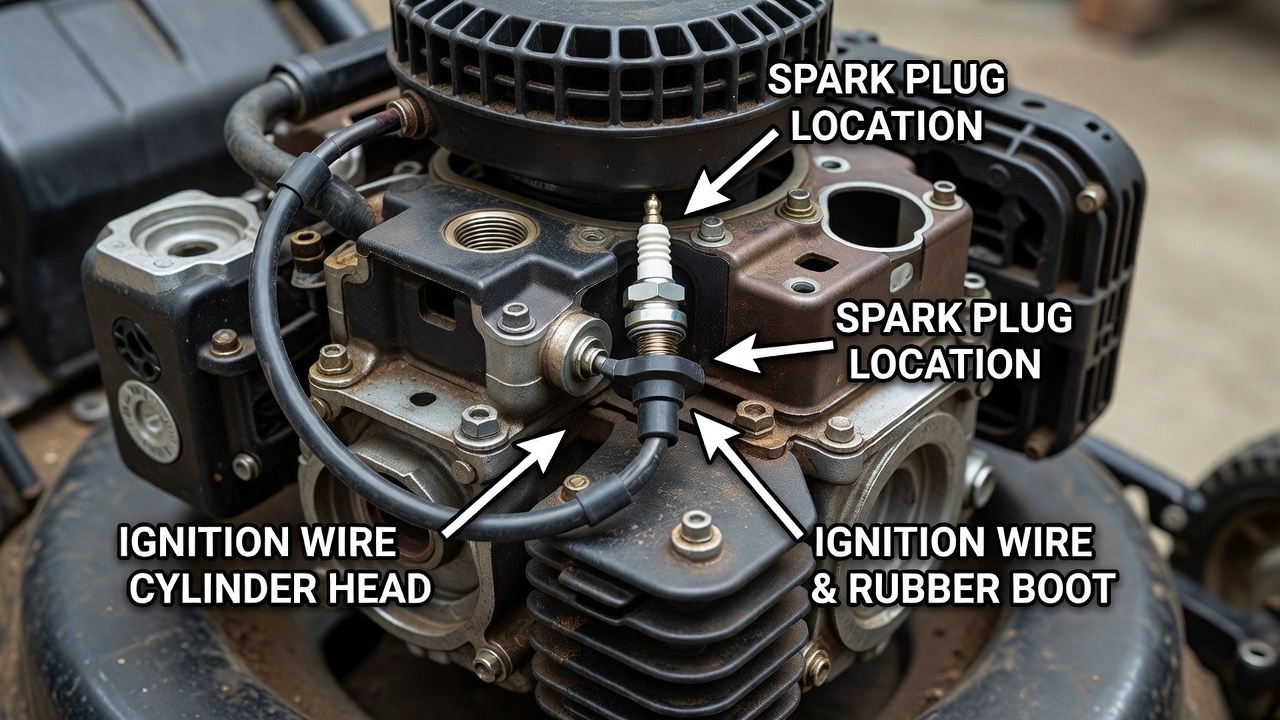
The spark plug on a lawn mower is almost always located on the engine’s cylinder head, which is the top portion of the engine block. It is identifiable as a small component with a white or black ceramic insulator and a metal base, connected to a thick, insulated ignition wire. This wire often terminates in a rubber boot or plastic cap that covers the spark plug’s terminal. You will typically find it on the top or side of the engine, easily accessible once you remove any engine cover or shroud.
Understanding the Spark Plug’s Role and General Location
The spark plug is a critical component of your lawn mower’s ignition system. Its job is to receive a high-voltage electrical current from the ignition coil and create a spark inside the engine’s combustion chamber. This spark ignites the compressed air-fuel mixture, powering the engine.
Knowing its location is essential for routine maintenance, troubleshooting starting issues, or performing a replacement. While the exact position can vary, the general area is consistent across most small engines.
What Does a Spark Plug Look Like?
- Ceramic Insulator: A white or black ribbed ceramic section that insulates the high voltage.
- Metal Shell: A hexagonal metal base that threads into the engine cylinder head.
- Terminal: A small metal tip at the top where the ignition wire connects.
- Ignition Wire & Boot: A thick, black wire leading to a rubber boot that snaps onto the spark plug terminal.
Key Factors That Determine the Exact Location
While the general area is the cylinder head, several factors influence the precise placement:
- Mower Type: The location differs between a walk-behind push mower and a riding mower or lawn tractor.
- Engine Design: Vertical-shaft engines (common in push mowers) and horizontal-shaft engines (common in some riding mowers) will have different orientations.
- Engine Manufacturer: Brands like Briggs & Stratton, Honda, Kohler, and Tecumseh have specific engine layouts, though they follow general conventions.
Push Mower vs. Riding Mower Locations
| Mower Type | Common Spark Plug Location |
|---|---|
| Walk-Behind Push Mower | Typically on the front or side of the vertical engine, often near the top. It may be partially hidden by the engine’s plastic housing or air filter assembly. |
| Riding Mower / Lawn Tractor | Usually located on the top or side of the engine, which is often under the hood. The engine is a larger, vertical-shaft model, and the plug is frequently on the front or left side when facing the mower. |
Step-by-Step Guide to Locating and Accessing Your Spark Plug
Follow these safety and procedural steps to find and access your spark plug:
- Safety First: Disconnect the spark plug wire before performing any work on the engine to prevent accidental starting. For riding mowers, also remove the key and disconnect the negative battery terminal.
- Identify the Engine: Locate the main engine block on your mower. On push mowers, it’s the central metal assembly with cooling fins. On riding mowers, it’s under the hood.
- Look for the Ignition Wire: Trace the thick, insulated black wire coming from the ignition coil (usually a small black box mounted near the flywheel). This wire leads directly to the spark plug.
- Find the Rubber Boot: Follow the wire to its end. You will find a rubber boot or cap covering the spark plug terminal. This boot is often pressed firmly onto the plug.
- Remove the Boot: Grip the rubber boot firmly (not the wire itself) and pull it straight off the spark plug. You may need to twist it slightly to break the seal.
- Visual Confirmation: Once the boot is removed, you will see the top of the spark plug—the ceramic insulator and metal terminal—threaded into the engine cylinder head.
Direct Answer: Common Spark Plug Locations by Mower Type
Here are specific, practical scenarios to reinforce the general answer:
On a Standard Walk-Behind Push Mower
Look at the front of the engine, just below the fuel tank and above the muffler. The spark plug is often on the front-facing side of the cylinder head. On many Briggs & Stratton engines, it’s directly accessible. On some Honda models, it may be on the side, near the air filter housing.
On a Standard Riding Lawn Mower
Open the hood. The engine is a large, vertical-shaft unit. The spark plug is typically on the top or front-left side of the engine when you are seated on the mower. Look for the ignition wire running from the side of the engine to a component on the cylinder head.
Unusual or Less Common Locations
On some older or specialized models, the spark plug might be positioned more towards the rear of the engine or slightly obscured by other components like the starter motor or fuel line. If you cannot find it, consult your owner’s manual for a diagram.
Frequently Asked Questions
Q: What should I do if I can’t find the spark plug on my lawn mower?
A: If the general description doesn’t help, first ensure you’ve removed any engine cover or shroud. Then, consult your mower’s owner’s manual, which will have a diagram labeling all components. As a last resort, search online for your specific mower make and model plus “spark plug location” for visual guides.
Q: Why is it important to know where the spark plug is?
A: Knowing the location is crucial for regular maintenance (cleaning or replacing the plug), troubleshooting starting problems, and performing safe repairs. Always disconnect the spark plug wire before working on the engine to prevent injury.
Q: Can the spark plug location vary by engine brand like Briggs & Stratton vs. Honda?
A: Yes, the exact placement can differ. For example, many Briggs & Stratton engines have the plug on the front, while some Honda engines place it on the side. However, all will be on the cylinder head and connected to the ignition wire. Manufacturer documentation is the best source for precise confirmation.
Q: Is the spark plug under the gas tank on a push mower?
A: Not directly under it, but often in the same general area. The spark plug is on the cylinder head, which is part of the main engine block. The fuel tank sits above or adjacent to the engine, so you’ll typically look below and to the side of the tank.