Quick Answer: 400 Cfm Leaf Blower
A 400 CFM leaf blower moves 400 cubic feet of air per minute, ideal for patios, driveways, and light residential cleanup. Pair it with 100 to 150 MPH airspeed for wet leaves. Choose cordless 20V-56V brushless models for portability or 12-amp corded units for unlimited runtime. It is not rated for heavy, wet, or deep leaf piles.

Pros
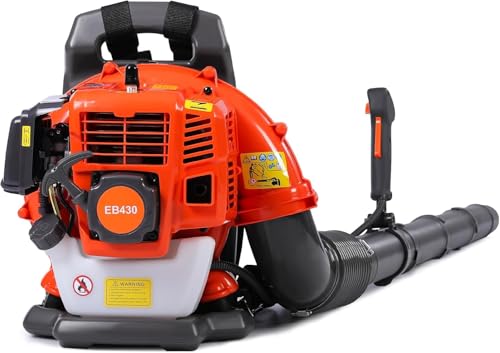
- Potent 28cc engine producing up to 490 CFM and 280 MPH
- 0.65L fuel tank rated for up to 160 minutes of runtime
- Lightweight 9.5-pound construction for gas power
- Transparent fuel tank for easy liquid monitoring
- Upgraded ignition mechanism for smooth starting
Cons
- Requires 2-stroke oil and fuel mixing
- Gas engine produces exhaust emissions

Pros
- 26cc 2-stroke engine produces up to 435 CFM and 180 MPH
- Low-resistance recoil starter with external primer bulb
- Lightweight handheld build weighing approximately 8.38 lbs
- Includes segmented blow tubes, mixing bottle, and tool kit
- Integrated emergency stop switch for quick shutdown
Cons
- Requires 25:1 premixed gas and oil fuel
- 0.6L fuel tank yields an estimated 20 to 30 minutes of runtime

Pros
- Lightweight 4.6-pound frame for one-handed use
- Airflow rated up to 155 MPH and 350 CFM
- Adjustable blowpipe with included extension nozzle
- Built-in cord holder prevents accidental disconnection
Cons
- Extension cord is not included
- Restricted to tethered outlet access
What “400 CFM” Actually Means on a Spec Sheet
CFM stands for cubic feet per minute, the volume of air a blower moves in sixty seconds. A 400 CFM rating means the turbine or impeller displaces 400 cubic feet of air every minute, measured at the nozzle outlet under free-flow (no back-pressure) conditions. This is the single most important number for clearing capacity: how wide a swath you can push leaves across and how quickly you can move a pile.
CFM is frequently confused with MPH (miles per hour), which measures air velocity. Velocity is what dislodges stuck or wet debris from cracks and turf; volume is what transports it. A 400 CFM blower rated at 250 MPH (like the Hyper Tough 12-amp corded 3-in-1) concentrates air through a narrow nozzle for high impact, while a 400 CFM unit at 90, 100 MPH (like the PRORUN PBL120 or Masterforce 20V) uses a wider turbine outlet for broader, gentler clearing. Both move the same air volume , the nozzle geometry decides how that volume is delivered. Readers comparing setup options can review our technical analysis on how to choose leaf blower.
The Physics: Why CFM and MPH Trade Off Against Each Other
Blower performance follows basic fluid dynamics. Airflow (Q), velocity (v), and cross-sectional outlet area (A) are linked by the continuity equation:
Q = A × v , where Q is airflow in CFM, A is nozzle outlet area in square feet, and v is air velocity in feet per minute. For complementary field maintenance guidelines, examine our breakdown of how to choose a leaf blower.
Because a blower’s motor and impeller produce a finite amount of power, you cannot maximize both Q and v simultaneously. Narrowing the nozzle (reducing A) forces velocity up but chokes volume; widening it (increasing A) raises volume but drops velocity. This is why a 400 CFM corded unit can claim 250 MPH through a concentrator nozzle, while a 400 CFM battery turbine blower with a wide-mouth tube delivers 90 to 100 MPH. For leaf moving, CFM is the primary spec; MPH matters most for dislodging wet or matted debris.
Practical implication: if your yard has dry, loose leaves on hard surfaces, a 400 CFM / 100 MPH battery blower will outperform your expectations. If you routinely clear wet oak leaves from turf, you need either the high-MPH corded configuration or a higher-CFM unit such as the 615 CFM or 765 CFM EGOPOWER+ 56V models.
400 CFM vs. Higher Ratings: Where the Class Boundary Sits
400 CFM sits at the entry-to-mid tier of modern cordless blowers. For context on the competitive landscape:
| Tier | Typical CFM | Typical MPH | Best Use Case |
|---|---|---|---|
| Entry / Compact | 250 to 350 | 60 to 100 | Balconies, decks, light dry debris |
| 400 CFM Class | 400 | 90 to 250 | Patios, driveways, small-to-medium residential yards |
| Mid-Performance | 500 to 650 | 110 to 170 | Medium yards, moderate leaf volume, some wet debris |
| High-Performance | 700+ | 180 to 250 | Large properties, deep leaf cover, wet conditions, light commercial |
As Pro Tool Reviews notes, some blowers exceed 700 CFM and 180 MPH, but those numbers come with larger batteries, higher prices, and more weight. The 400 CFM class is deliberately positioned for homeowners who finish mowing and trimming and need a quick, reliable cleanup tool rather than a property-management machine.
Power Platforms in the 400 CFM Class
Cordless Battery (20V, 40V, 56V)
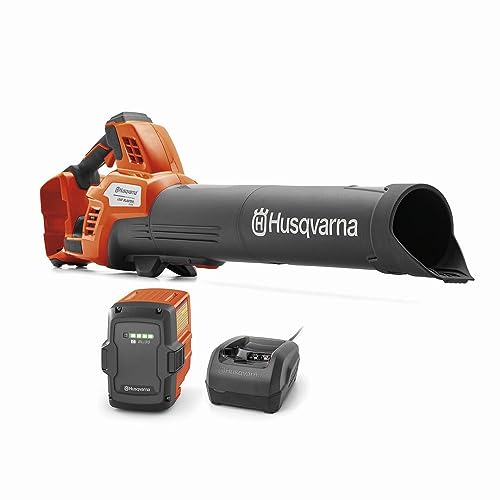
The dominant configuration. SKIL’s PWRCORE 20 brushless BL4714B delivers up to 400 CFM on a 20V platform with a 4.0 Ah battery; PRORUN’s PBL120 matches 400 CFM at 90 MPH on 20V with a 4.0 Ah pack. Higher-voltage platforms (40V, 56V) can reach 400 CFM more efficiently with less current draw, extending runtime. Brushless motors are the key differentiator, they use electronic commutation instead of carbon brushes, reducing friction, heat, and wear, and typically deliver 10 to 20% more runtime per charge than brushed equivalents.
Battery Ah (amp-hour) rating directly controls runtime. A 4.0 Ah 20V pack stores roughly 72 watt-hours; at a typical 400 CFM blower draw of 250 to 350 watts, expect 12 to 17 minutes of continuous full-throttle runtime. Variable-speed triggers and turbo buttons let you extend that substantially for light debris.
Corded Electric (12-Amp)
Units like the Hyper Tough 12-amp corded 3-in-1 and the BLACK+DECKER BV6000 draw up to 1,440 watts from a standard 120V outlet, delivering 400 CFM at up to 250 MPH with unlimited runtime. The trade-offs are the power cord (use a 14-gauge, 50-foot outdoor-rated extension cord to avoid voltage drop) and reduced portability. These are strong choices for fixed-area cleanup near outlets.
Gas-Powered (25cc-26cc 2-Cycle)
Troy-Bilt’s 25cc gas blower and Hyper Tough’s 26cc 2-cycle unit both rate 400 CFM (the Hyper Tough gas model pairs it with 150 MPH). Gas delivers cordless freedom with no battery runtime ceiling, but requires fuel mixing (typically 50:1 oil-to-gas ratio), pull-start effort, spark plug and air filter maintenance, and produces exhaust noise and emissions. For a full breakdown of these trade-offs, see our gas or electric leaf blower comparison.
Step-by-Step Diagnostic Matrix: Choosing the Right 400 CFM Blower
Work through these five decision points in order. Each one narrows the field before you compare prices.
Runtime, Weight, and Ergonomics: The Specs That Decide Daily Use
CFM ratings are measured at maximum throttle. Real-world usability depends on three factors the spec sheet often buries:
Runtime Under Load
Manufacturers quote runtime at a low or medium speed setting. At full turbo, expect roughly 40 to 60% of the advertised figure. A 4.0 Ah 20V battery at full throttle typically yields 12 to 17 minutes; at half throttle, 25 to 35 minutes. For a standard suburban lot (¼ acre), plan on 2 to 3 battery swaps or choose a 56V 5.0 Ah platform like the EGOPOWER+ 765 CFM for single-charge coverage.
Weight and Balance
Most 400 CFM cordless blowers weigh 5.5 to 7.5 lbs with battery. Weight matters because blower work is one-handed and repetitive, the motor housing sits behind the grip, so a front-heavy nozzle creates wrist fatigue within 10 to 15 minutes. Look for a well-balanced design with the battery acting as a counterweight, and a soft-grip handle. For extended sessions, evaluate backpack vs handheld blowers, backpack units redistribute weight to your shoulders and are the standard for properties over half an acre.
Noise Output
Battery blowers typically run 60 to 65 dB at 50 feet; gas 2-cycle units can exceed 70 to 75 dB. If you have noise-restricted HOA hours or close neighbors, cordless is the clear choice. Always verify local noise ordinances before purchasing, some municipalities restrict gas blower use by time of day or decibel level.
Practical Yard Applications: What 400 CFM Can and Cannot Do
Ideal Applications
- Clearing driveways, sidewalks, patios, and decks of dry leaves and grass clippings
- Blowing debris out of garage floors and under patio furniture
- Light mulching with a 3-in-1 vacuum attachment (typically 10:1 reduction ratio)
- Post-mowing cleanup on small residential lots (under ¼ acre)
- Drying wet surfaces after washing cars or pressure-washing (with high-MPH nozzle)
Where 400 CFM Falls Short
- Deep, wet, or matted leaf layers on turf, you need 600+ CFM and 150+ MPH
- Large properties (over ½ acre) where runtime and air volume become limiting
- Clearing gravel or mulch beds, high-velocity nozzles will displace your landscaping material
- Commercial or daily-use applications demanding sustained full-throttle operation
For homeowners who regularly face heavier conditions, stepping up to a 615 CFM or 765 CFM 56V unit (such as the EGOPOWER+ models listed at Lowe’s) provides the volume headroom to move wet leaves in a single pass rather than multiple overlapping passes.
Maintenance Intervals for 400 CFM Blowers
Whether battery, corded, or gas, consistent maintenance preserves CFM output and motor life. Debris buildup inside the housing and impeller is the most common cause of perceived performance loss.
For a deeper dive into maintaining outdoor power equipment, including chainsaws, trimmers, and blowers, see our guide to chainsaw and outdoor tool maintenance.
Safety Considerations
Leaf blowers generate sustained noise, particulate matter, and projectile risk. Follow these practices regardless of blower type:
- Wear hearing protection when operating gas units or high-MPH corded blowers for extended periods
- Use eye protection, small stones, twigs, and grit become projectiles at 150+ MPH
- Never point the nozzle at people, pets, windows, or loose gravel
- Keep cords and batteries away from water; do not operate corded units in rain
- Take breaks every 20 to 30 minutes to avoid vibration-related hand and wrist strain
For workplace or commercial applications, consult OSHA equipment safety regulations regarding noise exposure limits, personal protective equipment, and powered industrial tool operation.
Buyer FAQs: 400 Cfm Leaf Blower Solved
Is 400 CFM enough for a large yard?
For yards under ¼ acre with moderate leaf cover, yes. For larger properties or heavy fall leaf drop, 400 CFM will require multiple passes and frequent battery swaps. Consider 600+ CFM for anything over half an acre.
What MPH should I look for with 400 CFM?
For general dry-leaf cleanup, 90 to 120 MPH is sufficient. If you need to dislodge wet leaves from turf or cracks, target 150+ MPH, available on corded 12-amp and gas 2-cycle configurations in this class.
Cordless or corded for 400 CFM?
Cordless offers portability and no runtime limit concerns for small lots with a spare battery. Corded offers unlimited runtime and higher MPH at lower upfront cost, but restricts you to outlet range. Choose based on your yard layout and whether you already own compatible batteries.
How long does a 400 CFM battery blower run per charge?
Typically 12 to 17 minutes at full throttle with a 4.0 Ah 20V battery, or 25 to 35 minutes at half throttle. Higher-voltage 56V 5.0 Ah platforms can extend full-throttle runtime to 20 to 25 minutes.
Can a 400 CFM blower mulch leaves?
Only 3-in-1 models with a vacuum attachment and mulching impeller (such as the BLACK+DECKER BV6000 or Hyper Tough 12-amp) can mulch, typically achieving a 10:1 reduction ratio. Standard blower-only 400 CFM units cannot vacuum or mulch.
Our Final Editorial Take on 400 Cfm Leaf Blower
A 400 CFM leaf blower is the right tool for homeowners who need efficient, lightweight cleanup on patios, driveways, and small-to-medium residential yards without the cost, weight, or maintenance burden of high-performance machines. Match the power platform to your yard: cordless 20V brushless for portability and battery ecosystem compatibility, corded 12-amp for unlimited runtime and maximum MPH, or gas 2-cycle for cordless freedom in larger spaces. Prioritize CFM over MPH for volume tasks, verify runtime against your lot size, and maintain the impeller and intake to keep rated airflow consistent season after season. If your needs regularly exceed what 400 CFM delivers, step up to the 56V 615 to 765 CFM class rather than fighting the tool’s limits.
Mid Range Airflow for Small Yards
Mid range airflow suits many patios, decks and small lawns where debris is light and the area is compact. Comfort and weight often matter more than peak output here. Consumer level safety information on outdoor equipment is listed at American National Standards Institute (ANSI).