

Direct Answer: What Makes a Good Lawn Mower
A good lawn mower meets your specific yard size, terrain, and maintenance preferences while offering reliable cutting performance, durability, and ease of use. The right choice depends on factors like cutting width, engine type (gas, electric, cordless, or manual), deck construction, grass handling capacity, and your physical ability to operate it. Understanding these core characteristics helps you select a mower that balances performance, cost, and long-term maintenance requirements for your lawn.

Pros
- Lightweight 35.7-pound build makes it highly maneuverable and ideal for easy transport
- Dual 4.0Ah batteries included for 30+ minutes of extended cordless runtime
- 6-height adjustment from 0.98 to 2.95 inches offers flexibility for various lawn conditions
- 16-inch cutting width paired with large 10.57-gallon catcher boosts efficiency
- Brushless motor design with two-step safe startup and three-year warranty
Cons
- Charger is not included requiring separate purchase for battery recharging
- 30+ minute runtime may need recharges or extra batteries for larger lawns
- Batteries require careful storage at 40-60% capacity to avoid long-term degradation
The Litheli 40V (2 x 20V) 16" cordless electric lawn mower is a walk-behind push model built for convenient cordless mowing. It features a lightweight 35.7-pound frame with a portable design that creates an immediate impression of ease for everyday users. Dual 4.0Ah batteries come included, supporting a brushless setup suited for residential yards needing regular upkeep.
In performance, the mower delivers a 16-inch cutting width and 10.57-gallon grass catcher to cover ground efficiently with fewer passes and emptying stops. Its 6-position height adjustment from 0.98 to 2.95 inches adapts to different grass lengths and seasons, while the dual batteries provide over 30 minutes of runtime. The two-step activation ensures safe and simple starts, making real-world use straightforward for maintaining small to medium lawns without gas or cords.
Key considerations include the absence of a charger, so users must obtain one separately. Runtime of 30+ minutes can limit coverage on bigger properties without recharging or spare batteries. Additionally, proper battery storage at 40-60% capacity in a cool dry place is essential to prevent degradation over time.
Overall, this Litheli 40V cordless lawn mower is best for homeowners seeking a lightweight, easy-to-maneuver electric option with included batteries and height versatility. It provides solid value for those prioritizing portability and quiet battery operation on modest-sized lawns, backed by a three-year warranty for added confidence.

Pros
- Eco-friendly silent operation with zero emissions or fuel costs
- Lightweight design and 10-inch wheels enable easy pushing and tight-space maneuvering
- Durable tempered alloy steel reel and bed knife resist wear for long-lasting sharpness
- Simple height adjustment and low-maintenance mechanical design require no oil or spark plugs
Cons
- Manual push reel requires physical effort and is best suited for smaller lawns rather than large properties
- Limited maximum grass height of 4 inches means overgrown areas may need pre-trimming
- No grass collection bag or power assist included based on core specifications
The American Lawn Mower 1415-16 is a classic 16-inch push reel lawn mower from the American Lawn Mower Company that prioritizes simplicity and sustainability. Its gray finish, unbreakable steel side plates, and 10-inch durable composite wheels with radial tread create a sturdy yet lightweight build that feels easy to handle right out of the box.
In real-world use the 5-blade ball-bearing reel delivers a clean scissor-action cut across a 16-inch path while the tempered alloy steel blades maintain sharpness over time. Users can set the cutting height between 0.5 and 2.5 inches and tackle grass up to 4 inches tall, all without noise, fumes, or engine maintenance.
Potential drawbacks include the need for manual pushing, which can tire users on larger or uneven yards, and the absence of a collection system or powered assistance. The mower also works best on regularly maintained lawns rather than heavily overgrown areas.
Overall the American Lawn Mower 1415-16 is an excellent choice for environmentally minded homeowners with small to medium lawns who value quiet low-maintenance operation and a precise cut. It offers lasting value for those willing to trade gas power for simplicity and eco-friendliness.
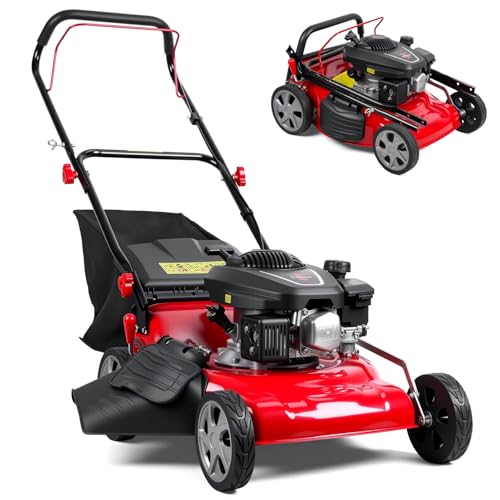
Pros
- Versatile 3-in-1 mulching, bagging and side-discharge modes for flexible lawn care
- Generous 50L grass collection capacity with easy-empty design
- Fuel-efficient 131cc 4-cycle engine with low-noise operation
- Lightweight construction and large wheels improve maneuverability
- Cutting height adjustment and easy-start features suit various users
Cons
- Gas engine requires ongoing fuel, oil and basic maintenance unlike electric models
- Exact cutting width and detailed height settings are not specified in available data
- Push-focused design may still demand physical effort on large or rough properties
The YOXIER 131cc 4-Cycle Gas Lawn Mower is a walk-behind model aimed at residential lawns, yards and gardens. It features a lightweight frame, large wheels and a 50L grass tank that create a practical first impression for everyday home use.
In performance the durable blade handles thick weeds and overgrowth while the 3-in-1 system supports mulching, side discharge or rear bagging. The 131cc engine is described as fuel-efficient and low-noise, with position cutting height adjustment and push-button start adding convenience. Rear-wheel drive is claimed to help on slopes and uneven terrain.
Drawbacks include the need for regular gas and oil maintenance. Precise cutting width and full height range details are missing from the specifications, so buyers should verify fit for larger or very dense areas. Physical pushing effort may remain depending on the terrain despite self-propelled mentions.
Overall this mower delivers solid value for homeowners with medium-sized yards who want a budget-friendly gas option with multi-mode clipping control and simple operation. It suits users comfortable with basic gas mower upkeep rather than those seeking fully electric convenience.
Understanding Lawn Mower Types
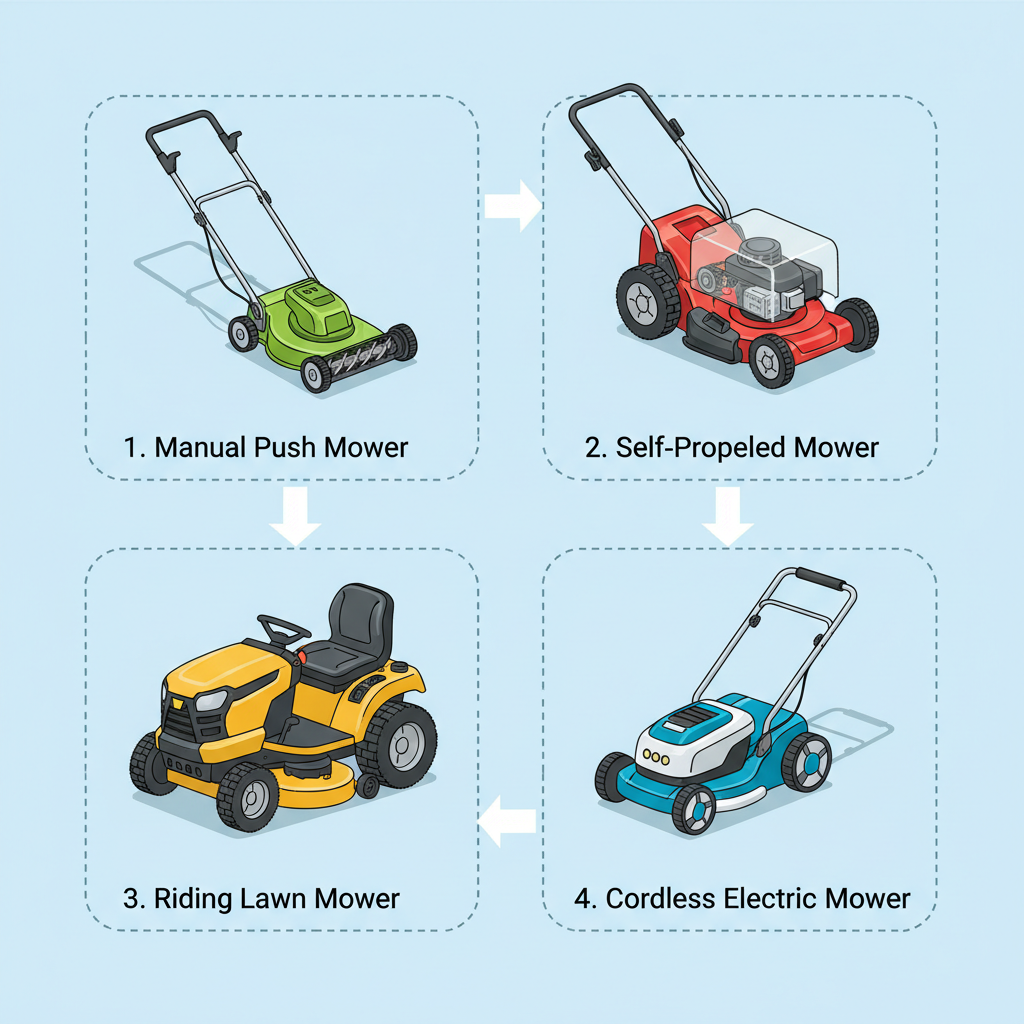
The foundation of selecting a good lawn mower begins with understanding the four primary categories available. Each type serves different yard sizes and user preferences.
Push Mowers
Push mowers require manual effort to move across the lawn. They are lightweight, affordable, and ideal for small residential lawns under 0.25 acres. Push mowers work well on flat terrain and offer excellent maneuverability in tight spaces. The trade-off is physical exertion, users must push the mower’s weight throughout the mowing session, which can be fatiguing on larger properties or for users with limited physical capability.
Self-Propelled Mowers
Self-propelled models feature a transmission system that powers the wheels, reducing the physical effort required. The operator controls speed and direction while the engine propels the mower forward. These are suitable for suburban properties (0.25 to 1 acre) and hilly terrain where push mowers become impractical. They cost more than push mowers but require less user exertion.
Riding Mowers
Riding mowers are designed for large properties (over 1 acre) and feature a seated operator position. They typically offer wider cutting decks (42 to 60+ inches), faster mowing speeds, and reduced user fatigue. Riding mowers require dedicated storage space and regular maintenance similar to small engines. They are less maneuverable around obstacles and garden beds.
Robotic and Cordless Electric Mowers
Cordless electric mowers offer quiet, low-maintenance operation and zero emissions. They are ideal for noise-sensitive neighborhoods and small-to-medium lawns. Robotic mowers can operate autonomously, mulching grass clippings and returning them to the lawn. The trade-offs include higher upfront costs, battery runtime limitations (typically 30 to 90 minutes), and reduced cutting power in thick or overgrown grass.
Key Features That Define Lawn Mower Quality
Cutting Width
Cutting width directly affects mowing efficiency and the time required to cover your lawn. Wider decks mow more grass per pass but sacrifice maneuverability.
- Small lawns (under 0.25 acres): 18 to 21 inches ideal
- Suburban lawns (0.25 to 1 acre): 21 to 28 inches balanced for efficiency and control
- Large properties (over 1 acre): 36 to 60+ inches on riding mowers
A good mower offers a cutting width matched to your yard size and layout. Wider isn’t always better if your property has narrow passages, flower beds, or obstacles requiring precise navigation.
Cutting Height Range and Adjustment
Quality mowers offer adjustable cutting height (typically 0.75 to 4 inches) to accommodate different grass types and seasonal conditions. Multiple adjustment points across the deck, rather than a single lever, provide more consistent cutting heights and better performance. Grass species have different recommended mowing heights; a good mower allows flexibility to adjust for your lawn’s needs.
Deck Construction and Materials
Deck durability affects mower lifespan and cutting performance. Premium mowers feature steel or reinforced composite decks that resist rust, impacts, and warping. Aluminum decks offer lighter weight but less durability. The deck design should facilitate easy cleaning and mulching capability. A well-constructed deck maintains blade alignment and cutting consistency over years of use.
Grass Collection and Mulching Capability
A good mower should handle grass clippings effectively through one of three methods: When planning workspace deployment, consider the engineering criteria outlined in our marshall stanmore iii vs harman kardon onyx studio 8 guide.
- Bagging: Collects clippings in a rear or side bag for disposal; useful for thick grass or thatch management
- Mulching: Finely chops clippings and returns them to the lawn, reducing waste and nutrient loss
- Discharge: Throws clippings to the side; simplest design but less tidy
Quality mowers offer at least two of these options. Mulching capability is increasingly valued because it reduces yard waste and promotes soil health.
Engine Power and Reliability
Engine specifications vary by mower type. Gas mowers typically feature single-cylinder engines (3.5, 7+ horsepower). Electric mowers are rated in amps or watts. A good mower has an engine sized to handle your lawn’s conditions, thicker grass and slopes require more power. Established brands with strong service networks and parts availability indicate better long-term reliability. For additional operational safety benchmarks, see our published testing notes on dyson v8 cyclone vs bissell featherweight stick.
Choosing Based on Yard Size and Terrain
Small Residential Lawns (Under 0.25 Acres)
For compact yards, a push or cordless electric mower is typically sufficient. These are lightweight, easy to store, and maneuverable around obstacles. A 19 to 21 inch cutting width balances efficiency with control. Cordless electric models are excellent if your lawn is rectangular and unobstructed. Manual push mowers work well for very small or well-maintained lawns but require physical fitness.
Suburban Properties (0.25 to 1 Acre)
A self-propelled gas or electric mower reduces fatigue on larger areas. A 21, 28 inch cutting deck provides efficient coverage without excessive weight. If your property is relatively flat, self-propelled models excel. For hilly terrain, self-propulsion becomes essential to maintain consistent mowing speed and prevent operator strain. To compare alternative configurations, check our hands-on review of bissell crosswave hydrosteam vs shark stainforce.
Large Properties and Acreage (Over 1 Acre)
A riding mower is the practical choice for large lawns. The wider cutting deck (42 to 60+ inches) and faster speed dramatically reduce mowing time. Riding mowers handle rough terrain better than walk-behind models. However, consider your property layout, if it has many obstacles, narrow passages, or complex landscaping, a large riding mower may be difficult to maneuver.
Terrain Compatibility
Flat lawns work with any mower type. Slopes and uneven terrain require different considerations:
- Gentle slopes (less than 15 degrees): Self-propelled mowers handle adequately
- Steep terrain (15+ degrees): Requires self-propulsion or riding mower for safety and control
- Very rough or wet ground: All-terrain riding mowers with wider tires provide better traction
Operating a push mower on slopes increases injury risk and decreases cutting quality. Evaluate your terrain before selecting a mower type.
Engine Type and Power Considerations
Gas-Powered Mowers
Gas mowers offer powerful cutting performance and unlimited runtime. They excel on thick grass and large properties. Trade-offs include:
- Regular maintenance: oil changes, spark plug replacement, seasonal fuel stabilization
- Higher operating costs from fuel and oil
- Noise levels (typically 85 to 90 decibels)
- Emissions and air quality concerns
- Storage complexity (draining fuel for off-season)
A good gas mower minimizes maintenance burden through accessible spark plugs, drain plugs, and oil filters. Overhead-valve (OHV) engines are more efficient and durable than side-valve designs.
Electric and Cordless Mowers
Electric mowers eliminate maintenance complexities. Benefits include:
- No oil changes, spark plugs, or seasonal storage procedures
- Quieter operation (70 to 80 decibels)
- Zero emissions
- Lower operating costs per use
Limitations include:
- Battery runtime (typically 30 to 90 minutes, limiting mowing area per charge)
- Battery replacement costs after 3 to 5 years
- Reduced cutting power in dense or overgrown grass
- Higher upfront cost
Cordless electric mowers suit residential properties with regular maintenance and good grass condition. Dual-battery systems extend runtime for larger lawns.
Manual Push Mowers
Manual push mowers offer the lowest cost and zero operating expenses. They work on small, well-maintained lawns with fine grass. Physical exertion is high, making them impractical for most users with larger properties or physical limitations.
Durability, Maintenance, and Long-Term Value
Build Quality Indicators
A good mower demonstrates quality through:
- Solid deck construction without rust or warping
- Tight blade bolts and aligned cutting deck
- Smooth wheel movement and proper tire condition
- Clean fuel cap, air filter housing, and engine covers
- Even cutting performance across the full deck width
Higher-priced mowers often feature heavier-gauge materials, sealed bearing systems, and reinforced handles that extend usable lifespan to 10+ years.
Typical Maintenance Schedules
Gas mowers require:
- Oil changes every 50 operating hours or annually
- Air filter cleaning or replacement every 50 hours
- Spark plug replacement annually or every 100 hours
- Blade sharpening every 8 to 10 hours of use
- Seasonal fuel stabilization before storage
Electric mowers require:
- Blade sharpening every 8 to 10 hours of use
- Battery conditioning every 3 to 6 months
- Deck cleaning after use
- Minimal other maintenance
A good mower features accessible maintenance points, clearly labeled service intervals, and readily available parts through the manufacturer or local dealers.
Warranty and Manufacturer Support
Reputable manufacturers typically offer 2 to 3 year warranties on walk-behind mowers and 3 to 5 years on riding mowers. Extended warranties are available for premium models. Strong manufacturer support, local service centers, and easy parts procurement indicate confidence in durability. Check warranty terms for coverage of normal wear versus defects.
Physical Ability and Usability Factors
Weight and Maneuverability
A good mower balances cutting power with reasonable weight. Push mowers typically weigh 60 to 100 pounds; heavier decks provide better cutting but increase fatigue. Self-propelled models offset weight through motorized wheels. For users over 65 or with limited strength, prioritize self-propulsion or electric models over manual push designs.
Handle Design and Vibration
Quality mowers feature ergonomic handles with cushioning to reduce hand vibration and fatigue. Adjustable handle heights accommodate different user statures. Foam handle grips reduce shock transmission better than plastic or bare metal. Test handle comfort during purchase, extended mowing should not cause hand numbness or pain.
Noise and Operational Comfort
Gas mowers generate 85 to 90 decibels, requiring hearing protection during extended use. Electric mowers operate at 70 to 80 decibels, permitting conversation without shouting. For residential neighborhoods with early morning or evening mowing, electric or cordless models respect neighbors and reduce physical strain from noise exposure.
Starting Ease
Gas mowers require pulling a starter cord or using electric start systems. For users with shoulder, wrist, or hand limitations, electric or cordless models eliminate this physical barrier. High-quality gas mowers feature assisted-start systems reducing cord-pull force.
Storage and Space Requirements
Walk-Behind Mower Storage
Push and self-propelled mowers require 4 to 6 square feet of wall space in a garage, shed, or storage area. Vertical wall mounts maximize space efficiency. Models fold handles for compact storage. Cordless electric mowers benefit from dedicated charging stations near storage areas.
Riding Mower Storage
Riding mowers require 60 to 100+ square feet of sheltered storage. Before purchasing a riding mower, confirm available space that protects the unit from weather and allows ease of access. Small properties without storage capacity may make riding mowers impractical regardless of lawn size.
Seasonal Considerations
In regions with frozen winters, fuel-based mowers require pre-storage maintenance to prevent carburetor gumming. Electric models store without seasonal preparation, making them lower-maintenance for year-round storage.
Step-by-Step Selection Process
Step 1: Measure Your Lawn
Calculate lawn area in square feet. Divide by 43,560 to convert to acres. This determines the minimum cutting width efficiency you need. A wider deck isn’t necessary for small lawns but saves significant time on large properties.
Step 2: Assess Terrain and Layout
Note slopes, obstacles, flower beds, and hardscape features. Flat, open lawns suit any mower type. Sloped or complex layouts require self-propulsion or riding capability.
Step 3: Evaluate Your Grass Type and Condition
Thick, dense grass requires more cutting power than fine, thin grass. Overgrown lawns benefit from wider cutting heights and powerful mulching. Well-maintained lawns work with lighter-duty mowers.
Step 4: Consider Your Physical Ability
Honestly assess physical capability and stamina. Users over 65, with mobility limitations, or living in hilly areas should prioritize self-propelled or riding mowers. Users with hearing sensitivity should consider cordless electric models.
Step 5: Determine Your Budget
Set a realistic total-cost-of-ownership budget including purchase price, maintenance, fuel or battery replacement, and potential repairs. A quality push mower costs $250 to 600; self-propelled models run $400 to 1,200; riding mowers start at $1,500 and exceed $5,000 for premium models. Cordless electric mowers range $300 to 1,000 depending on battery capacity.
Step 6: Prioritize Features
List essential features: mulching capability, adjustable cutting height, bagging option, ease of maintenance, noise level, and storage space. Secondary features might include electric start, cruise control, or suspension. Avoid overpaying for features you won’t use.
Step 7: Test and Verify Return Policy
Purchase from retailers offering 30+ day return policies. Test the mower on your actual lawn, if possible, before committing. Check starting ease, cutting quality, handling, and noise levels during real use.
Everything You Need to Know: Good Lawn Mower FAQ
Q: How often should I sharpen lawn mower blades?
Lawn mower blades should be sharpened every 8 to 10 hours of use or when cutting quality noticeably declines. Sharp blades create clean cuts promoting grass health; dull blades tear grass, increasing disease susceptibility. Most users sharpen blades 2 to 4 times per mowing season depending on lawn size and use frequency.
Q: What cutting height is best for my lawn?
Recommended cutting heights vary by grass type. Cool-season grasses (fescue, bluegrass) should be cut at 2.5 to 3.5 inches. Warm-season grasses (bermuda, zoysia) prefer 1.5 to 2.5 inches. Cutting no more than one-third of blade length per mowing prevents stress and promotes healthy growth. A good mower offers multiple height settings to adjust for seasonal conditions and grass species.
Q: Is a cordless electric mower suitable for a 0.75-acre lawn?
Cordless electric mowers with 30 to 90 minute runtimes can handle 0.75-acre lawns if well-maintained and mowed regularly (not overgrown). Dual-battery systems extend runtime to 60 to 120 minutes, providing adequate coverage. However, if your grass grows thick or grows quickly, a gas-powered or self-propelled mower may be more practical. Test a cordless model on your lawn before purchasing to confirm sufficient runtime and cutting power.
Q: What maintenance difference exists between gas and electric mowers?
Gas mowers require oil changes (every 50 hours), spark plug replacement (annually), air filter servicing (every 50 hours), and seasonal fuel stabilization. Electric mowers need only blade sharpening and occasional deck cleaning. Electric mowers eliminate spark plugs, air filters, oil changes, and seasonal storage procedures, reducing total maintenance time by approximately 80%. For users prioritizing low-maintenance operation, cordless electric or plug-in electric mowers significantly reduce annual upkeep.
Final Considerations for Making Your Choice
A good lawn mower isn’t necessarily the most expensive or feature-rich model, it’s the one matching your yard, physical capability, budget, and maintenance tolerance. Small residential lawns typically require $250 to 600 push or cordless electric mowers. Suburban properties benefit from $400 to 1,200 self-propelled models. Large properties justify $1,500+ riding mowers. Prioritize reliability, ease of maintenance, availability of parts, and manufacturer support over brand prestige or excessive features. Test the mower before purchasing when possible, and verify return policies protecting your investment. With thoughtful evaluation of these factors, you’ll select a mower delivering years of reliable performance for your specific lawn care needs.
Choosing a Mower for Your Yard
A good mower matches the size of the lawn, the terrain, and how much maintenance you are willing to do. Cutting width, engine type, and deck build all change how the machine feels during a long session. Readers who want general operator safety information can start with American National Standards Institute (ANSI).









