Direct Answer: What Is a Brushless Lawn Mower?
A brushless lawn mower is a power tool equipped with a brushless motor (electronically commutated motor or ECM) that eliminates the carbon brushes found in traditional brushed motors. This technology results in increased efficiency, extended runtime, minimal maintenance, reduced heat generation, and longer motor lifespan compared to brushed alternatives. Brushless motors can power cordless (battery-powered) or corded electric lawn mowers, though many modern brushless models are cordless for convenience.

Pros
- Brushless motor delivers more torque, quieter performance, and extended lifespan.
- Lightweight 16-inch deck enables easy maneuvering in small to medium yards up to half an acre.
- Includes ready-to-use 4.0Ah battery and charger that fully recharges in 120 minutes.
- Versatile single-lever height adjustment and 2-in-1 mulching or rear bagging options.
- 3-year warranty covers both the tool and battery for reliable long-term ownership.
Cons
- Runtime is limited to about 30 minutes per charge, potentially requiring a recharge or extra battery for larger areas.
- Push-only design demands manual propulsion without self-propelled assistance.
- 16-inch deck and capacity suit yards up to half an acre, making it less practical for extensive properties.
The Greenworks 40V 16 Inch Brushless Cordless Push Lawn Mower is a compact walk-behind electric mower engineered for residential small to medium yards. Its lightweight build and 16-inch cutting deck create an immediate impression of easy handling, while the included grass collection bag, 4.0Ah battery, charger, and operator manual deliver a complete ready-to-use package. Compatibility with over 75 Greenworks tools further enhances its value as part of a shared battery ecosystem.
In real-world use the brushless motor supplies strong torque for clean cuts with notably quiet operation and extended durability. Users can expect up to 30 minutes of runtime from a full charge of the 4.0Ah battery, which recharges completely in 120 minutes. The single-lever 5-position height adjustment covers a practical range from 1-1/4 to 3-3/8 inches, and the 2-in-1 mulching or rear bagging system lets homeowners adapt quickly to different grass conditions. Instant push-button start removes the hassle of pull cords, making each session more efficient.
Potential drawbacks stem directly from the specifications. The 30-minute runtime may prove short for anything beyond half-acre lawns without a spare battery on hand. As a pure push model it requires continuous manual effort rather than offering self-propulsion, and the relatively narrow 16-inch deck means more passes on wider areas compared with larger gas or electric alternatives.
Overall this Greenworks 40V mower delivers strong value for homeowners seeking a low-maintenance cordless solution for small to medium properties. Those who prioritize quiet performance, simple operation, battery platform expansion, and solid 3-year warranty protection will gain the most from this lightweight brushless design.

Pros
- Rear-wheel self-propelled drive system
- Includes two 40V 4.0Ah lithium-ion batteries
- 3-in-1 mulching, rear bagging, and side discharge
- 6-position height adjustment (1.5" to 3.9")
- Brushless motor reduces vibration and noise
Cons
- Substantial unit weight of 57.5 pounds
- Single battery operation requires swapping to continue

Pros
- Self-propelled drive reduces pushing effort
- 20.5-inch cutting deck for wide passes
- 3-in-1 mulch, bag, and rear discharge options
- 8 cutting height levels from 1.2" to 3.9"
- Brushless motor delivers up to 4,100 RPM
Cons
- Rated for yards up to 1/4 acre per charge
- Requires two batteries simultaneously to run
What Exactly Is a Brushless Motor?
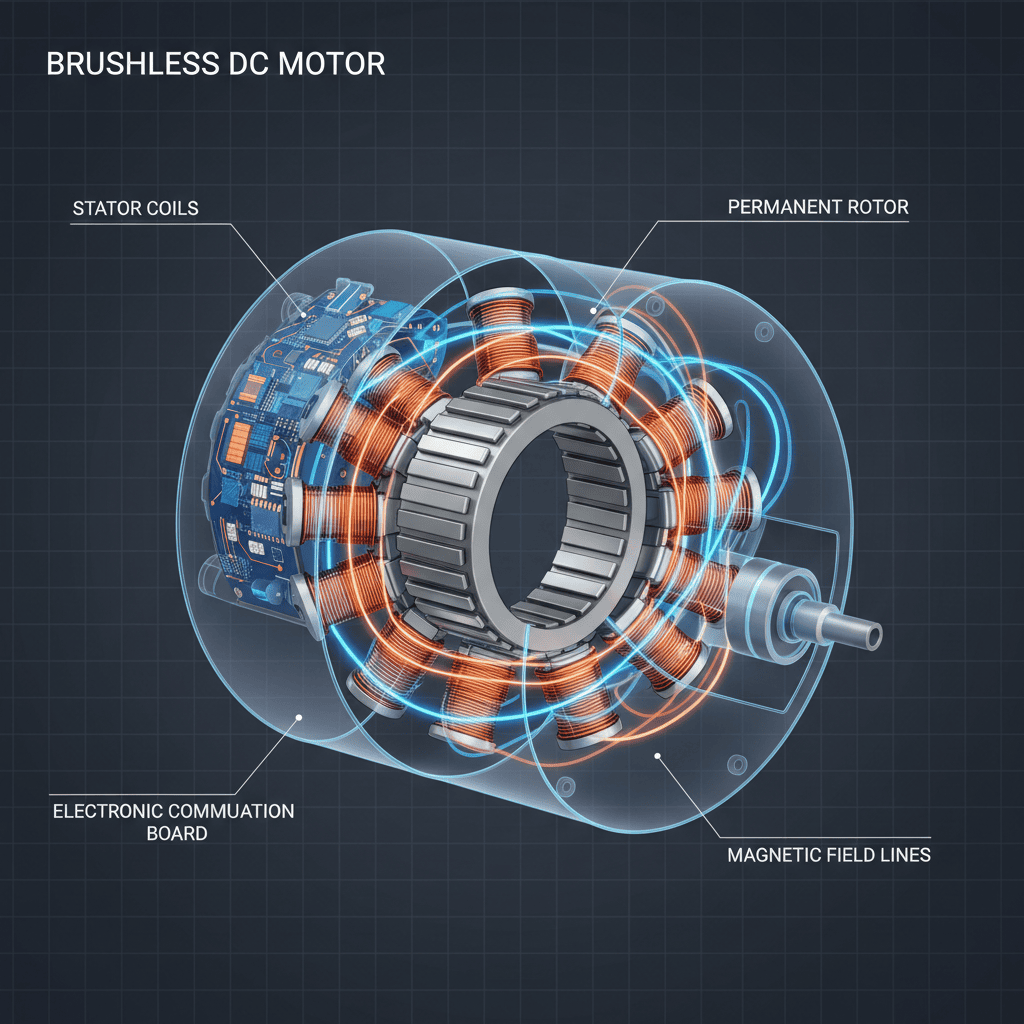
To understand brushless lawn mower technology, it helps to first understand how traditional brushed motors work.
How Traditional Brushed Motors Operate
Brushed motors use carbon brushes, small carbon or graphite contacts, that physically touch a spinning component called a commutator. These brushes transfer electrical current to the motor’s rotor, creating the magnetic field that produces motion. As the rotor spins, the brushes continuously make and break contact, which is why they wear down over time and require replacement.
How Brushless Motors Work Differently
Brushless motors eliminate physical carbon brushes entirely. Instead, they use electronic commutation, a dedicated electronic circuit (typically a microcontroller) that switches electrical current at precisely timed intervals. This electronic control replaces the mechanical brushes and commutator, directing power to the motor coils electronically rather than physically.
The result is cleaner power delivery, minimal friction loss, and no moving parts that wear out from constant contact. The motor’s rotor still spins, but the electromagnetic switching happens electronically inside the motor’s control system.
What “Electronically Commutated Motor” Means
Commutation refers to the process of switching electrical current direction to keep a motor spinning. In brushed motors, mechanical brushes do this commutation. In brushless motors, electronics do it. This electronic control is what gives brushless motors their efficiency advantage, the switching can be optimized perfectly, without the friction and wear of physical brushes.
Brushless vs. Brushed Lawn Mowers: Key Differences
| Factor | Brushless Motor | Brushed Motor |
|---|---|---|
| Efficiency | 85 to 90%+ efficiency; minimal energy loss | 60 to 80% efficiency; energy lost to brush friction |
| Motor Lifespan | 2000+ hours of runtime; brushes never wear | 500 to 1000 hours; brushes wear out and need replacement |
| Maintenance | Minimal; no brush replacement required | Requires periodic brush inspection and replacement |
| Heat Generation | Runs significantly cooler during operation | Generates more heat due to brush-commutator friction |
| Battery Runtime (Cordless) | 15 to 25% longer runtime on same battery capacity | Shorter runtime; more energy wasted as heat |
| Noise Level | Quieter; less mechanical friction | Slightly louder due to brush noise |
| Power Delivery | Smoother, more consistent power output | Consistent but with slight mechanical variations |
| Cost | Higher upfront cost (10 to 30% premium) | Lower initial cost |
Main Benefits of Brushless Lawn Mower Technology
1. Extended Battery Runtime for Cordless Models
Because brushless motors waste less energy as heat and friction, they deliver more cutting power from the same battery charge. For cordless lawn mowers, this means you can mow a larger yard or multiple properties on a single battery. The efficiency advantage translates directly to longer operating time.
2. Longer Motor Lifespan
Without carbon brushes wearing down, brushless motors typically last 2 to 3 times longer than brushed motors. Lawn mower users report brushless motors operating reliably for thousands of hours, while brushed motors often require brush replacement after 500 to 1000 hours of use. This longevity reduces long-term ownership costs.
3. Minimal Maintenance Requirements
Brushed motors require periodic inspection and eventual brush replacement, a maintenance task that adds cost and inconvenience. Brushless motors have no brushes to replace, eliminating this maintenance burden entirely. You can run a brushless lawn mower for years without internal maintenance beyond normal cleaning and storage.
4. Reduced Heat Generation
The friction created by carbon brushes constantly contacting the commutator generates significant heat. Brushless motors eliminate this friction source, running much cooler during operation. Cooler operation protects the motor’s windings, extends component lifespan, and reduces the risk of thermal shutdown during extended use.
5. Improved Energy Efficiency
Brushless motors convert electrical energy to mechanical motion with higher efficiency (typically 85, 90%+) compared to brushed motors (60, 80%). This means less wasted energy, lower operating costs for corded models, and better value from battery capacity in cordless mowers. Before finalizing equipment decisions, refer to our comprehensive marshall stanmore iii vs harman kardon onyx studio 8 comparison.
6. Smoother, More Consistent Performance
Electronic commutation in brushless motors can be optimized for perfect timing, delivering consistent power without the mechanical variations created by brush wear in traditional motors. Users experience steadier cutting performance and more predictable blade speed throughout the mowing season.
Important Clarification: Brushless vs. Cordless
A common point of confusion: brushless and cordless are not the same thing. For broader ecosystem context, read through our operational guide on dyson v8 cyclone vs bissell featherweight stick.
Understanding the Distinction
- Brushless refers to the motor type, how the motor creates motion (with or without carbon brushes).
- Cordless refers to the power source, whether the mower is battery-powered or plugged into an electrical outlet.
Possible Combinations
- Brushless + Cordless (most common): Battery-powered lawn mowers with brushless motors. These combine the efficiency benefits of brushless technology with the convenience of cordless operation.
- Brushless + Corded: Electric lawn mowers plugged into an outlet with brushless motors. Less common but available; they offer brushless efficiency without battery dependency.
- Brushed + Cordless: Battery-powered mowers with traditional brushed motors. Older or budget cordless models may use this configuration, sacrificing efficiency and lifespan for lower cost.
- Brushed + Corded: Traditional electric mowers with brushes. Common in older corded models; still available but being phased out in favor of brushless technology.
Key takeaway: A cordless lawn mower may or may not be brushless. Always check the product specifications to confirm whether a cordless mower uses brushless motor technology.
How Brushless Technology Affects Lawn Mower Performance
Cutting Power and Blade Speed
Brushless technology doesn’t directly increase cutting power, but the improved efficiency and heat management mean the motor can sustain full power longer without thermal throttling. Blade speed remains consistent, and some users report that the smoother power delivery of brushless motors produces cleaner cuts with fewer vibrations. For troubleshooting and reliability insights, consult our in-depth bissell crosswave hydrosteam vs shark stainforce report.
Noise Levels
Brushless motors operate more quietly than brushed motors because they eliminate the mechanical contact noise created by brushes against the commutator. The difference is typically 2 to 5 decibels, which is noticeable but not dramatic. If quiet operation is important to you, brushless technology offers a genuine advantage.
Typical Motor Lifespan
A quality brushless lawn mower motor can operate for 2000+ hours, roughly 10 to 20 years of typical home use. In contrast, brushed motors often require brush replacement at 500 to 1000 hours. For professional landscapers or frequent mowers, this lifespan difference justifies the brushless investment quickly.
Real-World Performance Implications
In practical use, brushless lawn mower owners report:
- Consistent cutting performance throughout the mowing season
- No decline in power as the motor ages (unlike brushed motors, which weaken as brushes wear)
- Ability to mow larger areas on cordless models without battery anxiety
- Fewer unexpected breakdowns due to motor failure
Is a Brushless Lawn Mower Worth the Investment?
Price Difference
Brushless lawn mowers typically cost 10 to 30% more upfront than comparable brushed models. For example, a brushless cordless mower might cost $400 to 500 while a brushed cordless model costs $300 to 400. The question is whether the benefits justify this initial premium.
Cost-Benefit Analysis
Brushless is worth the investment if you:
- Mow regularly (weekly or more frequently) and plan to own the mower for 5+ years
- Value low maintenance and don’t want to manage brush replacement costs
- Use a cordless model and want maximum runtime from your battery
- Prioritize durability and long motor lifespan
- Want predictable, consistent performance year after year
Brushed may be acceptable if you:
- Mow infrequently (few times per season) and expect shorter ownership duration
- Have budget constraints and accept higher long-term maintenance costs
- Are willing to replace brushes as part of routine maintenance
- Don’t require extended battery runtime
Long-Term Value Proposition
While brushless mowers cost more initially, the lower maintenance costs, extended motor lifespan, and reduced need for component replacement often make them cheaper over 5 to 10 years of ownership. If you plan to keep your lawn mower for more than 3 to 4 years, brushless technology likely represents better long-term value.
Everything You Need to Know: Brushless Lawn Mower FAQ
Are all cordless lawn mowers brushless?
No. While most modern premium cordless lawn mowers use brushless motors, some budget cordless models still use brushed motors. Always verify the motor type in the product specifications before purchasing. Look for terms like “brushless,” “ECM” (electronically commutated motor), or “brushless technology” in the product description.
Can you use a brushless lawn mower in the rain?
Brushless motors themselves are not more or less water-resistant than brushed motors. What matters is the mower’s overall design and the battery system (for cordless models). Most manufacturers recommend avoiding use in heavy rain regardless of motor type, but light moisture typically poses no problem. Check your specific mower’s user manual for guidance.
Do brushless lawn mowers require any special maintenance?
No special maintenance is needed beyond standard mower care: cleaning the deck after use, checking for grass buildup around the blade, and storing properly during off-season. Unlike brushed motors, you’ll never need to inspect or replace internal brushes. This simplicity is one of the key advantages of brushless technology.
What’s the difference between brushless and lithium-ion lawn mowers?
These terms describe different things. “Brushless” refers to the motor type, while “lithium-ion” refers to the battery chemistry. Many brushless cordless mowers use lithium-ion batteries, but these are independent features. You could theoretically have a lithium-ion mower with a brushed motor (though this is uncommon). When shopping, look for both brushless motor technology and modern lithium-ion battery systems for the best performance.
Key Takeaways
- Brushless lawn mowers use electronically commutated motors instead of mechanical carbon brushes, resulting in superior efficiency and durability.
- The main advantages are extended runtime (for cordless models), minimal maintenance, longer motor lifespan, cooler operation, and smoother performance.
- Brushless and cordless are different features, cordless refers to power source, brushless refers to motor type.
- Brushless mowers cost 10 to 30% more upfront but typically deliver better long-term value through reduced maintenance and extended lifespan.
- For homeowners who mow regularly and plan 5+ years of ownership, brushless technology is generally worth the investment.
Brushless Motors Explained Simply
A brushless motor relies on electronic control instead of carbon brushes to drive the rotor, and that design is often cited as one reason these mowers need less routine upkeep. Many battery-powered models pair this motor with a removable pack. If you want wider background on electrical safety around outdoor tools, look at American National Standards Institute (ANSI).