Quick Answer: What Is Snow Blowing?
Snow blowing is the process of removing accumulated snow from surfaces using a motorized machine called a snow blower. The machine scoops up snow using a rotating auger and throws it to the side or rear through a discharge chute, making it an efficient mechanical alternative to shoveling for clearing driveways, walkways, parking lots, and roads during winter weather. Snow…

Pros
- 24-inch clearing path covers large areas quickly
- Self-propelled drive reduces manual pushing effort
- Equipped with 13-inch snow tires for traction
- Electric start enables fast ignition in cold weather
- Manufacturer-rated snow throwing distance up to 40 feet
Cons
- Heavy 142-pound build requires significant effort to store
- Listing title notes recoil start while features state electric

Pros
- 20-inch clearing width and 10-inch intake depth per pass
- 180-degree rotating chute with adjustable deflector
- Throws snow up to a manufacturer-stated 35 feet
- Uses two 20V 6.0Ah PowerShare Pro batteries
- Battery platform works across compatible Worx tools
Cons
- Limited to 10 inches of snow intake height per pass
- Performance and battery life decrease in dense, wet snow

Pros
- 15-amp electric motor moves up to 840 lbs of snow per minute
- Wide 22-inch cutting path with a 13-inch intake depth
- Steel auger with 4 rubber-tipped blades protects paved surfaces
- 180-degree adjustable chute throws snow up to 25 feet
- Dual LED headlights improve visibility in dark winter conditions
Cons
- Requires continuous cord management with an outdoor extension cord
- Best suited for flat, paved surfaces rather than uneven gravel
How Snow Blowers Work
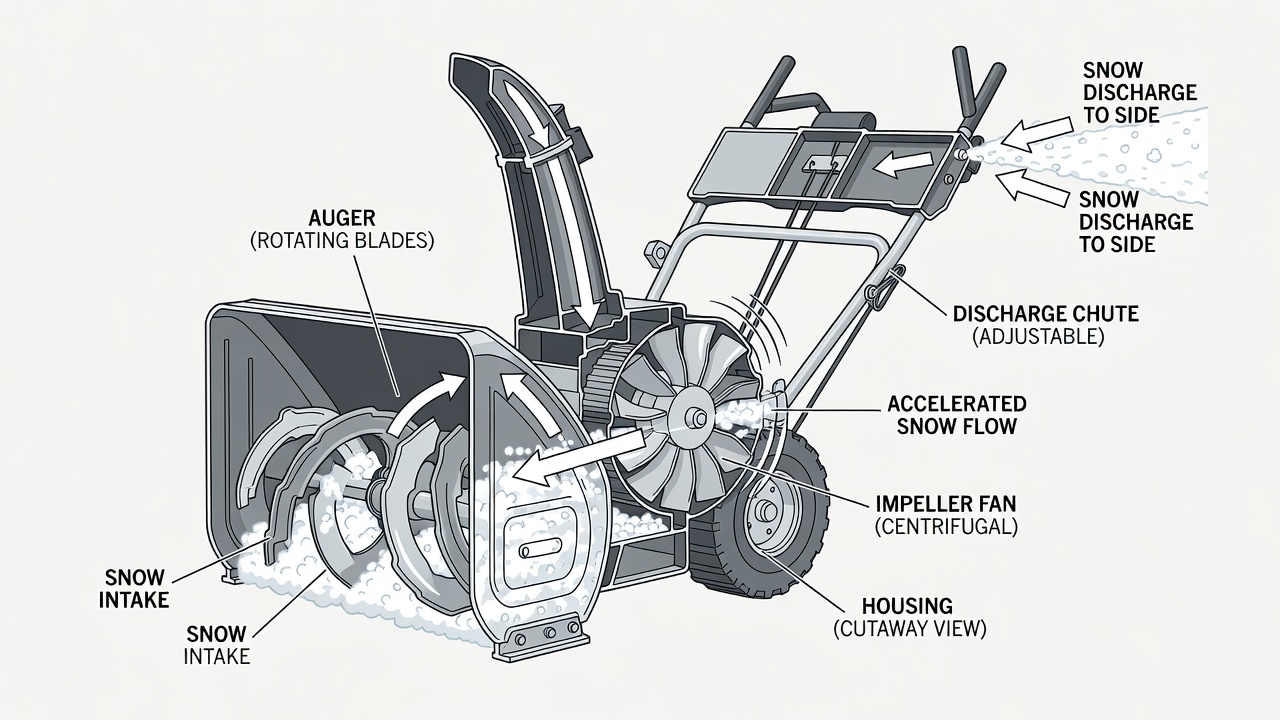
Snow blowers operate using a simple but effective mechanical process. When you engage the machine, a rotating auger, a spiral blade or paddle system, scoops up snow from the ground. The auger feeds the snow into an impeller, which is a high-speed fan that accelerates the snow and directs it through a discharge chute. You control the direction of the chute (typically left, right, or straight) to throw snow away from the area you’re clearing.
Most snow blowers are powered by gasoline engines, though electric and battery-powered models have become increasingly popular. Gas-powered blowers offer more power and longer runtime, while electric models are quieter, require less maintenance, and produce zero emissions. The engine powers both the auger and impeller through a belt-and-pulley or gear system.
- Auger: The rotating spiral that collects and feeds snow
- Impeller: The fan that accelerates and discharges snow
- Discharge chute: The channel directing snow output, usually adjustable
- Drive system: Belts, gears, or chains transferring engine power
- Control handles: Levers for engaging the auger, impeller, and direction adjustment
Types of Snow Blowers: Single-Stage, Two-Stage, and Three-Stage
Snow blowers are classified by the number of stages, which refers to how many separate systems move and discharge the snow. Each type is designed for different snow depths and clearing tasks.
Single-Stage Snow Blowers
Single-stage models use one auger to both collect and discharge snow in a continuous motion. The auger touches the ground directly, scooping up snow and throwing it out the chute in one operation.
Best for: Light, fluffy snow up to 6-8 inches; small driveways and walkways; residential homeowners with minimal snow accumulation.
Advantages: Compact, lightweight, affordable, quiet (especially electric models), easy to store and maintain.
Disadvantages: Limited power; not effective on packed, wet, or heavy snow; slower clearing speed. For additional operational safety benchmarks, see our published testing notes on marshall stanmore iii vs harman kardon onyx studio 8.
Two-Stage Snow Blowers
Two-stage models use an auger to collect snow and a separate impeller to discharge it. This design allows more efficient snow movement and higher discharge velocity.
Best for: Moderate to heavy snow (8-20+ inches); larger driveways; mixed snow conditions; most residential and light commercial applications. To compare alternative configurations, check our hands-on review of dyson v8 cyclone vs bissell featherweight stick.
Advantages: More powerful than single-stage; handles packed and wet snow; faster clearing; better for uneven surfaces.
Disadvantages: Larger and heavier; more expensive; requires more storage space; higher maintenance needs. Users looking for related component recommendations can explore our bissell crosswave hydrosteam vs shark stainforce breakdown.
Three-Stage Snow Blowers
Three-stage models add an additional accelerator stage, moving snow through three separate systems for maximum power and discharge distance. These are professional-grade machines.
Best for: Very heavy snow; commercial properties; municipal road clearing; extreme winter conditions; frequent, large-scale snow removal.
Advantages: Maximum clearing power; throws snow farthest; handles extreme conditions; fastest clearing speed.
Disadvantages: Very expensive; largest and heaviest; requires significant storage; overkill for most homeowners.
Electric vs. Gas-Powered Snow Blowers
Beyond stages, snow blowers differ in power source. Electric models (corded or battery-powered) are becoming popular alternatives to traditional gas engines.
Gas-powered: Reliable, powerful, unlimited runtime (for commercial fuel availability), works in any weather. Drawbacks include noise, emissions, maintenance, and storage of gasoline.
Battery-electric: Quiet, zero emissions, minimal maintenance, low operating cost. Limitations include battery runtime (typically 30-60 minutes), charging time, and reduced power in extreme cold.
Corded electric: Consistent power, very quiet, no emissions. Drawbacks include cord management, distance limitations, and need for nearby outlets.
Common Uses for Snow Blowing
Snow blowers are used across residential, commercial, and municipal contexts to clear various surfaces during winter weather.
Residential Applications
Homeowners use snow blowers to clear driveways, sidewalks, patios, decks, and walkways. Single-stage and two-stage models dominate this market, with many households choosing based on their region’s typical snowfall and driveway size. Snow blowing eliminates the physical strain of shoveling and significantly reduces clearing time.
Commercial Operations
Commercial snow removal contractors use two-stage and three-stage blowers to clear parking lots, business entrances, and private roads. Professional operators may use larger or multiple machines to meet service agreements and maintain safe, accessible surfaces for customers.
Municipal and Government Use
Cities, counties, and state departments of transportation use heavy-duty snow blowers (sometimes truck-mounted or integrated into clearing equipment) to maintain public roads, sidewalks, and municipal parking areas. Municipal operations often require clearing large volumes quickly to ensure public safety and traffic flow.
When Snow Blowing Is Most Necessary
Snow blowing becomes practical and cost-effective when snowfall exceeds 4-6 inches. For lighter snow, many people choose shoveling. Frequent or heavy snowfall areas make snow blowers essential winter tools. Snow blowing is typically performed during or immediately after snowstorms to prevent snow compaction and maintain accessibility.
Snow Blowing vs. Other Snow Removal Methods
While snow blowing is efficient, it’s useful to understand how it compares to alternative snow removal approaches.
Snow Blowing vs. Shoveling
Shoveling is manual snow removal using a shovel. Snow blowing offers significant advantages: it’s faster (a two-stage blower can clear a 30-foot driveway in minutes versus 30+ minutes of shoveling), requires no physical exertion (important for elderly or disabled individuals), and handles larger snowfall volumes. However, shoveling requires no equipment investment, storage space, or maintenance, and works well for small areas or light snow.
Snow Blowing vs. Snow Plowing
Snow plowing uses a blade attached to a vehicle (truck, tractor, or ATV) to push snow aside rather than throw it. Plowing is faster for very large areas and is typically used for roads and expansive commercial properties. Snow blowing is more precise for residential driveways and walkways, can throw snow farther away, and is more maneuverable in tight spaces. Plows can damage pavement or property if not carefully operated, while snow blowers are gentler on surfaces.
Snow Blowing Limitations
Snow blowers work best on relatively flat surfaces and struggle with extremely wet, heavy, or ice-packed snow. They cannot clear snow already compressed to ice. They are also loud (gas models), require storage space, need regular maintenance, and involve an initial equipment investment. For very light snow or small areas, shoveling or snow brooms may be more practical.
Basic Snow Blower Operation and Safety
Operating a snow blower safely requires understanding the machine and following essential precautions.
Pre-Operation Checklist
- Check fuel level (for gas models) and ensure fresh fuel
- Inspect the auger and impeller for debris or damage
- Verify the discharge chute rotates freely
- Check tire pressure and condition
- Review the user manual for your specific model
Operating Steps
- Clear the area of obstacles (rocks, sticks, toys)
- Start the engine according to manufacturer instructions
- Engage the auger slowly to begin collecting snow
- Walk forward at a controlled pace; let the machine do the work
- Adjust the discharge chute direction as needed
- Disengage the auger when stopping or clearing blockages
- Allow the impeller to stop completely before leaving the machine
Critical Safety Precautions
- Never put hands or feet near the auger or discharge chute while the machine is running
- Always disengage the auger before clearing a jam or blockage
- Wear protective gear: winter coat, gloves, goggles, and hearing protection
- Keep bystanders (especially children and pets) away from the operating area
- Do not operate on steep slopes where you could lose control
- Use the machine in daylight or good lighting
- Never refuel while the engine is running or hot
Maintenance Requirements
Seasonal maintenance: At the end of winter, drain fuel (or run the engine dry for gas models), clean the auger and chute, check belts for wear, and store in a dry location.
Regular maintenance: Change oil according to manufacturer schedules, replace spark plugs annually, inspect the auger for cracks or bending, and keep the discharge chute clear of snow buildup.
Battery-electric models: Store batteries indoors in moderate temperatures, charge fully before winter storage, and avoid complete battery discharge during the season.
Choosing the Right Snow Blower for Your Needs
Selecting a snow blower depends on your specific situation. Consider your typical annual snowfall, driveway or clearing area size, physical ability, storage space, and budget. For most residential homeowners in moderate snow climates, a two-stage gas or electric snow blower offers the best balance of power, price, and practicality. Light-snow-area residents may find a single-stage model sufficient, while commercial operators require heavy-duty two or three-stage equipment.
Buyer FAQs: What Is Snow Blowing Solved
How much faster is snow blowing compared to shoveling?
A two-stage snow blower can clear an average residential driveway in 5-15 minutes, depending on snow depth and driveway width. The same driveway typically requires 30-60+ minutes of shoveling. For those with physical limitations or in regions with frequent heavy snow, this time savings can be substantial.
Can a snow blower handle wet, heavy snow?
Single-stage snow blowers struggle with wet, heavy snow, which can clog the discharge chute. Two-stage and three-stage models are more effective because the separate impeller stage can handle denser snow. However, extremely wet snow that’s beginning to freeze may still cause clogging regardless of blower type. Clearing snow more frequently during a wet, heavy storm prevents the worst accumulation.
How do I store a snow blower during the off-season?
Store your snow blower in a dry, preferably sheltered location like a garage or shed. For gas-powered models, drain the fuel or run the engine dry to prevent fuel degradation and carburetor clogging. Clean the auger and discharge chute of any remaining snow or debris. Battery-electric models should be stored indoors with fully charged batteries in moderate temperatures. Cover the machine to protect it from dust.
Are electric snow blowers as powerful as gas models?
Battery-electric snow blowers are less powerful than comparable gas models and have limited runtime (typically 30-60 minutes on a single charge). They work well for light to moderate snow and smaller areas but may not be ideal for heavy, frequent snowfall or large properties. Corded electric models provide consistent power but are limited by cord length. Gas models remain the standard for maximum power and unlimited runtime.
Related Maintenance and Operating Guides
To keep your equipment running at peak operating efficiency, explore our related technical walkthroughs and maintenance tutorials:
- Consult our detailed breakdown on cordless stick vacuum buyer guide.
- Consult our detailed breakdown on robotic pool cleaner comparison guide.
Snow Blowing Explained for Beginners
Snow blowing uses an auger and impeller to lift snow and throw it clear of the path being cleared. Clearing in layers rather than all at once reduces strain on both the machine and the operator. General cold-weather safety and snow equipment guidance is available from American National Standards Institute (ANSI).