Quick Answer: Choosing the Best Battery Powered Lawn Mower
The best battery-powered lawn mower isn’t one-size-fits-all, it depends on your yard size, budget, and performance priorities. For most residential users with quarter-to-half-acre properties, a mid-range lithium-ion model ($500 to 700) from established brands like EGO, DeWalt, or Ryobi delivers the best balance of runtime (45 to 60 minutes), cutting width (19 to 21 inches), and reliability. Budget-conscious buyers can find solid options starting at $300, while…
Pros
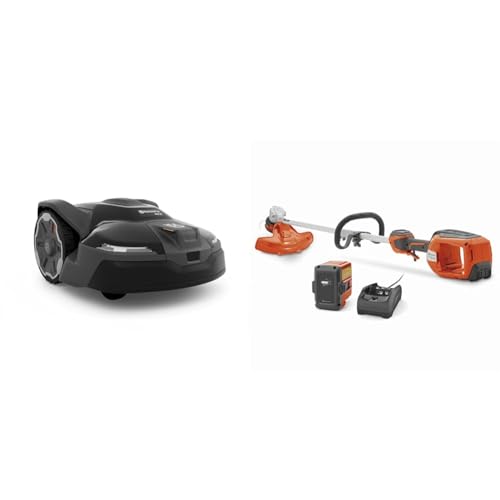
- Precise EPOS positioning system ensures accurate navigation without boundary wires
- Handles slopes up to 45 percent and works rain or shine for year-round reliability
- Full app control for schedules, patterns, cutting height, and theft tracking
- Bundle includes ready-to-use cordless trimmer with dual-direction head and power boost
- Simple blade swaps and hose-down cleaning make ongoing upkeep quick and easy
Cons
- Maximum mowing capacity limited to 0.5 acres, unsuitable for larger properties
- Virtual mapping setup requires manually driving the mower to define boundaries, adding initial time investment
- Performance details such as exact battery runtime for the mower are not specified in available data
The Husqvarna 410iQ Automower Bundle combines the brand's robotic mower with the 320iL cordless string trimmer into a complete lawn care package. Built for American yards, the 410iQ features a rugged bumper, larger wheels, and solid construction that crosses paths and driveways smoothly while the included trimmer arrives with a 4 Ah battery and charger for immediate use. The overall design prioritizes wire-free convenience and ease of maintenance from the first unboxing.
In performance, the Exact Positioning Operating System uses satellite communication for centimeter-level accuracy, allowing the mower to handle slopes up to 45 percent and cut heights from 1 to 4 inches without tearing grass. App-guided virtual mapping replaces boundary wires, and the mower operates rain or shine with customizable schedules and patterns. The companion 320iL trimmer delivers a 16-inch cutting width, dual-direction head to keep clippings off beds, and a power boost mode offering 20 percent more power for heavy weeds, all while remaining 25 percent lighter with active cooling for consistent runtime.
Considerations include the 0.5-acre capacity limit, which may restrict use on bigger properties, and the initial virtual mapping process that requires driving the unit around the lawn. Available data also lacks specific battery life figures for the mower itself, so owners should plan for typical robotic charging cycles based on lawn conditions.
This bundle delivers excellent value for homeowners seeking automated mowing plus versatile cordless trimming on medium-sized properties. Those with complex landscaping who value app control, precision navigation, and a ready-to-go trimmer kit will benefit most from the Husqvarna 410iQ and 320iL combination.

Pros
- Two-year warranty, per listing
- Eight cutting heights from 0.75 to 4 inches
- Mulching plug and 2.1-bushel grass bag included
- Nationwide parts and service network, manufacturer-stated
Cons
- Runtime of up to 45 minutes per charge is manufacturer-stated
- Second 12Ah battery is sold separately

Pros
- Gas-like power and high torque from the Honda battery motor for tough conditions
- Dual battery bays and included 12AH lithium-ion pack for flexible extended runtime
- True 4-in-1 Versamow versatility with no extra attachments needed
- Precise variable-speed self-propulsion and easy dual-lever height adjustments
- Strong safety features including blade control, rear shield, and automatic 3-minute shutoff
Cons
- Only one 12AH battery and 2A charger included; second battery sold separately for dual bay use
- Single battery runtime limited to about 45 minutes or 0.37 acre before needing recharge or swap
- Automatic shutoff after 3 minutes of blade inactivity may require restarts during pauses
The Honda HRX-BE is a premium 21-inch walk-behind battery-powered lawn mower engineered for residential users seeking reliable performance. Its robust build includes dual battery bays, an Easy-Off 2.2 bushel grass bag, and thoughtful safety elements that create a high-quality, durable first impression backed by the Honda brand.
Performance stands out with a powerful Honda motor that matches GCV gas engine torque and RPMs for excellent cut quality even in demanding conditions. The 4-in-1 Versamow Clip Director and twin blade MicroCut System produce ultra-fine clippings for superior mulching, bagging, discharging, or leaf shredding. The e-Select Drive offers adjustable self-propelled speeds from 0 to 4 mph, while dual-lever controls provide 7 cutting heights from 0.75 to 4 inches. Blade control buttons, rear shield, discharge guard, and automatic shutoff after 3 minutes of inactivity add practical safety and convenience.
Key considerations include the single included 12AH lithium-ion battery that delivers up to 45 minutes or 0.37 acre of runtime, with a second battery available separately to utilize both bays fully. The mower ships with a 2A charger, wall bracket, bag frame, and manual, and benefits from nationwide parts support plus a 5-year residential warranty.
Overall, the Honda HRX-BE delivers exceptional value for homeowners with medium to larger yards who prioritize gas-level power, mulching versatility, self-propulsion, and long-term serviceability in a battery platform. It is best suited for those ready to invest in optional extra batteries for maximum runtime and who appreciate Honda's established support network.

Pros
- 21-inch steel deck listed for tall grass
- Push-button start with no pull cord
- Seven-position height adjustment
- Works with 75+ Greenworks 80V tools per listing
Cons
- Listed weight of 90 pounds limits portability
- Coverage and power claims are manufacturer-stated

Pros
- Two 8.0Ah batteries and rapid charger listed as included
- Electric eight-position cutting height adjustment
- Variable self-propelled speed from 1.3 to 2.9 MPH
- T-shaped handle folds with one bend for storage
Cons
- Runtime is up to 45 minutes per charge, per manufacturer
Pros
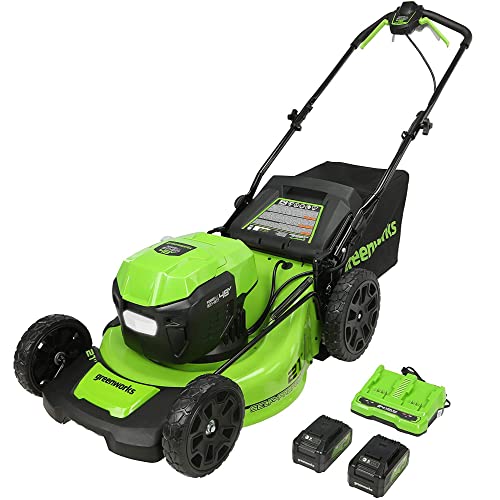
- Two 5Ah batteries combine for 48V output
- Self-propelled rear-wheel drive with variable speed
- Brushless motor, per manufacturer specifications
- Mulch, rear bag, side discharge and turbo modes
- Dual port charger listed as included
Cons
- Weighs 77 pounds, which may be hard to maneuver
- Run time varies with grass conditions and operator technique
Pros
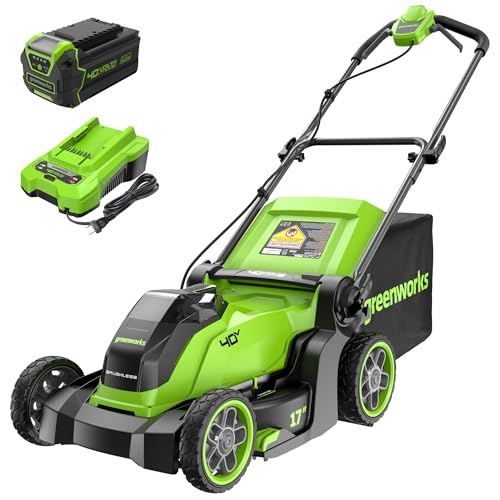
- Six cutting heights adjusted with one lever
- Mulching or bagging options listed for finish preference
- Listed 3-year tool and 3-year battery warranty
- Listed as compatible with 75+ Greenworks 40V tools
Cons
- Up to 35-minute runtime is a manufacturer-stated figure
- Listed for yards up to 1/4 acre, so larger lawns are not covered

Pros
- Brushless motor offers enhanced power and reduced long-term maintenance
- Includes two 4.0Ah batteries for extended continuous runtime
- Versatile 6-height settings accommodate varied lawn conditions
- 18-inch deck and large bag improve overall mowing efficiency
- Lightweight construction makes transport and handling easier
Cons
- Charger is not included and must be purchased separately
- 30+ minute runtime may require battery swaps for larger properties
- No mulching or side-discharge options detailed in available specs
The LiTHELi 18-inch 40V Brushless Lawn Mower is a cordless walk-behind model built for garden yards. Its lightweight 42.33-pound frame gives an immediate impression of easy handling and portability while the brushless design signals modern efficiency and lower upkeep needs.
Performance & Key Features The advanced brushless motor delivers reliable cutting power with reduced maintenance. Six height positions ranging from 0.98 to 2.95 inches let users match the cut to grass type or season. An 18-inch cutting width paired with the 10.57-gallon collection bag covers ground quickly and minimizes emptying trips. Twin 4.0Ah batteries support up to 30+ minutes of runtime for uninterrupted sessions on typical residential lawns.
Drawbacks & Considerations The charger is not included, so buyers need to obtain one separately. Runtime of 30+ minutes works well for smaller to medium yards but may force battery changes on larger properties. No further accessories or alternative discharge modes are specified in the product data.
Verdict This mower suits homeowners with garden yards who want a lightweight cordless option with flexible height control and dual-battery convenience. It offers strong everyday value for users prioritizing maneuverability and reduced maintenance over extended single-charge capacity.
Pros
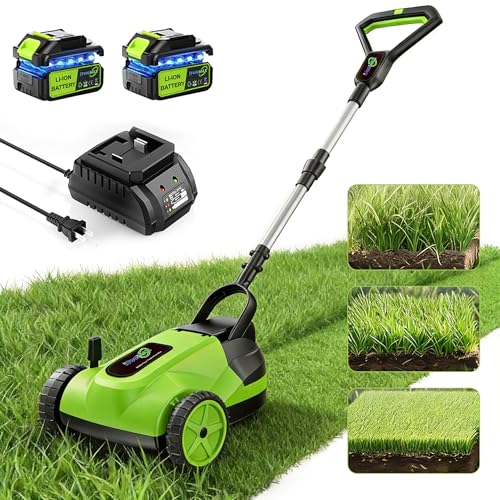
- Ultra-lightweight 9.9 lb build allows easy handling and storage for seniors and users seeking low-effort yard work
- Powerful quiet 7500RPM brushless motor combined with dual batteries for solid 45-minute runtime
- Ergonomic height-adjustable handle supports upright no-bend mowing posture
- Advanced dual-button and tilt-activated auto shut-off safety features
- Versatile three-position height settings optimize lawn health and appearance
Cons
- Narrow 8.7-inch cutting width requires more passes to cover medium or larger lawns efficiently
- 45-minute runtime may need battery swaps or recharges for bigger yards or denser grass
- No grass bagging or mulching system detailed, so clippings rely on side discharge only
The iToolMax Electric Small Lawn Mower is a compact cordless walk-behind model built for gardens, yards, and farms. Its standout 9.9-pound weight delivers immediate ease of use and portability, while the height-adjustable handle ranging from 54 to 59 inches creates a thoughtful ergonomic design that lets users of any stature stay upright. Overall build prioritizes simplicity and accessibility for everyday family use.
Performance centers on a high-efficiency 7500RPM brushless motor that produces clean precise cuts far more quietly than gas alternatives. Dual 21V batteries supply up to 45 minutes of runtime, enough for most front and back lawns in one session. The three height settings of 1.0 inches, 1.6 inches, and 2.2 inches plus 8.7-inch cutting width give flexible control for different grass conditions. Dual-button startup and the auto shut-off sensor that deactivates the unit if tilted past 20 or 70 degrees add strong real-world safety.
Drawbacks stem mainly from the compact size. The narrow cutting path means extra passes on larger areas, and the 45-minute battery life can fall short for extensive or thick grass without mid-job recharging. Available details also omit any grass bag or mulching option, limiting how clippings are managed.
This mower delivers the most value for seniors, parents, and owners of small to medium gardens who want a lightweight, safe, battery-powered tool. It is especially well suited as a gift for anyone who needs reduced physical strain and reliable safety features during routine yard care.

Pros
- Brushless motor design is typically quieter and more durable than brushed alternatives.
- Two included 5.0Ah batteries add flexibility for longer mowing sessions.
- Lightweight cordless format improves maneuverability around garden yards and storage spaces.
- Six height settings provide useful cutting versatility for different lawn needs.
Cons
- The 18-inch deck is best suited to small and medium yards, so larger lawns may take longer to mow.
- Battery runtime is not specified in the manufacturer listing, so exact coverage per charge is unclear.
- The listed color is shown as "Sliver" in the manufacturer listing, which may reflect a product listing typo.
Overview & Design: The LiTHELi 18-inch 40V Brushless Lawn Mower is a cordless walk-behind mower made for garden yards and small to medium lawns. Its lightweight build and compact 18-inch size should make it easier to push, turn, and store than bulkier gas mowers.
Performance & Key Features: The 40V brushless motor is the main highlight, offering consistent cutting power with less noise and vibration than a brushed motor. The mower also includes 2 x 5.0Ah batteries, which adds convenience because you can swap batteries instead of waiting on a charge. With 6 height settings, it gives users enough flexibility to adjust the cut for different grass types and seasonal conditions.
Drawbacks & Considerations: This model is aimed at smaller mowing jobs, so it may be less efficient for larger properties. The manufacturer listing does not specify runtime, charging time, or bag capacity, so buyers who need exact performance numbers may want more detail before purchasing.
Verdict: For homeowners who want a simpler, low-maintenance mower for everyday yard care, the LiTHELi 18-inch 40V Brushless Lawn Mower looks like a practical option. It offers useful cordless convenience, adjustable cutting height, and dual batteries in a format that favors easy handling over heavy-duty cutting.

Pros
- Gas-free, cord-free 40V battery platform
- Six cutting height positions from 1.5 to 3.9 inches
- 11.8-gallon bag for mulching or rear bagging
- Includes a 40V battery and charger
- Listing states a 2-year warranty
Cons
- Listed runtime is up to 25 minutes per charge
- Listed weight is 49 pounds

Pros
- Includes 4.0Ah battery and charger, per the listing
- Lightweight design with push-button start
- Single-lever, five-position height adjustment
- Mulch or bag option for cleanup flexibility
Cons
- Listed runtime of up to 30 minutes varies by conditions
- 13-inch cutting deck covers less width per pass

Pros
- Mulching plug and 10.6-gallon bag option for two cutting modes
- Two 4.0Ah batteries and two chargers listed as included
- Five cutting heights from 1.37 to 2.95 inches
- Dual-action safety switch requires two steps to start
- Brushless motor rated up to 3400 RPM per listing
Cons
- Listed runtime of up to 10 minutes may suit only small lawns
- Overheat protection may stop the mower in tall or thick grass

Pros
- Two 20V 4.0Ah batteries and charger listed as included
- One-touch lever with five heights from 0.98 to 2.56 inches
- Brushless motor described for efficiency and quieter operation
- 8-gallon grass collection bag included
Cons
- Weight differs between features (20.5 lbs) and specs (25 lbs)
- Runtime varies with grass density, cutting height, and conditions

Pros
- Two 36Wh batteries and a charger listed as included
- Cordless push-button start with no gas or extension cord
- Four cutting heights listed from 0.67 to 1.77 inches
- Compact 16-inch path for trees, beds, and tight spaces
- Up to 30 minutes runtime per manufacturer, varies by conditions
Cons
- Not recommended for uneven ground, tall or dense grass, or wet grass
- Runtime depends on grass height, density, terrain, and mowing pace
Why Battery-Powered Lawn Mowers Matter
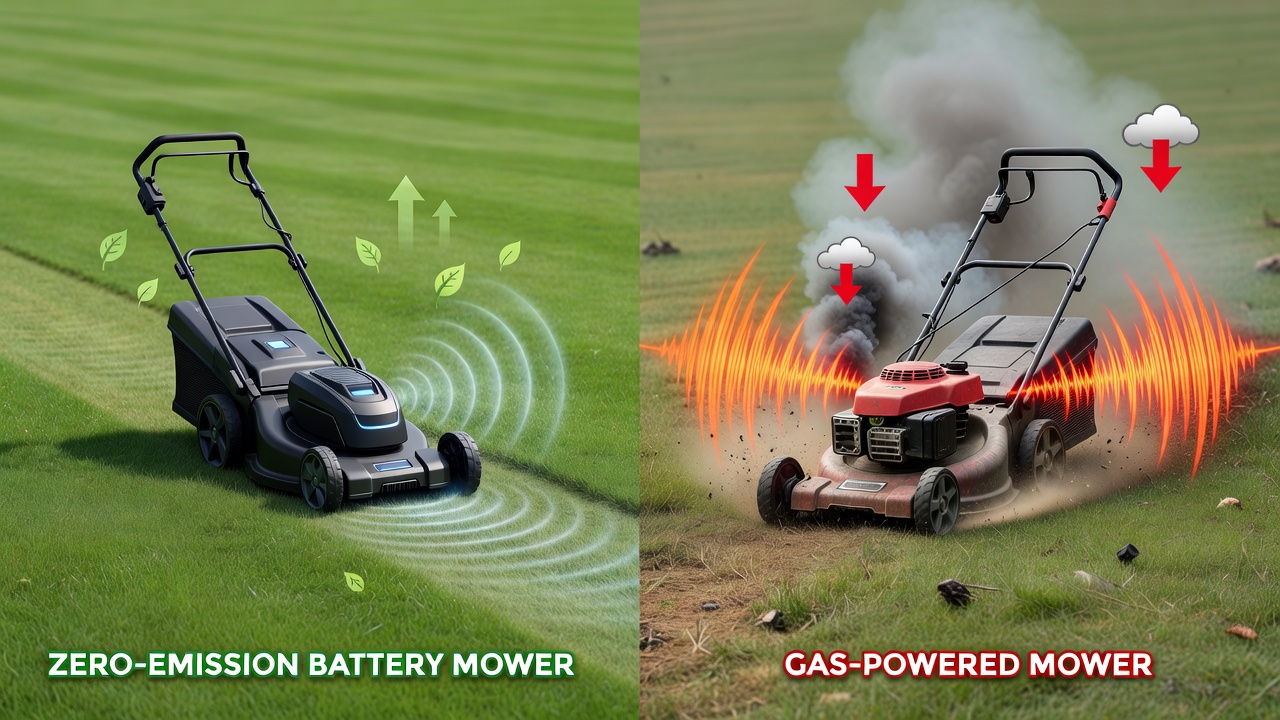
Battery-powered (cordless) lawn mowers have transformed residential lawn care over the past decade. Unlike gas-powered mowers, they produce zero emissions, require minimal maintenance, and operate quietly, typically 75 to 80 decibels compared to 90+ dB for gas models. Unlike corded electric mowers, they offer complete yard mobility without extension cord management.
The primary trade-off is runtime: a single battery charge typically covers 30 to 60 minutes of mowing, sufficient for most residential yards up to one acre. Lithium-ion battery technology has matured significantly, with modern batteries delivering consistent power throughout the charge cycle and retaining 80% capacity after 500+ charge cycles (roughly 5 to 7 years of typical use).
Key Factors to Consider Before Buying
1. Yard Size and Mowing Runtime Requirements
Battery runtime is the most critical limiting factor. Here’s how to self-assess:
- Small yards (under ¼ acre): 30 to 40 minutes of runtime is sufficient. Budget models with 40 to 60V batteries work well.
- Medium yards (¼-½ acre): Plan for 45 to 60 minutes of runtime. Mid-range 56 to 80V systems are ideal.
- Large residential (½-1 acre): Consider dual-battery systems or professional-grade 80V+ models that support extended run times.
- Commercial or heavy use: Professional mowers with hot-swap battery capability and 90+ minute runtime are necessary.
Real-world runtime varies with grass height, density, terrain slope, and weather. Thick, wet grass reduces battery life by 20 to 30% compared to ideal conditions. Most manufacturers’ stated runtime assumes ideal mowing conditions on level terrain.
2. Battery Technology and Capacity
Modern cordless mowers use lithium-ion batteries measured in amp-hours (Ah) and voltage (V). A higher Ah rating means longer runtime; higher voltage improves cutting power and efficiency.
- 40 to 60V systems: Entry-level to mid-range, suitable for small-to-medium yards. Typical capacity: 2.0 to 5.0 Ah.
- 80V systems: Professional-grade, best for larger properties and demanding conditions. Typical capacity: 2.0 to 7.5 Ah.
- Battery ecosystem compatibility: Many brands (DeWalt, Ryobi, Ego) use batteries across multiple tools. If you own other cordless equipment from the same brand, purchasing a mower compatible with existing batteries can reduce total cost of ownership.
Lithium-ion batteries degrade over time. Expect 80 to 85% of original capacity after 500 full charge cycles, roughly 5 to 7 years of typical weekly use. Proper storage (cool, dry conditions; partial charge during off-season) extends lifespan.
3. Cutting Deck Width and Height Adjustment
Cutting deck width ranges from 17 to 21 inches. Wider decks (20 to 21 inches) reduce mowing time on large properties but are heavier and harder to maneuver in tight spaces. For residential yards, 19 to 20 inches is the practical sweet spot.
Cutting height adjustment should offer a range of 1 to 3.5 inches, allowing flexibility for different grass types and seasonal conditions. Most modern mowers feature 5 to 7 height settings; some premium models offer infinitely variable adjustment.
4. Self-Propulsion vs. Push Mowers
Self-propelled mowers reduce operator fatigue and are easier on slopes or dense grass. Most mid-range and premium cordless mowers include self-propulsion (variable speed control). Budget models are typically push-only. On flat, well-maintained lawns, push mowers suffice; on sloped terrain or thick grass, self-propulsion is worth the premium.
5. Mulching, Bagging, and Discharge Options
Most modern mowers offer three grass-handling options: Readers comparing setup options can review our technical analysis on marshall stanmore iii vs harman kardon onyx studio 8.
- Mulching: Finely chops grass and returns it to the lawn (no bag needed). Reduces waste and provides nutrients.
- Bagging: Collects clippings for removal or composting. Cleaner appearance but requires bag emptying.
- Side discharge: Throws clippings to the side. Fast for large areas but creates visible discharge patterns.
Premium models include all three; budget models may support only mulching or bagging. For most homeowners, mulching and bagging capability is sufficient.
Understanding Battery Runtime in Real-World Conditions
Manufacturers typically provide runtime estimates under ideal conditions (level terrain, dry grass, mower deck adjusted to medium height). Real-world performance varies significantly: For complementary field maintenance guidelines, examine our breakdown of dyson v8 cyclone vs bissell featherweight stick.
- Wet or dense grass: 15 to 30% reduction in runtime.
- Sloped terrain: 20 to 25% reduction (self-propelled mowers use additional battery power navigating inclines).
- Cold weather (below 50°F): 10 to 20% reduction in effective runtime.
- Blade dullness: A dull blade forces the motor to work harder, reducing runtime by 15%+.
For a yard requiring 45 minutes to mow, purchase a mower with a stated runtime of at least 60 minutes to account for real-world conditions and battery degradation over time.
What to Evaluate in Performance and Reliability
Cutting Efficiency and Blade Speed
Blade speed (typically 2,500, 4,000 RPM) affects cutting quality and power draw. Higher speeds produce a cleaner cut but consume more battery power. Most established brands balance these factors appropriately; a mower with inconsistent blade speed under load will produce ragged cuts and drain batteries faster. To evaluate matched hardware tolerances, consult our detailed overview of bissell crosswave hydrosteam vs shark stainforce.
Noise Level
Battery mowers operate at 75 to 80 dB, compared to 90 to 100 dB for gas models. This translates to roughly one-quarter the perceived loudness. Most municipalities allow cordless mower use during early morning or evening hours when gas mowers are prohibited.
Weight and Maneuverability
Weight ranges from 40 to 70 lbs (push mowers) to 60 to 90 lbs (self-propelled models). Lighter mowers are easier to handle and store but may sacrifice cutting power or battery capacity. For most users, 50 to 60 lbs is manageable; above 70 lbs, fatigue becomes a factor on larger lawns.
Durability and Warranty
Quality battery mowers from established brands (EGO, DeWalt, Ryobi, Toro) typically include 3 to 5 year warranties on the mower deck and 2 to 3 years on batteries. Warranty coverage reflects manufacturer confidence in longevity. Look for brands with strong customer support networks and parts availability in your region.
Price Tiers and What They Mean
Budget Tier ($300 to 500)
Entry-level cordless mowers suitable for small yards (under ¼ acre). Typically push-only, 40 to 56V systems, limited mulching options. Best for homeowners willing to make multiple passes or have low-maintenance lawns.
Mid-Range Tier ($500 to 700)
The sweet spot for most residential users. Self-propelled, 56 to 80V systems, 45 to 60 minute runtime, solid mulching and bagging capability, better build quality. Brands like EGO Power+, DeWalt, and Ryobi dominate this segment.
Premium Tier ($700 to 1,000+)
Professional-grade mowers for large properties (¾+ acres), commercial use, or demanding conditions. Advanced features include dual-battery support, extended runtime, superior cutting performance, heavy-duty construction. Justifiable for commercial landscapers or large estates.
Matching Mower Type to Yard Characteristics
Small, Flat, Well-Maintained Lawns
A budget-to-mid-range push mower (40 to 56V, 17 to 19 inch deck) is adequate. Prioritize mulching capability to reduce waste.
Medium Residential Lawns with Varied Terrain
A mid-range self-propelled mower (56 to 80V, 19 to 21 inch deck) with variable speed control handles slopes and dense grass efficiently. Look for at least 45 minutes stated runtime.
Large Properties or Challenging Conditions
A professional-grade self-propelled mower (80V+, 21 inch deck) with dual-battery capability or fast-charging support is necessary. Prioritize models with proven durability in independent reviews.
Sloped or Uneven Terrain
Self-propulsion is essential. Look for variable speed control that allows adjustment to terrain steepness. Wider cutting decks reduce total mowing time, reducing fatigue on slopes.
Brand Reliability and Support
Top battery mower brands offer different strengths:
- EGO Power+: Longest runtimes, best cutting performance, premium pricing. Strong warranty and parts availability.
- DeWalt: Excellent for users with existing DeWalt cordless tool ecosystems. Professional-grade build quality, mid-to-premium pricing.
- Ryobi: Best value for budget-conscious buyers. Good runtime and feature parity with higher-priced competitors. Extensive tool ecosystem.
- Toro: Professional-grade options, known for durability. Higher pricing but excellent warranty coverage.
- Greenworks: Affordable entry-to-mid-range options. Growing parts availability but smaller support network than established brands.
Before purchasing, verify parts availability and service centers in your region. A lower-priced mower becomes expensive if repairs require shipping to a regional distributor.
Buyer FAQs: Best Battery Powered Lawn Mower Solved
How long does a battery-powered mower battery last?
Modern lithium-ion mower batteries retain 80 to 85% of original capacity after 500 full charge cycles, roughly 5 to 7 years of weekly use. Expected lifespan depends on storage conditions, charging habits, and usage patterns. Cool, dry storage during off-season extends lifespan. Most manufacturers warranty batteries for 2 to 3 years.
Can I use one battery for multiple cordless tools?
Yes, if tools share the same brand and battery platform. DeWalt, Ryobi, and EGO batteries are cross-compatible within their respective ecosystems. This reduces total cost of ownership if you own multiple cordless tools. Check compatibility before purchasing to ensure batteries work across your tool collection.
Is a battery-powered mower suitable for commercial or professional use?
Professional-grade battery mowers (80V+, dual-battery support) can handle commercial landscaping, but require careful planning around runtime and charging cycles. For daily commercial use on multiple properties, gas mowers or plug-in corded models may still be more practical. Battery mowers excel for residential properties or small commercial accounts with defined service routes.
What maintenance does a battery-powered mower require?
Minimal maintenance compared to gas mowers. Clean the cutting deck after each use to prevent grass buildup. Sharpen or replace blades annually or after every 20 to 30 hours of use. Store batteries partially charged (50%) in cool, dry conditions during off-season. Check for loose bolts or wear annually. No oil changes, spark plug maintenance, or seasonal tune-ups required.
Making Your Final Decision
Selecting the best battery-powered mower comes down to matching specifications to your specific lawn conditions and budget. Start by assessing your yard size, terrain, and typical mowing time requirements. Compare mid-range models ($500 to 700) first, they offer the best value and cover 80% of residential needs. If your lawn is smaller or simpler, a budget model may suffice. If your property is large or heavily sloped, invest in a premium model with extended runtime and self-propulsion.
Check independent reviews and customer feedback specific to your top choices; real-world user experiences reveal durability issues that warranty coverage alone won’t capture. Verify battery ecosystem compatibility with tools you already own. Finally, confirm that your chosen brand has local parts availability and service support.
Battery-powered mowers have matured into a reliable, cost-effective alternative to gas and corded models for most residential users. The right choice balances runtime, cutting performance, and price against your specific lawn needs.