Direct Answer: How to Dispose of a Lawn Mower
Lawn mower disposal depends on the mower’s condition and your location. Working mowers can be donated to charities like Habitat for Humanity ReStore or Goodwill, sold locally online, or given away to neighbors. Broken mowers should be taken to scrap metal recyclers, municipal hazardous waste facilities, or bulk waste collection sites. All gas-powered mowers require fuel and oil drainage before disposal for safety and environmental compliance. Check your city or county waste management guidelines, as regulations vary significantly by region.
Assess Your Mower’s Condition
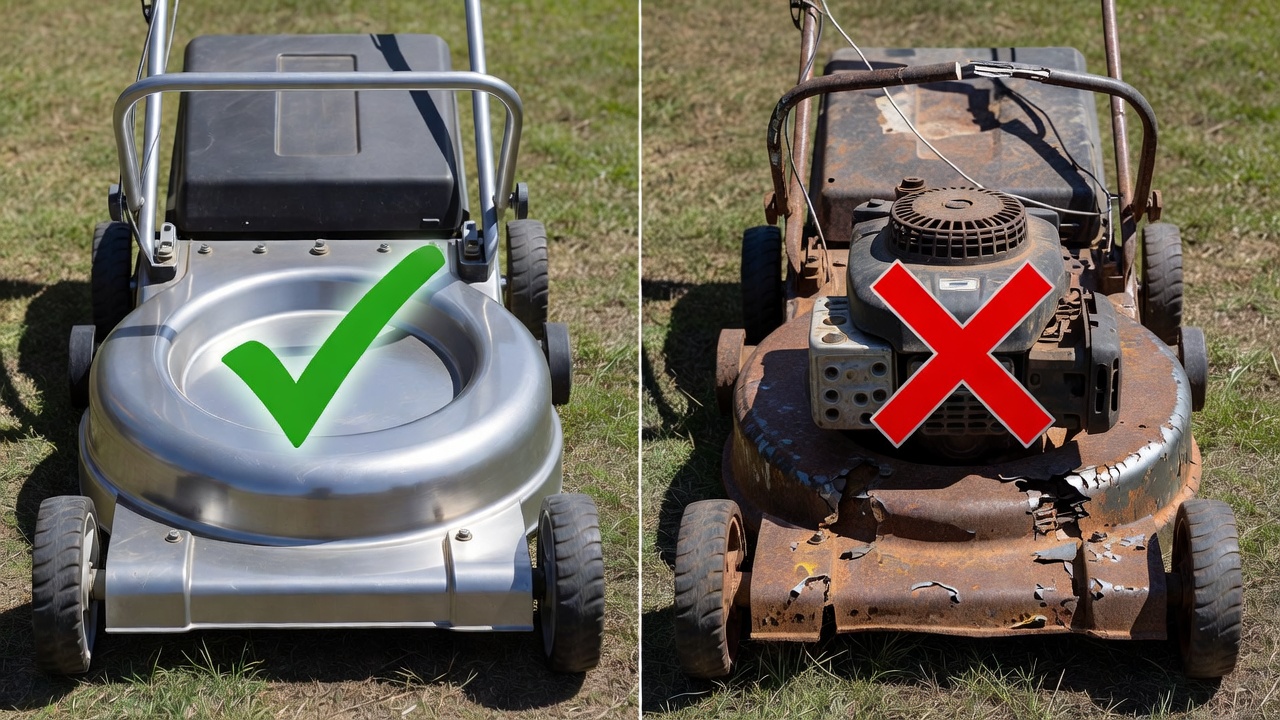
The first step in lawn mower disposal is determining whether your mower is functional or damaged. This assessment directly determines which disposal pathway is most appropriate, cost-effective, and environmentally responsible.
- Does the mower start and run smoothly?
- Is it gas-powered, electric, or cordless?
- Does it have visible damage, deep rust, or broken parts?
- How old is the mower, and has it been regularly maintained?
A mower that starts reliably, cuts grass effectively, and has minimal cosmetic damage qualifies as “working” and is suitable for donation or resale. Mowers with seized engines, extensive rust, broken decks, or non-functional components should follow the recycling or scrap metal pathway.
Donation & Resale Options for Working Mowers
If your lawn mower is in working condition, donating or selling it extends the product’s lifecycle and keeps it out of waste streams. This option also provides potential tax deductions when donating to registered nonprofits.
Where to donate a working lawn mower:
- Habitat for Humanity ReStore: Accepts working lawn equipment at their local outlets. Items are resold affordably to community members. Contact your nearest ReStore for acceptance criteria and drop-off information.
- Goodwill and Salvation Army: Both accept lawn equipment if in working condition. Call ahead to confirm your local branch accepts large items and inquire about pickup services.
- Local community centers and parks departments: Some municipal programs accept donations of lawn equipment for community gardens, parks maintenance, or job training programs.
- Schools and vocational programs: Technical and vocational schools sometimes accept used lawn equipment for training purposes.
- Farms and agricultural nonprofits: Local farming organizations or agricultural extension offices may redirect equipment to small farms or community gardens.
Selling your used lawn mower:
- Facebook Marketplace and Craigslist: Post photos, condition details, and price. Local buyers can pick up, avoiding shipping costs.
- OfferUp and Letgo: Mobile-first platforms popular for local equipment sales.
- Local classified ads: Community newspapers and bulletin boards still attract buyers.
- Lawn equipment consignment: Some local lawn care shops or equipment dealers accept used mowers on consignment.
When listing or donating, be honest about the mower’s condition, maintenance history, and any known issues. This builds buyer/recipient trust and ensures the equipment finds the right home.
Prepare Your Mower for Safe Disposal
Before moving your lawn mower to any disposal facility, you must safely drain fuel, oil, and handle batteries. This critical step prevents environmental contamination, reduces fire hazards, and ensures compliance with waste facility regulations.
How to drain fuel from a gas-powered mower:
- Move the mower to a well-ventilated outdoor area away from ignition sources.
- Locate the fuel tank (usually under the engine cowl or on the side).
- Place a metal or plastic container beneath the fuel drain plug or carburetor drain.
- Open the drain valve or remove the drain plug slowly to allow fuel to flow into the container.
- If your mower lacks a drain valve, use a hand pump (available at auto parts stores) to siphon fuel from the tank into a container.
- Once drained, allow residual fuel to evaporate for several minutes.
- Properly dispose of collected fuel at a hazardous waste facility (detailed below).
- Run the mower for a few minutes to warm the oil, making it flow more easily.
- Turn off the engine and let it cool slightly (not completely).
- Locate the oil drain plug or dipstick tube on the engine.
- Position a metal container underneath and remove the drain plug or use a pump to extract oil.
- Allow oil to drain completely into the container.
- Store the used oil in a sealed container labeled “Used Oil.”
- Take used oil to a recycling center or municipal hazardous waste site.
Handling cordless mower batteries:
- Never dispose of lithium-ion or lead-acid batteries in regular trash or curbside recycling.
- Remove the battery from the mower according to manufacturer instructions.
- If the battery is swollen, leaking, or damaged, place it in a fire-safe container away from flammable materials.
- Take batteries to battery recyclers, electronic waste (e-waste) facilities, or retailers that accept battery trade-ins (many home improvement stores offer this service).
- Some manufacturers offer mail-back battery recycling programs; check the brand’s website for details.
- Remove all personal items and attachments from the mower.
- Clean debris and grass clippings from the deck.
- Drain or properly store any fuel stabilizer or fuel treatment chemicals.
- If the mower has a spark plug, you may remove it before recycling (some recyclers prefer this).
Recycling & Scrap Metal Options for Broken Mowers
Broken or non-functional lawn mowers contain valuable metals (steel, aluminum, copper) and should be recycled through certified scrap metal facilities rather than landfilled. Scrap recycling keeps materials out of waste streams and provides raw materials for manufacturing.
- Local scrap metal recyclers: Search online for “scrap metal recycling near me” or check the Institute of Scrap Recycling Industries (ISRI) directory. Call ahead to confirm they accept lawn equipment and inquire about any preparation requirements.
- Certified e-waste recyclers: Facilities with R2 (Responsible Recycling) or e-Stewards certification handle electronics and metal equipment responsibly. These certifications ensure proper handling of hazardous materials.
- Junkyards and auto salvage yards: Many accept lawn equipment alongside vehicles and auto parts.
- Metal recycling events: Some communities host seasonal scrap metal collection days; check your county’s waste management website.
What to expect at a scrap metal recycler:
- The facility will accept your mower and assess its weight and material composition (predominantly steel and aluminum).
- Some recyclers offer payment based on current scrap metal market rates, typically $0.05-$0.15 per pound for lawn mowers. Payment amounts vary by metal market prices and facility policies.
- The mower is dismantled; metals are separated, cleaned, and baled for sale to manufacturers.
- Non-metal components (plastic handles, seat cushions) are handled separately according to facility capabilities.
Tips for scrap metal recycling:
- Call ahead to confirm hours, accepted materials, and whether payment is offered.
- Ask if the facility requires pre-drained fuel and oil (most do).
- Some recyclers offer free drop-off; others charge a small tipping fee for non-metal waste.
- Bring identification, as some facilities require it for record-keeping.
Hazardous Waste Disposal for Fuel & Oil
Gasoline, diesel, oil, and batteries are classified as hazardous waste in most jurisdictions. Improper disposal contaminates soil and groundwater. Municipal and certified hazardous waste facilities handle these materials safely.
How to find hazardous waste disposal near you:
- Earth911 Recycling Search: Visit earth911.com, enter your zip code, and search for “hazardous waste.” The database lists local facilities, hours, and accepted materials.
- EPA Hazardous Waste Locator: The Environmental Protection Agency’s website (epa.gov) provides state-specific resources and regulations.
- City or county waste management: Contact your municipal waste authority directly for collection schedules and drop-off locations.
- Local auto parts stores: AutoZone, Advance Auto Parts, and O’Reilly Auto accept used oil for free at most locations.
- Quick-lube and mechanic shops: Many accept oil and fuel from individuals for free or a small fee.
Municipal hazardous waste collection events:
Most counties hold seasonal (typically spring and fall) hazardous waste collection days where residents drop off fuel, oil, batteries, paint, and chemicals for free. Check your county’s website for dates, locations, and what’s accepted.
What to bring:
- Fuel in an approved metal or plastic container (typically up to 5 gallons).
- Used oil in a sealed container.
- Batteries in non-leaking condition.
- Any fuel-related additives or stabilizers.
Important regulations:
- Never mix different fuels or oils in the same container.
- Keep all containers sealed during transport.
- Store hazardous materials in a cool, well-ventilated area away from children and pets until disposal.
- Some states regulate homeowner disposal of more than 100 gallons per year; check your state’s environmental agency.
Municipal & Landfill Options
Some cities allow lawn equipment at landfills or bulk waste collection sites, while others restrict it. Regulations vary by municipality and state, so check local guidelines before attempting to dispose of a mower at a landfill.
Bulk waste and curbside pickup:
- Some municipalities offer seasonal bulk waste pickup for large items, including lawn equipment. Contact your city’s public works or sanitation department to ask if mowers are accepted.
- Timing varies; many communities schedule bulk pickup in spring or fall.
- You may need to schedule a pickup or deliver the mower to a designated collection site.
- Fees vary but are often included in sanitation bills or charged as a flat per-item rate ($10-$30).
Landfill drop-off:
- Not all landfills accept lawn equipment, and many states prohibit fuel-containing equipment for fire safety reasons.
- Call your local landfill or solid waste management facility to ask about acceptance policies.
- If accepted, you’ll likely pay a tipping fee (typically $15-$50 depending on location and weight).
- Bring proof of residency and identification.
Where landfills typically restrict lawn mowers:
- States with strict environmental regulations (California, New York, Massachusetts) often prohibit small engines at landfills.
- Facilities near watersheds or groundwater sources may have stricter policies.
- Check your state’s Department of Environmental Quality or equivalent agency website for state-level restrictions.
Finding Local Disposal Resources
Locating the right disposal option in your area requires a few quick searches and phone calls. Here are the most reliable tools and databases:
Online search tools:
- Earth911.com: Enter your zip code and search for “lawn mower recycling” or “scrap metal recycling” to find nearby facilities with details on hours, accepted materials, and whether they pay for scrap.
- RecycleSearch.org: Another comprehensive recycling locator for scrap metal, hazardous waste, and e-waste facilities.
- iScrap App: Mobile app listing scrap metal prices and local recycler locations.
- Habitat for Humanity ReStore locator: Visit habitat.org/restores to find the nearest ReStore and confirm lawn equipment acceptance.
Government resources:
- EPA Hazardous Waste Locator: epa.gov/hw provides state contacts and federal regulations.
- Your state’s environmental agency: Most states have a Department of Environmental Quality, Quality, or Environmental Protection with resources on small engine disposal and regulations.
- County waste management: Search “[Your County] waste management” to find the official authority’s website with local guidelines, collection schedules, and approved facilities.
Direct contact:
- Call your city or county public works department for bulk pickup information.
- Ask your local scrap metal recycler if they pick up large items or offer mobile collection.
- Contact nearby lawn care or landscaping companies; they often know local disposal options and may accept your mower for a small fee.
State & EPA Regulations on Lawn Mower Disposal
Lawn mower disposal is regulated at federal and state levels, particularly regarding fuel, oil, and emissions equipment. Understanding these regulations helps ensure compliant disposal and protects the environment.
Federal regulations (EPA):
- The EPA classifies small engine fuel and oil as hazardous waste. Improper disposal violates federal environmental law (the Resource Conservation and Recovery Act, or RCRA).
- Manufacturers must design engines to minimize emissions; some engines contain sealed emission control equipment that should not be removed or tampered with during disposal.
- Batteries, especially lithium-ion types, fall under federal transportation and waste regulations and must go to certified recyclers.
State-level variations:
- California: Has among the strictest small engine regulations. Fuel and oil disposal is tightly regulated; many landfills prohibit fuel-containing equipment entirely. Scrap metal recycling is the recommended pathway.
- New York and Massachusetts: Similar restrictions; hazardous waste facilities are the primary disposal route.
- Texas and Florida: Regulations are less stringent but still require proper fuel and oil handling. Scrap metal recycling and municipal hazardous waste sites are widely available.
- Most states require hazardous waste facilities to accept homeowner fuel and oil disposal at no cost or low cost.
Check your state’s environmental agency website (search “[Your State] environmental quality” or “[Your State] EPA regional office”) for specific local rules.
Cost Considerations: Free vs. Paid Disposal
Free disposal options:
- Donation to Habitat for Humanity, Goodwill, or community organizations (no cost, possible tax deduction).
- Municipal hazardous waste collection events (typically free for small quantities).
- Some scrap metal recyclers pay for mowers (typically $5-$20 depending on weight and metal market prices).
- Bulk waste pickup included in municipal sanitation services (no additional charge).
Paid disposal options:
- Landfill tipping fees: $15-$50 per item.
- Junk removal services: $100-$300 depending on your location and whether other items are removed simultaneously.
- Some scrap recyclers charge a tipping fee ($10-$20) for non-metal waste or heavily rusted equipment.
Donating or scrapping your mower typically costs nothing and may provide a tax deduction or small payment, making these options financially and environmentally preferable to landfill or junk removal services.
Common Questions on How To Dispose Of A Lawn Mower Answered
Can I throw a lawn mower in the trash?
No. Lawn mowers are prohibited in curbside trash and most landfills because they contain fuel, oil, and hazardous components. Improper disposal violates environmental regulations and contaminates soil and water. Always use scrap metal recycling, hazardous waste facilities, donation centers, or municipal bulk waste programs.
What do I do with a mower that won’t start?
A non-starting mower is generally not suitable for donation but is ideal for scrap metal recycling. First, drain any remaining fuel and oil safely (following the steps above). Then take the mower to a local scrap metal recycler, certified e-waste facility, or municipal bulk waste site. You may receive $5-$20 based on scrap metal weight and current market prices.
How do I dispose of a cordless/battery-powered lawn mower?
Remove the battery from the mower and take it separately to a battery recycler, electronic waste facility, or retailer offering battery trade-in programs (many home improvement stores accept this). The mower body itself can then go to a scrap metal recycler. Never dispose of lithium-ion batteries in regular trash or curbside recycling, as they pose fire hazards at waste facilities.
Is there a pickup service for lawn mower disposal?
Some junk removal companies (1-800-GOT-JUNK, local services) offer pickup for a fee ($100-$300). Alternatively, certain scrap metal recyclers and bulk waste programs offer curbside pickup for lawn equipment. Call your local waste management authority or search “lawn mower pickup near me” to find options in your area.
Can I get money for recycling my old mower?
Yes. Scrap metal recyclers typically pay based on the mower’s weight and current metal market prices, typically $5-$20 per mower. Payment depends on the recycler’s assessment and whether the mower requires prep work. Contact local recyclers for current rates, or check the iScrap App to see real-time scrap metal prices in your region.
Related Maintenance and Operating Guides
To keep your equipment running at peak operating efficiency, explore our related technical walkthroughs and maintenance tutorials:
- Consult our detailed breakdown on marshall stanmore iii vs harman kardon onyx studio 8.
- Consult our detailed breakdown on dyson v8 cyclone vs bissell featherweight stick.
- Consult our detailed breakdown on bissell crosswave hydrosteam vs shark stainforce.
- Consult our detailed breakdown on heavy-duty chainsaw buyer guide.
Disposing of an Old Mower
Old mowers can contain oil, fuel, and battery chemicals that should never reach a landfill. Local waste programs often accept batteries and fluids, so check their rules before hauling anything away.
Background on safe handling of powered yard equipment through its full life is found at American National Standards Institute (ANSI).