Quick Answer: How to Operate Craftsman Riding Lawn Mower
To operate a Craftsman riding lawn mower, begin with a pre-operation inspection of fuel, oil, and blade condition. Mount the seat, set the throttle to start position, engage the parking brake, turn the key to start the engine, disengage the parking brake, select forward speed using the transmission lever, steer using the wheel, engage the cutting deck when ready, and mow in overlapping passes. Always shut down by disengaging the deck, moving to neutral, setting the parking brake, and turning off the engine.
Pre-Operation Safety Inspection
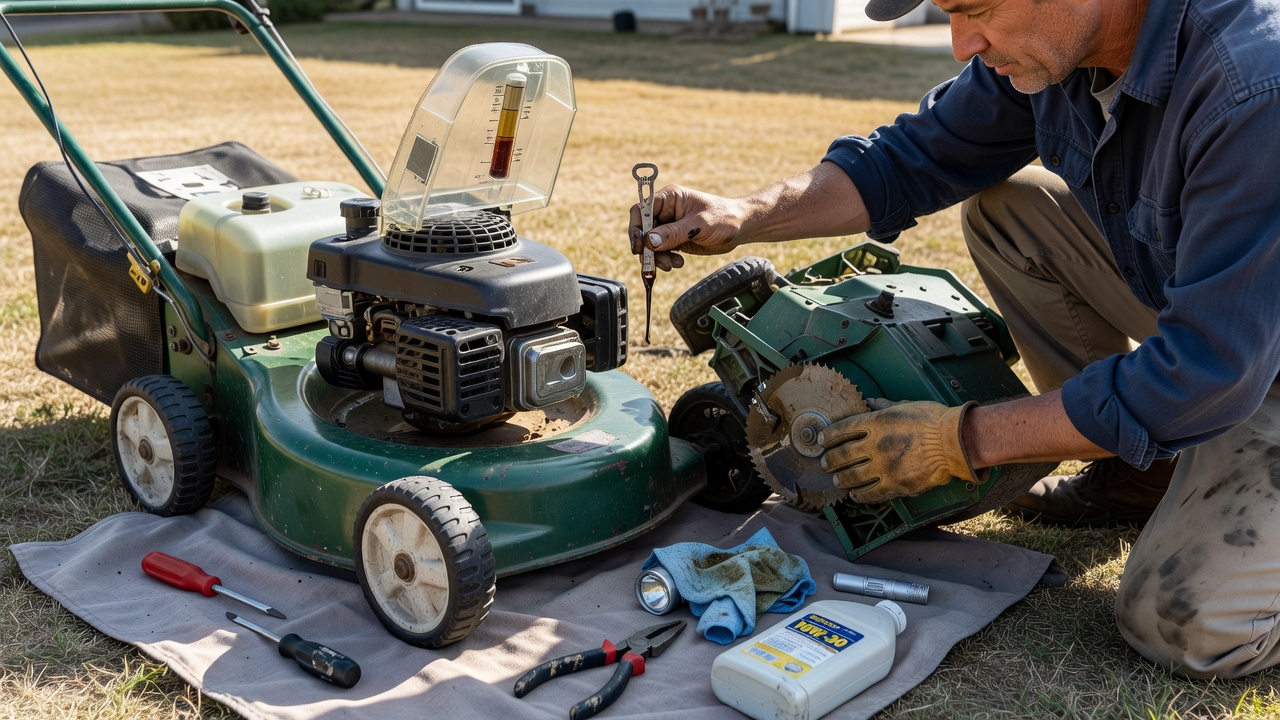
Before starting your Craftsman riding mower, perform a thorough inspection to prevent accidents and equipment damage. This five-minute routine protects both you and your equipment.
Fuel and Oil Levels: Check that the fuel tank contains fresh gasoline (use unleaded fuel without ethanol when possible for longer storage life). Inspect the engine oil level using the dipstick, most Craftsman models require oil to be at the “full” mark on the dipstick with the mower on level ground. Dirty or low oil causes poor engine performance and potential damage.
Cutting Blade Inspection: Disengage the cutting deck and look underneath for debris, rocks, or accumulated grass clippings. Spin the blade by hand (with the ignition off) to ensure it rotates freely without striking the deck housing. Check for cracks, bent edges, or missing chunks, these require blade replacement before mowing. A damaged blade reduces cut quality and creates dangerous vibration.
Tire Condition: Verify that all four tires have adequate air pressure (typically 10-15 PSI for rear tires, check your model’s manual for exact specs). Look for cuts, cracks, or bulges. Uneven tire pressure causes steering problems and uneven cutting height.
Safety Features: Ensure the seat switch clicks when you sit down, this prevents the engine from running if no one is seated. Check that the parking brake engages firmly and the steering wheel moves freely without grinding or resistance. Test the dead-man switch (the lever or handle you must squeeze to engage the cutting deck) to confirm it springs back when released.
Understanding Your Craftsman Mower’s Controls and Layout
Familiarize yourself with the primary controls before starting. Most Craftsman riding mowers share similar layouts, though specific locations vary by model year and engine type.
The Throttle Control: Located on the dashboard or steering column, the throttle lever controls engine RPM. The throttle typically has positions marked “START,” “SLOW,” and “FAST.” For cold starting, position the throttle at the START position (usually the lowest or closed position). Once the engine runs, move it to SLOW for initial operation, then gradually increase to FAST for optimal mowing performance. Never operate at full throttle for extended periods on slopes.
The Transmission Lever: This lever selects forward speed, reverse, or neutral. Craftsman mowers use either hydrostatic (smooth, infinitely variable speed) or gear-drive (fixed speed steps) transmissions. With hydrostatic transmissions, move the lever slightly forward for low speed and farther forward for higher speeds. With gear-drive transmissions, distinct positions (usually marked 1, 2, 3, or similar) select fixed speeds. Always return to neutral when stopped.
The Parking Brake: This is typically a lever or button near the seat or steering column. Engage it whenever you dismount or stop for more than a few seconds. The parking brake prevents the mower from rolling and cuts power to the transmission.
The Cutting Deck Engagement: Most Craftsman mowers use a lever or button (often on the steering column or seat area) to raise or lower the cutting deck. Pulling or pressing this lever engages the blade. Some models have a separate height-adjustment lever for cutting height. For complementary field maintenance guidelines, examine our breakdown of marshall stanmore iii vs harman kardon onyx studio 8.
The Steering Wheel: Operated like a car’s wheel, light pressure controls direction. Avoid sharp turns at high speed, as this stresses the transmission and can cause rollover on slopes.
Starting Your Craftsman Riding Mower
Proper starting procedure prevents engine flooding, hard starting, and damage to the starter. To evaluate matched hardware tolerances, consult our detailed overview of dyson v8 cyclone vs bissell featherweight stick.
The Starting Sequence:
- Sit on the mower seat, the engine will not start if the seat switch doesn’t engage.
- Move the throttle to the START position (usually marked or the lowest position).
- Engage the parking brake firmly.
- Ensure the transmission is in NEUTRAL (move the lever completely back or to the neutral position).
- Turn the ignition key to START and hold it for 3-5 seconds. Release immediately if the engine starts.
- If the engine doesn’t start on the first try, wait 10 seconds and attempt again. Do not hold the key for more than 10 seconds continuously, as this drains the battery and floods the engine.
- Once running, move the throttle to SLOW and let the engine idle for 30 seconds to warm up.
If the Engine Won’t Start: Check that the parking brake is fully engaged and you’re seated. Verify the fuel tank contains fresh fuel and the oil level is adequate. If the engine still won’t turn over, the battery may be dead or the starter faulty, consult your owner’s manual or contact a Craftsman dealer. When planning workspace deployment, consider the engineering criteria outlined in our bissell crosswave hydrosteam vs shark stainforce guide.
Operating the Transmission and Speed Control
Safe speed control is essential for maintaining traction, preventing accidents, and achieving even cutting.
Selecting Forward Speed: With the engine running and the mower warmed up, slowly move the transmission lever forward to begin moving. Start at the lowest or slowest speed setting, especially when learning or navigating tight spaces. Gradually increase speed as you become comfortable. On slopes or rough terrain, maintain a slower speed to preserve traction and stability.
Speed Recommendations by Condition:
- Thick, tall grass: Use the lowest speed to allow the blades adequate time to cut without bogging the engine.
- Thin, short grass: Medium to high speed provides efficient mowing and faster yard completion.
- Slopes: Always use the lowest speed and mow horizontally (side-to-side) rather than up and down to prevent rollover.
- Wet grass: Reduce speed and allow extra distance between passes to prevent slipping and uneven cutting.
Using Reverse: Move the transmission lever backward to engage reverse. Back up slowly and only in short distances. Never mow while reversing.
Stopping Safely: To stop or slow down, move the transmission lever back to NEUTRAL and apply the parking brake. The mower will come to a gradual stop. Avoid sudden jerking movements of the transmission lever, as this stresses the gearbox.
Engaging and Using the Cutting Deck
The cutting deck must be properly engaged and set to the correct height for quality results.
Engaging the Blade: Once you’re positioned to begin mowing and moving at your desired speed, pull or press the cutting deck engagement lever (often located on the steering column or near the seat). You’ll hear the blade engage and feel a slight pull as the engine powers the cutting mechanism. Never engage the blade while stationary, always engage while moving at operating speed.
Cutting Height Adjustment: Most Craftsman mowers have a separate cutting height lever or handles on the rear axle or deck arms. These adjust the deck from approximately 1.5 inches to 4 inches off the ground. Before mowing, position the height lever to your desired setting. For most lawns, a 2.5- to 3-inch height maintains healthy grass. Never cut below 1.5 inches, as this stresses the grass and encourages weeds.
Mowing Patterns for Best Results: Mow in straight, overlapping passes. Begin at one edge of the yard and mow parallel lines, slightly overlapping each pass to avoid leaving uncut strips. Alternate your mowing direction each week (mow north-south one week, east-west the next) to prevent soil compaction and promote even growth. This pattern also prevents visible tracks.
Blade Maintenance: Stop the engine, turn off the ignition, and wait 5 minutes before checking under the deck. Remove any grass buildup or debris. A clean deck prevents corrosion and improves airflow.
Steering, Maneuvering, and Safety Considerations
Proper technique reduces turf damage, prevents accidents, and extends equipment life.
Steering Technique: Use gentle, continuous pressure on the steering wheel. Avoid sharp, jerky turns, which can damage the lawn and stress the transmission. When turning around at the end of a row, slow down first, then steer smoothly. On hydrostatic mowers, you may need to reduce transmission speed during sharp turns to maintain control.
Navigating Obstacles: Dismount and remove obstacles like sticks, rocks, or toys before mowing. Never attempt to run over large branches or rocks, as these can damage the blade or deck. When mowing around trees, flower beds, or parked cars, approach slowly and watch your mower’s sides and rear, it’s easy to misjudge clearance while seated.
Operating on Slopes: Mow slopes horizontally (side-to-side) rather than up and down. This prevents the mower from rolling backward if power is lost and reduces the risk of rollover on steep terrain. Do not attempt slopes steeper than 15 degrees. Always use low speed on slopes, regardless of grass height.
Common Mistakes to Avoid:
- Operating with wet feet or when the ground is extremely wet, this reduces traction and increases slip risks.
- Mowing near parked vehicles or property without clear sightlines.
- Leaving the cutting deck engaged while not mowing, this wastes fuel and stresses the blade.
- Attempting to clear grass clippings or debris with the engine running and blade engaged.
- Mowing with the throttle at maximum RPM for extended periods, which accelerates engine wear.
Shutting Down and Post-Operation Care
A proper shutdown sequence protects your equipment and ensures safe storage.
The Shutdown Procedure:
- Disengage the cutting deck by releasing the engagement lever, the blade will stop rotating within a few seconds.
- Move the transmission lever to NEUTRAL.
- Set the parking brake firmly.
- Move the throttle to SLOW and allow the engine to idle for 30 seconds.
- Turn the ignition key to OFF.
- Wait at least 5 minutes before servicing or inspecting under the deck, as the blade and engine remain hot.
Post-Mowing Maintenance: After each mowing session, brush debris from the deck and undercarriage. Check the air filter (should be clean and dry) and inspect the blade for damage. After every 50 hours of operation, change the engine oil and replace the air filter. These simple steps significantly extend your mower’s lifespan and maintain cutting performance.
Model-Specific Variations in Craftsman Mowers
Craftsman manufactures multiple generations and transmission types. While the basic operational principles remain consistent, specific control locations and procedures may vary.
Hydrostatic vs. Gear-Drive Transmissions: Hydrostatic transmissions offer smooth, infinitely variable speed control, move the lever forward slightly for low speed and farther for high speed. Gear-drive transmissions use fixed-speed gears (typically 3-6 speeds), requiring you to select specific speed steps. Hydrostatic mowers are easier for beginners but may require more frequent maintenance. Gear-drive mowers are simpler mechanically but require more deliberate gear selection.
Older vs. Newer Models: Vintage Craftsman mowers (pre-2000s) often feature mechanical linkages and simpler engines, while newer models integrate electronic ignition and enhanced safety switches. If you’re operating an older model, consult the specific owner’s manual, as throttle and transmission control positions may differ.
Engine Type: Most Craftsman mowers use Kohler or Briggs & Stratton engines. These are highly reliable but may have slightly different starting procedures. Check your engine manufacturer’s label on the mower for specifics.
Always consult your specific model’s owner’s manual for exact control locations, maintenance intervals, and troubleshooting guidance. Craftsman manuals are available online through the Craftsman website or your local dealer.
Everything You Need to Know: How To Operate Craftsman Riding Lawn Mower FAQ
Q: How long should I warm up my Craftsman mower before mowing?
A: Allow 30-60 seconds of idling after starting. Once the engine sounds smooth and steady, you’re ready to begin mowing. Prolonged warm-up isn’t necessary and wastes fuel.
Q: Can I mow wet grass with my Craftsman riding mower?
A: Mowing wet grass is not recommended. Wet conditions reduce traction, cause uneven cutting, and promote clumping. Wait until the grass dries (usually a few hours after rain or dew). If you must mow wet grass, reduce speed and allow longer intervals between passes.
Q: What should I do if the blade hits something while mowing?
A: Stop immediately, turn off the engine, and wait 5 minutes. Inspect the blade and deck for damage. If the blade is bent or cracked, it must be replaced before continuing. Check that no debris is wrapped around the blade shaft.
Q: How often should I sharpen my mower blade?
A: Sharpen or replace the blade every 20-25 hours of mowing, or whenever you notice the cut quality declining. A dull blade tears grass, leaving brown, damaged tips that attract disease. Never attempt to sharpen a bent blade, replace it instead.
Q: Is it safe to mow in the evening or early morning?
A: Mow when visibility is best, typically mid-morning through mid-afternoon. Avoid mowing when dew is heavy (early morning) or in fading light (evening), as these reduce traction and visibility. Never mow at night.
Related Maintenance and Operating Guides
To keep your equipment running at peak operating efficiency, explore our related technical walkthroughs and maintenance tutorials:
- Consult our detailed breakdown on heavy-duty chainsaw buyer guide.
Operating a Riding Mower
Operating a riding unit demands familiarity with the throttle, choke, and blade engagement switch before the first pass. Practice the controls on a flat driveway before moving onto grass.
General safety information for outdoor power machines is also available from American National Standards Institute (ANSI).