Direct Answer: What Defines a Good Weed Eater
A good weed eater matches three core requirements: adequate power for your vegetation type, cutting width suited to your lawn size, and ergonomic design you can handle comfortably for 30-60 minutes. For most residential properties, a cordless electric string trimmer (also called a weed whacker or weed whip) with 40V or higher voltage, a 13-16 inch cutting head, and at least 30 minutes of battery runtime delivers the best balance of low maintenance, reasonable power, and user-friendly operation. The ‘best’ choice ultimately depends on whether you prioritize convenience (cordless electric), maximum cutting power (gas), or lowest upfront cost (corded electric).
Pros
- Brushless motor offers efficient performance with reduced maintenance compared with many gas trimmers
- Quiet cordless operation is well suited for neighborhoods and frequent use
- Variable speed control improves accuracy in tight or delicate areas
- Kit includes a 4.0Ah battery, so it is ready for use with less added setup
Cons
- Runtime can drop when cutting thick grass or running on higher power settings
- The 13-inch cutting width may feel slow on larger properties compared with wider trimmers
- The listing does not provide details such as weight or shaft adjustability, which may matter to some buyers
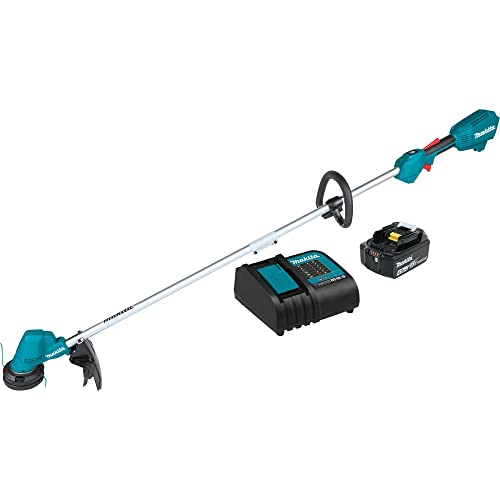
Overview: The Makita XRU23SM1 is an 18V LXT brushless cordless 13-inch string trimmer kit designed for users who want a cleaner, lower-maintenance alternative to gas trimming. The teal Makita design reflects the brand's practical tool-first approach and feels suited to regular yard maintenance.
Performance: Its BL Brushless Motor delivers up to 6,000 RPM, while the variable speed trigger and High/Low button make it easier to match cutting power to the job. Makita says the included 18V LXT 4.0Ah battery can provide up to 1 hour of runtime, which is useful for routine edging and trimming sessions.
Considerations: The 13-inch cutting width is practical for most residential tasks, but it is not the fastest option for larger overgrown areas. Runtime will also vary with grass thickness and how often higher power mode is used.
Verdict: This trimmer makes the most sense for homeowners and light-to-moderate professional users already invested in Makita's 18V LXT system. It offers good control, low noise, and reduced upkeep, but buyers needing maximum coverage for big properties may want a wider or more powerful option.

Pros
- Lightweight construction ideal for easy handling during occasional homeowner work
- SmartStart system enables fast, low-effort engine starts
- Straight shaft effectively reaches under bushes and obstacles
- Compatible with T25 head and multiple click-on attachments for expanded use
- Low-noise 22cc engine suitable for residential environments
Cons
- Designed specifically for occasional homeowner use and may lack power for heavy-duty or frequent professional jobs
- 2-cycle engine requires pre-mixed fuel and oil, adding a maintenance step versus electric or 4-cycle options
- Full attachment versatility requires separate purchases beyond the included T25 head
The Husqvarna 122LK is a 22cc 2-cycle gas grass trimmer with a 17-inch straight shaft and T25 head. It is built as a durable yet lightweight tool aimed at occasional homeowner use, giving an immediate impression of a practical residential string trimmer that prioritizes access and ease of handling around bushes and obstacles.
Performance centers on the efficient low-noise engine and the SmartStart system that starts the unit quickly with minimal effort. The straight shaft reaches beneath plants and barriers while the T25 head and click-on attachment compatibility support versatile trimming and multi-tool switching for everyday yard work.
Drawbacks include its focus on occasional rather than continuous heavy use, the need to mix fuel and oil for the 2-cycle engine, and the fact that additional attachments are purchased separately to unlock full versatility.
The Husqvarna 122LK delivers solid value for homeowners who need a reliable, easy-starting gas string trimmer for light to moderate property maintenance. It is best for users who want lightweight portability, low noise, and attachment flexibility without requiring commercial-grade power.
Pros
- No oil-gas mixing required, which simplifies refueling and everyday use.
- Includes multiple cutting attachments for different yard jobs.
- Shoulder strap and U-handle improve handling and reduce strain.
- 4-stroke engine offers stable power and lower emissions than many 2-stroke models.
Cons
- As a gas-powered unit, it will be heavier and louder than battery trimmers.
- The included cutting options are versatile, but the product details do not provide exact cutting capacity for brush or wood.
- No verified customer review feedback is available in the manufacturer listing, so long-term reliability is harder to assess.
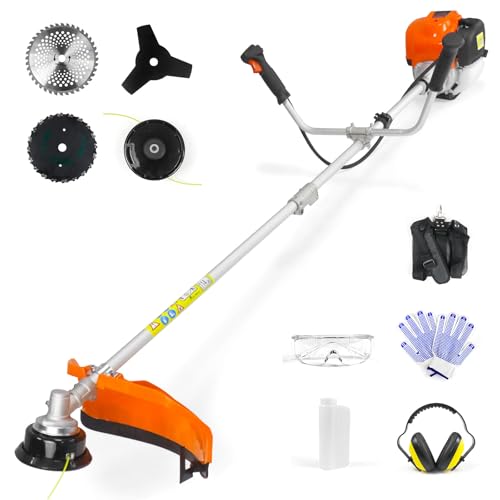
Overview: The NEO-TEC 31cc 4-Cycle Gas Weed Wacker is a multi-purpose gas trimmer designed for homeowners who want one tool for trimming, edging, and brush cutting. Its U-handle, shoulder strap, and balanced layout suggest a focus on comfort and control during extended yard work.
Performance: The 31cc 4-stroke engine is built for stable power delivery, and the included 17-inch string trimmer plus three 10-inch brush blades make it more flexible than a basic weed eater. It is suited for grass, weeds, and some heavier cutting tasks, while the no-mix fuel design makes starting and refueling simpler.
Considerations: Because this is a gas-powered trimmer, it will typically be noisier and heavier than electric or battery alternatives. The listing does not provide detailed specs such as weight, runtime, or exact cutting thickness, so buyers should consider how demanding their yard work really is before choosing it.
Verdict: This is a practical choice for users who want gas-powered performance, multiple attachments, and easier fuel handling in one tool. It is best for homeowners managing mixed yard conditions who value versatility and stable cutting power over ultra-lightweight convenience.
Types of Weed Eaters: Understanding Power Sources

Weed eaters come in three primary power configurations, each with distinct trade-offs:
Cordless Electric (Battery-Powered)
- Pros: Minimal maintenance, quiet operation (60-75 decibels), zero emissions, no fuel mixing, lightweight (typically 5-8 pounds), quick start, works well for residential yards up to 1 acre.
- Cons: Battery runtime typically 30-60 minutes depending on voltage; requires charging between uses; batteries degrade over time (usually 3-5 years); upfront cost higher than corded models.
- Best for: Homeowners with small to medium lawns who value convenience and low maintenance.
Corded Electric
- Pros: Unlimited runtime (no battery depletion), lowest total cost of ownership, lightweight, quiet, zero emissions, minimal maintenance.
- Cons: Tethered to an extension cord (limits range to 50-100 feet depending on cord length); tangled cord management; unsuitable for large properties; less power than comparable cordless models at the same amperage.
- Best for: Budget-conscious buyers with small yards who don’t mind cord management.
Gas-Powered
- Pros: Maximum cutting power, no battery limitations, handles thick brush and dense vegetation, ideal for commercial use or large properties (1+ acres).
- Cons: Highest maintenance (spark plugs, air filters, fuel mixing), loud (80-90+ decibels), produces emissions, heaviest option (8-12 pounds), requires seasonal storage procedures, steeper learning curve for starting and operation.
- Best for: Large properties, thick overgrowth, professional or frequent use scenarios.
Key Features That Determine Performance
Cutting Width
The cutting head diameter directly impacts efficiency. Most residential trimmers range from 12-18 inches. A 13-16 inch cutting width suits most homeowners, wide enough to complete average yards in reasonable time without excessive weight. Larger cutting heads (17-18 inches) belong on commercial-grade or gas-powered models; smaller heads (under 12 inches) are best for edging or tight spaces. Measure your lawn perimeter and estimate how many passes you’ll need; wider cutting widths reduce fatigue but add weight.
Power: Voltage, Amperage, and Engine Size
Power determines how effectively the trimmer cuts through thick weeds and grass:
- Cordless electric: Look for 40V minimum (56V or higher offers better power for dense vegetation). Voltage directly correlates with cutting performance and runtime.
- Corded electric: Measured in amps; 6-8 amps is standard for residential use.
- Gas-powered: Engine displacement in cubic centimeters (cc); 25-35 cc handles residential trimming, 40+ cc for commercial work.
Higher power matters most if you’re tackling overgrown areas or dense brush. For regular lawn maintenance, don’t oversell yourself, excessive power adds weight and cost.
Battery Runtime and Battery System
For cordless models, runtime depends on voltage, battery amp-hours (Ah), and cutting density. A 40V battery with 2.0 Ah capacity typically delivers 20-30 minutes of continuous trimming; upgrading to 4.0 Ah extends this to 40-60 minutes. Consider whether you need a single full charge to complete your yard or if multiple charges are acceptable. Check whether the trimmer uses the same battery ecosystem as other tools you own (many manufacturers offer interchangeable platforms, this saves money on additional batteries).
Weight and Ergonomics
Weed eaters are held overhead or at waist level for extended periods. A trimmer heavier than 8-10 pounds causes arm and shoulder fatigue quickly. Look for:
- Padded or adjustable shoulder straps to distribute weight
- Lightweight construction (aluminum rather than steel)
- Balanced weight distribution (not all mass at the cutting head)
- Curved vs. straight shaft (curved shafts are lighter and more maneuverable; straight shafts offer better reach and are preferred by taller users)
Cutting Head Type: Bump Feed vs. Auto-Feed
Bump feed: You manually tap the cutting head against the ground to advance fresh line. Requires active management but gives you control over line consumption.
Auto-feed: Line advances automatically as it shortens. More convenient but uses more line over time. Users looking for related component recommendations can explore our marshall stanmore iii vs harman kardon onyx studio 8 breakdown.
Auto-feed is friendlier for beginners; bump feed appeals to users who want precision and cost control.
Edge Guard and Design Details
A protective edge guard shields your legs and nearby objects from flying debris. Adjustable cutting heads allow you to switch between trimming and edging mode (useful for driveway and walkway edges). These features add minor cost but significantly improve usability and safety. Before finalizing equipment decisions, refer to our comprehensive dyson v8 cyclone vs bissell featherweight stick comparison.
Matching Your Weed Eater to Your Lawn and Needs
Assessing Lawn Size and Terrain
- Small yards (under 0.25 acre): Cordless electric 40V with 13-inch cutting width and auto-feed. A single charge handles the job comfortably.
- Medium yards (0.25-0.75 acre): Cordless electric 56V or corded electric (6-8 amps) with 14-16 inch cutting width. Consider a second battery for cordless models or accept cord management for corded.
- Large yards (0.75+ acres) or thick overgrowth: Gas-powered or commercial-grade cordless (80V+). Prioritize runtime and cutting power over weight.
Terrain Considerations
Uneven or rocky terrain requires lighter models to avoid fatigue. Wet grass demands more power, so upsize your power estimate. Dense brush or overgrown areas need gas-powered or high-voltage cordless options.
Residential vs. Commercial-Grade Equipment
Commercial trimmers are built for daily use and handle abuse better, but they’re heavier, louder, and cost significantly more. Residential-grade equipment is adequate if you trim 1-2 times weekly during growing season. Only justify commercial-grade if you’re actively using the tool on 2+ properties or in dense vegetation regularly. For broader ecosystem context, read through our operational guide on bissell crosswave hydrosteam vs shark stainforce.
Durability and Long-Term Value
Build Quality and Materials
Aluminum cutting heads and shafts outlast plastic. Reinforced joints and sealed motor housings (especially on cordless models) resist moisture and debris ingestion. Read user reviews about specific models’ longevity; a $200 trimmer that lasts 8 years is better value than a $120 model failing after 2 seasons.
Maintenance Demands by Power Type
- Cordless electric: Minimal, keep air vents clear, replace line occasionally, store batteries in cool conditions. 5-10 minutes annually.
- Corded electric: None, unplug and store indoors. Lowest maintenance option.
- Gas-powered: Significant, change spark plugs annually, clean air filters, drain fuel before winter storage, replace fuel lines every 3-5 years. 30-60 minutes of annual maintenance required.
Warranty and Parts Availability
Reputable brands offer 2-5 year warranties on cordless and corded models; gas-powered trimmers typically have 1-3 year coverage. Check whether replacement parts (batteries, chargers, cutting heads, lines) are readily available and reasonably priced. Established brands have better parts ecosystems.
Battery Degradation (Cordless Models)
Lithium-ion batteries degrade over time. Most maintain 80% capacity after 3 years and 60-70% after 5 years. Factor replacement cost ($50-150 per battery) into long-term ownership projections.
Common Mistakes When Choosing a Weed Eater
Buying Solely on Price
The cheapest trimmer often has underpowered motors, poor ergonomics, and limited durability. A $150 cordless electric trimmer that fails after one season costs more than a $280 model lasting 6 years. Aim for mid-range options from established brands (DeWalt, Ryobi, Makita for cordless; Echo, Stihl for gas-powered).
Oversizing for Your Needs
Buying a 56V professional-grade trimmer for a quarter-acre suburban yard adds unnecessary weight, noise, and complexity. Match equipment to actual use patterns, not aspirational scenarios.
Undersizing and Expecting Miracles
A 20V corded trimmer struggles with thick weeds or overgrown areas. Honestly assess your vegetation and terrain, then choose power accordingly.
Ignoring Ergonomics
Saving $30 on a model without a padded strap or with poor balance costs you in fatigue and discomfort. If you’re 5’4″ or 6’4″, prioritize models with adjustable shafts.
Overlooking Battery Ecosystem
If you own cordless power tools, buying a trimmer with a different battery platform means duplicating battery and charger investment. Stick with the same manufacturer ecosystem when possible.
Common Questions on Good Weed Eater Answered
How long does a weed eater last?
Cordless and corded electric trimmers typically last 5-10 years with basic maintenance. Gas-powered models last 7-15 years but require consistent upkeep. Battery replacement around year 3-5 is common for cordless models. Lifespan depends heavily on usage frequency and maintenance discipline.
Is cordless electric enough power for a residential yard?
For most residential yards (under 1 acre) with regular lawn maintenance, yes. A 40V or higher cordless trimmer handles typical lawn grass and light weeds efficiently. If you’re dealing with thick brush, overgrowth, or dense vegetation, gas-powered or commercial-grade cordless (56V+) is more appropriate.
What’s the difference between a weed eater, weed whacker, and string trimmer?
These terms are interchangeable in common usage, they all refer to the same tool: a handheld device with a spinning cutting line (usually nylon string) that trims grass and weeds at lawn edges and around obstacles. ‘String trimmer’ is the technical term; ‘weed eater’ and ‘weed whacker’ are colloquial.
Should I buy a corded or cordless electric trimmer?
Choose cordless if you prioritize convenience, minimal maintenance, and freedom of movement (no cord tethering). Choose corded if your yard is small, you don’t mind managing a cord, and you want the lowest total cost with zero battery concerns. For yards larger than 0.5 acres or with multiple zones, cordless is usually worth the extra investment.
Final Recommendation
The best weed eater is one that matches your lawn size, vegetation density, physical ability, and maintenance tolerance. For the vast majority of homeowners, a mid-range cordless electric string trimmer (40-56V, 13-16 inch cutting width, auto-feed, padded strap) offers the optimal balance of power, convenience, and value. It handles regular lawn maintenance without the fuss of gas-powered equipment or the cord constraints of electric models. Invest $200-350 in a reputable brand with good warranty coverage, and you’ll have a dependable tool for years. If your yard is small and budget-conscious, a corded electric option delivers excellent value. Reserve gas-powered trimmers for large properties or intensive use scenarios where maximum cutting power justifies the maintenance burden.
Related Maintenance and Operating Guides
To keep your equipment running at peak operating efficiency, explore our related technical walkthroughs and maintenance tutorials:
- Consult our detailed breakdown on cordless stick vacuum buyer guide.
- Consult our detailed breakdown on robotic pool cleaner comparison guide.
Guidance for Handheld Trimmers
The right weed eater depends on yard size, the vegetation you cut, and how comfortable the machine feels over time. Eye protection and sturdy footwear matter on any job, and American National Standards Institute (ANSI) offers broader outdoor safety reading.