What Is a Mulching Mower? Direct Answer
A mulching mower is a lawn mower equipped with a specialized blade design and enclosed deck that finely chops grass clippings into small pieces and redistributes them back onto the lawn as ground-level mulch, rather than collecting them in a bag or discharging them to the side. This process returns valuable nutrients to the soil, eliminates the need for manual clipping removal, and reduces overall lawn maintenance labor.

Pros
- Strong 201cc OHV engine supplies reliable cutting power
- Rear-wheel self-propelled drive eases mowing effort
- Flexible bagging, mulching, and side-discharge options
- Wide 22-inch deck speeds up lawn coverage
- Synchronized 6-position height adjustment is simple to use
Cons
- Gas engine requires regular fueling and routine maintenance such as oil changes
- Rear-wheel drive only may deliver less traction than all-wheel models on steeper slopes
- Assembly is needed using the included instruction manual
The SENIX 22 Inch Gas Lawn Mower is a walk-behind gasoline-powered unit built around a sturdy steel chassis. It pairs a 201cc 4-cycle OHV engine with variable-speed rear-wheel self-propulsion, giving homeowners a solid first impression of power and practicality for everyday residential mowing.
Performance centers on the 22-inch cutting path and 3-in-1 design that supports bagging, mulching, or side discharge. The single-handle 6-position height system ranges from 1.25 to 4 inches, while the self-propelled rear wheels help maintain steady progress across typical lawn surfaces based on the listed specifications.
Drawbacks to consider include the ongoing need for gasoline and engine maintenance, plus the limitation of rear-wheel drive that can reduce traction on steeper or uneven ground. Initial setup also requires following the instruction manual for assembly.
This mower suits owners of medium to large yards who want a gas-powered self-propelled option with versatile clipping management and solid cutting width. It delivers the most value for users comfortable with traditional fuel-powered equipment seeking efficiency and adjustability.

Pros
- Auto choke and recoil starter simplify engine starting for dependable performance.
- Rear-wheel-drive self-propulsion improves control and reduces fatigue on hills.
- Versatile 3-in-1 mulch bag rear discharge options with spacious 60L bag.
- Rugged all-steel 22-inch deck built for long-term durability.
- Quick tool-free assembly by just unfolding the handle.
Cons
- Recoil pull-start system requires physical effort to engage the engine.
- Gas engine needs fuel and regular maintenance unlike battery models.
- Steel deck construction favors toughness but can feel heavier during maneuvering or storage.
The PowerSmart 22 in. 170cc Self Propelled Gas Lawn Mower is a walk-behind unit built around a sturdy all-steel deck and rear-wheel-drive layout. Its design prioritizes durability and straightforward operation, giving an immediate impression of a no-nonsense residential mower ready for regular seasonal use on typical home lawns.
Performance centers on the 170cc gas engine with auto choke and recoil starter that supplies solid cutting force, while the self-propelled RWD system delivers traction on slopes and uneven ground. The 22-inch heavy-duty blade, 3-in-1 mulch bag rear discharge modes, large 60L bag, and 6-position height adjustment work together to handle varied grass conditions efficiently with minimal user strain once underway.
Considerations include the manual pull-start that demands physical effort and the gas powertrain that requires fuel and routine upkeep. The steel deck adds lasting strength yet may increase overall handling weight compared with lighter alternatives when moving or storing the unit.
This mower is best for homeowners managing medium lawns with mild hills or mixed terrain who want gas power, multipurpose cutting flexibility, and simple tool-free setup. Users preferring electric starts or cordless convenience should weigh other choices.
Pros
- True 2-in-1 mulching and bagging capability for versatile yard maintenance
- Brushless motor delivers efficient power and longer potential runtime
- 5.0 Ah battery and charger included for ready-to-use cordless convenience
- Single-lever 6-position height adjustment from 1 to 3 inches for quick setup
- Cut-to-edge design enables precise cutting along borders and obstacles
Cons
- 14-inch cutting width limits efficiency on larger lawns requiring more passes
- Manual push operation lacks self-propulsion, increasing physical effort
- No specified runtime data means battery may need recharging for bigger jobs
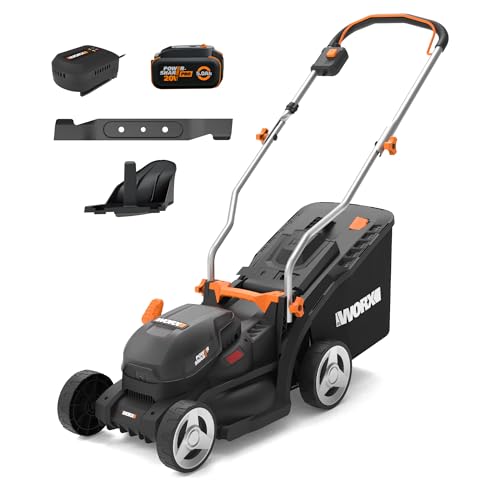
The WORX WG733.1 is a 14-inch cordless electric walk-behind lawn mower built for homeowners seeking a lightweight alternative to gas-powered models. Its compact design and included 5.0 Ah battery plus charger create an immediate impression of convenience and readiness for small yard maintenance without cords or fumes.
Performance centers on practical features that shine in everyday use. The 2-in-1 mulching and bagging system lets users switch modes easily for either nutrient return or clean collection. The cut-to-edge design allows closer trimming along fences and beds, while the brushless motor supports efficient operation. A single-lever control provides six cutting heights from 1 to 3 inches to match varying lawn conditions, and the PowerShare compatibility extends the battery's value across other WORX tools.
Drawbacks stem from the core specifications. The smaller 14-inch deck requires more time on larger properties, and as a pure push mower it demands continuous manual effort without self-propel assistance. Available data does not detail runtime, so users of bigger areas should plan for potential battery swaps or recharges.
This mower delivers the most value to owners of small to medium lawns who prioritize easy storage, quiet cordless operation, and simple adjustments. It is especially appealing for those already using WORX tools or looking for an affordable entry into battery-powered lawn care.
How a Mulching Mower Works
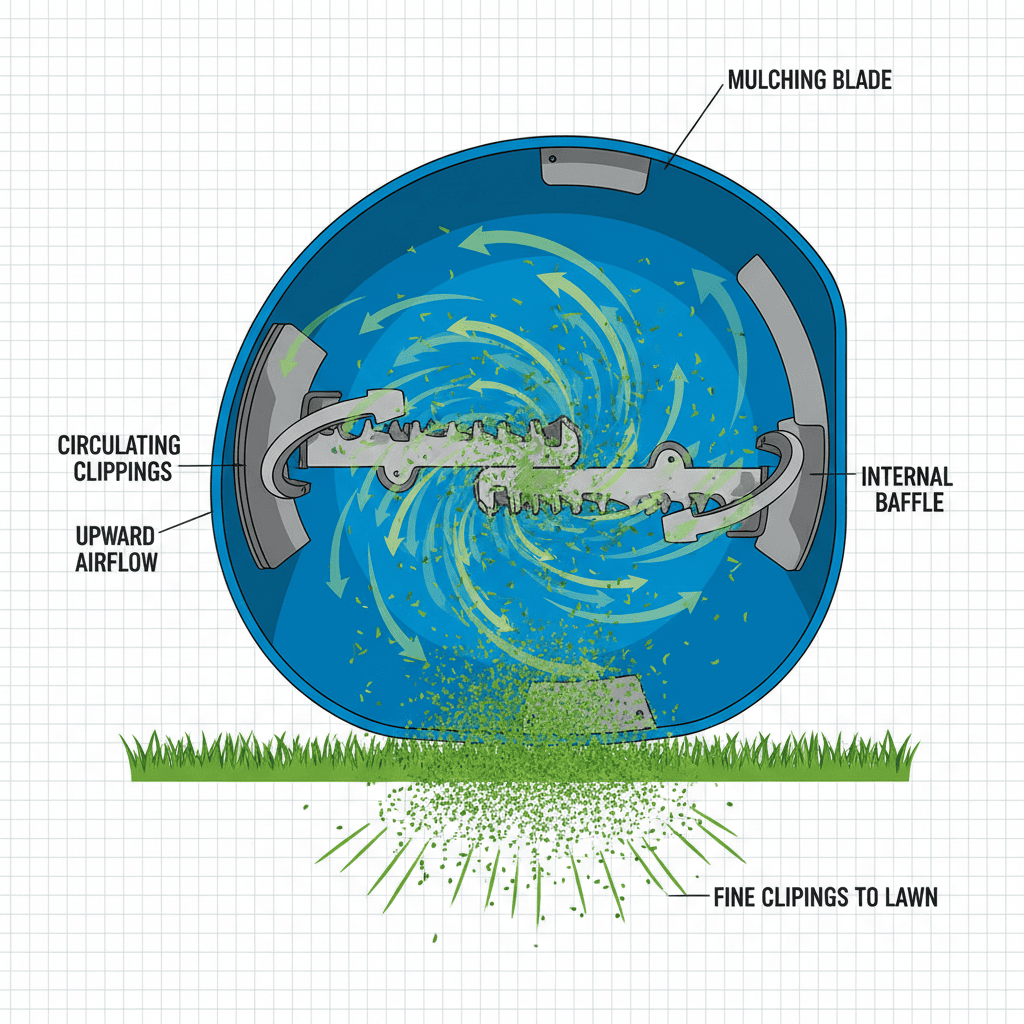
Understanding the mechanics of a mulching mower reveals why it’s fundamentally different from standard mowers. The key lies in three interdependent components: blade design, deck circulation, and discharge management.
Specialized Blade Design
Mulching mowers use specially designed blades, often called “mulching blades” or “high-lift blades”, that differ significantly from conventional mower blades. These blades feature:
- Curved or rounded leading edges that lift grass upward as they cut, rather than simply slicing it
- Multiple cutting surfaces that chop clippings multiple times as they circulate within the deck
- Higher blade speeds (typically 3,000+ RPM) that enable finer chopping compared to standard blades
When the blade spins, it creates an upward airflow that suspends clippings inside the mower deck longer, allowing repeated contact with the blade for progressive chopping into smaller and smaller pieces.
Enclosed Deck Circulation
The deck design is critical to mulching function. Mulching mower decks are fully enclosed with no side discharge opening (or a blocked discharge chute). This containment forces clippings to circulate repeatedly within the deck chamber before being pushed downward and dispersed onto the lawn. The deck shape and internal baffles direct airflow to maximize clipping circulation time, ensuring thorough chopping before discharge.
This differs sharply from side-discharge mowers, which have an open chute allowing clippings to exit sideways after a single blade pass.
Downward Dispersal Pattern
Once clippings are finely chopped, mulching mowers distribute them downward and backward in a pattern that spreads them evenly across the lawn’s surface. The small particle size, typically 1/4 inch or smaller, allows clippings to fall between grass blades and settle near the soil, where they begin decomposing immediately.
Mulching Mowers vs. Traditional Mowing Methods
Three primary mowing methods exist: mulching, side-discharge, and bagging. Each has distinct characteristics and use cases.
Mulching vs. Side-Discharge Mowers
Side-discharge mowers have an open chute on one side that ejects clippings sideways in a single pass. The clippings remain relatively large and create visible windrows (lines of clippings) across the lawn. This method is faster but leaves uneven coverage and requires raking or secondary passes to distribute clippings evenly. Side-discharge is ideal for very tall or wet grass where mulching would clog. For complementary field maintenance guidelines, examine our breakdown of marshall stanmore iii vs harman kardon onyx studio 8.
Mulching mowers take significantly longer per pass because clippings recirculate for repeated chopping, but they eliminate the need for raking or cleanup. Clippings are distributed finely and evenly, disappearing visually into the lawn within 24-48 hours.
Mulching vs. Bagging Mowers
Bagging mowers collect clippings in a rear or side-mounted bag, eliminating clippings from the lawn entirely. This is useful for diseased lawns or when you want a manicured appearance immediately after mowing. However, bagging requires: To evaluate matched hardware tolerances, consult our detailed overview of dyson v8 cyclone vs bissell featherweight stick.
- Stopping frequently to empty full bags
- Manual disposal or composting of clippings
- Reduced mower speed and efficiency due to collection mechanics
- Loss of nutrient recycling to the soil
Most modern mowers are convertible, allowing users to switch between mulching, side-discharge, and bagging modes with simple adjustments (closing/opening the discharge chute or installing/removing a bag attachment). However, true mulching performance requires a mower designed specifically for mulching, not simply a standard mower with the discharge chute closed.
Standard Mowers as Mulchers?
Closing the discharge chute on a standard mower does not create true mulching. Without the specialized blade design and deck circulation pattern, clippings simply accumulate in clumps beneath the mower, potentially causing grass suffocation and disease. Effective mulching requires the complete system: proper blade design, deck shape, blade speed, and airflow management. When planning workspace deployment, consider the engineering criteria outlined in our bissell crosswave hydrosteam vs shark stainforce guide.
Key Benefits of Mulching Mowers
Nutrient Cycling and Soil Health
Grass clippings are approximately 80-85% water and contain significant quantities of nitrogen, phosphorus, and potassium, the same nutrients homeowners purchase as lawn fertilizer. When clippings are left on the lawn (a practice called “grasscycling”), they decompose and release these nutrients back into the soil within 2-4 weeks, reducing the need for chemical fertilizer applications by 25-50% depending on lawn condition and growth rate.
This nutrient return is gradual and organic, promoting stable soil health rather than the boom-bust cycle of synthetic fertilization.
Reduced Labor and Time
Eliminating the need to bag clippings saves significant time and physical labor:
- No stopping to empty bags during mowing
- No raking or manual clipping removal
- No hauling clippings to compost or waste disposal
- Mowing becomes a single-pass, continuous operation
For typical residential lawns, mulching can reduce total mowing time by 15-30% compared to bagging, depending on deck size and lawn area.
Environmental Benefits
Mulching mowers reduce lawn care’s environmental footprint through multiple pathways:
- Reduced landfill waste: A typical homeowner generates 500+ pounds of grass clippings annually. Mulching eliminates this waste stream entirely.
- Lower fertilizer demand: Reduced chemical fertilizer needs mean fewer synthetic nutrients entering groundwater and waterways.
- Decreased fuel consumption: Eliminating bag emptying means fewer mower stops and shorter total mowing time, reducing fuel use.
- Carbon sequestration: Organic matter returning to soil stores carbon, contributing to soil carbon sequestration.
Improved Lawn Appearance Over Time
While freshly mulched lawns may initially look slightly less manicured than bagged lawns, clippings disappear within 1-2 days. Over weeks and months, lawns mowed with mulching mowers develop denser, healthier turf due to consistent nutrient return and improved soil organic matter, resulting in better color, reduced bare patches, and improved disease resistance compared to bagged-clipping lawns.
When Mulching Works Best
Ideal Grass and Lawn Conditions
Mulching is most effective under these conditions:
- Mowing height: Grass cut to 2.5-3.5 inches (most residential lawns). Shorter grass produces fewer clippings and mulches more finely.
- Grass moisture: Mowed at moderate moisture, not drought-stressed (very dry, brittle) or freshly watered (soaking wet). Dry grass chops cleanly; wet grass clumps.
- Mowing frequency: Mowed weekly or before grass exceeds 1 inch above desired cutting height. Infrequent mowing leaves excessive clippings that won’t mulch finely.
- Lawn type: Fine-bladed grasses (Kentucky bluegrass, perennial ryegrass, fescue) mulch more finely than coarse varieties.
- Season: Spring through early fall when growth is active and clippings are produced regularly. Mulching is less beneficial in dormant season when clipping volume drops.
Situations Where Mulching Is Not Recommended
Mulching is less suitable when:
- Grass is very tall: Infrequent mowing leaves excessive clippings that won’t mulch fine enough, creating visible clumps. Side-discharge or bagging is better for “rescue” mowing after skipping weeks.
- Lawn is diseased: Fungal or bacterial diseases can spread via mulched clippings. Bagging is recommended until the lawn recovers.
- Extremely wet conditions: Wet clippings clump heavily and won’t mulch finely. Wait for conditions to dry before mulching.
- Heavy weed seed pressure: While not a barrier to mulching, high weed seeds in clippings can spread. Bagging may be preferable until weed populations are controlled.
- Allergies or preferences: Some homeowners prefer the manicured look of bagged lawns or have allergies aggravated by fresh grass clippings.
Mulching Mower Features to Consider
Deck Size and Blade Design
Larger decks (54-60 inches for zero-turn mowers; 21-22 inches for push mowers) cover more lawn per pass, reducing total mowing time. Verify that the mower is specifically marketed as a “mulching mower” with mulching blades included, not a standard mower with a mulching kit add-on, which rarely performs as well.
Deck Discharge Options
Look for mowers with convertible decks that allow switching between mulching, side-discharge, and bagging modes. This provides flexibility for different seasons and situations without purchasing multiple machines.
Engine Power
Mulching requires higher blade speeds than standard mowing. Ensure the engine has adequate torque (measured in foot-pounds) to maintain blade speed through dense grass. Underpowered engines will slow or stall during mulching, producing poorly chopped clippings.
Deck Baffles and Airflow Design
Better mulching mowers have optimized internal baffles that maximize clipping circulation time. This is difficult to assess without hands-on inspection, so reading professional reviews and user feedback is valuable.
Frequently Asked Questions About Mulching Mower
Do mulching mowers clog easily?
Properly designed mulching mowers rarely clog if used correctly, mowing when grass is at moderate moisture, maintaining weekly mowing schedules, and keeping blades sharp. However, attempting to mulch very tall, wet grass will cause clogging. If clogging occurs frequently, ensure you’re mowing at appropriate intervals and moisture levels, and consider upgrading to a more powerful engine or higher-spec mulching deck.
Can I mulch leaves with a mulching mower?
Yes, many mulching mowers perform well on leaves, chopping them finely for composting or soil enrichment. Some mowers have specialized “leaf mulching” modes. However, heavy leaf loads may require multiple passes or slower mowing speeds. Mowers with convertible decks can switch to bagging mode for dense leaf collection if preferred.
Will mulched clippings cause thatch buildup?
No. This is a common misconception. Mulched clippings decompose within 2-4 weeks and are reabsorbed by the soil, contributing to soil organic matter rather than accumulating as thatch. Thatch develops from dead roots and rhizomes beneath the soil surface, not from surface clippings. Proper mulching actually helps prevent excessive thatch by promoting soil microbial activity.
Do I need to fertilize if I mulch?
Mulching reduces fertilizer needs by 25-50%, but most lawns benefit from at least one light fertilizer application annually to maintain optimal color and density. Heavy-use lawns or those with poor soil may need more. A soil test can guide appropriate fertilization. Mulching effectively reduces but does not eliminate the need for supplemental fertilization.
Getting Started with Mulching
Transitioning to mulching is straightforward:
- Assess your current mower: Check if it has mulching capability or a convertible deck. Most modern mowers do; older models may not.
- Establish a regular mowing schedule: Mow weekly or before grass exceeds 1 inch above your target height. Consistency is key.
- Keep blades sharp: Dull blades tear rather than cut cleanly, producing larger clippings that don’t mulch fine enough. Sharpen blades every 20-40 hours of mowing.
- Monitor moisture: Mow when grass is at moderate moisture, not drought-stressed or freshly watered. Early morning or late afternoon is usually ideal.
- Start observing: After 2-3 weeks of mulching, you’ll notice clippings disappearing and lawn density improving. By season’s end, the difference in turf health is usually visible.
Mulching is not complicated, but consistency and proper technique matter more than equipment choice.
Related Maintenance and Operating Guides
To keep your equipment running at peak operating efficiency, explore our related technical walkthroughs and maintenance tutorials:
- Consult our detailed breakdown on residential zero-turn lawn mower guide.
- Consult our detailed breakdown on heavy-duty chainsaw buyer guide.
Mulching Mower Safety Overview
A mulching mower chops clippings finely and returns them to the turf instead of collecting them in a bag. Operators who want a general overview of mower safety can look to American National Standards Institute (ANSI) as one source among several.