Quick Answer: Locate the air filter housing on your engine, remove the cover, and inspect the filter type. For foam filters, tap gently and wash with warm soapy water; for paper filters, tap only and never wash. Inspect for damage, air-dry completely, and reinstall securely. Clean every 25 operating hours or monthly during mowing season.
Why Air Filter Maintenance Matters
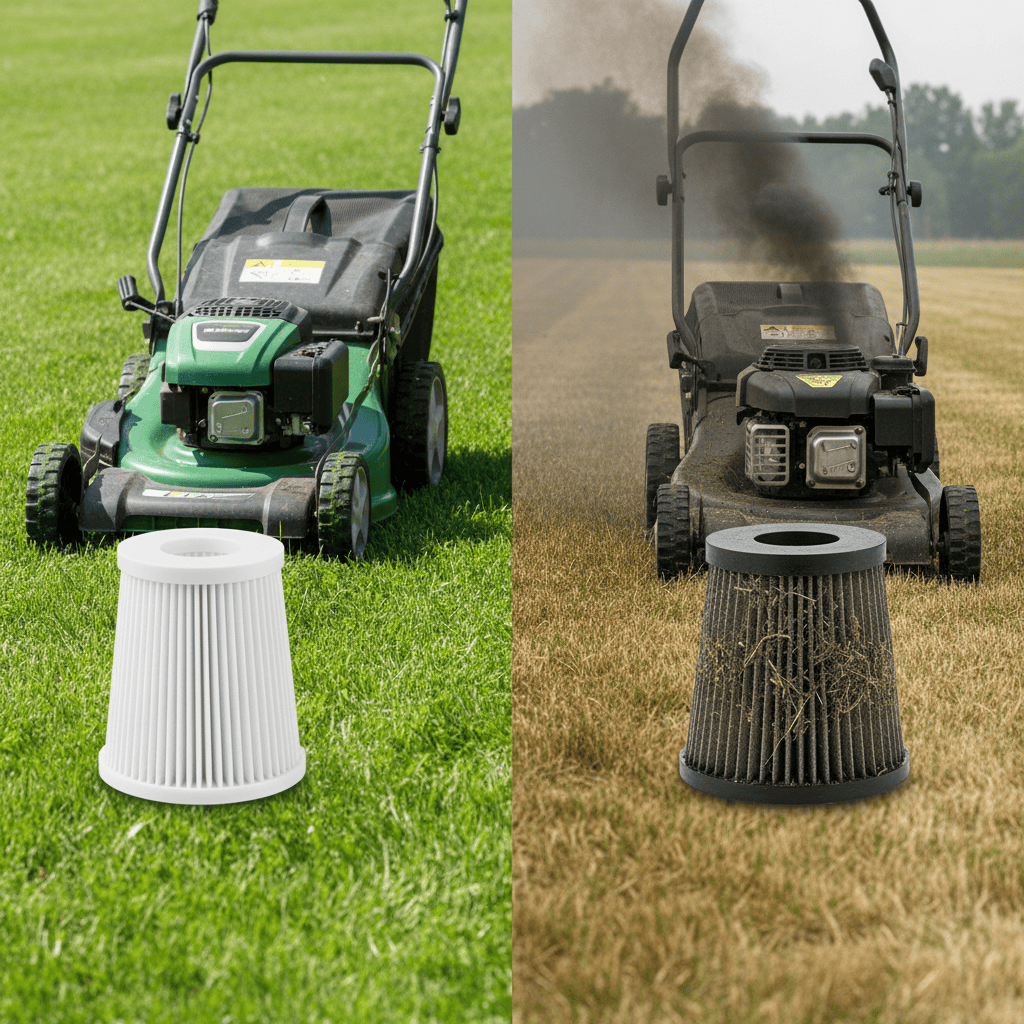
Your lawn mower’s air filter is a critical component that prevents dirt, grass clippings, and debris from entering the engine. A clean filter ensures your mower runs efficiently, starts reliably, and uses fuel economically. A clogged filter restricts airflow to the carburetor, forcing your engine to work harder and consume more fuel while producing less power.
Neglecting air filter maintenance leads to:
- Hard starting — The engine struggles to ignite due to poor air-fuel mixture
- Loss of power — The mower bogs down under load or won’t cut evenly
- Excessive fuel consumption — The engine runs too rich and wastes gas
- Engine damage — Dirt can bypass a severely clogged filter and scratch cylinder walls
- Fouled spark plug — Carbon buildup causes misfires and poor performance
Regular cleaning extends your mower’s lifespan and keeps it running like new. Most residential mower owners can complete this task in 10–15 minutes with no special tools.
Identifying Your Filter Type and Location
Before cleaning, you need to know what type of filter your mower has. Three main types exist, and each requires a different cleaning approach.
Common Air Filter Types
| Filter Type | Appearance | Cleaning Method | Common On |
|---|---|---|---|
| Foam | Yellow or orange spongy material, cylindrical or rectangular | Tap to dislodge debris, wash with soap and water, air-dry | Push mowers, small engines, budget-friendly models |
| Pleated Paper | White or cream-colored accordion-like folds, cylindrical cartridge | Tap gently only; do not wash | Mid-range to premium push and riding mowers |
| Dual-Stage | Foam pre-filter surrounding a paper cartridge | Clean both elements separately using appropriate methods | Commercial-grade and high-end residential mowers |
Where to Find the Air Filter
On push mowers: The air filter housing is typically mounted on top of the engine or on the side near the carburetor. Look for a black plastic or metal canister with a clip or bolt holding the cover in place.
On riding mowers: The filter is usually larger and located under the seat, on the side of the engine, or under a side panel. Consult your owner’s manual for the exact location if you’re unsure.
On commercial or walk-behind mowers: Some have twin filters (one pre-filter and one main filter) in a large housing. Check your manual for your specific model.
Step-by-Step: Cleaning a Foam Air Filter
Foam filters are durable and reusable, making them cost-effective long-term. They can tolerate wet cleaning without damage.
Removal
- Stop the engine and allow it to cool for at least 5 minutes.
- Locate the air filter cover. It’s usually held by a single bolt, clip, or wing nut.
- Loosen and remove the fastener. Some covers simply slip off.
- Carefully lift the foam filter out of the housing. Note its orientation for reinstallation.
- Inspect the inside of the housing for excess dirt or oil buildup. Wipe clean with a dry cloth if needed.
Cleaning
- Tap the filter gently. Hold it over a trash can and tap it lightly on the sides to dislodge loose dirt and grass. Do not bang it or squeeze it hard—this can push debris into the foam fibers.
- Wash with warm soapy water. Fill a bucket with warm water and a small amount of dish soap. Submerge the filter and gently squeeze the soapy water through the foam 5–10 times. Do not wring or twist.
- Rinse thoroughly. Run clean warm water through the filter until all soap is gone. Squeeze gently to remove excess water.
- Air-dry completely. Lay the filter on a clean cloth and allow it to air-dry for at least 30 minutes. Do not use compressed air, a hair dryer, or place it in direct sunlight—this can damage the foam.
Reinstallation
- Ensure the filter is completely dry before reinstalling.
- Place the filter back into the housing in its original orientation.
- Reinstall the cover and secure the fastener firmly (hand-tight is sufficient; do not over-tighten).
- Start the engine and listen for any air leaks. If the engine sounds right, you’re done.
Step-by-Step: Cleaning a Paper Air Filter
Paper filters are pleated and cannot tolerate water cleaning. Over-cleaning a paper filter can collapse the pleats and ruin it, so replacement is often more practical than aggressive cleaning.
Removal and Initial Inspection
- Stop the engine and wait for it to cool.
- Remove the air filter cover by unbolting or unclipping it.
- Lift out the paper cartridge and inspect it closely. Look for tears, holes, or a heavily caked layer of dust that won’t come off easily.
Gentle Cleaning
- Tap the filter lightly. Hold it vertically over a trash can and tap the sides gently with your hand. This dislodges loose surface dust.
- Use compressed air cautiously. If you have a compressor, blow air from the inside out (opposite the direction dirt enters). Hold the filter at arm’s length and use low pressure to avoid damaging the pleats. Most owners skip this step.
- Do not wash or soak. Water permanently damages paper filters by collapsing the pleats and reducing airflow.
When to Replace Instead of Clean
If the filter shows any of these signs, replacement is the better choice:
- Heavy caked dust that doesn’t dislodge with tapping
- Visible tears, holes, or punctures
- Collapsed or flattened pleats
- Oil saturation or discoloration
- The filter is more than 2 years old
Reinstallation
- Place the cleaned filter back into the housing, aligning it properly.
- Reinstall the cover and tighten the fastener securely.
- Start the engine to confirm a good seal.
Cleaning a Dual-Stage Air Filter
Dual-stage filters have a foam pre-filter on the outside and a paper cartridge inside. Both must be cleaned or replaced separately.
- Remove the housing and separate the foam pre-filter from the paper cartridge.
- Clean the foam: Tap and wash it with warm soapy water as described above. Air-dry completely.
- Clean the paper cartridge: Tap gently only. Do not wash. Replace if heavily soiled or damaged.
- Reassemble with the foam outside and the cartridge inside.
- Reinstall in the engine housing and secure the cover.
Inspecting for Damage and Knowing When to Replace
Even with regular cleaning, air filters eventually wear out. A filter that shows physical damage should never be reused, as it no longer provides protection.
Signs Your Filter Needs Replacement
- Tears or holes: Any puncture allows unfiltered air and dirt to enter the engine.
- Collapse or deformation: The filter no longer seals properly in the housing.
- Extreme discoloration: Heavy black or dark stains indicate excessive dirt accumulation.
- Oil saturation: Oil on the filter suggests engine problems (leaking seals, overfilled crankcase) and the filter cannot function correctly.
- Age: Foam filters last 1–2 years; paper filters last 1–3 years depending on use. Replace after the filter’s lifespan, even if it looks clean.
How to Replace
- Remove the old filter and dispose of it properly (most curbside recycling programs accept foam and paper filters).
- Wipe the inside of the housing with a dry cloth.
- Install the new filter in the same orientation as the old one. Check that it seats evenly in the housing.
- Reinstall the cover and tighten securely.
- Start the engine and listen for leaks.
Air Filter Maintenance Schedule
Cleaning frequency depends on mowing conditions and filter type. Follow these guidelines:
| Mowing Condition | Cleaning Interval | Replacement Interval |
|---|---|---|
| Light use, well-maintained lawn | Every 50 operating hours or quarterly | Annually (foam) or every 2 years (paper) |
| Regular use, dry or dusty conditions | Every 25 operating hours or monthly | Every 6–12 months (foam) or yearly (paper) |
| Heavy use, sandy/dusty property | Every 10–15 operating hours or weekly | Every 3–6 months (foam) or semi-annually (paper) |
| Commercial or daily use | Every 5 operating hours or after each use | Monthly (foam) or quarterly (paper) |
Quick tip: Most residential mower owners clean their air filter every month during the mowing season (spring through fall) and replace it annually. This simple habit prevents most air-filter-related problems.
Troubleshooting Air Filter Issues
My Mower Won’t Start or Is Hard to Start
A clogged air filter restricts fuel vaporization, making cold starts difficult. Clean or replace the filter. If the problem persists, check the spark plug and fuel filter as well.
The Mower Loses Power or Bogs Down Under Load
This is often the first sign of a dirty air filter. The engine can’t get enough air to burn fuel efficiently. Clean the filter immediately. If performance doesn’t improve, the carburetor may need cleaning.
The Air Filter Is Soaked in Oil
This indicates an oil leak from the engine’s crankcase seal or an overfilled crankcase. Replace the filter and check the engine oil level (it should be between the min and max marks on the dipstick). If the oil level is correct, the engine may need repair to fix the leak.
I Can’t Get the Filter Housing Off
The bolt or clip may be stuck due to corrosion. Apply a small amount of penetrating oil (like WD-40) and wait 10 minutes. Use a wrench or screwdriver with a proper fit to avoid stripping the fastener. If it’s still stuck, tap the wrench handle gently with a rubber mallet to break the corrosion.
The Filter Looks Clean But the Mower Still Runs Poorly
Ensure the filter housing seal is intact—a crack or loose cover allows unfiltered air to bypass the filter entirely. Also check that the filter is installed correctly and seated evenly in the housing. If the seal is damaged, replace the housing.
Best Practices for Long Filter Life
- Mow shorter grass first: Longer grass and leaves create more dust and debris. Mow finer lawns when conditions are dry.
- Avoid wet or muddy conditions: Wet grass clogs filters faster. Mow after the dew dries or after light rain has passed.
- Empty the mower deck occasionally: A clean deck reduces the amount of grass clippings that get sucked into the air intake.
- Store the mower properly: Cover the air intake with a cloth or plug during off-season storage to prevent dust accumulation.
- Keep records: Note the date of each cleaning or replacement. This helps you track maintenance patterns and spot problems early.
Frequently Asked Questions
Can I Use an Air Compressor to Clean My Air Filter?
For foam filters, compressed air is optional but not necessary. If used, blow from the inside out at low pressure to avoid damaging the foam. For paper filters, compressed air can be used cautiously from the inside out, but it’s easy to damage the pleats, so tapping is safer. Never blow from outside in—this drives dirt deeper into the filter.
How Much Does a Replacement Air Filter Cost?
Foam or paper air filters for residential push mowers typically cost $10–$30. Dual-stage or larger riding mower filters range from $20–$60. Buying a few filters at the start of the season is more economical than buying them one at a time when you run out.
Is It Better to Have a Reusable Foam Filter or a Disposable Paper Filter?
Foam filters are better for frequent cleaners who want to save money long-term. Paper filters require less maintenance but must be replaced more often. If you mow in dusty conditions, a dual-stage filter (foam pre-filter + paper cartridge) offers the best protection because the foam catches large debris and extends the life of the paper cartridge.
What Happens If I Mow With a Clogged Air Filter?
A clogged filter reduces engine power, increases fuel consumption, and strains the engine. Over time, dirt may bypass the filter and enter the engine, causing internal wear. A severely clogged filter can cause the engine to overheat or fail to start. Always clean the filter before mowing if you notice poor performance.
Key Takeaways
Cleaning your lawn mower’s air filter is a quick, affordable maintenance task that pays dividends in performance and reliability. Identify your filter type, follow the appropriate cleaning method, and inspect for damage before reinstalling. Most residential owners should clean their filter monthly during mowing season and replace it annually. A well-maintained air filter keeps your mower running strong and prevents costly repairs down the road.