Quick Answer: Your Disposal Options
You can get rid of an old lawn mower through curbside bulk pickup (free, fastest), donation to nonprofits (if functional), online resale via Facebook Marketplace or Craigslist (if worth money), scrap metal yards (for metal value), or junk removal services (most convenient but paid). The best choice depends on whether the mower works, how quickly you need it gone, and whether you want to make money or just eliminate it cost-free.
Step 1: Assess Your Lawn Mower’s Condition
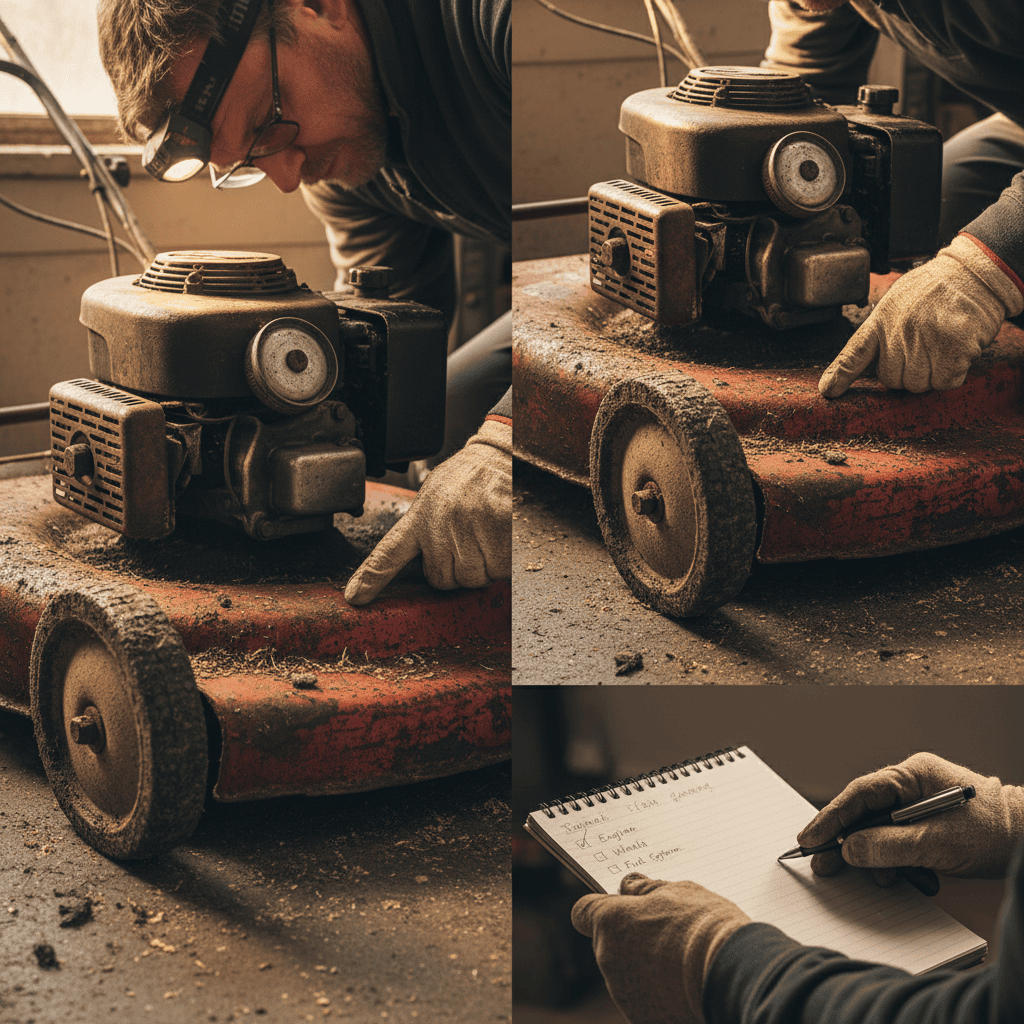
Before choosing a disposal method, honestly evaluate what you’re working with. This determines which paths are actually viable.
- Does it start and run? A functional mower opens donation and resale doors. A mower that won’t start limits you to scrap or bulk pickup.
- Is there visible damage? Rust, missing parts, cracked housing, or broken wheels make resale unlikely but don’t prevent donation or recycling.
- When was it last used? A mower unused for 5+ years may need fuel system cleaning or carburetor work before it runs again—factor this into your decision.
- What type is it? Gas-powered, electric, or push mowers have different recycling and disposal considerations. Electric mowers contain batteries that require special handling.
Step 2: Prepare Your Mower for Safe Disposal
Before handing off your mower—whether to donation, resale, or disposal—follow these safety and environmental steps.
Drain Fuel Safely
- Turn off the mower and let it cool for 15–20 minutes.
- Locate the fuel tank drain plug or use a siphon pump to extract gas into an approved fuel container.
- If there’s no drain, tip the mower carefully (carb side up on most models) over a metal container to catch fuel.
- Store fuel properly: Keep it in a labeled, sealed container away from heat and ignition sources. Never pour fuel down drains or into soil.
Drain Oil (4-Stroke Engines)
- Locate the oil drain plug underneath the engine.
- Place a pan underneath and remove the plug to let oil drain completely (5–10 minutes).
- Dispose of used oil at auto parts stores, recycling centers, or municipal hazmat collection events—never in trash or drains.
Clean Debris
- Remove grass clippings, dirt, and mud from the undercarriage and deck using a brush or scraper.
- Wipe the exterior with a dry cloth.
- Clean mowers are more appealing to buyers and easier for organizations to accept.
Option 1: Free Curbside Bulk Pickup (Fastest & Easiest)
Most cities and counties offer free curbside bulk waste pickup for large items like lawn mowers. This is the fastest, zero-cost option if you don’t care about reuse or resale.
How to Schedule
- Contact your city or county waste management department (search “[your city] bulk pickup” online).
- Many municipalities allow you to schedule online; others require a phone call.
- Common pickup windows are quarterly or twice yearly. Plan ahead if you need it gone by a specific date.
- Some cities allow you to set the mower on the curb on designated collection days; others require advance scheduling.
Preparation for Pickup
- Drain fuel and oil as outlined above (required by most waste services).
- Place the mower on the curb or designated pickup area 24 hours before collection.
- Remove the gas cap and leave it open or partially open to signal fuel has been drained.
- Include a note if needed: “Fuel drained, ready for pickup.”
Why This Works
Bulk pickup is convenient because there’s zero cost, no negotiation, and minimal effort. The downside: limited scheduling (you can’t choose the date), and you must wait for the next collection cycle.
Option 2: Donate to Charity or Community Organizations
If your mower still runs or is easily repairable, donation is an environmentally responsible choice that may qualify for a tax deduction.
Where to Donate
- Goodwill and Salvation Army: Accept working lawn mowers at many locations. Call ahead to confirm, as policies vary by branch.
- Local community centers and parks departments: May accept donations for maintenance or community gardens.
- Schools and vocational programs: Some vocational schools or agricultural programs accept mowers for teaching.
- Habitat for Humanity ReStores: Some locations accept small outdoor power equipment.
- Nonprofit tool libraries: Tool-sharing nonprofits in urban areas sometimes accept lawn mowers for lending programs.
- Local churches or community Facebook groups: Post to neighborhood groups; someone may need it.
Donation Steps
- Call or visit the organization’s website to confirm they accept lawn mowers and whether they offer pickup.
- Describe the mower’s condition honestly (does it start, are there issues?).
- Schedule a dropoff or arrange a pickup (many charities offer free pickup for bulky items).
- Ask for a donation receipt; you may claim the fair market value on your taxes if you itemize deductions.
Tax Deduction
If you itemize deductions on your federal tax return, you can deduct the fair market value of donated items. Look up similar used mowers on Facebook Marketplace or Craigslist to estimate value, then keep the donation receipt. Consult a tax professional for details.
Option 3: Sell Online (Facebook Marketplace, Craigslist, OfferUp)
A working or minimally damaged mower can often be sold, especially if it’s a known brand or relatively recent model.
Pricing Your Mower
- Search completed listings on Facebook Marketplace or Craigslist for similar mowers to gauge price.
- A used push mower in working condition typically sells for $50–$200; gas-powered rotary mowers for $150–$500; zero-turn riders for $800–$2,500+.
- Start 10–15% above your target price to leave room for negotiation.
- Factor in brand, age, condition, and local demand.
Listing Tips
- Clear photos: Take 4–5 photos showing the mower from multiple angles, close-ups of damage or wear, and the engine running (if possible).
- Honest description: State the brand, model, type (push, gas, electric), year if known, and any issues (worn blades, weak spark, etc.).
- Recent maintenance: Mention recent tune-ups, new spark plugs, or blade sharpening—buyers respond to maintained equipment.
- Price confidence: Say “firm” if you know the market; offer “OBO” (or best offer) if flexible.
Safety When Meeting Buyers
- Meet in a public, well-lit location during daylight.
- Bring a friend if possible.
- Let the buyer test-run the mower before handing over payment.
- Use cash or a secure payment method; avoid checks or wire transfers.
- Complete a simple bill of sale with buyer and seller names, date, mower description, and sale price.
Option 4: Recycle at a Scrap Metal Yard
If your mower is broken beyond practical repair or won’t sell, a scrap metal recycling facility will take it for its metal and engine components, often paying by weight.
Finding a Scrap Yard
- Search “scrap metal recycling near me” or “metal recycling [your city].”
- Call ahead to confirm they accept lawn mowers and ask about their payment rate (typically $0.05–$0.15 per pound of steel/iron).
- Ask if they have weight minimums (many require at least 50–100 lbs).
What You’ll Get Paid
- A typical lawn mower weighs 150–300 lbs (steel deck and engine). At current rates, expect $7–$45 depending on local scrap prices.
- Scrap metal prices fluctuate daily based on global markets; call for current rates before bringing in your mower.
- Some yards pay slightly more if you remove the engine separately (aluminum engine blocks and brass fittings are higher-value materials).
Preparation
- Drain all fuel and oil.
- Remove plastic parts (handles, wheels) if the yard requests it; some facilities separate materials themselves.
- Bring your mower ready to be weighed and processed.
Option 5: Hire a Junk Removal Service
If you want the mower gone today with zero effort, junk removal is the most convenient—but also the most expensive—option.
Common Services
- 1-800-Junk (Junk King): National franchise; offers same-day or next-day removal. Cost: typically $150–$300 for a single item.
- Local haulers: Independent junk removal companies often offer lower rates ($75–$150) but vary in availability and reliability.
- Handyman or yard services: Some landscapers or handymen remove mowers as a side service for $50–$100.
What to Expect
- Request a quote online or by phone (most services offer free estimates).
- Schedule a time window (usually 2–4 hours).
- Crew arrives, loads the mower, and hauls it away.
- You pay at pickup or invoice.
Cost Factors
- Size and weight of the item (a ride-on mower costs more than a push mower).
- Accessibility (easy access = lower cost; basement or backyard retrieval = higher cost).
- Local market (rural areas may charge more due to travel distance).
- Same-day or rush service (premium pricing).
Decision Matrix: Which Option Is Right for You?
| Your Situation | Best Option | Why |
|---|---|---|
| I need it gone fast and don’t care about money | Junk removal service | Fastest; can often pick up same day |
| I want it gone for free and can wait | Curbside bulk pickup | Zero cost; minimal effort; just plan ahead |
| My mower still works well | Donation or online resale | Donation is tax-deductible; resale puts cash in your pocket |
| I want to make some money | Facebook Marketplace / Craigslist | Reach motivated buyers; working mowers sell quickly |
| My mower is broken and has no resale value | Scrap metal yard | Gets paid by weight; environmentally responsible |
| I have limited mobility or no transport | Donation pickup or junk removal | No need to haul; organizations come to you |
Environmental & Legal Considerations
Fuel and Oil Disposal
The EPA and most state environmental agencies prohibit disposing of fuel or oil in trash, down drains, or into soil. Small engines in lawn mowers are a significant source of environmental contamination. Always drain both before any disposal method. Most auto parts stores (AutoZone, O’Reilly, Advance Auto Parts) accept used oil and fuel for free.
Battery Disposal (Electric Mowers)
Lithium-ion and lead-acid batteries in electric mowers are recyclable and should never go to landfills. Take them to an e-waste recycling facility or call your local waste management for battery collection events.
Local Regulations
Some municipalities have specific rules about what can be picked up curbside. Gas cans, batteries, and fuel-powered equipment sometimes require hazmat collection. Confirm your local rules before disposal.
Frequently Asked Questions
Can I put a lawn mower in the trash?
No. Most waste services prohibit lawn mowers in regular trash for safety (sharp blades, fuel hazard) and environmental reasons (fuel/oil contamination). Use curbside bulk pickup, donation, resale, scrap recycling, or junk removal instead.
Will charities pick up my lawn mower for free?
Many charities offer free pickup for bulky items including lawn mowers. Goodwill, Salvation Army, and Habitat for Humanity ReStores typically provide this. Call ahead to confirm they accept mowers and whether pickup is available in your area.
How much will a scrap yard pay for my mower?
Scrap yards pay by weight of metal, typically $0.05–$0.15 per pound. A 200 lb mower might fetch $10–$30, depending on local scrap steel prices (which fluctuate daily). Call for current rates before bringing your mower in.
What’s the fastest way to get rid of a lawn mower?
Junk removal services (1-800-Junk, local haulers) offer same-day or next-day pickup and haul-away. Cost is $75–$300 depending on the service and your location. This is the most convenient but also the most expensive option.
Can I get a tax deduction for donating my mower?
Yes, if you itemize deductions on your federal tax return. Document the fair market value of the mower (check similar listings online), get a donation receipt from the charity, and consult a tax professional for details. Deductions are limited to the mower’s actual used value, not its original purchase price.