

Weed Eater Price Range: Direct Answer
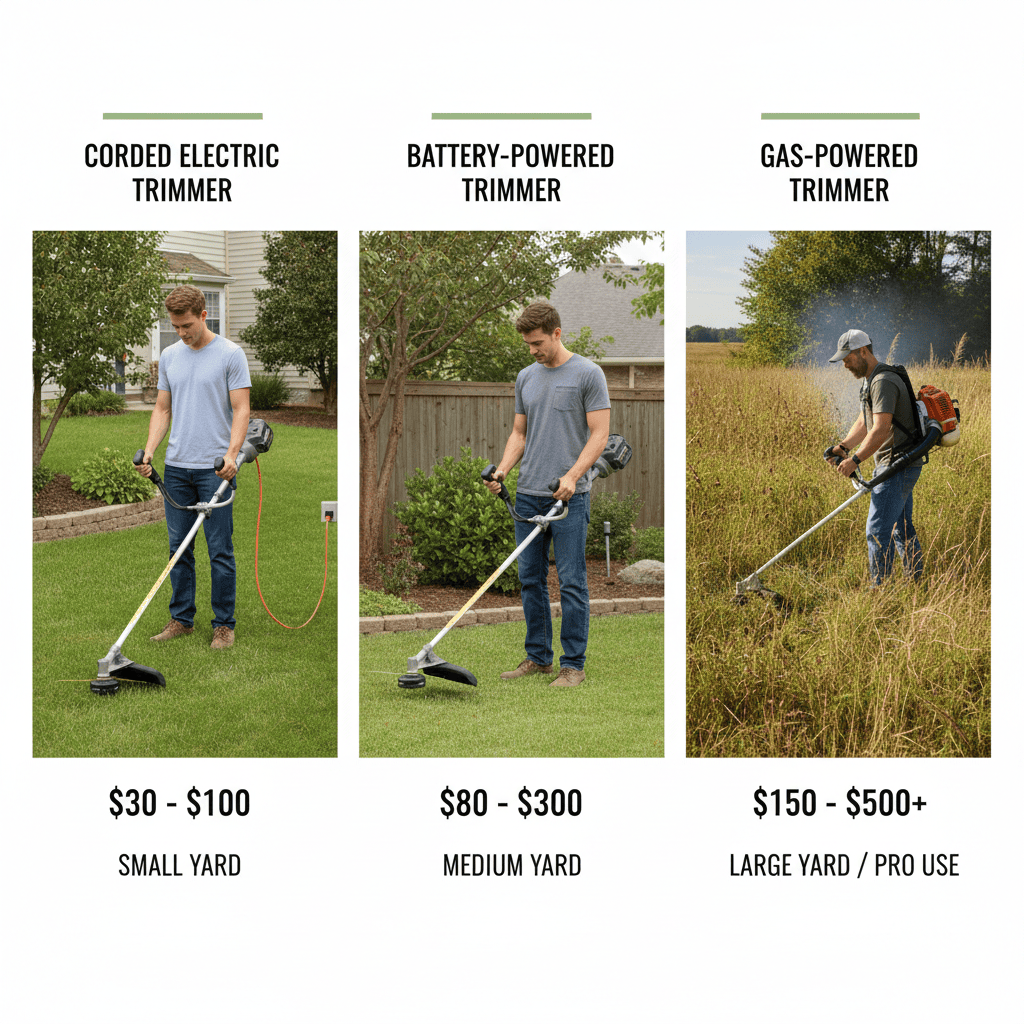
Weed eaters, also called string trimmers, typically range in price from $30 to over $500. The most significant factor in the cost is the power source: basic corded electric models start around $30-$100, battery-powered options generally cost $80-$300, and gas-powered trimmers range from $150 to $500 or more. The price is further determined by the tool’s build quality, brand, features, and whether it is intended for occasional homeowner use or professional landscaping.

Pros
- Powerful 25.4cc X-TORQUE engine delivers strong performance with reduced engine wear
- Effortless Smart Start technology and auto-reset stop switch enhance usability
- Tap-n-Go head makes string reloading simple and fast
- Fuel-efficient design supports longer sessions with less frequent refueling
- Straight shaft and 17-inch path excel at precision trimming in confined spaces
Cons
- 2-cycle gas engine requires proper fuel-oil mixing which adds preparation steps
- Gas-powered design involves emissions and regular maintenance unlike cordless electric options
- Limited specifications provided on weight or included accessories may require extra research for some buyers
The Husqvarna 525L is a gas-powered string trimmer built for everyday residential yard work. It features a straight shaft design and 17-inch cutting width that give it a solid, professional impression right out of the box. This model targets homeowners who need reliable access to grass in tight or irregular areas.
In real-world use the 25.4cc X-TORQUE engine provides strong low-RPM power while the efficient air filter helps reduce wear. Smart Start technology and the Tap-n-Go head make starting and line reloading straightforward. Intuitive choke and purge controls plus the auto-reset stop switch keep operation simple and keep the tool ready between sessions.
As a 2-cycle gas unit the 525L requires fuel-oil mixing and routine maintenance that electric models avoid. Buyers seeking quiet cordless convenience or detailed weight and accessory data will need to consider these trade-offs carefully.
Overall the Husqvarna 525L suits homeowners and gift buyers looking for a durable gas weed eater that handles everyday trimming tasks efficiently. Those who value easy starting and reliable power in a straight-shaft package will get the most value from this landscaping tool.

Pros
- Complete kit includes 4 Ah battery and charger for immediate use
- 16-inch cutting width and faster speed cover ground efficiently
- Dual-direction head improves edge control and cleanliness
- Power boost and active cooling maintain performance on tough spots
- Compatible with entire Husqvarna 40V battery lineup
Cons
- Battery appearance may vary from product images shown
- Straight shaft design may not offer height adjustability for all users
- Runtime depends on 4 Ah capacity without further details provided
The Husqvarna 320iL is a cordless electric string trimmer built as a complete kit that includes the tool, 4 Ah battery, and charger. It features a 16-inch straight shaft and Rapid Replace head, giving an immediate impression of a ready-to-use, lightweight lawn and garden tool aimed at everyday homeowners and gift shoppers.
In performance, the 25 percent lighter build pairs with faster cutting speed and a dual-direction head that lets users reverse direction to keep clippings away from beds and hardscapes. Power boost mode adds 20 percent more power for thick weeds, while the active cooling system and simple touchpad controls with LED indicator deliver consistent operation and instant starts. The 40V battery system extends runtime potential across other Husqvarna handheld equipment.
Drawbacks include the note that battery appearance may vary, a fixed straight shaft that lacks mentioned height adjustment, and the absence of detailed runtime figures beyond the included 4 Ah capacity. These factors may require buyers to plan for their specific yard size and storage needs.
Overall, the Husqvarna 320iL offers strong value for homeowners seeking a lighter, battery-powered trimmer with convenient features and multi-tool battery compatibility. It suits those looking for an all-in-one package for routine lawn edging and weed control rather than heavy commercial brush clearing.

Pros
- Commercial brushless motor produces up to 1.5kW and 5,700 RPM
- Wide 16-inch cutting path with durable 1.1-inch shaft construction
- Load N' Go head holds up to 34 feet of .095-inch trimmer line
- Includes an 82V 2.5Ah (180Wh) lithium-ion battery
Cons
- Heavy 22-pound system weight requires substantial physical effort
- Incompatible with standard Greenworks 80V battery products
Understanding Weed Eater Types & Baseline Pricing
The type of power source defines the fundamental price bracket and trade-offs for a weed eater. Here is a breakdown of what you can expect to pay for each category.
- Corded Electric Trimmers ($30 – $100): These are the most affordable option. Their low price comes from a simpler motor and the absence of a battery or fuel system. The trade-off is limited range due to the cord and potentially less power than gas models. Ideal for small yards with accessible outlets.
- Battery-Powered (Cordless) Trimmers ($80 – $300): This is a popular and rapidly evolving category. The price reflects the cost of the lithium-ion battery and charger. Lower-end models for light use start around $80, while more powerful systems with larger batteries and brushless motors can exceed $250. They offer excellent freedom of movement.
- Gas-Powered Trimmers ($150 – $500+): Gas trimmers represent the highest upfront cost due to their internal combustion engine. Basic homeowner models begin around $150, while heavy-duty, professional-grade units with more power, better durability, and advanced features like straight shafts can cost $400-$500 or more. They offer maximum power and runtime for large properties.
Factors That Influence Weed Eater Pricing
Within each power-source category, prices vary widely. Understanding these factors helps explain why two battery trimmers, for example, might differ by hundreds of dollars.
Power Source and Cost of Ownership
The upfront price is only part of the equation. The power source dictates ongoing costs:
- Electric (Corded): Lowest long-term cost. The only ongoing expense is minimal electricity and occasional line replacement. No batteries or fuel to buy.
- Battery-Powered: Mid-range total cost. The primary expense is replacing the rechargeable battery every few years ($50-$100+). Electricity for charging is negligible.
- Gas-Powered: Highest long-term cost. You must budget for gasoline and two-cycle oil mixture. Maintenance like spark plug and air filter changes also adds to the expense.
Brand Reputation
Established brands with strong reputations for durability and performance often command a premium. Companies like Husqvarna and Stihl are known for commercial-grade equipment and are priced at the top end. Consumer brands like Black+Decker, Ryobi, and WORX often offer excellent value for homeowner use, sitting in the mid-to-lower price tiers for their respective power sources.
Build Quality and Motor Technology
- Motors: Budget trimmers use basic brushed motors. Higher-priced models feature brushless motors, which are more efficient, produce less heat, last longer, and deliver more power. This significantly impacts cost.
- Shaft Design: Straight shafts are generally more durable and preferred for professional use, adding to cost. Curved shafts are common on lighter, homeowner models.
- Materials: Components like gearbox housings, handle grips, and shaft materials (aluminum vs. steel) affect durability and price.
Features and Inclusions
Additional features increase the price:
- Adjustable Handles/Heads: For better ergonomics and reaching under decks.
- Edging Capabilities: Some models have a pivoting head or dedicated wheels for easy transition from trimming to edging.
- Line Feed Systems: Automatic or bump-feed systems for advancing the trimmer line are more convenient than manual feed and are found on higher-end models.
- Included Batteries/Chargers: A trimmer sold as a “tool only” is cheaper than a kit that includes a battery and charger. Buying the kit is usually more cost-effective initially.
Gas-Powered Weed Eaters: Cost Breakdown
Gas models are divided into two main tiers:
- Homeowner Gas Trimmers ($150 – $250): These typically have 21-25cc engines, lighter builds, and often feature curved shafts. They are capable for maintaining average-sized residential lawns with thicker grass or weeds but are not designed for all-day use.
- Professional/Commercial Gas Trimmers ($250 – $600+): These are built for daily, heavy-duty use. They feature larger (25cc+), more powerful engines, durable straight shafts, anti-vibration systems, and higher-quality components from brands like Husqvarna and Stihl. The higher cost translates to greater power, longer life, and less operator fatigue.
Important Additional Costs: Don’t forget to budget for the fuel mixture (pre-mixed fuel is a convenience option) and essential maintenance items like replacement trimmer line, spark plugs, and air filters.
Electric & Battery-Powered: Pricing Breakdown
This category shows a clear price vs. performance ladder: For additional operational safety benchmarks, see our published testing notes on marshall stanmore iii vs harman kardon onyx studio 8.
- Corded Electric ($30 – $100): Best for very small, flat yards where an extension cord can reach all areas. Limited by the cord’s length and potential power.
- Battery-Powered Entry-Level ($80 – $150): Good for light-duty trimming on small to medium lawns. Batteries typically provide 15-25 minutes of runtime. Power is sufficient for trimming grass, not thick weeds.
- Battery-Powered Mid-Range ($150 – $300): This is the sweet spot for many homeowners. These trimmers offer more power (often with brushless motors), larger batteries (30-60 minutes runtime), and better build quality. They can handle typical suburban yard tasks, including thicker grass and edging.
- Battery-Powered Professional ($300+): The pinnacle of battery technology. These offer power comparable to gas trimmers, long runtime, and robust construction for commercial landscapers looking to transition away from gas. The premium is for top performance and battery system compatibility with other professional tools.
Budget vs. Professional-Grade: What You’re Paying For
The decision between a budget and professional model involves understanding the value beyond the sticker price.
- Performance: Professional models cut faster, handle tougher growth, and work more efficiently. If you have a large, unkempt yard, a budget trimmer may frustrate you and take twice as long.
- Durability & Lifespan: Professional tools are built with superior materials and engineering to withstand daily use. A homeowner trimmer used for the same task may wear out much quicker.
- Ergonomics & Comfort: Features like anti-vibration, better grips, and balanced weight reduce fatigue, which is crucial for extended use.
- Warranty & Support: Professional-grade equipment often comes with stronger warranty support and easier access to replacement parts.
For the typical homeowner with a quarter-acre lot and basic grass trimming needs, a mid-range battery or quality corded model offers the best balance of price and performance. Investing in a professional-grade gas trimmer is usually only necessary for very large properties or if you will use it commercially. To compare alternative configurations, check our hands-on review of dyson v8 cyclone vs bissell featherweight stick.
How to Choose a Weed Eater Within Your Budget
- Assess Your Yard: Size, terrain, and the type of growth (grass vs. thick weeds) are the primary determinants. A small, flat lawn doesn’t need a powerful gas trimmer.
- Prioritize Power Source: Choose based on your tolerance for cords, desire for low maintenance, or need for maximum power. Consider the total cost of ownership.
- Look for Key Features: Decide if you need an edger function, auto-feed line, or adjustable handle. These add value but also cost.
- Consider the Ecosystem: If you already own cordless power tools, buying a trimmer from the same battery platform (e.g., Ryobi ONE+ or Dewalt 20V MAX) can save significant money.
- Don’t Overbuy: A $300 professional trimmer is unnecessary for trimming grass in a small suburban yard. Match the tool to the task.
Common Questions on How Much Is A Weed Eater Answered
Is a gas or battery weed eater better?
For most homeowners, battery-powered trimmers offer the best combination of convenience, low maintenance, and sufficient power. They are quieter, lighter, and eliminate the hassle of mixing fuel. However, for very large yards, extremely thick brush, or all-day commercial use, a gas-powered trimmer still provides unmatched runtime and raw power.
How long does a weed eater battery last on a single charge?
Battery runtime varies greatly by model and usage. Entry-level batteries may last 15-20 minutes, while higher-voltage batteries on mid-range to professional models can provide 30 to 60 minutes or more. Purchasing a second battery is a common solution for larger yards. Users looking for related component recommendations can explore our bissell crosswave hydrosteam vs shark stainforce breakdown.
What is a reasonable budget for a good homeowner weed eater?
A reasonable budget for a reliable, mid-range weed eater that will handle most residential tasks for years is typically $150 to $250. This range includes quality battery-powered models with a brushless motor and a good battery, or capable gas trimmers from reputable brands.
Are cheap weed eaters from big-box stores worth it?
Cheap models under $50 can be worth it only for very light, occasional use on a tiny patch of grass. They often have less powerful motors, cheaper components, and shorter lifespans. For regular maintenance, spending slightly more on a name-brand budget model from the $80-$120 range will provide much better value and durability.
Related Maintenance and Operating Guides
To keep your equipment running at peak operating efficiency, explore our related technical walkthroughs and maintenance tutorials:
- Consult our detailed breakdown on cordless stick vacuum buyer guide.
- Consult our detailed breakdown on robotic pool cleaner comparison guide.
Buying and Safety Background
Weed eater prices vary with fuel type, power source, and brand, so compare features carefully rather than focusing on price alone. For broader safety reading on handheld trimmers, look to American National Standards Institute (ANSI).









