Direct Answer: What Makes a Good Leaf Blower
A good leaf blower matches your yard size, power needs, and maintenance preferences. Gas blowers offer maximum power (180-600+ CFM) for large properties but require regular maintenance and produce noise; electric corded blowers provide consistent mid-range power (150-400 CFM) with minimal upkeep, ideal for small to medium yards; battery-powered blowers deliver quiet, eco-friendly operation (100-500 CFM) with convenience, though runtime depends on battery capacity. Effective leaf clearing typically requires 200+ CFM and 100+ MPH, combined with ergonomic design and durability.
Understanding Leaf Blower Types: Gas, Electric, and Battery-Powered
Gas Leaf Blowers: Maximum Power and Performance
Gas leaf blowers are the most powerful option, making them ideal for large properties, heavy debris, and wet leaves. These models produce CFM ratings of 180-600+ depending on engine displacement. Gas blowers excel at clearing compacted leaves and handling thick yard waste.
Advantages: Unlimited runtime without charging, maximum power output, ability to handle challenging conditions, and no cord restrictions.
Limitations: Require regular maintenance including oil changes, spark plug replacement, and seasonal storage preparation. They produce significant noise (typically 85-106 decibels), emit exhaust fumes, and have higher fuel costs. Initial investment is typically higher than corded electric models.
Corded Electric Leaf Blowers: Consistent Power with Low Maintenance
Electric corded blowers provide steady, reliable power without the maintenance demands of gas models. They deliver CFM ratings between 150-400, sufficient for most residential yards. The power output remains consistent throughout operation without fuel fluctuations.
Advantages: Minimal maintenance, quiet operation (typically 70-85 decibels), zero emissions, lower operating costs, and instant start capabilities. No fuel or oil to manage.
Limitations: Cord restricts movement and range, requiring strategic outlet placement or extension cords. Not ideal for properties larger than one acre. Power depends on consistent electricity access.
Battery-Powered Leaf Blowers: Convenience Meets Eco-Friendliness
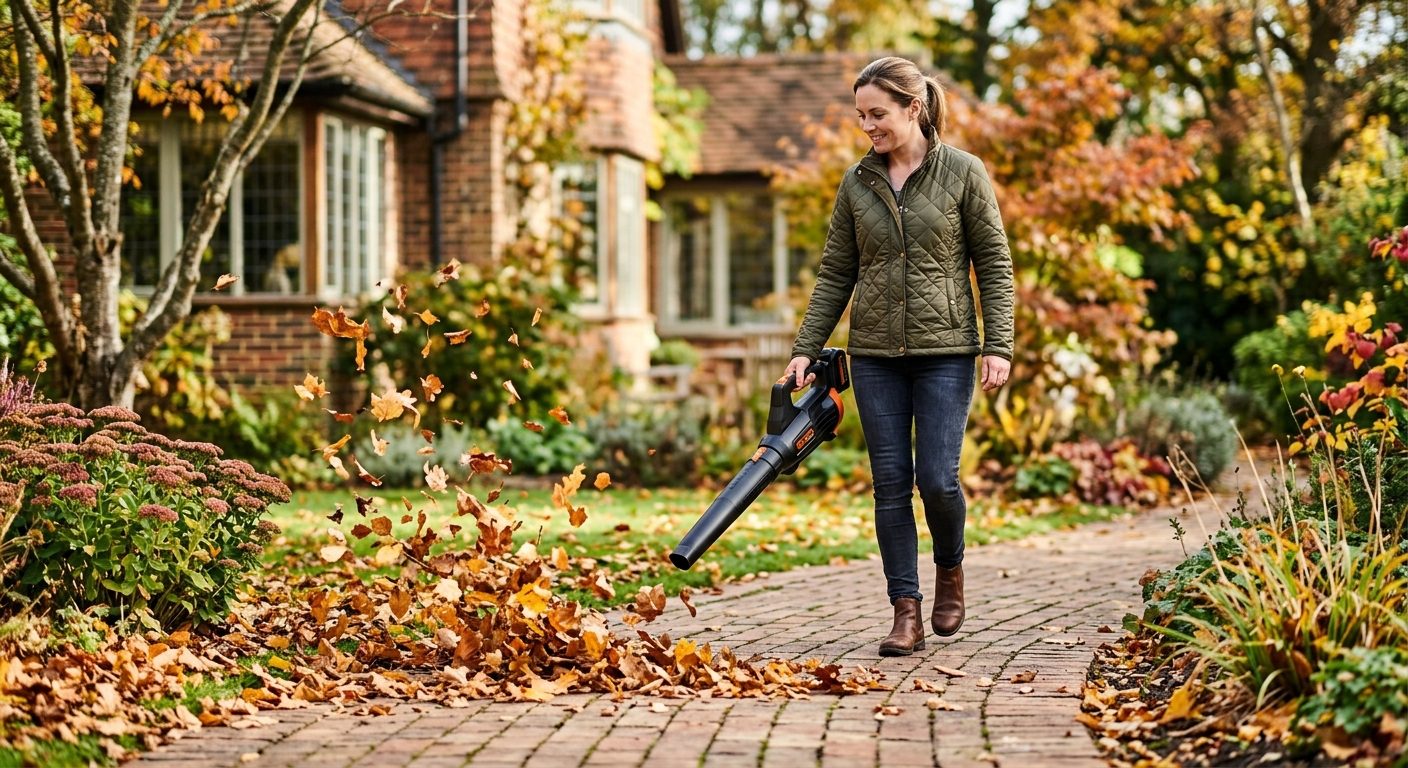
Battery-powered (cordless) blowers have advanced significantly, now delivering CFM ratings of 100-500. These models combine the convenience of cordless operation with environmental benefits and low noise levels.
Advantages: Cordless freedom, quiet operation (typically 70-80 decibels), zero emissions, minimal maintenance, and fast recharging. Battery technology works across multiple tools if the same platform is used.
Limitations: Runtime varies by battery capacity and vegetation density, typically 20-60 minutes per charge. Battery replacement adds long-term costs. Performance may decline as batteries age. Initial investment can be higher than corded models.
Key Performance Metrics: CFM, MPH, and What They Mean
CFM (Cubic Feet Per Minute): Measuring Airflow Volume
CFM measures the volume of air a blower moves in one minute. Higher CFM values indicate greater volume of air displaced, which translates to faster debris clearing and ability to handle heavier materials.
CFM guidelines by yard size:
- Small yards (under 0.25 acres): 100-200 CFM sufficient for routine maintenance and light debris
- Medium yards (0.25-0.5 acres): 200-400 CFM recommended for mixed leaf loads and moderate debris
- Large yards (over 0.5 acres): 400+ CFM necessary for comprehensive clearing and heavy accumulation
MPH (Miles Per Hour): Measuring Air Velocity
MPH measures how fast air moves from the blower nozzle. Higher velocity concentrates airflow, making it effective at dislodging compacted or wet leaves. Velocity and volume work together; high CFM with low MPH spreads air broadly but gently, while lower CFM with high MPH concentrates force on specific areas.
MPH effectiveness: Most effective leaf clearing occurs at 100+ MPH, whichdislodges and moves stuborn debris. Velocities below 80 MPH handle light, dry leaves but struggle with compacted or wet material.
Balancing CFM and MPH for Different Tasks
A blower with 300 CFM at 120 MPH handles various conditions effectively. The combination allows clearing of both loose leaves and denser debris. Neither metric alone determines effectiveness; both contribute to clearing performance. Yard terrain, leaf type, and seasonal conditions affect which balance works best.
Choosing the Right Blower for Your Situation
Assessing Your Actual Power Needs
Determine power requirements by evaluating yard size, terrain type, and typical leaf volume. Flat, open properties require less power than sloped yards with dense trees. Wet climates or yards with heavy fall foliage demand higher CFM than moderate-debris environments.
Consider seasonal frequency: occasional fall cleanup needs differ from regular maintenance during extended leaf seasons. Properties with multiple large trees generate substantially more debris than single-tree landscapes.
Noise Level and Neighbor Considerations
Noise production varies significantly by type. Gas blowers produce 85-106 decibels, comparable to lawnmower operation. Corded and battery-powered models operate at 70-85 decibels, permitting earlier morning or evening use without disturbing neighbors.
Local ordinances often restrict outdoor power equipment operation to specific hours. Battery-powered and corded electric models provide flexibility for off-peak cleaning without noise violations.
Weight, Ergonomics, and Physical Demands
Handheld blowers range from 7-12 pounds for battery models to 10-15 pounds for corded units and 12-20 pounds for gas blowers. Backpack models distribute weight across shoulders, reducing arm and shoulder fatigue during extended use. Prolonged operation at higher weights causes user fatigue, affecting job completion and control.
Vibration characteristics matter for extended use. Gas engines produce more vibration than electric motors, contributing to fatigue even when weight is similar.
Maintenance Requirements and Long-Term Costs
Gas blowers require annual or seasonal maintenance: spark plug replacement, air filter cleaning, fuel system stabilization, and carburetor servicing. Electric and battery models need occasional cord inspection (corded) or battery maintenance (battery-powered). Long-term ownership costs favor electric models due to reduced maintenance expenses.
Budget Considerations Across Power Types
Entry-level corded electric blowers cost $50-150. Battery-powered models range $100-400, with premium brands reaching $600+ for professional-grade units. Gas blowers start around $100-200 for basic models, reaching $400+ for commercial equipment. Budget should account for long-term maintenance and runtime expenses, not just purchase price.
Step-by-Step Buying Guidance
Step 1: Define Your Primary Use Case
Clarify whether you need a blower for seasonal fall cleanup, regular maintenance, or year-round debris management. One-time annual use justifies different criteria than weekly operation. Identify whether you’ll use the blower for leaves, grass clippings, dust, or mixed debris.
Step 2: Evaluate Power Type Fit
Match your situation to power type advantages: Choose gas if you have large properties (over one acre), heavy debris, or unlimited runtime needs and don’t mind maintenance. Select corded electric if your yard is small to medium, you value quiet operation, and you can manage cord placement. Pick battery-powered if you want cordless convenience, environmental responsibility, and can tolerate limited runtime per charge.
Step 3: Determine Required CFM and MPH
Based on yard size and debris type, identify minimum CFM needed from the guidelines above. Confirm the blower achieves 100+ MPH for effective leaf movement. Models meeting these thresholds will handle typical residential conditions effectively.
Step 4: Assess Weight and Comfort
If you have shoulder or back limitations, prioritize lighter models or backpack designs. Test handheld models when possible to evaluate grip comfort and balance. Consider operation duration; heavier models fatigue users faster during extended sessions.
Step 5: Review Warranty and Brand Support
Quality brands offer 2-5 year warranties on blower units and batteries (where applicable). Established manufacturers provide parts availability and service support. Check warranty coverage for normal wear versus manufacturing defects. Local dealer availability simplifies service and parts replacement if issues arise.
Step 6: Compare Operating Costs
Calculate annual fuel costs for gas models, electricity costs for corded units, and battery replacement timing for cordless models. Over 5-10 years, electric and battery models typically cost less to operate than gas blowers, even with battery replacements factored in.
Frequently Asked Questions
Q: What CFM do I actually need for a residential yard?
Most residential properties clear effectively with 150-300 CFM. Yards under 0.5 acres rarely need more than 250 CFM for standard fall cleanup. Properties with heavy tree coverage or regular maintenance demands benefit from 300-400 CFM. Unless your yard exceds one acre or features unusually dense debris, 200+ CFM with 100+ MPH handles typical conditions efficiently.
Q: Are battery-powered blowers powerful enough compared to gas?
Modern battery-powered blowers deliver 200-400 CFM, comparable to many mid-range gas models. They handle typical residential leaf clearing effectively. Battery models excel in small to medium yards (under one acre) with occasional or moderate debris. Large commercial properties or heavy-duty daily use still favor gas blowers for unlimited runtime and highest power output.
Q: How longdo cordless leaf blower batteries last per charge?
Battery runtime typically ranges 20-60 minutes depending on battery capacity (measured in amp-hours) and debris density. Light leaf clearing may achieve full capacity runtimes, while heavy debris or high-power settings reduce runtime by 20-30 percent. Premium battery systems from established manufacturers often provide better runtime than budget options.
Q: Can I use a corded blower outdoors in wet conditions?
Operating corded electric blowers in wet grass or rain increases shock hazard. Use only in dry conditions or with properly grounded outdoor outlets and ground fault circuit interrupters (GFCIs). Battery and gas blowers eliminate electrical hazards in wet conditions. If regular wet-weather operation is necessary, battery-powered models provide the safest option.
Making Your Final Decision
A good leaf blower delivers the power needed for your specific yard while matching your priorities around noise, maintenance, cost, and convenience. Gas blowers suit large properties and heavy-duty demands. Corded electric models serve small to medium yards efficiently. Battery-powered blowers offer flexible, quiet operation for most residential needs. Identify your power requirements, match them to available CFM and MPH ratings, and select based on your maintenance tolerance and budget. The right choice depends on your specific situation, not universal’best’ recommendations.