Direct Answer: Where Is the Spark Plug on a Lawn Mower?
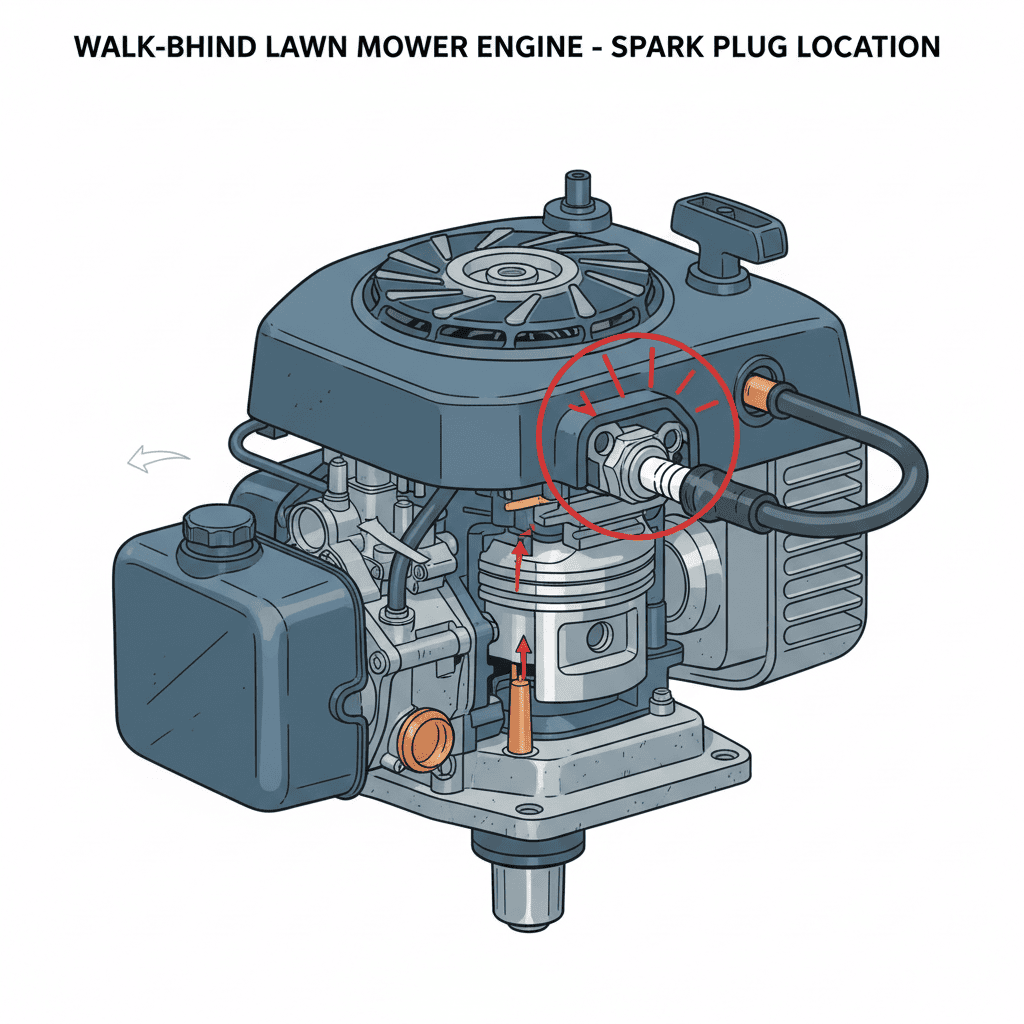
The spark plug on a lawn mower is typically located on the engine cylinder head, accessible from the top or side of the engine. It is usually covered by a thick rubber boot or cap that connects the spark plug wire to the plug itself. The exact position varies significantly by lawn mower model and engine type, so the most reliable way to find it on your specific machine is to consult the owner’s manual.
In most walk-behind mowers, you will find the spark plug near the front or side of the engine block, often protruding slightly from the metal housing. On riding mowers, the plug is frequently tucked under the engine shroud or near the top of the engine. If you can see a thick black wire leading to a rubber boot, you have found the spark plug.
Understanding the Spark Plug’s Role and Common Placement
What Does a Spark Plug Do in a Lawn Mower Engine?
The spark plug is a small but essential engine component. It delivers the electric spark that ignites the air-fuel mixture inside the engine’s combustion chamber. This controlled explosion pushes the piston, which turns the crankshaft and ultimately powers the mower blade. Without a properly functioning spark plug, the engine may fail to start, run roughly, or stall under load.
Over time, spark plugs accumulate carbon deposits, their electrodes wear down, and the gap between electrodes widens. This is why regular inspection and periodic replacement are part of standard lawn mower maintenance.
On Which Part of the Engine Is the Spark Plug Usually Mounted?
The spark plug is always mounted in the cylinder head, because it must reach directly into the combustion chamber. On most lawn mower engines, the cylinder head is a metal block located at the top or side of the engine, often with cooling fins. The spark plug screws into a threaded hole in this head, with only the upper portion of the plug and its terminal visible from the outside.
Because the cylinder head can face different directions depending on the engine design, the spark plug may point upward, sideways, or at an angle. On many Briggs & Stratton and Honda engines used in walk-behind mowers, the plug points horizontally toward the side of the machine. On some overhead valve (OHV) engines, it may be positioned higher and closer to the top of the engine.
What Does a Lawn Mower Spark Plug and Its Connector Look Like?
Recognizing the spark plug visually is the fastest way to find it. The spark plug is a small metal cylinder, roughly the size of a large socket, with a hexagonal nut shape near the top. A thick, insulated wire runs from the engine’s ignition system to a rubber boot that snaps over the plug’s terminal.
This boot is usually black, sometimes with a colored stripe, and it pulls straight off with a firm tug. Underneath the boot, you will see the metal terminal of the spark plug. The plug itself is threaded into the engine block, so only the top portion is visible. If you see a rubber boot on a wire disappearing into the engine’s metal housing, you have almost certainly found the spark plug.
How to Locate the Spark Plug on Your Specific Lawn Mower
First Safety Step: Disconnect the Spark Plug Wire
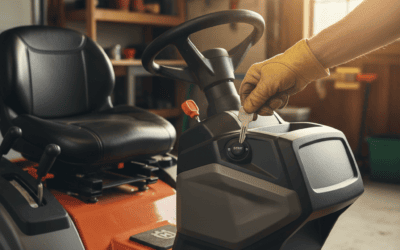
Before you touch anything near the engine, ensure the mower is turned off, the engine is cool, and the ignition key is removed (on riding mowers). If you plan to work on the mower, disconnect the spark plug wire by pulling firmly on the rubber boot, not the wire itself. This prevents the engine from accidentally starting while you are performing maintenance. Many manufacturers and professional mechanics recommend this as a standard safety practice before any service work.
Common Visual Cues to Identify the Spark Plug Location
- Follow the thick wire: The spark plug wire is the thickest wire on the engine. Trace it from the ignition coil or magneto to where it ends in a rubber boot.
- Look for the rubber boot: A black rubber cap, often about an inch long, covering a small metal cylinder is your spark plug.
- Check near the cooling fins: The cylinder head has metal fins for air cooling. The spark plug is usually threaded into this same metal casting.
- Inspect the top and sides of the engine: On most walk-behind mowers, the plug is on the side or front of the engine block. On riding mowers, check the top of the engine under the shroud.
- Remove debris and grass clippings: Built-up clippings can hide the plug, so brush away loose material to reveal the boot.
Why the Owner’s Manual Is the Definitive Resource
While the general guidance above applies to most mowers, there is no single universal location. Engine manufacturers position the cylinder head differently depending on the engine family, carburetor placement, and shroud design. The owner’s manual for your specific model typically includes a labeled diagram showing the spark plug location, the correct spark plug part number, and the proper electrode gap.
If you no longer have the printed manual, most manufacturers publish PDF versions online. You can search by the mower’s model number, which is usually printed on a sticker on the deck or under the seat of a riding mower. The manual is the fastest way to avoid guessing and to confirm you are looking at the correct component.
Key Factors That Determine Spark Plug Location
How Engine Type Affects Spark Plug Placement
Lawn mower engines come in two main designs, and each places the spark plug differently:
| Engine Type | Typical Spark Plug Location | Notes |
|---|---|---|
| Flathead (side-valve) engine | Side of the engine block, often horizontal | Common on budget walk-behind mowers; plug is usually easy to reach |
| Overhead valve (OHV) engine | Higher on the engine, near the top of the cylinder head | Common on premium and commercial mowers; may be angled or partially recessed |
Flathead engines typically have the spark plug mounted on the side of the cylinder, pointing outward. OHV engines, with their more complex valvetrain, often position the plug higher and closer to the top of the engine. Neither location is difficult to access in most cases, but knowing your engine type helps you know where to look first.
Does Location Differ Between Walk-Behind and Riding Mowers?
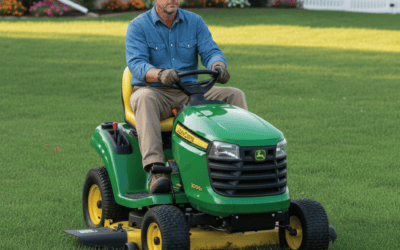
Yes. On a walk-behind mower, the engine sits directly on the deck, and the spark plug is usually visible on the side or front of the engine without removing any covers. On a riding mower, the engine is often enclosed in a metal shroud or hood, and the spark plug may be tucked beneath it. You may need to remove a small access panel or lift the hood to reach the plug.
On some zero-turn mowers and tractors, the engine is mounted with the cylinder head facing rearward or downward, making the plug harder to see. In these cases, a flashlight and a mirror can help you locate the boot before you attempt to remove it.
Less Common or Harder-to-Access Spark Plug Locations
Some engines mount the spark plug at an angle, recessed into a pocket in the cylinder head. Others, particularly on older models, place the plug underneath a metal shroud that must be unbolted first. On a few compact engines, the plug is positioned close to the exhaust, which means you should wait for the engine to cool completely before touching it.
If the plug is recessed, you may need a spark plug socket with an extension to remove it. If the plug is buried under the shroud, remove the shroud bolts carefully and set them aside in order. In all cases, take a photo with your phone before disassembly so you can remember how the parts go back together.
Direct Answer and Quick Reference Summary
In One Sentence, Where Is the Spark Plug on Most Lawn Mowers?
On most lawn mowers, the spark plug is located on the engine cylinder head, visible from the top or side of the engine and covered by a black rubber boot attached to a thick wire.
Top Three Steps to Find It Quickly
- Turn off the mower and let the engine cool. Safety comes first, and a hot engine can burn you.
- Follow the thick spark plug wire. Trace it from the engine body to the rubber boot at its end.
- Pull the boot to confirm. Gently tug the boot (not the wire) to expose the metal terminal of the spark plug.
When Should You Stop and Seek Professional Help?
If you cannot locate the spark plug after checking the owner’s manual, or if the plug is hidden behind shrouds that you are uncomfortable removing, stop and consult a small-engine repair shop. Likewise, if the spark plug is seized and will not turn with reasonable force, do not force it; a broken plug can damage the cylinder head. A professional mechanic has the right tools and experience to handle these situations safely.
Frequently Asked Questions
Do all lawn mowers have the spark plug in the same place?
No. While the spark plug is always mounted in the engine cylinder head, the head itself faces different directions on different engines. On flathead engines the plug usually points out the side, while on OHV engines it is often higher and near the top. Always confirm with your owner’s manual.
Can I find the spark plug without the owner’s manual?
Yes, in most cases. Look for the thickest wire on the engine and follow it to the rubber boot. The boot covers the spark plug terminal. If you cannot see it, brush away grass clippings and check the sides and top of the engine block.
Why is there a rubber boot over the spark plug?
The rubber boot protects the connection from moisture, dirt, and vibration, and it prevents the high-voltage current from arcing to the engine block. It also makes the plug easy to disconnect safely for maintenance.
How often should I check or replace the spark plug?
Most manufacturers recommend inspecting the spark plug once a season and replacing it annually or every 100 hours of use, whichever comes first. If your mower is hard to start, runs rough, or stalls, a worn or fouled spark plug is one of the first things to check.