Understanding Your Craftsman Riding Mower’s Starting System
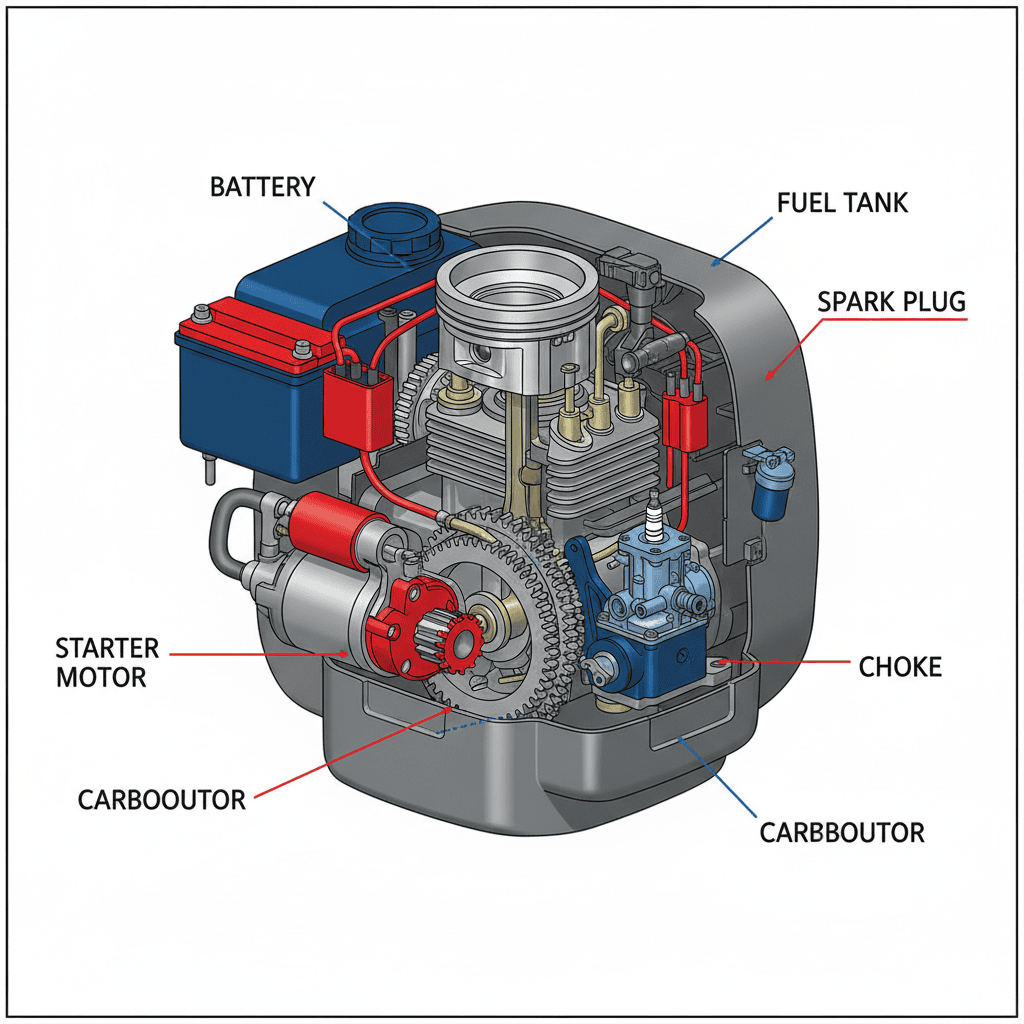
A Craftsman riding lawn mower’s starting system relies on several interconnected components working together to safely ignite the engine. Understanding how these parts function will help you start your mower correctly and diagnose problems if they occur.
The core components involved in starting include:
- Ignition Key and Switch: Controls electrical power to the starter motor and engine ignition system
- Battery: Provides electrical power to the starter solenoid and ignition system
- Starter Motor: Cranks the engine to initiate combustion
- Choke: Restricts air intake to create a rich fuel mixture for cold starts
- Fuel System: Delivers gasoline to the engine; includes the fuel valve and carburetor
- Safety Interlock Switches: Prevent starting unless specific conditions are met
Why Safety Switches Matter
Craftsman riding mowers are equipped with safety interlock switches that prevent the engine from starting unless the operator is seated, the parking brake is engaged, and the PTO (blade) switch is disengaged. These switches exist to prevent accidents and injuries. If any of these conditions are not met, the mower will not crank, even if the battery and fuel are in good condition. This is a critical safety feature, not a malfunction.
How Model and Engine Variations Affect Starting
Craftsman riding mowers vary by year, model, and engine type (Kohler, Briggs & Stratton, Kawasaki, etc.). While the general starting procedure is similar across most models, specific details such as choke location, fuel valve position, and throttle settings may differ. Always consult your owner’s manual for your specific model to ensure you follow the correct procedure.
Before You Start: Essential Pre-Start Checks
Before attempting to start your Craftsman riding mower, perform these critical checks to prevent damage to the engine and ensure safe operation:
Check the Fuel Supply
- Verify that the fuel tank contains fresh gasoline (fuel older than 30 days may cause starting problems)
- Ensure the fuel valve (typically located at the base of the fuel tank) is in the ON position
- If the mower has been sitting for an extended period, consider draining old fuel and replacing it with fresh gasoline mixed with a fuel stabilizer
Check the Oil Level
- Remove the dipstick or oil level indicator and wipe it clean
- Reinsert it fully, then remove it again to check the level
- The oil should be between the minimum and maximum marks on the dipstick
- If low, add the recommended oil type (typically SAE 30 or 10W-30, depending on your model)
- Never start the mower if the oil level is critically low, as this can cause engine damage
Inspect the Battery
- Check that the battery terminals are clean and tightly connected
- Look for corrosion (white, blue, or green deposits) on the terminals and clean if necessary using a wire brush
- If the battery is more than 3-5 years old and the mower has been in storage, the battery may be dead and require charging or replacement
Verify Operator Position and Safety Switches
- Sit fully in the operator’s seat; the mower will not start if you are not seated properly
- Engage the parking brake (usually a lever or pedal) to its fully locked position
- Ensure the PTO (Power Take-Off or blade) switch is in the OFF position to disengage the cutting blades
- Some models have a seat switch that must detect your weight; if the mower still won’t start, try shifting your position slightly
Check the Throttle and Choke
- Set the throttle to the FAST or START position (consult your manual for the exact setting)
- For a cold engine, the choke should be in the CLOSED or FULL CHOKE position
- For a warm engine, the choke should be partially or fully open
Step-by-Step: How to Start a Craftsman Riding Lawn Mower
Follow this procedure to start your Craftsman riding mower correctly:
Step 1: Prepare the Mower
- Sit in the operator’s seat and adjust your position so you are fully supported
- Engage the parking brake completely
- Verify that the PTO (blade) switch is in the OFF position
- Check that the fuel valve is ON
Step 2: Set the Choke
- If the engine is cold (mower has not been run recently or was shut off more than an hour ago), set the choke to CLOSED or FULL
- If the engine is warm (mower was recently running), set the choke to OPEN or PARTIAL
- The choke lever is typically located on the side of the engine or on the dashboard; consult your manual for the exact location
Step 3: Insert and Turn the Ignition Key
- Insert the ignition key into the keyswitch (usually located on the dashboard to the right of the steering wheel)
- Turn the key to the RUN position (not all the way to START yet)
- Wait 2-3 seconds for the fuel pump to prime and electrical systems to initialize
Step 4: Start the Engine
- Turn the ignition key to the START position and hold it there
- The starter motor will engage and crank the engine
- Hold the key in the START position for 3-5 seconds, or until the engine fires and begins to run
- Do not hold the key in the START position for more than 10 seconds continuously, as this can damage the starter motor; if the engine does not start, release the key, wait 30 seconds, and try again
Step 5: Release the Key and Adjust the Choke
- Once the engine fires and begins running, immediately release the ignition key to the RUN position
- The engine will continue running on its own
- If the choke is fully closed, gradually push it toward the OPEN position as the engine warms (typically over 30-60 seconds)
- Listen to the engine sound; as it warms, it will run more smoothly and you can open the choke further
- By the time the engine reaches normal operating temperature, the choke should be fully open
Step 6: Warm Up the Engine
- Allow the engine to run at idle (low throttle) for 1-2 minutes before mowing
- This allows the engine oil to circulate and reach proper operating temperature
- You can now disengage the parking brake and adjust the throttle to the desired mowing speed
Troubleshooting: Why Won’t My Craftsman Mower Start?
If your Craftsman riding mower does not start after following the procedure above, work through these diagnostic steps:
The Mower Clicks But Doesn’t Crank
Symptom: You hear a clicking sound from the starter solenoid, but the engine does not turn over.
Likely Causes and Solutions:
- Dead or Weak Battery: The battery does not have enough charge to power the starter motor. Solution: Charge the battery with a battery charger or replace it if it is more than 5 years old.
- Corroded Battery Terminals: Corrosion prevents electrical current from flowing properly. Solution: Disconnect the battery cables and clean the terminals with a wire brush and baking soda solution, then reconnect securely.
- Loose Battery Connections: The battery cables may not be making good contact. Solution: Tighten the battery cable clamps by turning them clockwise with a wrench.
- Faulty Starter Solenoid: The solenoid may be failing. Solution: If the battery and connections are good, the solenoid may need replacement (consult a technician).
The Mower Cranks But Won’t Fire (No Ignition)
Symptom: The engine turns over but does not ignite; you hear the starter motor but no combustion.
Likely Causes and Solutions:
- No Fuel Reaching the Engine: The fuel valve is off, the fuel line is clogged, or the fuel pump is faulty. Solution: Check that the fuel valve is ON; if fuel is present in the tank, inspect the fuel line for blockages or cracks; if the fuel line is clear, the fuel pump may need replacement.
- Bad Spark Plugs: The spark plugs may be fouled, gapped incorrectly, or dead. Solution: Remove the spark plugs, inspect them for black deposits or damage, and replace if necessary; ensure the gap is correct (typically 0.025-0.030 inches for Craftsman mowers).
- Faulty Ignition Coil: The ignition coil may not be generating spark. Solution: If the spark plugs are good but there is no spark, the ignition coil likely needs replacement.
- Old or Stale Fuel: Fuel older than 30 days can gum up the carburetor and prevent ignition. Solution: Drain the fuel tank and fill with fresh gasoline; consider running a fuel stabilizer through the system.
- Flooded Engine: If you have been trying to start the mower repeatedly, excess fuel may have accumulated in the combustion chamber. Solution: Remove the spark plugs, turn the ignition key to START for several seconds to clear excess fuel, reinstall the spark plugs, and try starting again.
Safety Switches Preventing Start
Symptom: The mower makes no sound when you turn the ignition key; there is no clicking or cranking.
Likely Causes and Solutions:
- Operator Not Seated Properly: The seat switch does not detect your weight. Solution: Sit fully in the seat and ensure your full weight is supported; try shifting your position slightly.
- Parking Brake Not Engaged: The brake safety switch requires the parking brake to be fully locked. Solution: Engage the parking brake lever or pedal completely until you hear or feel it lock.
- PTO Switch in ON Position: The blade engagement switch must be OFF to start the engine. Solution: Move the PTO switch to the OFF position.
- Faulty Safety Switch: One of the safety interlock switches may be broken or misaligned. Solution: If all conditions appear to be met but the mower still won’t start, a safety switch may need replacement (consult a technician).
Engine Starts But Immediately Stalls
Symptom: The engine fires and runs briefly, then shuts off.
Likely Causes and Solutions:
- Choke Set Incorrectly: If the choke is fully open on a cold engine, the fuel mixture is too lean. Solution: Close the choke more and allow the engine to warm up before opening it gradually.
- Carburetor Issues: The carburetor may be dirty or the fuel mixture may be incorrect. Solution: Clean the carburetor with carburetor cleaner or have a technician service it.
- Air Filter Clogged: A dirty air filter can cause the engine to stall. Solution: Locate the air filter (usually a large plastic box on top of the engine), remove it, and inspect for dirt; replace if heavily soiled.
- Low Fuel: The fuel tank may be nearly empty. Solution: Refill the fuel tank with fresh gasoline.
Frequently Asked Questions
Do I Need to Press the Brake Pedal to Start a Craftsman Riding Mower?
No, you do not need to press the brake pedal to start the engine. However, you must engage the parking brake (a separate lever or pedal) to lock the wheels and satisfy the safety interlock switch. The parking brake is different from the foot brake used during operation. Once the engine is running and you are ready to mow, you can disengage the parking brake and use the foot brake as needed to slow or stop the mower.
Can I Start the Mower Without Sitting in the Seat?
No, Craftsman riding mowers are designed with a seat safety switch that prevents the engine from starting unless the operator is seated. This is a critical safety feature to prevent accidents. You must sit fully in the operator’s seat with your weight supported before the mower will crank. If the mower still won’t start when you are seated, the seat switch may be faulty and require replacement.
Should the PTO Switch Be On or Off When Starting?
The PTO (Power Take-Off) switch, which engages the cutting blades, must be in the OFF position when starting the engine. Starting the mower with the PTO engaged is dangerous and violates the safety interlock system. Once the engine is running and warmed up, you can engage the PTO to begin mowing. Always disengage the PTO before stopping the engine.
What Should I Do If My Mower Hasn’t Been Used in Several Months?
If your Craftsman riding mower has been in storage for several months, take these steps before attempting to start it: (1) Check the oil level and top up if necessary; (2) Inspect the battery and charge it if it appears weak; (3) Drain the old fuel from the tank and fill it with fresh gasoline mixed with a fuel stabilizer; (4) Check the spark plugs and replace them if they appear fouled or corroded; (5) Inspect the air filter and replace it if it is dirty; (6) Follow the standard starting procedure, allowing extra time for the engine to warm up. If the mower still won’t start, consult your owner’s manual or contact a Craftsman service center.
Key Takeaways
- Always sit in the seat, engage the parking brake, and ensure the PTO switch is OFF before attempting to start
- Check fuel, oil, and battery condition before starting
- Use the choke for cold starts and gradually open it as the engine warms
- Do not hold the ignition key in the START position for more than 10 seconds continuously
- Safety interlock switches are designed to prevent accidents; they are not malfunctions
- Old fuel is a common cause of starting problems; use fresh gasoline and consider fuel stabilizer for storage
- If the mower won’t start, systematically check the battery, fuel supply, spark plugs, and safety switches before assuming a major component has failed