
Can You Jump Start a Lawn Mower with a Car? The Short Answer
Yes, you can typically jump-start a 12-volt lawn mower battery with a car battery. However, there is one critical condition: the car engine should be OFF during the process. This prevents dangerous voltage spikes that can damage the lawn mower’s more sensitive electrical system. You must also connect the jumper cables in the correct, safe order to avoid sparks.
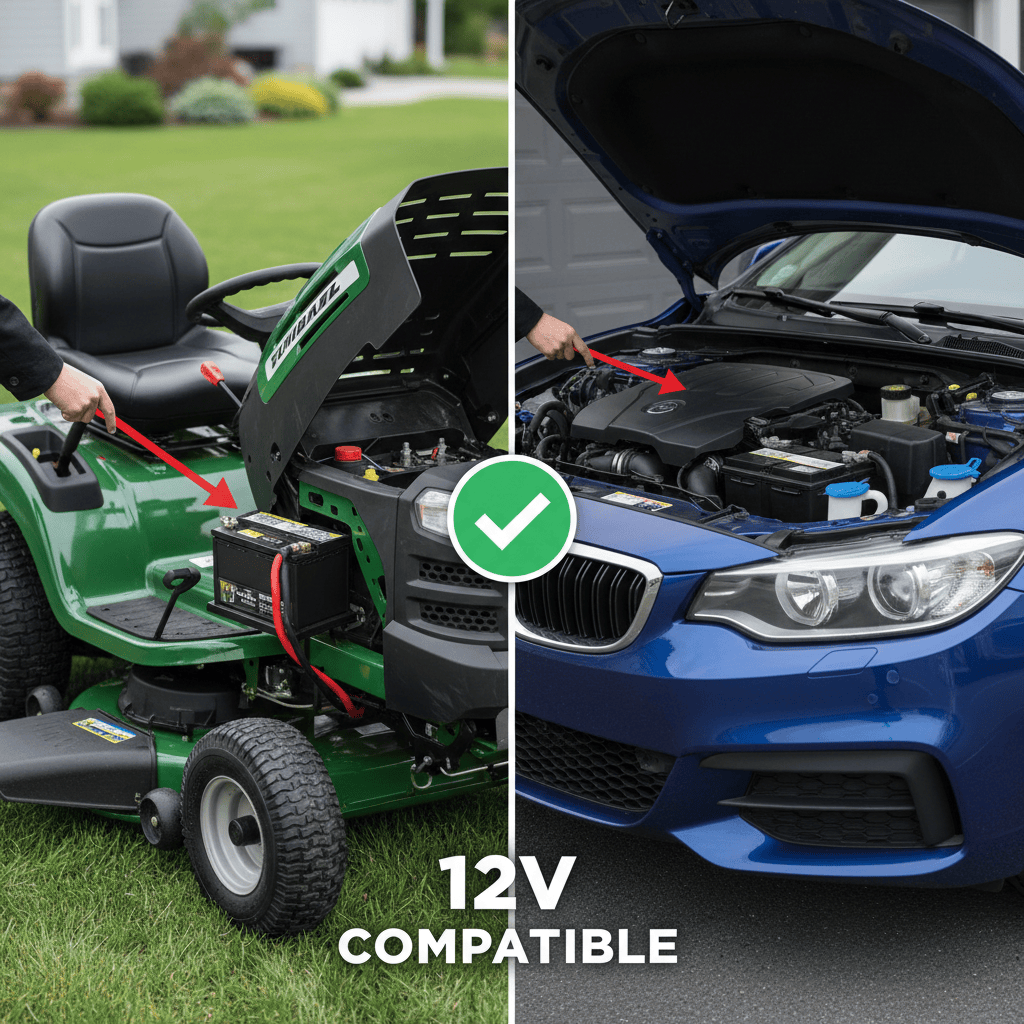
This guide applies to riding mowers and other lawn tractors that have a standard 12-volt battery. It does not apply to small, walk-behind push mowers that have no battery and are started with a pull cord or a small, non-12V engine.
Key Factors to Check Before Attempting the Jump
Before you grab the jumper cables, confirm your mower is a candidate for a jump start.

Pros
- Large-size design named in product title
- Sharpening and balancing functions listed
- Listed as a new upgraded version

Pros
- Adjustable 15-to-45-degree range in title
- Sharpening and balancing functions listed
Pros
- Includes replacement gaskets and a 98079-55846 spark plug
- Matches Honda HRR216 and HRS216 lawn mower models
- Designed around the 16100-Z8B-901 carburetor specification
Cons
- Restricted to select Honda GCV160 mower applications
- Installation requires basic mechanical tools and skills
- Confirm a 12-Volt Battery: Check your lawn mower’s owner’s manual or look for a label on the battery itself. Most riding mowers and lawn tractors use a 12-volt battery. If you have a small push mower with no battery, you cannot jump-start it.
- Inspect the Battery Terminals: Look at the battery terminals (the metal posts). If they are heavily corroded (covered in white, blue, or green powder), clean them with a wire brush and a mixture of baking soda and water before attempting a jump. Poor connection can prevent a successful jump.
- Check for Physical Damage: Do not attempt to jump a battery that is cracked, leaking, or physically damaged. This is a safety hazard, and the battery needs replacement.
Step-by-Step: How to Safely Jump Start a Lawn Mower with a Car
Follow these steps in order. Safety is paramount. To compare alternative configurations, check our hands-on review of jbl partybox club 120 vs sony srs xv500. For complementary hardware performance, examine our breakdown on riding lawn mower specifications.
- Position the Vehicles: Park the car close to the lawn mower so the jumper cables can reach both batteries, but ensure the vehicles are not touching.
- Turn Everything OFF: Make sure the car engine is OFF and the lawn mower’s ignition is in the OFF position.
- Connect the Positive (Red) Cable: Attach one red clamp to the positive (+) terminal of the dead lawn mower battery. Then, attach the other red clamp to the positive (+) terminal of the car battery.
- Connect the Negative (Black) Cable: Attach one black clamp to the negative (-) terminal of the car battery. DO NOT connect the other black clamp to the negative terminal of the lawn mower battery. Instead, attach it to an unpainted metal frame or ground point on the lawn mower, away from the battery and fuel system. This provides a safe ground and reduces the risk of sparks near the battery.
- Start the Car (Briefly): Start the car and let it run for 3-5 minutes. This allows the car’s alternator to send a small charge to the lawn mower battery.
- Attempt to Start the Mower: With the car still running, try to start the lawn mower. If it starts, let it run.
- Disconnect Cables in Reverse Order: If the mower starts, remove the cables in the exact reverse order you connected them: 1) Black clamp from mower frame, 2) Black clamp from car battery, 3) Red clamp from car battery, 4) Red clamp from mower battery.
Common Mistakes to Avoid
Avoid these errors to prevent damage or injury:
- Leaving the Car Running: This is the most common mistake. A running car’s alternator can produce up to 14.8 volts, which can overwhelm and fry the smaller electrical system of a lawn mower. Always keep the car engine OFF.
- Reversing Cable Polarity: Connecting positive to negative or vice versa can cause dangerous sparks, damage electronics, or even cause the battery to explode. Double-check the + and – symbols on each battery.
- Connecting Negative to Mower Battery: Connecting the final negative clamp directly to the lawn mower’s negative battery terminal can create a spark right at the battery, which may ignite hydrogen gas. Always connect to a metal ground point on the frame.
- Using Damaged Cables: Inspect your jumper cables for frayed wires or cracked insulation before use.
When to Call a Mechanic Instead
Jump-starting is a temporary fix. You should seek professional help if: Users looking for related component recommendations can explore our z890 vs x870e motherboard breakdown. For complementary hardware performance, examine our breakdown on our comprehensive weed eater guide.
- The Mower Won’t Start After a Jump: This could indicate a more serious problem with the starter motor, ignition switch, or other electrical components.
- The Battery Won’t Hold a Charge: If the mower runs fine after a jump but the battery is dead again the next time you use it, the battery is likely old and needs replacement.
- You See Signs of Electrical Damage: If you smell burning, see melted wires, or notice other damage after a jump attempt, stop immediately and consult a small engine repair technician.
Everything You Need to Know: Can You Jump Start A Lawn Mower With A Car FAQ
Can I jump-start a walk-behind push mower with a car?
No. Most walk-behind push mowers do not have a 12-volt battery. They are typically started with a pull cord or a small, self-contained engine. There is no battery to jump.
Why should the car be OFF when jump-starting a lawn mower?
A car’s charging system (alternator) can produce over 14 volts when running. Lawn mower electrical systems are designed for a stable 12 volts. The higher, fluctuating voltage from a running car can damage the mower’s voltage regulator, ignition module, or other sensitive electronics.
How long should I leave the cables connected before trying to start the mower?
After connecting all cables, let the car run (with cables connected) for about 3-5 minutes. This gives a small initial charge to the dead battery. Then, try starting the mower. Do not leave the cables connected for an extended period.
What if the mower starts but dies immediately after I disconnect the cables?
This usually means the lawn mower battery is too weak to hold a charge on its own. It likely needs to be replaced. The jump start only provided enough power to crank the engine temporarily. Before finalizing equipment decisions, refer to our comprehensive marshall stanmore iii vs harman kardon onyx studio 8 comparison.
Related Maintenance and Operating Guides
To keep your equipment running at peak operating efficiency, explore our related technical walkthroughs and maintenance tutorials:
- Consult our detailed breakdown on heavy-duty chainsaw buyer guide.
Jump Start Safety Considerations
Connecting a mower to a car battery involves high current, so cable order and clean terminals deserve careful attention. For broader reading on safe battery handling, see American National Standards Institute (ANSI).