What Is the Typical Weight Range for a Ride-On Mower?
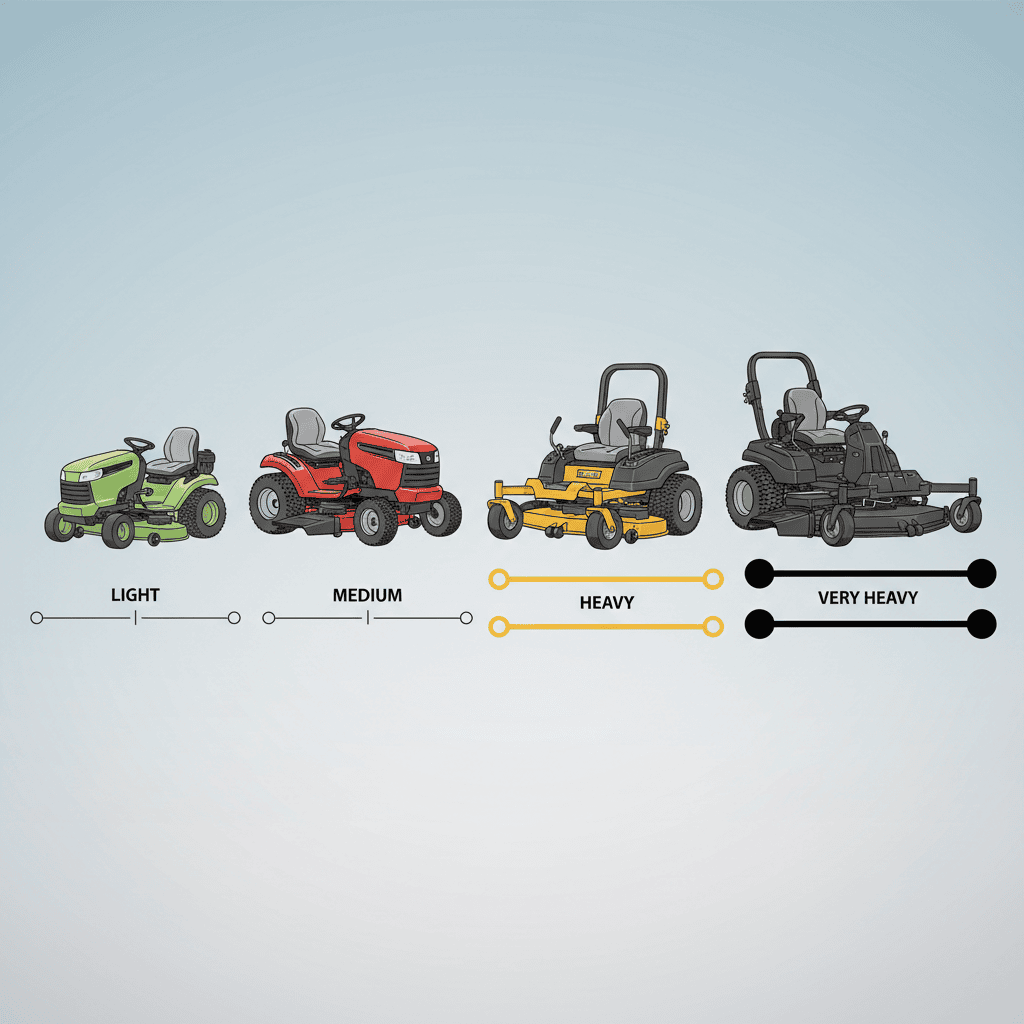
The weight of a ride-on mower can vary significantly based on its type, size, and features. Generally, you can expect a ride-on mower to weigh between 300 and 800 pounds (136 to 363 kilograms). For most homeowners, the relevant category is the residential model, which typically falls in the 400 to 600 pound range.
Here is a quick breakdown of common weight ranges by category:
- Compact Riding Mowers: 300 – 400 lbs
- Standard Lawn Tractors: 400 – 600 lbs
- Residential Zero-Turn Mowers: 500 – 700 lbs
- Commercial-Grade Mowers: 800 – 1,500+ lbs
Understanding this baseline is crucial for transport, storage, and ensuring your equipment can handle the terrain of your property.
Key Factors That Influence a Ride-On Mower’s Weight
Why does one mower weigh 450 pounds while another weighs 700 pounds? The difference comes down to several key engineering and feature choices.
Cutting Deck Size
The cutting deck is the metal housing that covers the blades. A larger deck means more steel and a wider structure. A mower with a 42-inch deck will be significantly lighter than one with a 54-inch or 60-inch deck. The deck size is often the single biggest factor in determining the overall width and weight of the machine.
Engine Displacement and Type
The engine is the heart of the mower. A larger engine (measured in cubic centimeters or cc) provides more power but adds substantial weight. A small 380cc engine might weigh around 60-70 pounds, while a large 700cc+ engine can weigh over 150 pounds. Additionally, engines with overhead valves (OHV) or liquid cooling systems tend to be heavier than simpler side-valve air-cooled engines.
Frame Construction and Material
The frame is the skeleton of the mower. Residential mowers often use stamped steel or lighter tubular frames. Commercial mowers, built for durability and daily use, use heavy-gauge welded steel frames that add significant weight but also longevity.
Additional Features and Attachments
Features that add convenience or capability also add weight:
- Bagging Systems: A rear-mounted grass bagger with its mounting frame can add 30-50 pounds.
- Four-Wheel Drive (4WD): The transfer case, driveshaft, and additional differential add weight compared to a standard rear-wheel-drive model.
- Hydrostatic Transmissions: While standard on most modern mowers, larger, more robust transmissions for hilly terrain are heavier.
- Operator Comfort Features: High-back seats with suspension, armrests, and even canopies add minor but cumulative weight.
Comparing Weights by Mower Type
To give you a more specific idea, let’s look at the typical weights for the most common categories of ride-on mowers.
Lawn Tractors
Lawn tractors are the classic, versatile ride-on mower. They have a mid-mounted cutting deck and are designed for mowing, but can often pull attachments like carts or aerators. A standard residential lawn tractor with a 42-48 inch deck typically weighs between 450 and 550 pounds.
Zero-Turn Mowers
Zero-turn mowers are known for their maneuverability and speed. They use a pair of hydrostatic transmissions to control the rear wheels independently. A residential zero-turn with a 48-54 inch deck usually weighs between 550 and 700 pounds. The weight is often concentrated in the rear due to the engine and transmission placement, which aids in traction.
Commercial-Grade Mowers
Commercial mowers are built for all-day use and are significantly heavier. A large commercial zero-turn or a stand-on mower can easily weigh between 800 and 1,200 pounds. These machines feature reinforced decks, larger engines, and heavy-duty frames to withstand professional use.
Why Knowing the Weight Matters for Transport and Safety
The weight of your mower isn’t just a number—it has practical implications for ownership.
Transport and Trailer Capacity
If you need to transport your mower to another property, you must ensure your trailer can handle the weight. A standard utility trailer rated for 1,500 pounds is sufficient for most residential mowers. However, if you have a large zero-turn or a commercial model, you may need a trailer with a higher weight rating. Always check the Gross Vehicle Weight Rating (GVWR) of your trailer and tow vehicle.
Storage and Floor Load
For storage in a shed or garage, consider the floor’s load-bearing capacity. While most residential garage floors can easily support a 600-pound mower, an older wooden shed floor might not. Distributing the weight with plywood or mats can help prevent damage.
Slope Stability and Handling
A heavier mower generally has a lower center of gravity and more traction, which can be beneficial on slopes. However, excessive weight on soft, wet ground can lead to rutting or getting stuck. The weight distribution (front vs. rear) also plays a critical role in stability on inclines.
Frequently Asked Questions
How much does a typical riding lawn mower weigh?
A typical residential riding lawn mower, such as a lawn tractor or a zero-turn model, weighs between 400 and 600 pounds. Compact models may be lighter, around 300 pounds, while larger residential models with more features can approach 700 pounds.
Does a zero-turn mower weigh more than a lawn tractor?
Generally, yes. Zero-turn mowers often weigh more than comparably sized lawn tractors. This is because they have more complex dual hydrostatic transmissions and a heavier rear frame to house the engine, which contributes to their higher weight, typically in the 550-700 pound range for residential models.
How does mower weight affect fuel efficiency?
While not the primary factor, weight does have an impact. A heavier mower requires more energy to move, especially on inclines or soft ground. This can lead to slightly higher fuel consumption compared to a lighter mower performing the same task on flat terrain. However, engine size and cutting conditions are more significant factors in fuel efficiency.
Can I运输 a ride-on mower in the back of a pickup truck?
It is possible but requires caution. You must know the weight of your mower and the payload capacity of your truck. A standard half-ton pickup can typically handle most residential mowers, but you must secure the mower properly with ramps and tie-downs. Always consult your vehicle’s owner’s manual for its specific payload limits.