
Direct Answer: How to Wash a Lawn Mower
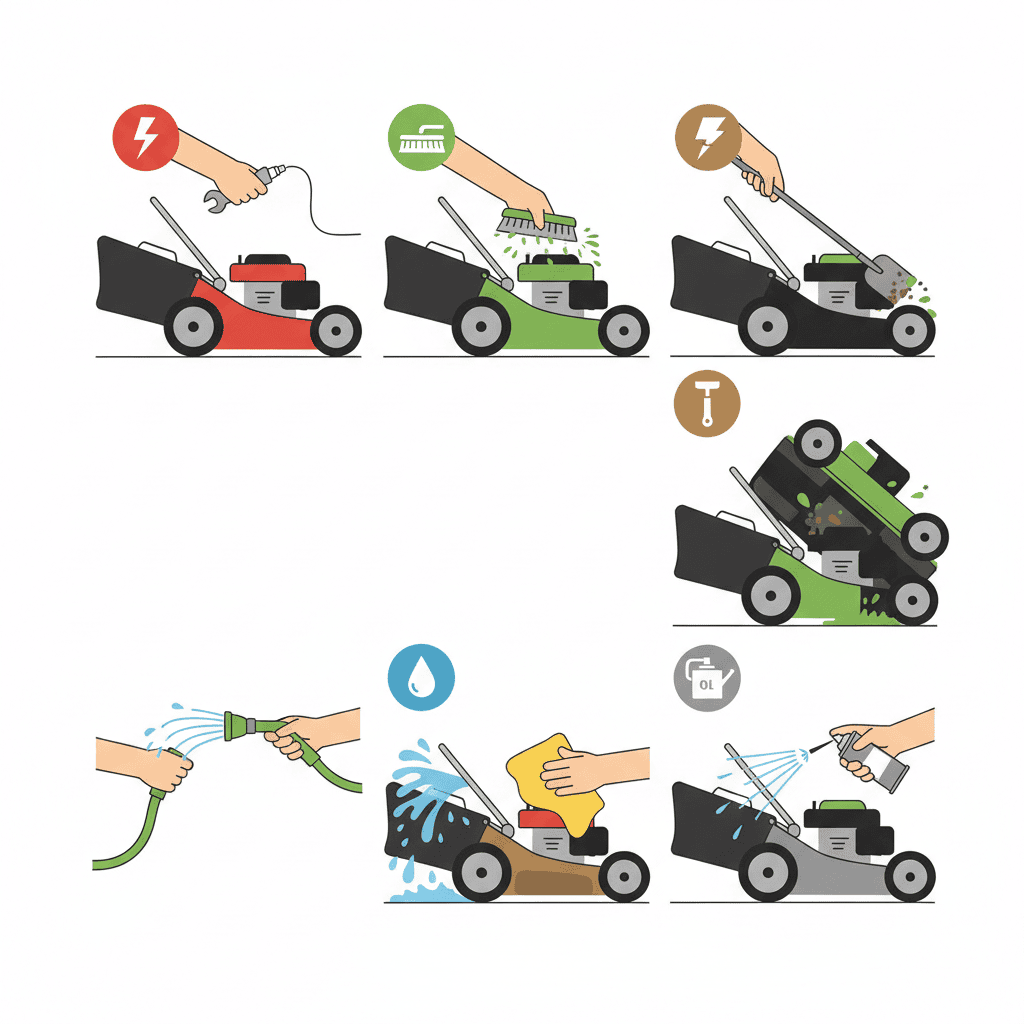
Wash a lawn mower safely in six steps: (1) disconnect the spark plug (and remove the battery on electric models) so the engine cannot start; (2) clear loose dirt, leaves, and grass with a stiff brush or compressed air, working from the top down; (3) scrape heavy grass clumps off the underside of the deck with a putty knife or deck scraper; (4) rinse the deck and exterior with a garden hose on a gentle spray setting, but never aim water at the engine, air filter, exhaust, or carburetor; (5) dry the mower with a cloth or let it air-dry fully; (6) re-oil or lubricate moving parts as the owner’s manual instructs, then reassemble and reconnect the spark plug before storage. Avoid pressure washers, which most manufacturers advise against because they can force water into the engine and electrical components.
What Does Washing a Lawn Mower Actually Involve?
Before you grab a hose, it helps to understand what a lawn mower wash really means. Many homeowners assume a quick rinse is enough, but a proper wash has two parts: an exterior rinse and a deck underside cleaning. This guide covers both so your mower looks clean and performs well.

Pros
- 23.5HP Kawasaki FX730 V-Twin OHV engine
- 726cc displacement per listing
- 60-inch cutting width in the product name
Cons
- No features, description, or reviews to verify performance
- Listed weight of 930 pounds complicates transport

Pros
- Brushless motor system delivers gas-equivalent power without emissions or excessive noise
- High-capacity battery kit enables cutting coverage of up to 4.4 acres per charge set
- Durable 10-gauge steel deck and constant high blade tip speed handle dense grass effectively
- Premium seating and lighting features support comfortable extended operation
- 4-year warranty provides strong protection for the investment
Cons
- Runtime tops out around 4.4 acres depending on conditions, requiring recharges for bigger properties
- Electric design depends on charging infrastructure and battery management rather than simple refueling
- Height adjustment is noted only basically without extensive position details in available specs
The Greenworks 60V MaximusZ Zero Turn Riding Lawn Mower is a commercial-grade electric machine built for large lawns. Its primary construction centers on a heavy-duty 60-inch 10-gauge fabricated steel deck that prioritizes durability and airflow, paired with premium comfort elements including an adjustable suspension seat with lumbar support and foldable armrests for a solid first impression of quality and user focus.
Performance shines through an intelligent brushless motor system offering power equivalent to a 31HP gas engine with zero emissions. Three high-torque brushless hub motors sustain a constant 17,900 FPM blade speed, while SmartCut Technology auto-adapts to prevent bogging in thick or wet grass. The complete kit supplies (2) 20.0Ah suitcase batteries plus (4) 8.0Ah batteries and a 1.5kW fast charger for up to 4.4 acres of cutting. Additional capabilities include a 4-in-1 deck for mulching, bagging, rear and side discharge, 300 lb towing capacity with front/rear hitch, dual LED headlights, and an LCD display.
Drawbacks and considerations include the practical need to recharge the battery set after maximum runtime, which can interrupt work on properties exceeding 4.4 acres. Being fully electric means reliance on power sources for recharging instead of fuel, and height adjustment is referenced only in basic terms without more granular position data in the specifications.
In verdict, the Greenworks 60V MaximusZ delivers the most value to homeowners and professionals managing medium-to-large properties who want quiet, emission-free commercial power, versatile cutting options, and the security of a 4-year warranty in a comfortable zero-turn package.

Pros
- Commercial-grade electric performance with instant torque and no gas engine maintenance.
- Large included battery package and fast charger improve runtime and turnaround time.
- Heavy-duty 54-inch fabricated deck is built for durability and wider coverage per pass.
- Comfort-focused operator features are better than many basic riding mowers in this class.
- Backed by a 4-year limited warranty for added purchase confidence.
Cons
- At 848.78 pounds, it is very heavy and will be difficult to move manually or transport without proper equipment.
- The large footprint, with dimensions of 76.77 x 73.23 x 56.3 inches, requires substantial storage space.
- The premium feature set and battery system may be more than many small-yard owners need.
Overview & Design: The Greenworks 80V 54" MaximusZ Zero Turn Riding Lawn Mower is a commercial-style electric mower built for large residential properties. Its 54-inch 10-gauge fabricated steel deck, zero-turn layout, and premium operator seat give it a serious, heavy-duty feel right away.
Performance & Key Features: This model is positioned as a 41HP gas-equivalent machine with instant torque, a constant 17,900 FPM blade speed, and SmartCut technology that adapts to changing grass conditions. The included battery kit with (2) 16.0Ah and (4) 6.0Ah batteries is designed to support up to 4+ acres per charge, while the 1.5kW fast charger helps reduce downtime.
Drawbacks & Considerations: The mower is extremely heavy at 848.78 pounds, so it is not easy to move or store in tight spaces. It is also a major investment and may be excessive for smaller yards or users who do not need the runtime and power of a large battery-electric zero-turn.
Verdict: This is a strong fit for homeowners with large lawns who want powerful, low-maintenance mowing performance and premium comfort features. Buyers who need a wide cutting deck, long runtime, and electric operation will likely get the most value from it.
Pros
- Robust 26HP Kohler engine provides ample power for demanding mowing tasks and thick vegetation
- Large 60-inch fabricated steel deck enables faster coverage of extensive lawn areas
- Durable 3-blade fabricated construction enhances deck longevity and resistance to wear
- Zero-turn capability offers precise control and reduced mowing time in complex layouts
Cons
- Large 60-inch deck and overall zero-turn size demand significant storage space and may not suit smaller properties
- Base specifications lack details on accessories such as mulching kits or baggers, which may need separate purchase
- High-powered engine setup could increase fuel use during long sessions relative to lower-horsepower models
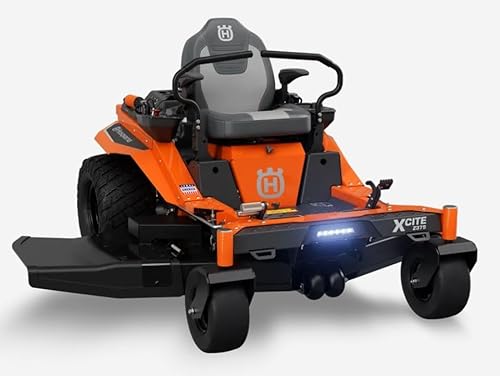
The Husqvarna Xcite Z375 is a zero-turn riding lawn mower engineered for large-scale residential and light commercial mowing. It combines a solid fabricated steel build with a capable Kohler power plant, creating an immediate impression of durability and purposeful design suited to expansive properties.
Performance centers on the 26HP 747cc Kohler V-Twin engine that supplies strong, consistent power for thick grass and varied terrain, paired with the 60-inch 3-blade fabricated steel deck. This setup delivers a wide, clean cut that covers ground efficiently and maintains quality across long sessions.
Considerations include the substantial footprint of the 60-inch deck and zero-turn frame, which requires ample storage and may feel oversized for compact yards. Available data also omits specifics on add-ons or comfort options, so buyers should confirm full feature sets independently.
The Husqvarna Xcite Z375 delivers the most value for owners of large lawns or light commercial operators who prioritize raw cutting power, deck durability, and zero-turn efficiency over compact size or extensive accessory packages.
Is a Quick Hose Rinse Enough, or Do I Need to Deep-Clean the Underside of the Deck?
A quick hose rinse will remove surface dust and fresh grass, but it will not remove the thick, packed layer of grass clippings that builds up under the deck. That buildup is the main reason mowers lose cutting power. When grass accumulates under the deck, it blocks airflow and forces the blade to work harder, which leaves an uneven cut and strains the engine. For a thorough wash, you should scrape the underside of the deck at least every few mows during peak growing season.
How Is Washing a Lawn Mower Different from Washing a Car?
Washing a car means getting the whole surface wet. A lawn mower is the opposite: you want to keep certain parts completely dry. The engine, air filter, exhaust, and carburetor are not sealed against water the way a car’s engine bay components are. Water in these areas can cause hard starting, rough running, or corrosion. Treat a mower wash like a targeted cleaning session, not a full soak.
Do I Need to Remove the Blade to Clean the Deck Properly?
Not always, but it helps. If you only need to remove loose clippings, you can scrape around the blade while it is still mounted. However, for a deep clean, removing the blade gives you full access to the deck, makes it easier to sharpen or replace the blade, and lets you clean the blade itself. If you remove the blade, note which way it faces before taking it off, and use a block of wood to wedge the blade in place so it cannot spin while you loosen the bolt.
Key Safety Factors to Consider Before Washing
Safety comes first. A lawn mower has a spinning blade and an engine that can start unexpectedly, so a few precautions can prevent an injury or an expensive repair.
Do I Have to Disconnect the Spark Plug Before Washing My Mower?
Yes. On a gas mower, always disconnect the spark plug wire before cleaning, especially if you will tip the mower or work near the blade. This prevents the engine from accidentally firing while you are scraping the deck or rinsing. On electric or battery mowers, remove the battery or unplug the unit entirely. This is the single most important step in the whole process.
Can I Use a Pressure Washer on a Lawn Mower?
Most manufacturers advise against it. A pressure washer blasts water at high velocity, which can force moisture past seals and into the engine, carburetor, electrical connections, and bearings. Even if the mower starts right after, trapped water can cause corrosion and premature wear. A garden hose with a gentle spray nozzle is plenty. If you must use a pressure washer, keep the nozzle on the widest, lowest-pressure setting and never point it at the engine, air filter, exhaust, or wiring.
Does the Washing Process Differ for Gas-Powered Versus Electric or Battery Mowers?
Yes. The core steps are the same, but there are important differences: When planning workspace deployment, consider the engineering criteria outlined in our marshall stanmore iii vs harman kardon onyx studio 8 guide.
- Gas mowers: Disconnect the spark plug wire. Keep water away from the engine, carburetor, air filter, and exhaust. Tipping the mower should be done carefully, with the air filter side facing up, to avoid oil or fuel leaks.
- Battery mowers: Remove the battery before cleaning. Keep water away from the battery compartment and any exposed electrical contacts. Never submerge the deck or motor housing.
- Corded electric mowers: Unplug the mower first. Keep the motor housing and cord connection completely dry.
Step-by-Step: How to Wash a Lawn Mower Safely
Follow these steps in order for the best results. The whole job takes 20 to 40 minutes depending on how dirty the mower is.
Step 1: Disconnect the Spark Plug or Remove the Battery
On a gas mower, pull the spark plug wire off the spark plug and tuck it away so it cannot touch the plug. On a battery mower, remove the battery. On a corded mower, unplug it. This guarantees the blade cannot spin and the engine cannot start while you work. For additional operational safety benchmarks, see our published testing notes on dyson v8 cyclone vs bissell featherweight stick.
Step 2: Clear Loose Debris with a Brush or Compressed Air
Work from the top down. Use a stiff brush, a plastic scraper, or compressed air to remove loose grass, leaves, dirt, and dust from the top of the deck, around the engine, and along the wheels. This dry pass removes most of the mess before any water is involved, which keeps wet debris from turning into mud in hard-to-reach spots.
Step 3: Scrape the Underside of the Deck
Tip the mower on its side or use a stable work stand so you can reach the underside. Keep the air filter and carburetor side facing up on gas mowers to prevent oil from leaking into the air filter. Use a putty knife, paint scraper, or a dedicated deck scraper to remove built-up grass clippings. Work along the blade path and around the discharge chute. If the buildup is very hard, a plastic scraper is safer than a metal one because it will not scratch the deck coating. To compare alternative configurations, check our hands-on review of bissell crosswave hydrosteam vs shark stainforce.
Step 4: Rinse with a Garden Hose, Not a Pressure Washer
With the mower upright again, use a garden hose with a gentle spray setting to rinse the deck, wheels, and exterior. Aim the water at the deck surfaces and let the spray carry the remaining dirt away. Never aim water at the engine, air filter, exhaust, carburetor, or any electrical components. If your mower has a washout port, you can attach the hose to it and run the mower briefly to flush the underside, but check your owner’s manual first, as the engine should be running and the blade area must be clear.
Step 5: Dry the Mower Thoroughly
Use a clean cloth or towel to wipe down the deck and any metal surfaces. Let the mower air-dry fully before reassembly. Pay extra attention to the underside of the deck, the blade, and any bare metal areas, because moisture left behind is what causes rust.
Step 6: Lubricate, Reassemble, and Reconnect
Once everything is dry, apply a light coat of oil or spray lubricant to the moving parts your owner’s manual recommends, such as wheel axles, the blade bolt, and pivot points. Some manuals recommend wiping a thin layer of oil on the underside of the deck to prevent rust, but do not overdo it, as excess oil can attract dirt. Reinstall the blade if you removed it, reconnect the spark plug wire or reinstall the battery, and the mower is ready for storage.
Drying, Lubrication, and After-Wash Maintenance
What you do after the rinse determines whether your mower stays rust-free and starts easily next time.
Should I Oil or Lubricate the Mower After Washing It?
Yes. Washing removes the old grease and exposes metal parts to moisture. A light lubricant on axles, cables, and pivot points keeps things moving smoothly. Never spray lubricant on the air filter, carburetor, or brake surfaces. Check your owner’s manual for the recommended lubricant and application points.
How Do I Dry the Mower to Prevent Rust and Corrosion?
Dry all metal surfaces with a cloth, then let the mower sit in a well-ventilated area until every drop evaporates. Do not store a damp mower in a shed or garage, because enclosed spaces trap moisture and speed up rust. On the underside of the deck, a thin coat of oil or a rust-preventive spray can add extra protection through the off-season.
After-Wash Maintenance Checklist
- Inspect the blade for nicks, dullness, or bending.
- Check the air filter and replace it if it is dirty or wet.
- Wipe the spark plug and check the gap if the mower has been running poorly.
- Check the oil level on gas mowers and top it up if needed.
- Look for loose bolts, worn belts, or damaged wheels while the mower is clean.
Everything You Need to Know: How To Wash A Lawn Mower FAQ
How often should I wash my lawn mower?
During the mowing season, a quick cleaning every few uses keeps grass from building up under the deck. A full wash with deck scraping and lubrication is a good idea once a month, or whenever you notice the cut quality dropping. Always clean the mower thoroughly before storing it for winter.
What is the difference between washing and fully cleaning or servicing a lawn mower?
Washing is the exterior and deck cleaning described in this guide. Servicing goes further and includes changing the oil, replacing the air filter and spark plug, sharpening or replacing the blade, and checking belts and cables. Wash your mower regularly, and service it at the intervals listed in your owner’s manual.
Can water getting inside the engine cause permanent damage?
Yes, it can. Water in the carburetor or cylinder can prevent the engine from starting, cause it to run rough, and lead to internal rust and corrosion over time. If water does get into the engine, do not keep trying to start it. Drain the fuel system, dry the affected components, and consult a small-engine mechanic if you are not comfortable working on it.
Is it safe to tip a lawn mower on its side to clean the deck?
It is safe if you do it correctly. On a gas mower, tip it with the air filter and carburetor facing up so oil and fuel do not leak into them. On battery mowers, remove the battery first. Never tip a mower with the engine running, and always disconnect the spark plug or battery before tipping.
Related Maintenance and Operating Guides
To keep your equipment running at peak operating efficiency, explore our related technical walkthroughs and maintenance tutorials:
- Consult our detailed breakdown on heavy-duty chainsaw buyer guide.
- Consult our detailed breakdown on durable ride-on lawn tractor guide.
Mower Cleaning Safety Notes
Washing a mower should happen with the engine off and the spark plug disconnected, since water near electrical parts and hot components can cause trouble. Safety reading on general outdoor equipment care is available from American National Standards Institute (ANSI).