

How Much Is a Snow Machine? (Direct Answer)
There is no single universal price for a “snow machine” because the term covers several very different products. For residential or consumer snowmakers that attach to a garden hose, expect roughly $100-$1,000. For commercial snowmaking machines used on ski slopes (often called snow cannons or snow lances), expect roughly $1,000-$10,000+ per unit, with industrial systems costing far more once air compressors, water pumps, and installation are included. For event, movie, or stage artificial snow machines, expect roughly $300-$3,000 depending on output and quality.

Pros
- Ribbon auger mixes air into snow for easier handling
- 21-inch intake height listed for clearing performance
- 3-year bumper-to-bumper warranty, per listing
- 5-year engine-only warranty, per listing
- All-steel chute and molded console, listed for durability
Cons
- 173-pound weight makes it heavy to move and store

Pros
- Cordless 48-volt dual battery system eliminates gas, extension cords, pull starts, and routine maintenance.
- 1200-watt brushless motor efficiently moves up to 700 pounds of snow per minute with less vibration.
- Adjustable 180-degree chute provides up to 20-foot throw distance for directional snow control.
- LED headlight and rubber-tipped steel auger enhance visibility and surface protection during use.
- Suitable for light to moderate snow on multiple outdoor areas including patios, decks, and concrete.
Cons
- Single-stage design is limited to light to moderate snow and may not handle heavy or packed accumulation well.
- Battery runtime details are not provided, so extended sessions require careful charge management.
- 18-inch clearing width can mean multiple passes are needed for wider driveways or larger areas.
The Snow Joe IONMAX 48V 18 Inch Cordless Electric Snow Blower is a battery-powered single-stage thrower built for convenient residential snow clearing. It combines dual IONMAX lithium batteries for 48-volt output with wheels for mobility and an LED light, giving an immediate impression of a modern, low-maintenance machine from the Snow Joe brand focused on ease of use.
In real-world performance the 1200-watt brushless motor moves up to 700 pounds of snow per minute across an 18-inch-wide by 10-inch-deep path. The adjustable 180-degree chute throws snow up to 20 feet for targeted discharge, while the rubber-tipped steel auger and scraper bar clear close to pavement without damage. This makes it effective for fresh light to moderate snowfall on driveways, sidewalks, patios, decks, walkways, and similar surfaces without gas or cords.
Key considerations include its single-stage limitation to light and moderate snow rather than heavy or dense accumulation, along with unspecified battery runtime that requires users to plan charging for longer jobs. The 18-inch width works for standard paths but may need extra passes on broader areas.
This Snow Joe IONMAX model delivers strong value for homeowners who want cordless convenience and straightforward clearing of light seasonal snow around the home. Users facing frequent heavy snowfalls may prefer multi-stage gas models, yet those prioritizing quiet electric power and minimal upkeep will find it a practical match based on the listed specifications.

Pros
- 15-amp motor clears a 22-inch wide by 13-inch deep path per pass
- Rubber-tipped steel auger protects surfaces on decks and walkways
- 180-degree directional chute throws snow up to 25 feet
- Dual LED headlights assist with low-light snow removal
- 7-inch snow-grabbing wheels and soft-grip handle improve control
Cons
- Requires an outdoor-rated extension cord for continuous power
- Corded setup limits reach to areas near an electrical outlet

Pros
- Clears a 20-inch-wide, 12-inch-deep snow path
- 15A motor throws snow up to a stated 25 feet
- 180-degree adjustable directional chute
- Dual LED headlights for low-light visibility
- Dual safety switch helps avoid accidental starts
Cons
- Corded design requires an extension cord and limits range
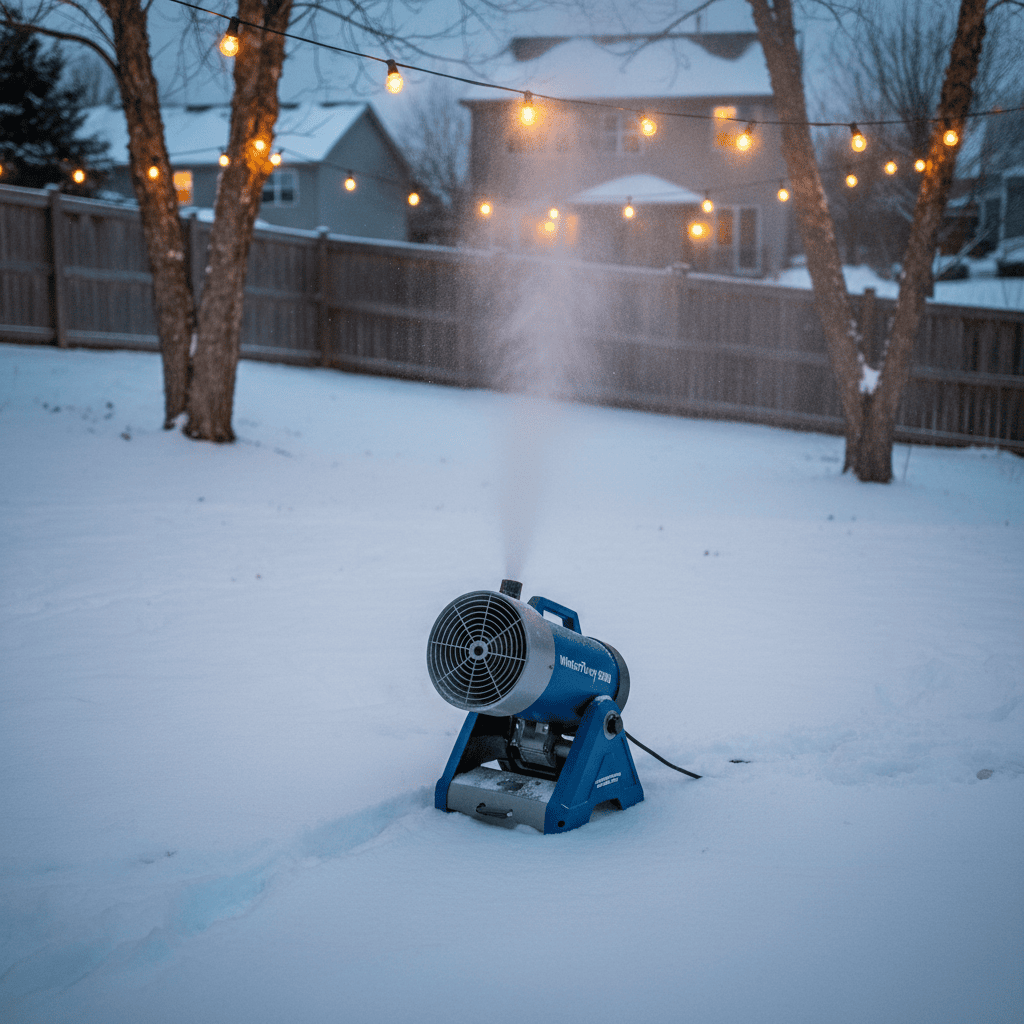
Prices vary widely by size, snow output, power source, and brand, so the best first step is deciding which type of snow machine you actually need before budgeting.
Which Type of Snow Machine Do You Mean?
The term “snow machine” is ambiguous and can refer to three main categories of products. Understanding the differences is crucial for accurate budgeting.
- Slope Snowmaking Machines: These are industrial systems used at ski resorts to produce snow for trails. They are often called snow cannons, snow lances, or snow guns. They require significant infrastructure, including high-pressure water and air systems.
- Event/Film Artificial Snow Machines: These machines create artificial snow for parties, movie sets, theater productions, or holiday displays. They typically use a foaming solution or paper-based material and are designed for temporary, controlled output.
- Home/Consumer Snowmakers: These are smaller, often portable units designed for residential use. They might be used to create a small patch of snow for a child’s play area or to supplement natural snowfall in a yard. They usually connect to a standard garden hose and electrical outlet.
Note: A “snow cone machine” or “shaved ice machine” is a completely different product used for making frozen treats and is not covered in this price guide. Users looking for related component recommendations can explore our jbl partybox club 120 vs sony srs xv500 breakdown.
Snow Machine Price Ranges by Type
Here is a detailed breakdown of the typical cost for each category.
Home/Consumer Snowmakers
Price Range: $100 – $1,000
These are the most affordable options. A basic model that can produce a small area of snow might cost between $100 and $300. More advanced consumer models with higher output or better build quality can range from $300 to $1,000. The price is influenced by the machine’s snow output (measured in pounds or kilograms per hour), durability, and brand.
Commercial Slope Snowmaking Machines
Price Range: $1,000 – $10,000+ per unit
A single commercial snow gun or lance can cost anywhere from $1,000 to over $10,000. However, this is just the unit price. A complete commercial snowmaking system for a ski slope includes multiple guns, air compressors, water pumps, extensive piping, and control systems. The total installation cost for a ski resort can easily reach hundreds of thousands or even millions of dollars. For broader ecosystem context, read through our operational guide on marshall stanmore iii vs harman kardon onyx studio 8.
Event/Movie Snow Machines
Price Range: $300 – $3,000
These machines are designed for temporary use. A basic model suitable for a small stage or party might cost $300, $600. Professional-grade machines used in film production or for large events, which offer higher output and more realistic snow effects, can cost between $1,000 and $3,000. The cost of the artificial snow fluid or material must also be factored in. For troubleshooting and reliability insights, consult our in-depth dyson v8 cyclone vs bissell featherweight stick report.
Key Factors That Affect Snow Machine Cost
The wide price ranges above are driven by several key variables:
- Snow Output: This is the most significant factor. A machine that produces 100 pounds of snow per hour will cost far less than one producing 1,000 pounds per hour. Output is often the primary specification used to compare models.
- Power Source: Electric models are common for consumer and event use. Commercial slope machines may use diesel-powered compressors or require connection to a high-voltage grid. The power source affects both the upfront cost and ongoing operational expenses.
- Size and Build Quality: Industrial machines built with heavy-duty, weather-resistant materials for year-round outdoor use on mountains are significantly more expensive than portable consumer units.
- Brand and Technology: Established brands in the snowmaking industry (e.g., TechnoAlpin, SMI) command premium prices due to their proven reliability and advanced technology. Newer or consumer-focused brands may offer lower prices.
Budgeting: Hidden Costs Beyond the Purchase Price
The sticker price is only part of the total investment. Consider these additional costs: Readers comparing setup options can review our technical analysis on bissell crosswave hydrosteam vs shark stainforce.
- Installation and Infrastructure: For commercial systems, this includes site preparation, piping, electrical work, and control systems. This can be the largest portion of the total cost.
- Operational Costs: These include electricity or fuel to run the machine, water consumption, and for event machines, the cost of the snow-making fluid or material.
- Maintenance and Repairs: All machines require regular maintenance. Commercial systems need professional servicing, while consumer models may have replaceable parts. Factor in potential repair costs over the machine’s lifespan.
- Rental vs. Purchase: For one-time events or film shoots, renting a machine is often more cost-effective than purchasing. Rental costs typically range from $100 to $500 per day.
Step-by-Step: How to Choose a Snow Machine for Your Budget
Follow this checklist to make an informed decision:
- Identify Your Use Case: Are you creating a winter scene for a party, making snow for a small backyard, or outfitting a ski slope? This determines the category you need.
- Set an Output Requirement: Estimate how much snow you need and how quickly. For a small area, low output is fine. For covering a large slope or stage, high output is essential.
- Confirm Power and Water Source: Check the electrical requirements (voltage, amperage) and water connection needs. Ensure your location can support them.
- Compare Price Ranges: Once you know the type and specifications, use the price ranges above as a starting point. Research specific models within that range.
- Factor in Total Cost of Ownership: Add installation, operational, and maintenance costs to the purchase price to get a realistic budget.
Buyer FAQs: How Much Is A Snow Machine Solved
What is the cheapest type of snow machine?
The most affordable option is a basic home or consumer snowmaker, with prices starting around $100. These are small, portable units designed for personal use.
How much does it cost to install a commercial snowmaking system for a ski resort?
The total cost varies dramatically based on the size of the resort, the terrain, and the desired snow coverage. While individual snow guns cost $1,000-$10,000+, a full system with compressors, pumps, and piping can cost hundreds of thousands to millions of dollars.
Are event snow machines expensive to run?
The operational cost depends on the machine’s power consumption and the cost of the snow-making material. For a typical event, the material cost (foam fluid or paper) is usually the main expense, which can range from $50 to $200 per hour of use, depending on the output level.
Should I buy or rent a snow machine for a one-time event?
For a single event, renting is almost always more cost-effective. Purchasing a machine makes sense only if you plan to use it frequently enough to justify the upfront investment and storage.
Related Maintenance and Operating Guides
To keep your equipment running at peak operating efficiency, explore our related technical walkthroughs and maintenance tutorials:
- Consult our detailed breakdown on cordless stick vacuum buyer guide.
- Consult our detailed breakdown on robotic pool cleaner comparison guide.
Snow Machine Safety Information
Snow machines range widely in price and capability, so buyers usually compare features before committing to a purchase. For general safety guidance covering snow clearing equipment, see American National Standards Institute (ANSI).









