What Is the Best Weed Wacker? A Direct Answer
The best weed wacker is the one that matches your specific yard size, terrain, and power preference. For the average homeowner with a small to medium yard, a battery-powered cordless trimmer is the best overall choice due to its balance of convenience, performance, and low maintenance. For large properties or heavy-duty clearing, a gas-powered trimmer offers unmatched power and runtime. For those on a very tight budget with a small, flat yard, a corded electric trimmer can be a viable, low-cost option.
Understanding the Terminology: Weed Wacker vs. Weed Eater vs. String Trimmer
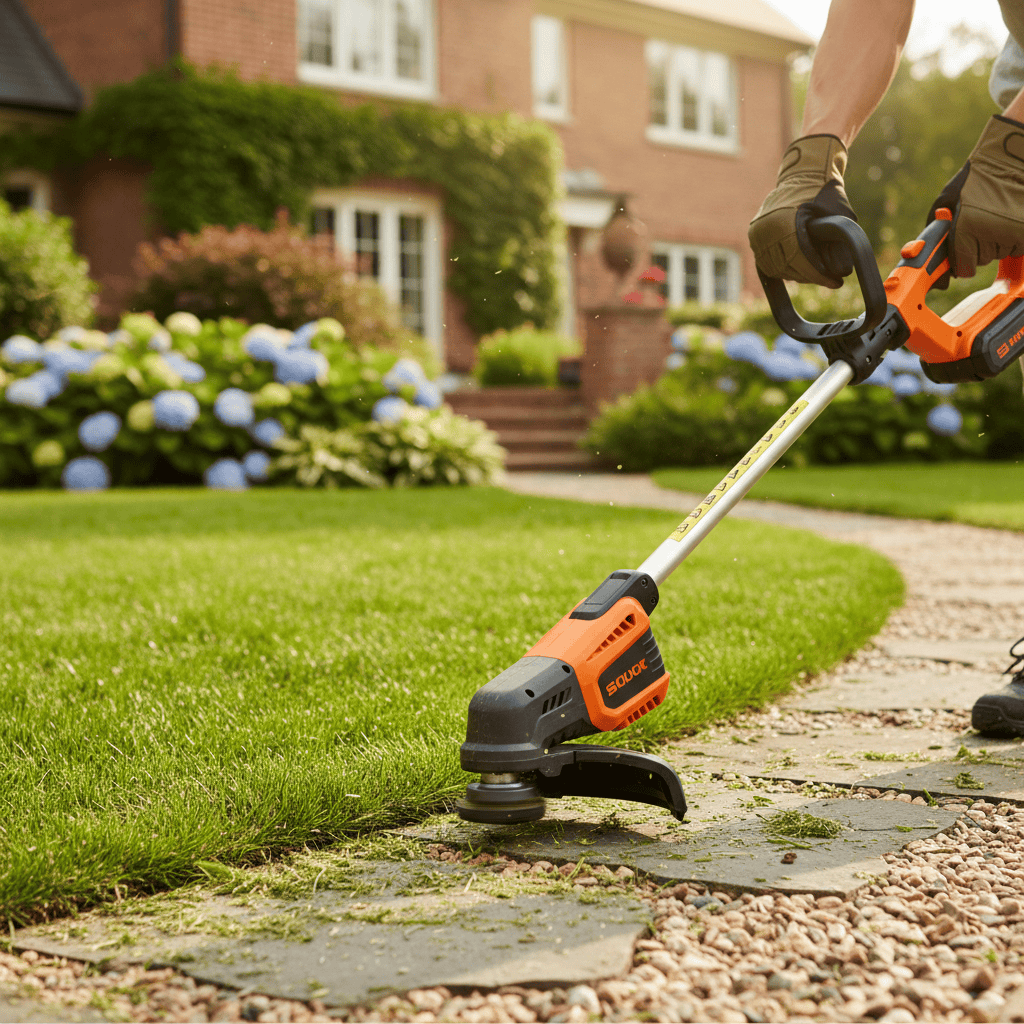
Before diving into the buying guide, it’s important to clarify that the terms “weed wacker,” “weed eater,” and “string trimmer” all refer to the same type of tool. “Weed Eater” and “Weed Wacker” are brand names that became genericized, much like “Kleenex” for tissues. The industry-standard term is string trimmer. This guide will use these terms interchangeably, but they all describe a handheld power tool used for cutting grass and weeds along edges, fences, and in tight spaces where a lawnmower cannot reach.

Pros
- Includes both battery and charger for immediate setup.
- Compatible with RYOBI 18V ONE+ batteries for broader system flexibility.
- Lightweight design improves portability and reduces fatigue during regular yard work.
- Supports both .065 and .080 trimmer line for added line compatibility.
Cons
- 13-inch maximum cutting width is more suited to small and medium yards than large properties.
- No runtime, noise level, or weight spec is provided in the manufacturer listing.
- The product details do not specify advanced features such as brushless motor technology or telescoping shaft adjustment.
Overview: The RYOBI ONE+ 18V 13 in. Cordless Battery String Trimmer/Edger is a lightweight, battery-powered lawn tool designed for basic trimming and edging tasks. Its 2-in-1 setup makes it a practical option for homeowners who want one tool for routine yard cleanup.
Performance: A pivoting head helps the tool transition into edging mode, while the variable-speed trigger gives the user more control over light trimming and tougher spots. The adjustable 11 in. to 13 in. cutting width adds flexibility, and compatibility with .065 and .080 line makes replacement easier.
Drawbacks: This model is best matched to smaller or medium-size yards because its 13-inch cutting width is modest. The manufacturer listing does not list runtime, total weight, or advanced motor details, so buyers should avoid assuming high-end performance beyond the stated features.
Verdict: For homeowners already using the RYOBI ONE+ platform, this trimmer/edger offers convenient cordless operation and broad battery compatibility. It is a sensible pick for straightforward lawn maintenance, especially when included battery and charger value matters.

Pros
- True 2-in-1 design that converts quickly between trimmer and edger modes
- Command feed spool with free spools for life program for ongoing convenience
- Two 20V batteries and charger included for extended use out of the box
- Tilting head plus rubberized wheels improve control on varied terrain
- Full Power Share compatibility with other WORX 20V and 40V tools
Cons
- 12-inch cutting diameter may require extra passes on larger lawns
- 0.065-inch line diameter best suited to light and medium grass rather than heavy brush
- Battery-powered design means runtime depends on charge levels without specified duration
The WORX WG163 is a cordless 20V string trimmer and lawn edger built for residential use. Weighing just 5.5 lbs with a compact design, it features rubberized wheels and an adjustable spacer guard that create a solid first impression of a user-friendly outdoor power tool focused on precision and ease.
In performance the 7600 rpm motor and 12 inch cutting diameter handle standard grass trimming effectively. The innovative command feed allows instant line deployment with a push button while the head tilts up to 90 degrees for slopes and tight spaces. Conversion from trimmer to edger takes only seconds and the two included Power Share batteries support the broader WORX ecosystem for ongoing convenience.
Potential drawbacks include the 12 inch path that can slow progress on expansive lawns and the 0.065 inch line suited mainly to lighter tasks. Battery runtime is not detailed in specs so users may need to plan around recharges for prolonged sessions.
Overall the WORX WG163 delivers strong value for homeowners managing small to medium yards who want a convertible cordless tool with ecosystem compatibility and straightforward operation.

Pros
- Includes battery and charger, so it is ready to use out of the box.
- Automatic line feed improves convenience versus manual bump-feed systems.
- Converts quickly from trimmer to edger for versatile yard cleanup.
- Backed by a 3-year limited warranty for added peace of mind.
Cons
- 0.065-inch line size may be less aggressive than heavier-duty trimmers for thick overgrowth.
- Runtime will depend on the selected speed setting and the included 2.0 Ah battery capacity.
- VERSATRACK wall organization requires a separate system that is sold separately.
Overview & Design: The CRAFTSMAN V20 CMCST900D1 is a cordless string trimmer and edger designed for homeowners who want a simple, battery-powered yard tool. Its lightweight, telescoping design makes it easier to move between trimming and edging tasks without dealing with gas, cords, or manual line bumping.
Performance & Key Features: This model uses an automatic 0.065-inch line advance and a 13-inch cutting swath, which helps cover routine lawn maintenance efficiently. The two speed settings provide a practical choice between stronger cutting and longer runtime, while the quick conversion feature makes switching from trimmer to edger straightforward.
Drawbacks & Considerations: The included 2.0 Ah battery is suitable for light to moderate yard work, but heavier or longer jobs may require recharging sooner. The 0.065-inch line is appropriate for general maintenance, though it may not be ideal for dense weeds or very overgrown areas. Also, the VERSATRACK storage system is sold separately.
Verdict: Overall, this is a solid option for homeowners looking for a convenient cordless trimmer and edger for everyday lawn care. It offers a good mix of ease of use, versatility, and ready-to-go value, especially for those already comfortable with battery-powered yard tools.
How to Choose the Best Weed Wacker for Your Needs
Selecting the right trimmer involves evaluating several key factors against your personal requirements. There is no single “best” model for everyone.
1. Match Power Source to Your Yard and Workload
- Battery-Powered (Cordless): Best for most homeowners. Offers excellent freedom of movement, quiet operation, and zero emissions. Ideal for yards up to 1/4 acre. Look for models with 20V to 60V batteries for a good balance of power and runtime.
- Gas-Powered: Best for large properties (over 1/2 acre), heavy brush, or professional use. Provides the most power and continuous runtime (as long as you have fuel). Requires more maintenance (oil/gas mix, spark plugs, air filters) and is louder.
- Corded Electric: Best for very small, flat yards and tight budgets. Offers unlimited runtime as long as you have an extension cord. The cord limits mobility and can be a tripping hazard. Best for light, occasional use.
2. Consider Weight and Ergonomics
You will be holding and maneuvering this tool for extended periods. A heavy or poorly balanced trimmer will cause fatigue and arm strain. Always check the total weight (including battery for cordless models). Look for features like adjustable handles, shoulder straps, and balanced motor placement.
3. Evaluate Cutting Width (Swath)
The cutting width, or swath, is the diameter of the circle the trimmer line cuts. A wider swath (e.g., 14-16 inches) clears more grass in a single pass, making it faster for larger areas. A narrower swath (e.g., 10-12 inches) is more precise for tight spaces and trimming around delicate plants.
4. Set a Realistic Budget
- Budget ($50 – $100): Typically corded electric or entry-level battery models. Suitable for very light, occasional use on small patches.
- Mid-Range ($100 – $250): The sweet spot for most homeowners. Includes high-quality battery-powered models with good runtime and power, and basic gas trimmers.
- Premium/Professional ($250+): High-voltage battery systems with long runtime, or commercial-grade gas trimmers with advanced features and durability.
Key Features to Compare Before Buying
Line Feed System
This is how you advance new trimmer line as it wears down. Automatic feed systems (often called “bump feed”) advance line when you tap the head on the ground. This is the most common and convenient system. Some models have fixed-line heads that use pre-cut lengths of line, which can be faster to reload but require you to stop and replace the entire line.
Trimmer Head Type
- Single-Line Head: Uses one strand of line. Lighter and simpler, good for light grass.
- Dual-Line Head: Uses two strands of line. Cuts more efficiently and handles thicker weeds better. This is the standard for most mid-range and high-performance trimmers.
Edging Capability
Many string trimmers can be converted into an edger for creating clean lines along sidewalks and driveways. This is often done by rotating the shaft or head 90 degrees. A dedicated edging function is a valuable bonus feature.
Direct Answer: Which Weed Wacker Is Best?
Best Overall for Most Homeowners
A 40V battery-powered, dual-line trimmer with a 13-15 inch cutting width is the best all-around choice. It provides enough power for most residential lawns, offers cordless freedom, and requires minimal maintenance. This category strikes the ideal balance between performance, convenience, and cost for the majority of users.
Best for Large Properties or Heavy-Duty Use
A 2-cycle or 4-cycle gas-powered trimmer is the best option for clearing large areas, thick brush, or for professional landscapers. The unlimited runtime (with fuel) and superior cutting power are unmatched by current battery technology for sustained, heavy use. Users looking for related component recommendations can explore our marshall stanmore iii vs harman kardon onyx studio 8 breakdown.
Best for Tight Budgets and Small Yards
A corded electric trimmer is the most affordable way to keep a small, manageable lawn tidy. While the cord is a limitation, for a small, flat yard, it provides sufficient power at a very low price point with no battery to charge or fuel to mix.
Buyer FAQs: Best Weed Wacker Solved
How long does a battery on a cordless weed wacker last?
Battery runtime varies significantly based on voltage, amp-hour (Ah) rating, and the thickness of the grass being cut. A typical 40V, 2.5Ah battery might provide 30-45 minutes of runtime on light grass. For larger yards, consider models that come with two batteries or invest in a spare battery to swap out. Before finalizing equipment decisions, refer to our comprehensive dyson v8 cyclone vs bissell featherweight stick comparison.
Is a gas or electric weed wacker better?
Neither is universally better; it depends on your needs. Gas trimmers offer more power and longer continuous runtime, making them better for large properties and tough weeds. Electric trimmers (battery or corded) are quieter, require less maintenance, produce no emissions, and are generally lighter and easier to use, making them better for most residential settings.
What is the difference between a trimmer and an edger?
A string trimmer (or weed wacker) is designed to cut grass and weeds from a horizontal or angled position. An edger is designed to cut a clean, vertical line along hard surfaces like sidewalks and driveways. Many modern trimmers have a feature that allows you to convert them into an edger by rotating the head. For broader ecosystem context, read through our operational guide on bissell crosswave hydrosteam vs shark stainforce.
How often should I replace the trimmer line?
You don’t replace the entire line on a schedule. You simply advance more line from the spool as it wears down during use (using the bump-feed mechanism). You will need to refill the spool with new line when it runs out completely, which could be after several uses depending on the amount of trimming you do and the thickness of the line.
Related Maintenance and Operating Guides
To keep your equipment running at peak operating efficiency, explore our related technical walkthroughs and maintenance tutorials:
- Consult our detailed breakdown on cordless stick vacuum buyer guide.
- Consult our detailed breakdown on robotic pool cleaner comparison guide.
Weed Wacker Buying Safety Notes
The right weed wacker depends on yard size, power source, and whether the work involves dense brush or light edging. Shoppers who want a general look at safe trimmer use can start with American National Standards Institute (ANSI).