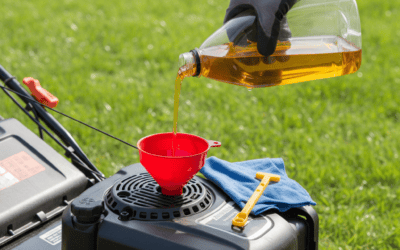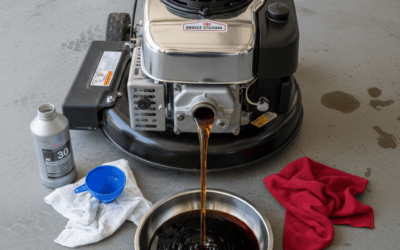
Quick Answer: What Oil Does Your Craftsman Mower Need?
Most Craftsman push mowers use SAE 30 or 10W-30 oil. Riding mowers typically require 10W-30. However, oil specifications vary significantly by engine type, model year, and climate conditions. The most accurate way to determine your mower’s oil requirements is to consult your owner’s manual by model number, or contact Craftsman customer service directly.
Most Common Oil Types for Craftsman Mowers
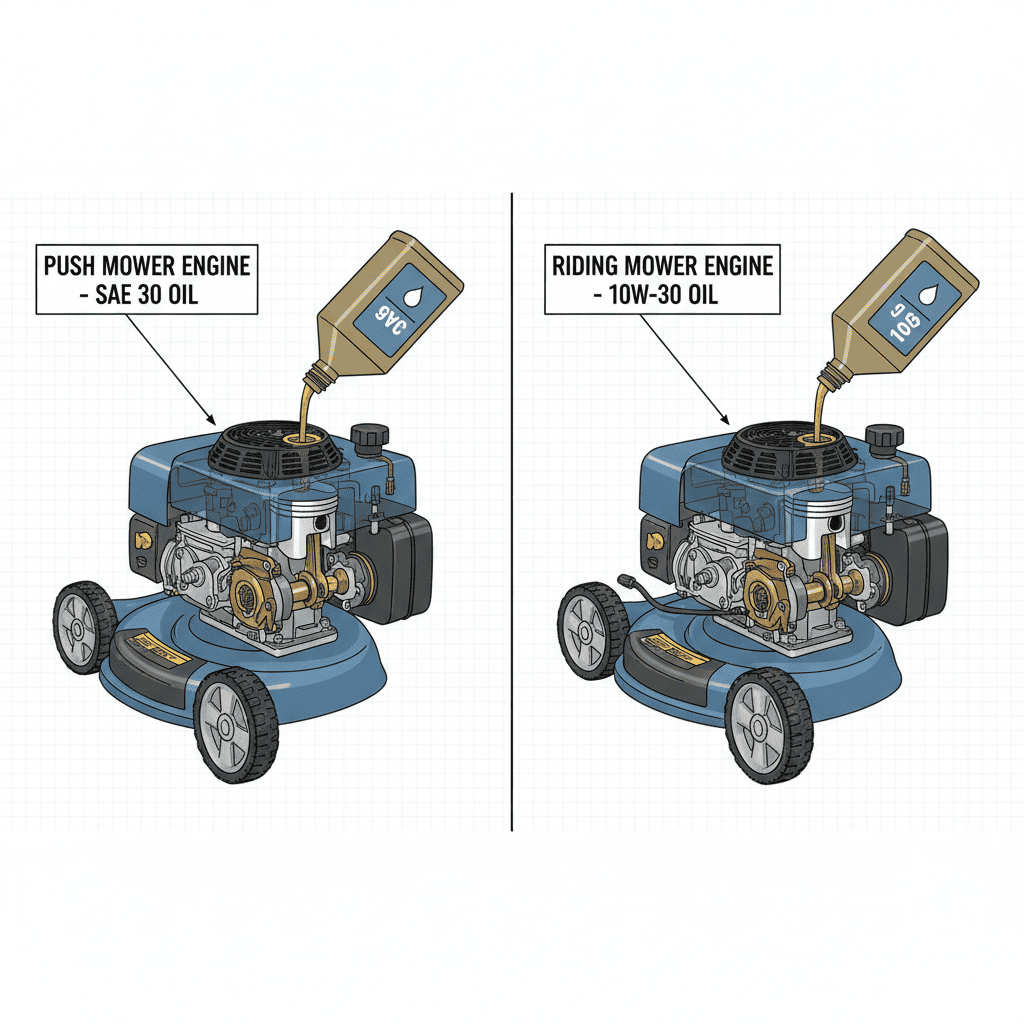
Craftsman lawn mowers come equipped with small engines that require specific lubricants to function properly. The two most common oil types are:
- SAE 30: A straight-weight oil recommended for most Craftsman push mowers operating in moderate to warm temperatures. This is the traditional choice for small engine maintenance.
- 10W-30: A multi-viscosity oil that performs across a wider temperature range, making it suitable for both older mower models and operation in cooler climates.
For Craftsman riding mowers and zero-turn models, 10W-30 is more commonly specified due to the larger engine displacement and the need for reliable cold-start performance.
The choice between SAE 30 and 10W-30 depends on three factors:
- Climate: SAE 30 works best in warm conditions; 10W-30 is preferred in cooler climates or for seasonal storage.
- Engine type: Older Craftsman mowers may specify SAE 30, while newer models often recommend 10W-30 for better engine protection.
- Mower category: Push mowers often use SAE 30; riding and zero-turn mowers typically use 10W-30.
How to Find Your Specific Oil Requirements
Since Craftsman has manufactured lawn mowers for decades with various engine designs, the only reliable way to determine the correct oil for your specific mower is to locate your model number and consult the owner’s manual.
Locating Your Craftsman Mower Model Number
The model number is typically found on a label or sticker attached to the mower’s frame or deck. Common locations include:
- The side of the mower deck (near the engine)
- The rear of the mower frame
- Inside the fuel door or access panel
- The handle assembly on push mowers
The model number usually contains a series of numbers and letters (for example: 37515 or CMSK-5BHP).
Accessing Your Owner’s Manual Online
Once you have your model number, you can access your manual through:
- Craftsman’s official website: Search their parts and manuals section by model number.
- ManualsLib.com: A third-party repository of lawn mower manuals, searchable by brand and model.
- The engine manufacturer’s website: If your Craftsman mower uses a Briggs & Stratton, Kohler, or MTD engine, you can search directly on their sites.
- Local Craftsman dealers: They often have printed or digital manuals available.
Your manual will specify the exact oil type, viscosity grade, and change interval for your model.
What If You Can’t Find Your Manual?
If your manual is unavailable, contact Craftsman customer service with your model number. They can provide oil specifications over the phone or via email. As a fallback, SAE 30 is a safe default for push mowers and 10W-30 for riding mowers, but verify before purchase if possible.
Understanding Oil Specifications and Viscosity Ratings
To make informed decisions about lawn mower oil, it helps to understand what these numbers and abbreviations mean.
What Does SAE Mean?
SAE stands for Society of Automotive Engineers. SAE ratings indicate oil viscosity—essentially how thick or thin the oil is. Higher numbers indicate thicker oil; lower numbers indicate thinner oil.
- SAE 30: A single-grade oil of medium thickness. It flows easily at startup but maintains adequate film strength at operating temperatures.
- SAE 10W: The “W” stands for Winter. This number indicates how the oil flows in cold temperatures. 10W means the oil performs like SAE 10 at 0°F, making it easier to start in cold weather.
SAE 30 vs. 10W-30: Key Differences
SAE 30 (straight-weight oil):
- Single viscosity grade, meaning it maintains the same thickness across temperature ranges.
- Best for mowers used primarily in warm climates or summer conditions.
- Typically less expensive than multi-grade oils.
- Common in older Craftsman push mowers manufactured before the 1990s.
10W-30 (multi-viscosity oil):
- Flows like 10W oil in cold conditions and like 30-weight oil at operating temperatures.
- Provides better cold-start performance and year-round protection.
- Slightly more expensive but offers better engine protection across seasons.
- Standard on most modern Craftsman riding mowers and newer push mower models.
Which should you choose? If your manual specifies SAE 30, use SAE 30. If it specifies 10W-30, use 10W-30. These are engineered for your specific engine. Using the wrong viscosity can reduce engine efficiency and potentially cause damage over time.
Synthetic vs. Conventional Oil
Most Craftsman mowers specify conventional (mineral) oil. However, some newer models may allow synthetic or synthetic-blend oils, which offer extended drain intervals and better protection in extreme temperatures. Always defer to your owner’s manual—using synthetic oil in an engine not designed for it can void warranties.
Oil Requirements by Craftsman Mower Type
Different Craftsman mower categories have slightly different oil needs due to engine size and operating conditions.
Craftsman Push Mowers
Craftsman walk-behind or push mowers typically use smaller single-cylinder engines rated between 3.5 and 7 horsepower. Most models use:
- SAE 30 (for warm-climate operation or older models)
- 10W-30 (for newer models or cooler climates)
Capacity is usually 15–20 ounces (about 0.5 quarts). Check your manual for the exact fill level; overfilling or underfilling both cause performance problems.
Craftsman Riding Mowers
Riding mowers have larger engines (typically 15–25 horsepower) with greater cooling demands. Most Craftsman riding mowers specify:
- 10W-30 (most common)
- 10W-40 (some larger models or high-temperature regions)
Riding mower oil capacity is typically 1.5–2 quarts. These mowers also have transmission fluid requirements separate from engine oil; check your manual to ensure you’re maintaining both.
Craftsman Zero-Turn Mowers
Zero-turn radius mowers are a premium category of riding mower with hydraulic drive systems and larger engines. Oil specifications are typically:
- 10W-30 or 10W-40 for the engine
- Separate hydraulic fluid for the steering and drive systems (do not use engine oil)
Zero-turn mowers require more frequent oil changes and more rigorous maintenance due to their complexity. Always follow the schedule in your manual.
Oil Maintenance and Change Intervals
Choosing the right oil is only half the equation. Proper maintenance keeps your mower running reliably.
How Often Should You Change the Oil?
Most Craftsman mowers require an oil change every 50–100 operating hours, or at least once per season. This translates to approximately:
- Push mowers: Every 5–10 lawn mowing sessions (depending on lawn size)
- Riding mowers: Every 25–50 hours, typically 2–4 times per season
- Zero-turn mowers: Every 50 hours or per manufacturer schedule
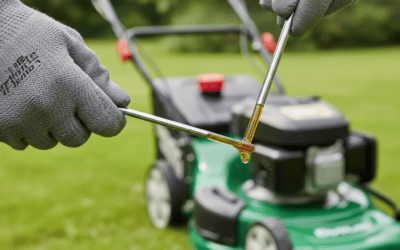
Check your oil level before each mowing session. A quick dipstick check takes 30 seconds and prevents engine damage from low oil.
How Much Oil Does Your Mower Need?
Oil capacity varies:
| Mower Type | Oil Capacity |
|---|---|
| Push mower (small engine) | 15–20 oz (0.5 quarts) |
| Push mower (larger engine) | 20–24 oz (0.75 quarts) |
| Riding mower | 1.5–2 quarts |
| Zero-turn mower | 2–2.5 quarts |
Always check your owner’s manual for the exact capacity. Overfilling causes smoking, fouled plugs, and engine damage. Underfilling causes inadequate lubrication and engine wear.
What Happens If You Use the Wrong Oil Type?
Using incorrect oil viscosity or type can cause:
- Hard starting: Oil too thick (high SAE number) won’t flow properly to the engine at startup.
- Poor lubrication: Oil too thin won’t maintain adequate protective film between moving parts.
- Engine wear: Inadequate lubrication accelerates piston and bearing wear, shortening engine life.
- Carbon buildup: Wrong oil type can leave excessive deposits in the combustion chamber.
- Warranty void: Using non-specified oil may invalidate your Craftsman warranty.
Always stick to your manual’s specifications.
Additional Lubrication Points on Craftsman Mowers
Engine oil is just one lubrication need. Craftsman mowers also require care in other areas.
Blade and Deck Lubrication
The cutting blade and mower deck benefit from occasional lubrication to prevent rust and reduce friction. However, they do not use engine oil. Instead:
- Use a general-purpose lubricant (like WD-40 or 3-in-1 oil) on blade pivots and deck underside.
- Apply before winter storage to prevent corrosion during off-season.
- Avoid over-greasing the deck—excess oil attracts dirt and debris.
Drive Belt and Pulley Maintenance
Riding and zero-turn mowers have drive belts and pulleys that may require lubrication. Check your manual; most modern mowers have sealed bearings that need no maintenance. Older models may benefit from occasional light lubrication.
Transmission Fluid (Riding and Zero-Turn Mowers)
Riding mowers have a separate transmission that requires its own fluid—do not use engine oil. Transmission fluid type varies by model:
- Check your manual for the specific type (often Hydrostatic Transmission Fluid or HTF).
- Change transmission fluid per the maintenance schedule.
- Low transmission fluid causes slow response, jerking, or transmission failure.
Frequently Asked Questions
Can I use 10W-30 car oil in my Craftsman push mower?
Technically, 10W-30 motor oil is compatible with the viscosity specification for many Craftsman mowers. However, automotive oil lacks the detergent package and deposit-control additives formulated for small engines. For best results and to protect your warranty, use small-engine oil specifically labeled for lawn mowers. The small cost difference is worth the engine protection.
How do I know if my mower oil is too old?
Small engine oil degrades over time, especially during off-season storage. If your mower has been in storage for more than six months, drain the old oil and refill with fresh oil before starting. Old oil loses its protective properties and can leave varnish deposits. Always start each season with fresh oil.
What’s the difference between SAE 30 and SAE 10W-40?
SAE 30 is thinner at startup (flows easier in cold weather) but thinner overall compared to 10W-40. The “10W” in 10W-40 means it flows like 10W oil in winter but thickens to 40-weight at operating temperature, providing more protection in hot conditions. Use whatever your manual specifies; switching between them without checking your manual risks engine damage.
Is synthetic lawn mower oil better than conventional?
Synthetic small-engine oils offer longer drain intervals and better performance in extreme temperatures. However, most Craftsman mowers are engineered for conventional oil. If your manual doesn’t specifically allow synthetic, stick with conventional oil. Mixing synthetic and conventional isn’t harmful, but it negates the benefits of synthetic.
What should I do with old lawn mower oil after changing it?
Never pour old oil down the drain—it’s harmful to the environment and illegal in most areas. Instead, store used oil in a sealed container and take it to a local recycling center, auto parts store, or hazardous waste facility that accepts used oil. Many accept it for free.