Pre-Start Checks: Fuel and Oil
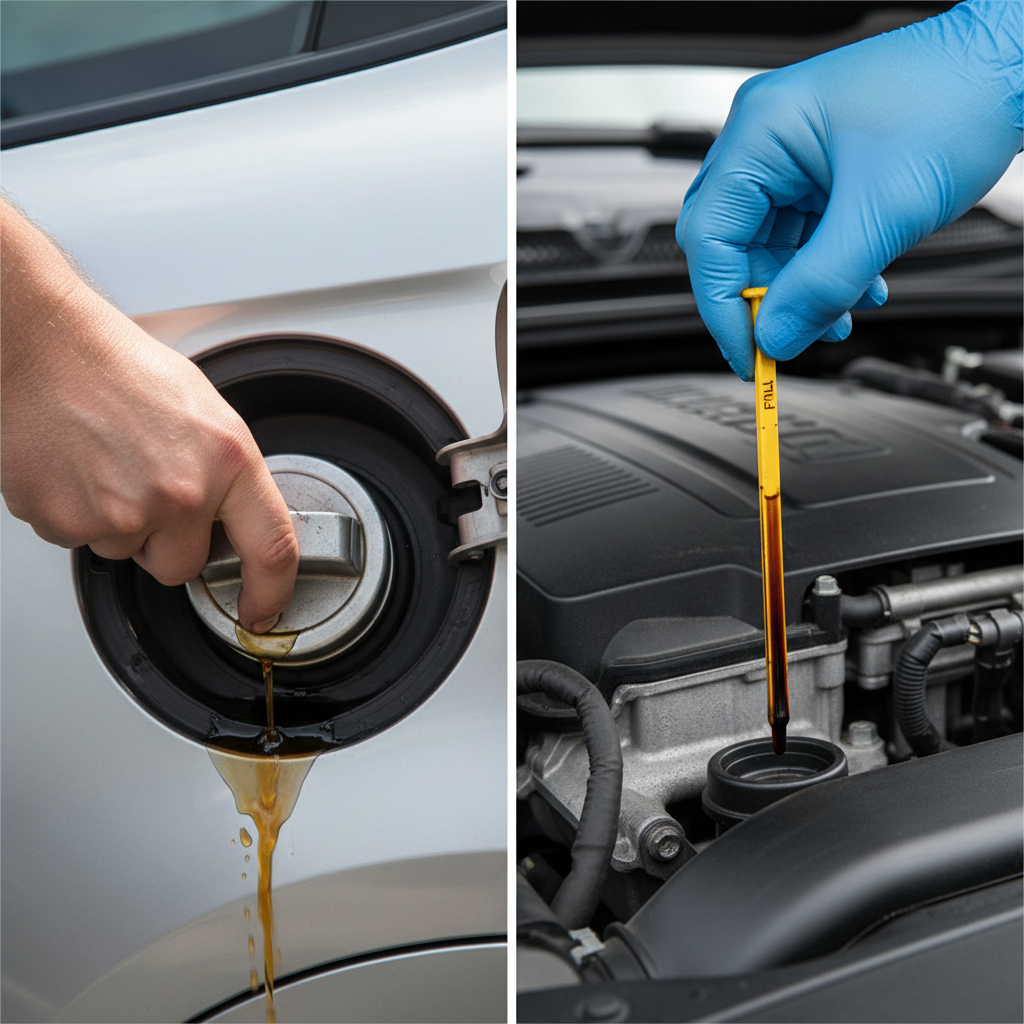
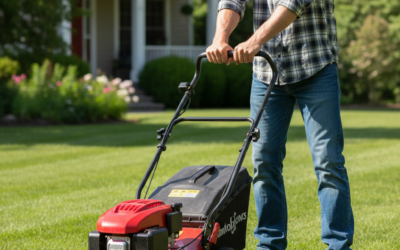
Before attempting to start your mower, confirm that basic conditions are met. A Briggs and Stratton engine requires fuel and adequate oil to operate safely and reliably.
Fuel check: Open the fuel tank cap and visually inspect the fuel level. The tank should be filled with fresh, clean gasoline—ideally purchased within the last 30 days. Old or contaminated fuel is a leading cause of hard starts and no-start conditions. If the mower has been stored for more than a month, drain the old fuel completely and replace it with fresh gasoline. Stale fuel can gum up the carburetor and prevent the engine from starting.
Oil level: Locate the dipstick on the engine (usually a yellow or orange handle on the side of the crankcase). Pull it out, wipe it clean with a cloth, reinsert it fully, and pull it out again to read the level. The oil should reach the full mark. If it’s low, add the recommended oil type (typically SAE 30 for warm climates or 10W-30 for variable temperatures). Running an engine with insufficient oil can cause severe damage and prevent starting.
Air filter: Check that the air filter is clean. A clogged air filter restricts airflow and makes cold starts difficult. If it’s dirty, replace or clean it according to your engine manual before starting.
Understanding the Choke and Primer System
The choke and primer bulb are essential components for cold starting. They work together to enrich the fuel-air mixture, making it easier for the cold engine to ignite.
The choke: The choke lever restricts airflow to the carburetor, increasing fuel concentration in the mixture. For a cold start—an engine that hasn’t run recently or is at ambient temperature—the choke must be set to the closed or full position. This enriched mixture is necessary because cold fuel doesn’t vaporize as easily as warm fuel. Once the engine warms up, the choke is gradually opened to return to normal operating conditions.
The primer bulb: Located on the side of the engine, the primer bulb is a small rubber sphere that draws fuel from the tank into the carburetor before the engine starts. Pressing it forces fuel through a one-way valve, priming the system so fuel is ready to ignite as soon as the piston begins to move. Without priming, you may need to pull the recoil cord many more times, or the engine may not start at all.
Cold start vs. warm start: A cold start requires the choke fully closed and the engine primed. A warm start (restarting shortly after shutdown) requires the choke in the open position and usually no priming, since fuel is already in the carburetor.
Cold-Start Procedure: Step-by-Step
Follow this sequence for reliable cold starts on your Briggs and Stratton push mower:
- Set the choke to closed (full choke). Move the choke lever all the way to the closed or “choke” position. This enriches the fuel mixture for cold ignition.
- Position the throttle. Set the throttle to half or full throttle. Some models have a dedicated cold-start throttle position; consult your manual for your specific model. A higher throttle setting increases air and fuel intake, aiding ignition.
- Prime the engine. Locate the primer bulb and press it firmly 3–5 times in quick succession. You may see fuel flow through the transparent fuel line, or you may feel resistance as fuel fills the carburetor. Stop when priming feels complete (you’ll sense slight resistance, indicating the system is full).
- Pull the recoil cord. Grip the handle firmly with one hand to stabilize the mower. Grasp the recoil cord handle with your other hand and pull it smoothly and quickly in one strong motion. Do not jerk or yank; a steady, firm pull is more effective. Allow the cord to recoil fully before the next pull.
- Listen for ignition. The engine should fire within 2–3 pulls if all conditions are correct. If it sputters but doesn’t fully start, continue pulling.
- Gradually open the choke. Once the engine catches and begins running, slowly move the choke lever toward the open position. This transition should happen over 10–15 seconds as the engine warms. If you open the choke too quickly, the engine may stall.
- Allow warm-up time. Let the engine run for 30 seconds to 1 minute before mowing to ensure it’s fully warmed up and running smoothly.
Warm-Start and Restart Procedure
Starting an engine that is already warm or has recently run is simpler than a cold start because fuel is already in the system and the engine is at operating temperature.
Warm restart steps:
- Set the choke to the open position (no choke). A warm engine does not need the enriched mixture a cold engine requires.
- Set the throttle to half or full as you would for cold starting.
- Do not prime the engine. Fuel is already in the carburetor, and additional priming may cause flooding.
- Pull the recoil cord with the same smooth, firm motion. The engine should start within 1–2 pulls.
- If the engine stalls immediately after starting, slightly close the choke (move it to half-choke) and try again. The engine may still need a small amount of enrichment.
Warm restarts are typically much faster than cold starts. If a warm restart requires more than 3–4 pulls, the engine may be flooding (too much fuel), and you should wait 2–3 minutes before retrying.
Troubleshooting: Mower Won’t Start
If your Briggs and Stratton mower refuses to start after following the standard procedure, work through these common issues:
Engine flooding: If you’ve pulled the recoil cord 6+ times without ignition, the engine is likely flooded with excess fuel. Stop pulling and wait 5 minutes. Remove the spark plug (located on top of the engine), wipe it dry with a clean cloth, and reinstall it. Try pulling the cord again. If the plug appears fouled (black and wet), replace it with a new spark plug of the correct type.
Old or contaminated fuel: Fuel older than 30 days can oxidize and form varnish deposits in the carburetor. Drain the fuel tank completely and refill with fresh gasoline. Run the engine for several minutes to clear old fuel from the system. For mowers stored over winter, drain and replace fuel before the season starts.
Fouled or wet spark plug: A fouled spark plug is a common cause of no-start conditions. Remove the spark plug using a socket wrench, inspect the electrode gap, and check if the plug is wet or black with carbon. Replace it with a new Briggs and Stratton spark plug (check your manual for the correct part number). Gap the new plug according to factory specifications, typically 0.030 inches for Briggs and Stratton engines.
Clogged air filter: A very dirty air filter starves the engine of oxygen. Remove the air filter cover (usually held by one or two clips), inspect the pleated paper element, and replace it if it’s dark and clogged. Clean filters can sometimes be tapped gently to dislodge loose dirt, but replacement is more reliable.
Incorrect choke positioning: Verify that the choke is fully closed for a cold start. Some newer models have automatic choke systems; if the lever doesn’t move or seems stuck, the automatic choke may need service. Consult your manual for model-specific guidance.
No fuel flow: If the engine won’t prime and fuel doesn’t flow when you press the primer bulb, the fuel line may be kinked, the fuel filter may be clogged, or the primer bulb itself may be damaged. Check the fuel line for kinks and straighten if necessary. If the line is clear, the fuel shut-off valve (if equipped) may be closed; open it by turning the valve handle to the on position.
Spark plug wire disconnected: On some models, the spark plug wire can become loose or disconnected. Ensure the high-tension wire is firmly seated on the spark plug terminal.
Model Variations and Special Features
Briggs and Stratton manufactures a wide range of push mower engines with different features. Some variations affect the starting procedure:
Automatic choke systems: Newer Briggs and Stratton engines often feature automatic choke technology that adjusts choke positioning based on engine temperature and speed. On these models, you move the choke lever to a labeled cold-start position, and the system automatically transitions to open as the engine warms. The starting procedure remains the same: set the lever to cold, prime, pull the cord, and let the automatic system handle the rest.
Fuel shut-off valves: Some mowers include a manual or automatic fuel shut-off valve on the fuel line. Before starting, ensure this valve is in the open (on) position. If the valve is closed, no fuel reaches the carburetor, and the engine won’t start. After using the mower, closing this valve prevents fuel from leaking into the oil sump during long storage.
Electric-start models: A few Briggs and Stratton push mower models include electric starters powered by rechargeable batteries. For these models, ensure the battery is fully charged, press the electric start button, and the engine should start without pulling a cord. If the electric starter fails, recoil-start backup is available. Consult your specific manual for battery charging and maintenance instructions.
Variable-speed throttle: Some models allow you to adjust engine speed while mowing. For starting, position the throttle at full speed; once the engine is running, you can reduce it as needed for mowing.
Seasonal and Storage Considerations
Starting problems often arise after the mower has been stored for weeks or months. Proper seasonal preparation prevents hard starts and extends engine life.
Spring startup after winter storage: Before attempting to start a mower stored over winter, inspect and prepare the engine. Check the oil level and top up if needed. Drain any old fuel from the tank and carburetor by opening the fuel shut-off valve and letting fuel run into a safe container. Refill the tank with fresh gasoline. If the mower was stored with fuel in the tank (not recommended), siphon out the old fuel and replace it. Run the engine for 10 minutes to circulate fresh fuel through the system and burn off any residue.
Fuel stabilizer for storage: If you must store the mower with fuel in the tank, add a fuel stabilizer (such as Briggs and Stratton brand fuel stabilizer or an equivalent product) to the fuel according to package directions. Stabilizer prevents fuel oxidation and varnish formation. Even with stabilizer, drain and replace fuel before the next mowing season if the mower sits longer than 6 months.
Off-season maintenance: At the end of the mowing season, run the mower and then drain the fuel tank and carburetor completely by opening the fuel shut-off valve (if equipped) and allowing fuel to drain. This removes fuel that can gum up the carburetor during months of inactivity. Alternatively, run fuel stabilizer through the engine and store the mower with fuel in the tank. Change the oil if it’s dirty, and replace the air filter if needed. Store the mower in a dry location.
Frequently Asked Questions
How many times should I pull the recoil cord before deciding the mower won’t start?
Pull the cord 5–6 times in succession. If the engine has not fired at all, stop and wait 3–5 minutes before retrying. Multiple failed pulls suggest either flooding (too much fuel) or a fuel system problem. Continuing to pull beyond 6 times typically makes flooding worse. If after waiting and retrying the engine still won’t start, troubleshoot fuel system components (spark plug, air filter, fuel line) before pulling further.
Can I start the mower with the choke open?
A cold engine can sometimes start with the choke open, but it will require many more recoil pulls and may not start at all. The open choke provides a lean fuel mixture (not enough fuel for easy ignition at low temperatures). Always use the closed choke position for cold starts. Once the engine is warm, gradually open the choke to prevent stalling.
What should I do if my Briggs and Stratton mower starts but dies immediately?
Immediate stalling after starting usually means the choke is being opened too quickly. Move the choke back toward the closed position slightly and allow the engine to run for 10–15 seconds before fully opening the choke. Another cause is a dirty air filter or fuel line obstruction; check and clean or replace these components. If stalling persists, the spark plug may be fouled; remove, inspect, and replace if necessary.
Why is fresh fuel important, and how often should I replace it?
Gasoline oxidizes when exposed to air over time, forming varnish and gum deposits that clog the carburetor and fuel lines. This is especially problematic in small engines with small carburetor passages. Use fuel purchased within 30 days for best results. For mowers stored over 3 months, drain old fuel and replace it with fresh gasoline. Adding fuel stabilizer to stored fuel extends its usable life to 6–12 months but does not replace the need for fresh fuel at the start of the season.
Key Takeaways
Starting a Briggs and Stratton push mower is straightforward when you follow the correct procedure: verify fuel and oil, set the choke to closed for cold starts, prime the engine, position the throttle, and pull the recoil cord with a smooth, firm motion. Once running, gradually open the choke. Warm restarts are simpler—choke open, no priming required. If the mower won’t start, troubleshoot flooding, fuel age, spark plug condition, and air filter cleanliness. Seasonal maintenance and proper fuel storage prevent most hard-start problems and keep your mower running reliably year after year.