Quick Answer: How to Sharpen Lawn Mower Blades with an Angle Grinder
To sharpen lawn mower blades with an angle grinder, first disconnect the spark plug wires and flip the mower on its side (or secure it safely). Remove the blades and mark the top surface to track orientation. Use a metal-bonded grinding wheel (60–80 grit), holding the angle grinder at 30–45 degrees to the cutting edge. Apply light, consistent pressure with short strokes along the edge, grinding only the bevel side. Check blade balance frequently, inspect for uniform sharpness, and reinstall blades with the marked side facing up at the correct torque specification.
Safety Precautions Before You Start

Working with an angle grinder and rotating mower blades involves serious hazards. Proper preparation prevents injury and damage.
- Disconnect Power: Remove the spark plug wires or battery terminals completely. This prevents accidental engine start while you work on the blade assembly.
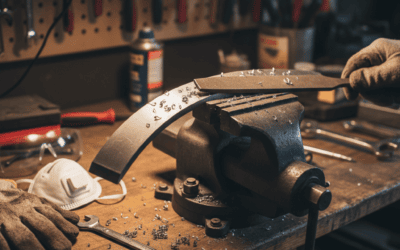
- Personal Protective Equipment (PPE): Wear safety glasses with side protection to guard against metal shards and dust. Use cut-resistant work gloves and a dust mask or respirator rated for metal particles. Hearing protection is recommended when operating the angle grinder.
- Work Area: Set up on a stable work bench or vise. Ensure adequate lighting and clear the area of bystanders, especially children and pets.
- Angle Grinder Inspection: Check the grinder for damage, ensure the guard is in place, and verify that the grinding wheel is rated for metal sharpening and installed correctly.
- Blade Balance Importance: An unbalanced blade after sharpening causes severe vibration, shortens engine life, and creates a safety hazard. Balance checking is mandatory before reinstallation.
Blade Removal and Preparation
Proper blade removal sets the foundation for safe and effective sharpening.
Step 1: Secure the Mower
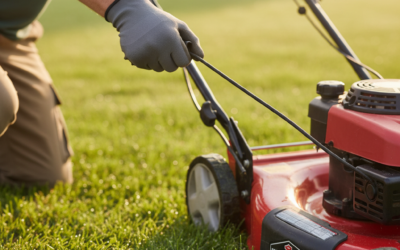
Position your mower on level ground. For rotary mowers, tilt it on its side (with the carburetor facing up to prevent oil leakage) or use a mower lift. For reel mowers, secure them in a stable position. Some users prefer removing the deck entirely for easier access—check your mower’s manual for guidance.
Step 2: Mark the Blade Orientation
Before removal, use a permanent marker or paint pen to mark the top side (the side facing the deck) of each blade. This prevents reinstalling blades upside down, which could direct clippings downward and reduce cutting efficiency. On rotary blades, also note which end faced forward during operation.
Step 3: Remove the Blades
Using a socket wrench or blade removal tool, loosen the center bolt while holding the blade steady with a block of wood or rubber mallet. Never use your hand. Remove the bolt completely, then carefully slide the blade off the spindle. Place bolts in a labeled container to prevent loss.
Step 4: Inspect for Damage
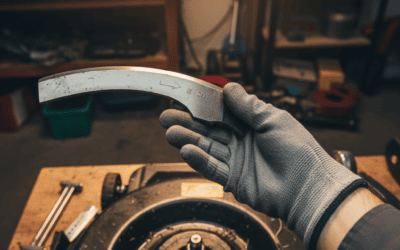
Before sharpening, examine the blade for cracks, deep gouges, or bent edges. Minor nicks and dullness are normal and sharpenable. Severely damaged blades should be replaced rather than ground—attempting to sharpen a cracked blade risks catastrophic failure during operation.
Angle Grinder Setup and Technique
The grinding process requires careful control to achieve a sharp, balanced blade.
Selecting the Right Grinding Wheel
Use a metal-bonded grinding wheel sized appropriately for your angle grinder (typically 4–5 inches for standard grinders). A 60–80 grit wheel removes dull metal efficiently. Avoid masonry or concrete wheels, which are not designed for steel and will shed dangerously. Ensure the wheel is rated for the RPM of your grinder and installed securely with the guard in place.
Establishing the Correct Angle
The grinding angle is critical for blade performance. Most lawn mower blades are beveled at approximately 30–45 degrees. To match this angle, position the angle grinder so the wheel contacts the blade’s edge at the same bevel angle it already has. Use a blade angle guide or hold the grinder steady by eye, referencing the existing blade geometry. Grinding at too steep an angle removes excessive material; too shallow an angle leaves the blade dull.
Secure the Blade for Grinding
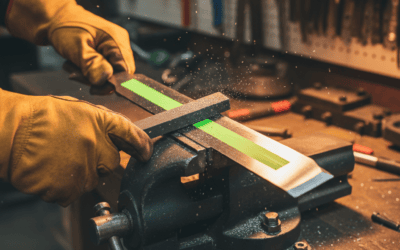
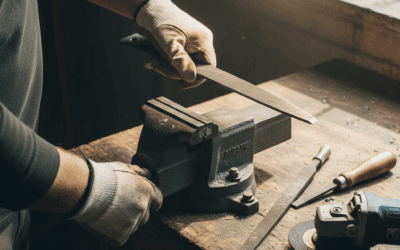
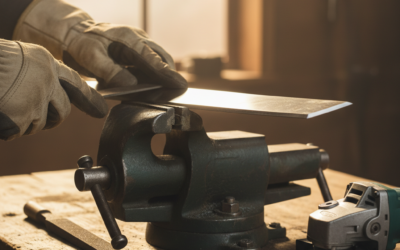
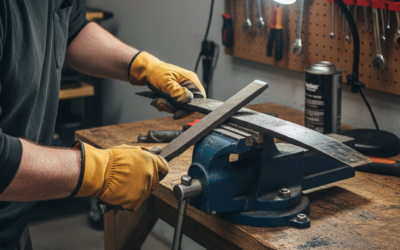
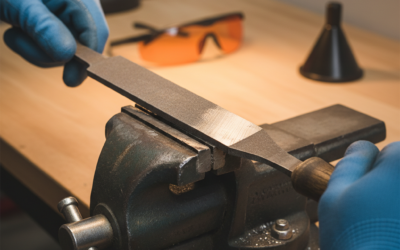
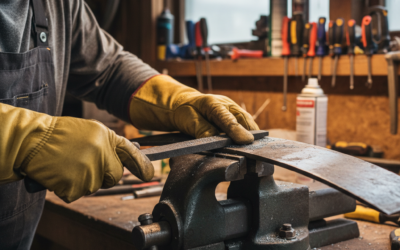
Clamp the blade securely in a vise with the cutting edge facing up and accessible. Ensure the blade cannot shift or rotate during grinding. Many users wrap the blade ends with cloth or place the vise in a position that keeps fingers well away from the grinding area.
Grinding Technique: Pressure and Strokes
Apply light, consistent pressure when grinding. Let the wheel do the work—excessive force generates heat, which can damage the blade’s temper and reduce durability. Use short, deliberate strokes along the cutting edge, grinding from the top bevel side only. Work from the center outward toward each end. After every 2–3 strokes, stop and inspect the blade. You should see a uniform shiny band forming along the cutting edge. Rotate the blade in the vise and repeat on the opposite side, grinding the same number of strokes to maintain balance.
Heat Management
If the blade becomes too hot to touch, stop and allow it to cool. Excessive heat can draw the temper from steel blades, making them softer and less durable. A shallow pan of water nearby allows quick cooling without thermal shock.
Blade Type Considerations
Sharpening technique varies slightly depending on blade type.
Rotary Mower Blades
Rotary blades are the most common type. They are relatively flat with beveled cutting edges on both ends. Grind both ends equally to maintain balance—this is why counting strokes is important. The two ends must have identical sharpness and geometry, or the blade will vibrate during operation.
Reel Mower Blades
Reel blades are curved and require a different approach. Grind with a light touch, following the existing curve of the blade. These blades are often more delicate and should not be over-ground. Some professionals recommend having reel blades professionally sharpened rather than attempting home sharpening, as improper technique can damage the blade’s curve.
Material Variations
Most lawn mower blades are made from hardened steel. Some premium blades include stainless steel or composite materials. Steel blades grind smoothly with a standard metal wheel. If your blade resists grinding or sparks excessively, verify it matches your grinder type and that the wheel is appropriate for the material.
Quality Inspection and Blade Balance
A sharp blade is only half the requirement—balance is equally important.
Checking for Sharpness
A properly sharpened blade should catch light along a thin, uniform shiny line at the edge. Run your thumb lightly across the cutting edge (from flat side to flat side, not along the edge) to feel for uniformity. The blade should feel consistently sharp across its length. If you notice dull spots, return to the grinder and make additional passes on those areas.
Blade Balance Testing
Blade imbalance causes vibration that stresses the engine and creates a dangerous mowing experience. To test balance at home, support the blade on a horizontal rod or bolt (like a nail inserted through the center hole in a block of wood). The blade should remain level. If one end dips, that end is heavier. Grind a bit more from the heavier end to remove material, then retest. This process may take several iterations but is essential.
Professional Balance Check
For precision, some users bring sharpened blades to a shop with a blade balancing tool. This is especially recommended if you’re unsure about your home testing method.
Blade Reinstallation
Careful reinstallation ensures the blade operates safely and effectively.
Orientation and Torque
Reinstall the blade with the marked top side facing the deck (the same orientation as removal). Align the blade with the spindle and hand-tighten the bolt initially. Then use a wrench to tighten to the manufacturer’s specified torque—typically 30–90 ft-lbs depending on mower model (consult your manual). Over-tightening can strip threads; under-tightening risks the blade loosening during operation.
Final Safety Checks
Before reconnecting the spark plug wires, manually rotate the blade to ensure it spins freely without rubbing on the deck. Check that the bolt is secure. Reconnect the spark plug wires and run the mower briefly at low speed in an open area to listen for unusual vibration or noise. If vibration is present, stop immediately and recheck blade balance.
Alternative Methods and When to Sharpen
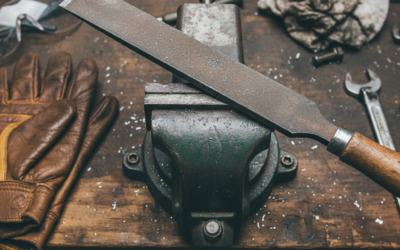
While angle grinders are effective, other options exist. Hand files and bench grinders are slower but offer finer control for beginners. Some users prefer professional sharpening services, which cost $5–15 per blade but guarantee precision and balance.
Sharpen blades every 20–40 hours of mowing, or when you notice the mower leaving torn grass edges instead of clean cuts. Regular sharpening keeps the mower running efficiently and extends engine life.
Frequently Asked Questions
Can you sharpen lawn mower blades without an angle grinder?
Yes. A hand file, bench grinder, or drill-mounted sharpening stone can sharpen blades, though these methods are slower and require more arm strength. Bench grinders are safer for beginners because they’re more stable and generate less kickback than angle grinders. A 10-inch bench grinder with a 60–80 grit metal wheel works well for home blade sharpening.
How often should lawn mower blades be sharpened?
Most homeowners should sharpen blades every 20–40 mowing hours, or roughly every 4–6 weeks during the growing season. If you mow a large area or rough terrain frequently, sharpen more often. Dull blades slow the mower and increase engine strain.
What’s the difference between sharpening and blade replacement?
Sharpening restores the cutting edge of a blade worn dull but still structurally sound. Replacement is necessary if the blade is cracked, deeply gouged, bent, or severely pitted. Most blades can be sharpened 2–3 times before replacement becomes necessary. New blades cost $15–50 per blade depending on mower type.
Is it safe to sharpen blades while they’re mounted on the mower?
No. Always remove blades before sharpening. Sharpening mounted blades risks injury and damage to the deck. Additionally, you cannot achieve proper blade balance or access both sides of the blade edge easily without removal.