How Wide Are Riding Lawn Mowers? Quick Answer
Most residential riding lawn mowers are 42 to 48 inches wide, with compact models starting around 30 inches and commercial-grade machines reaching 60 inches or more. This width measurement typically refers to the mowing deck—the cutting area underneath the machine—which directly determines the machine’s overall footprint and how much grass it cuts per pass.
Understanding Riding Lawn Mower Width: Deck Size vs. Total Machine Dimensions
When shopping for a riding lawn mower, “width” can mean two different things, and understanding the distinction is essential for making the right purchase decision.
What Does Width Mean for a Riding Mower?
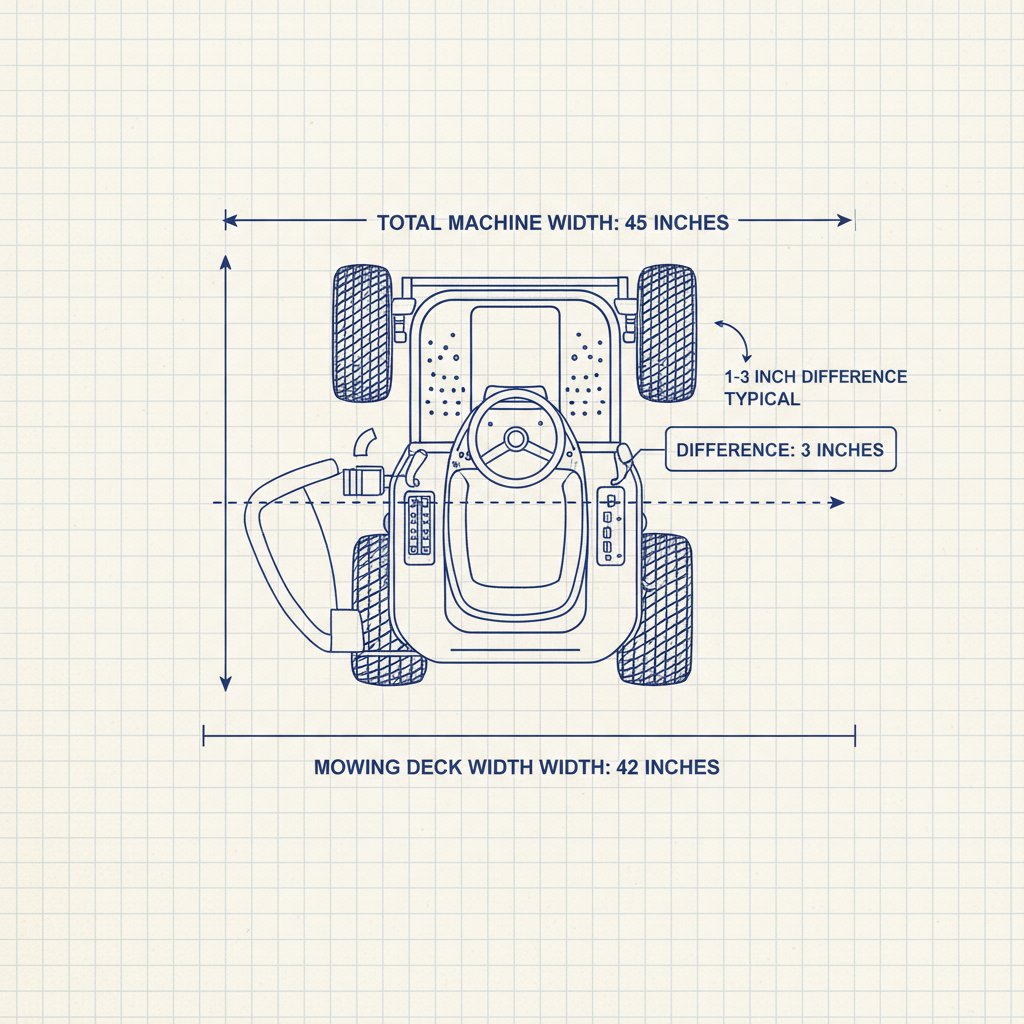
The width measurement you’ll see in most product specifications refers to the mowing deck width—the distance across the blades or cutting mechanism underneath the mower. This is the critical dimension because it determines how much grass the mower cuts in a single pass. A 48-inch deck cuts a 48-inch-wide swath of grass with each pass, while a 42-inch deck covers 42 inches.
The total machine width—from the outermost point of one tire to the other—is typically 1 to 3 inches wider than the deck width due to tire width and fender design. For practical purposes like fitting through gates or storing in sheds, you should plan for dimensions slightly larger than the listed deck width.
Why Width Matters for Your Purchase
Mower width affects three critical factors:
- Mowing efficiency: Wider decks cover more ground per pass, reducing mowing time on larger properties.
- Storage and transport: Wider machines require larger shed space and may need special trailer arrangements.
- Maneuverability: Narrower mowers navigate tight spaces, around landscaping, and small yards more easily.
Standard Widths by Mower Category
Residential Riding Mower Widths
Residential riding lawn mowers—the most common type for homeowners—typically fall into these width ranges:
| Mower Type | Deck Width Range | Best For |
|---|---|---|
| Compact/Lawn Tractors | 30–38 inches | Small yards (under 0.5 acres), tight spaces, storage-limited properties |
| Standard Residential | 42–48 inches | Typical residential lots (0.5–2 acres), good balance of efficiency and maneuverability |
| Premium Residential | 50–54 inches | Larger residential properties (2+ acres), reduced mowing time |
The 42-inch and 48-inch deck sizes dominate the residential market because they offer a practical balance. A 42-inch mower fits through most standard gates (typically 4 feet wide) with minimal clearance, while a 48-inch mower requires a slightly wider opening but cuts noticeably more ground per pass.
Compact Riding Mowers (30–38 Inches)
Compact models are ideal for homeowners with small yards, storage constraints, or properties with tight landscaping. These mowers excel at:
- Navigating around flower beds, trees, and garden structures
- Fitting through standard 4-foot gates
- Storing in small sheds or garage corners
- Transporting on smaller trailers or in pickup trucks
The trade-off is longer mowing times on larger properties, since you’re cutting a narrower swath with each pass.
Commercial and Premium Residential Mowers (50–60+ Inches)
Wider commercial-grade mowers and premium residential models (50 to 72 inches) are designed for:
- Large residential properties (3+ acres)
- Commercial landscaping and grounds maintenance
- Properties where mowing time is a priority
- Farms and estate properties
These machines require larger storage spaces, wider gates, and commercial-grade trailers for transport. They’re significantly more expensive than standard residential mowers but dramatically reduce mowing time on large properties.
How Width Affects Storage, Transport, and Maneuverability
Storage Space Requirements
Before purchasing a riding mower, measure your storage space carefully:
- Shed doors: Standard shed doors are 3–4 feet wide. A 42-inch mower can fit but may require angled entry or door removal. A 48-inch or wider mower will not fit through most standard doors without modification.
- Garage space: Plan for the mower width plus 12–18 inches on each side for walkway access.
- Covered storage: If storing outdoors, ensure a weather-resistant cover is available to protect the mower from rust and deterioration.
Transport Dimensions
If you need to transport your mower:
- Pickup truck beds: Standard pickup beds are 4.5–6.5 feet wide. Compact mowers (30–38 inches) can usually fit in most trucks. Larger residential mowers (48 inches) may require a wider-bed truck or trailer.
- Trailers: Utility trailers for mowers should be at least 2–4 inches wider than the mower for safe loading and tie-down points.
- Loading: Wider, heavier mowers may require ramps or equipment assistance for safe loading.
Gate and Pathway Access
Measure the width of gates and pathways on your property where you’ll need to move the mower:
- Standard residential gates: 3.5–4.5 feet (42–54 inches)
- Narrow side yards or pathways: May be 3–4 feet wide
- Backyards with landscaping: Consider tight turns around trees, sheds, and patios
If your property has narrow access points, a compact 30–38 inch mower is often the practical choice, even if a wider mower would cover more ground.
Maneuverability on Smaller Properties
Wider mowers are harder to turn in tight spaces and around obstacles. On properties under 1 acre with significant landscaping, a narrower mower often provides a better user experience, even if it takes slightly longer to mow.
Choosing the Right Width for Your Needs
Assess Your Property Size
Under 0.5 acres: A compact 30–38 inch mower is usually sufficient and offers better maneuverability.
0.5–2 acres: A standard 42–48 inch residential mower is the most popular choice, offering efficiency without sacrificing practicality.
2–5 acres: A 50–54 inch mower reduces mowing time significantly and is worth the extra storage and transport considerations.
5+ acres: Consider a commercial-grade mower (60+ inches) or a zero-turn radius mower for maximum efficiency.
Check Your Storage and Access Constraints
Measure your shed door, garage space, and any gates the mower must pass through. If your storage is limited, choose a compact model even if a wider mower would be more efficient. A mower that doesn’t fit in your shed is impractical to own.
Consider Mowing Pattern and Property Layout
Properties with many obstacles—trees, landscaping, garden beds—benefit from narrower, more maneuverable mowers. Properties with large open areas benefit from wider decks that reduce total mowing time.
Evaluate Long-Term Use
If you plan to keep the mower for many years or use it frequently, investing in a slightly wider model that fits your property can pay dividends in reduced mowing time. If you mow occasionally or have storage constraints, a compact model is a practical choice.
Frequently Asked Questions
What is the most common riding lawn mower width?
The 42-inch and 48-inch deck widths are the most popular for residential riding lawn mowers. These sizes offer a practical balance between mowing efficiency and maneuverability, and they fit through most standard residential gates. A 42-inch mower is often considered the “sweet spot” for homeowners with properties between 0.5 and 2 acres.
Can a 48-inch mower fit through a standard gate?
A 48-inch mower is tight for most standard 4-foot (48-inch) gates. While the deck width is 48 inches, the total machine width may be 50–51 inches when accounting for tire width. Most 4-foot gates have hinges and hardware that reduce usable width to 46–47 inches. A 42-inch mower provides more comfortable gate clearance. Always measure your specific gate before purchasing.
Does a wider mower always cut better or faster?
A wider mower covers more ground per pass, which reduces the total number of passes needed to mow your lawn—not because it cuts better, but because it cuts more area. The cut quality depends on blade sharpness, deck design, and engine power, not width. On smaller properties with tight spaces, a narrower mower may actually be more practical because it’s easier to maneuver.
What’s the difference between a 42-inch and 48-inch mower in terms of mowing time?
A 48-inch mower covers about 14% more ground per pass than a 42-inch mower. On a 1-acre property, this could reduce mowing time by roughly 10–15 minutes. For larger properties (2+ acres), the time savings become more significant. However, the wider mower requires more storage space and may not fit through your gates, so the practical benefit depends on your property layout.
Key Takeaways
- Most residential riding lawn mowers are 42–48 inches wide, measured across the mowing deck.
- Compact models (30–38 inches) fit through standard gates and store easily but take longer to mow.
- Premium and commercial models (50–60+ inches) cover large properties efficiently but require wider storage and transport options.
- Always measure your shed door, gates, and storage space before purchasing to ensure the mower fits your property.
- Choose width based on the balance between your property size, storage constraints, and maneuverability needs.