What Is an Edger? Direct Answer
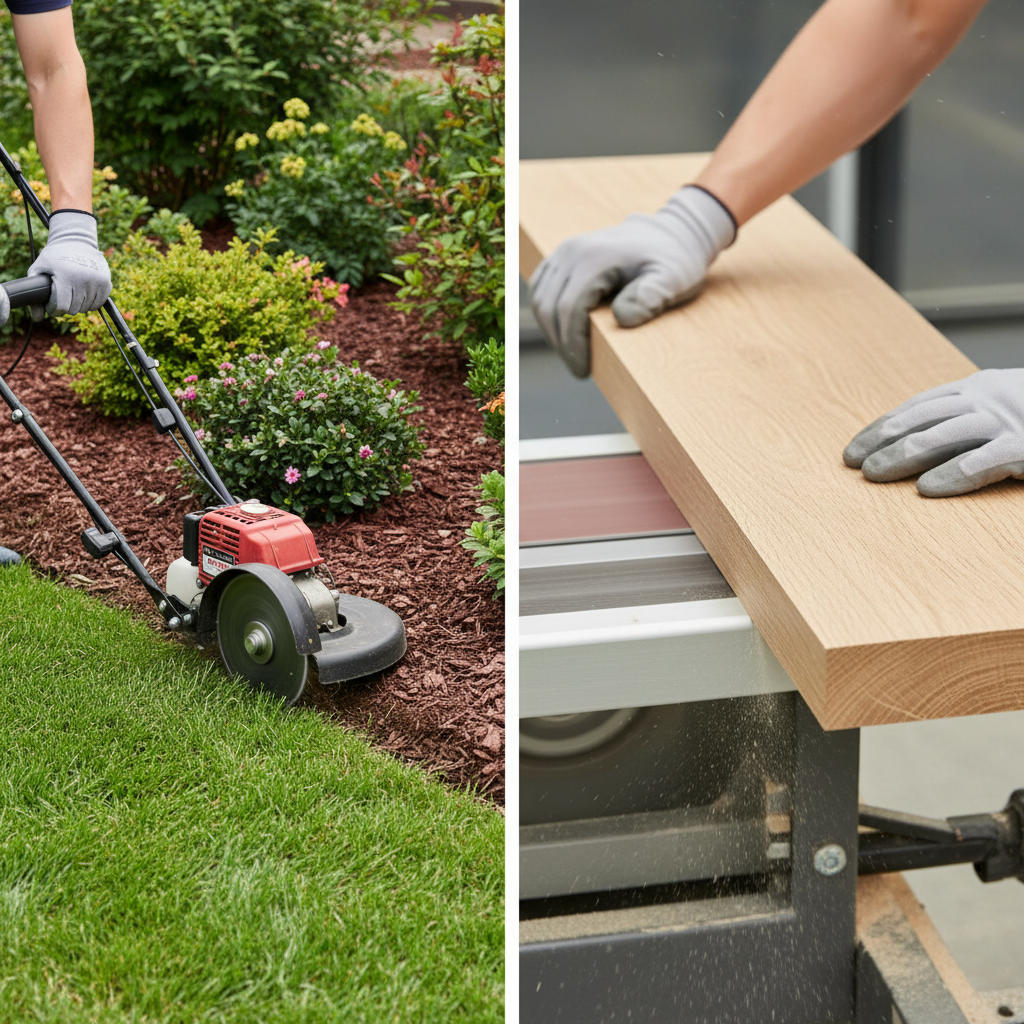
An edger is a tool designed to create clean, sharp borders and edges across multiple domains. In landscaping, it’s typically a power tool or hand tool that cuts along lawn perimeters to separate grass from garden beds, driveways, or walkways. In woodworking and construction, edgers finish or shape the edges of materials like wood, drywall, or stone. The specific design varies by application: lawn edgers use rotating blades or wheels, while woodworking edgers may feature sanders, routers, or manual planes.
What Does an Edger Do and Why Is It Used?
An edger serves a fundamental purpose across all its applications: creating precise, clean borders where two surfaces or materials meet. Whether in landscaping or construction, the tool prevents a ragged, unfinished appearance and maintains clear visual and functional separation between spaces.
In landscaping, edgers cut through soil and grass to create defined lines between lawn and garden beds, walkways, or driveways. This prevents grass from encroaching into planting areas and gives landscapes a maintained, professional appearance. In woodworking, edgers smooth, sand, or shape the raw edges of cut wood, making them safe to handle and visually finished. In construction, drywall edgers and tile edgers provide clean transitions and finished corners.
The core benefit of using an edger is efficiency and consistency. Manual edging with a shovel or knife is time-consuming and produces uneven results. Edgers—whether power-driven or hand tools—accomplish the task faster and with more uniform results, making them standard tools in landscaping, construction, and woodworking workflows.
Types of Edgers: Landscaping, Woodworking, and Construction
Landscape and Lawn Edgers
Lawn edgers are the most commonly recognized type. They cut clean borders along the perimeter of lawns, typically between grass and adjacent surfaces. Landscape edgers come in two main operational styles:
- Rotary or Wheel Edgers: Feature a spinning blade that cuts vertically into soil and grass. The rotating motion slices through roots and creates a sharp edge. These are typically gasoline or electric-powered and are ideal for establishing new edges or maintaining existing ones on larger properties.
- Straight-Blade or Walking Edgers: Use a flat, sharpened blade that you push into the ground and pull toward you, similar to a spade. These are often manual but may be electric-powered for larger jobs.
Woodworking Edgers
In woodworking, edgers prepare the raw edges of cut wood. Common types include:
- Edge Sanders: Use sandpaper strips or belts to smooth and finish wood edges.
- Edge Routers: Cut decorative profiles or chamfers on wood edges using interchangeable router bits.
- Hand Planes: Manual tools that shave thin layers from wood edges to achieve smooth, finished surfaces.
- Edge Banders: Apply thin veneer strips to cover raw plywood or particleboard edges, creating a finished appearance.
Construction Edgers
In construction, edgers smooth transitions and corners:
- Drywall Edgers: Create smooth, finished corners and edges on drywall joints before taping and mudding.
- Tile Edgers: Trim and finish the edges of cut tiles to create clean grout lines and transitions.
- Concrete Edgers: Shape and smooth the edges of freshly poured concrete for a finished appearance and safer walking surfaces.
Power Edgers vs. Manual Edgers: Key Differences
The choice between power and manual edgers depends on the scope of work, physical capability, and desired finish quality.
| Feature | Power Edger | Manual Edger |
|---|---|---|
| Speed | Fast; completes jobs in minutes on larger areas | Slower; requires sustained physical effort |
| Consistency | Produces uniform cuts with minimal operator skill variation | Quality depends on operator technique and strength |
| Cost | Higher initial investment ($150–$500+ for quality models) | Lower cost ($20–$100 for most hand tools) |
| Physical Demand | Minimal; the tool provides cutting force | Requires significant physical effort, especially in hard soil |
| Maintenance | Requires fuel, spark plug changes, blade sharpening, storage considerations | Minimal; mainly blade sharpening |
| Best For | Regular maintenance, large properties, hard or compacted soil | Small touch-ups, small properties, budget-conscious users |
How Edgers Work: Design and Functionality
Rotary Blade Edgers (Landscaping)
Rotary blade edgers are the most common power edgers for landscaping. A gasoline or electric engine drives a spinning vertical blade at high speed (typically 3,000–6,000 rpm, depending on the model). As you guide the edger along the lawn perimeter, the blade cuts into soil and grass, severing roots and creating a clean vertical edge. The operator walks behind or alongside the tool, controlling direction and speed. The spinning blade’s action is similar to a string trimmer but operates vertically rather than horizontally.
Wheel Edgers
Wheel edgers use a sharpened circular wheel that rolls along the ground while cutting downward. As the wheel rotates, it slices through turf in a continuous motion. These are typically lighter and quieter than blade edgers but may require more operator effort to maintain a straight line. Wheel edgers are excellent for maintaining existing edges and work well in softer soils.
Manual Edgers
Manual edgers operate through direct human force. A walking edger (also called a step edger or half-moon edger) has a flat, semicircular blade. You position it along the desired edge line, press down with your foot or hands, and pull backward, cutting through soil and grass roots in a single motion. The blade’s sharpness and your technique determine edge quality. Manual edgers are simple, durable, and effective for smaller properties or detailed work in flower beds.
Woodworking Edgers
Woodworking edgers vary widely in operation. Edge sanders use a rotating or oscillating abrasive surface to smooth wood. Edge routers spin a shaped bit against wood to cut profiles or chamfers. Hand planes rely on a sharp blade and operator technique to shave wood surfaces smooth. All three focus on preparing wood surfaces for finishing or creating decorative edge profiles.
Common Uses and Applications
Landscaping Applications
- Creating and maintaining borders between lawn and garden beds
- Establishing edges along driveways, patios, and walkways
- Defining property lines and lawn boundaries
- Preventing grass encroachment into flower beds or vegetable gardens
- Seasonal edge maintenance (spring refresh, fall cleanup)
Woodworking Applications
- Smoothing raw edges on cut lumber
- Creating decorative edge profiles on furniture and trim
- Preparing plywood edges for edge banding or veneer
- Finishing built-in cabinetry and shelving
- Preparing wood surfaces for staining or painting
Construction Applications
- Finishing drywall corners and seams
- Trimming and smoothing tile edges in kitchens and bathrooms
- Creating finished edges on concrete slabs and walkways
- Beveling or chamfering stone and tile edges for safety
Edger vs. Edge Trimmer vs. Edging: Clearing Up Confusion
Edger
An edger is the tool itself—a device designed to create or finish edges. It’s an active tool that the operator controls and directs to produce clean borders or finished surfaces.
Edge Trimmer
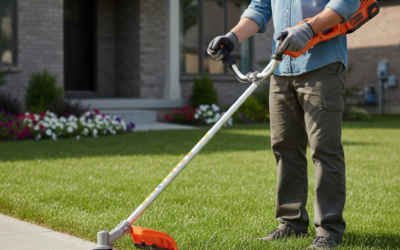
An edge trimmer (also called a string trimmer, weed whacker, or line trimmer) cuts grass and weeds around obstacles like trees, fences, and garden beds. It operates horizontally with a spinning nylon string or blade. While edge trimmers create neat perimeters, they don’t cut vertically into soil like edgers do. An edge trimmer maintains the visual edge of the lawn; an edger creates a physical edge by cutting into earth. Many landscapers use both: an edger to establish a border, then an edge trimmer for regular maintenance.
Edging (Material)
Edging refers to physical materials placed along lawn or garden borders to create separation and contain mulch or soil. Edging materials include plastic strips, metal borders, stone, or wood. Edging material is different from an edger tool—it’s the installed border itself, not the tool that creates it.
Choosing the Right Edger for Your Needs
Selecting an edger depends on several factors:
- Property Size: Small lawns (under 2,000 square feet) work well with manual edgers. Larger properties benefit from power edgers’ speed and consistency.
- Soil Type: Hard, compacted, or clay-heavy soil requires power edgers. Soft or moist soil responds well to manual tools.
- Frequency of Use: Regular landscapers and property owners with ongoing maintenance needs benefit from power edgers’ efficiency. Occasional users may prefer manual tools’ simplicity and lower cost.
- Budget: Manual edgers cost $20–$100. Power edgers range from $150 to $500+ depending on engine type and quality.
- Physical Capability: Manual edging requires sustained physical effort. Power edgers are accessible to users with limited strength or mobility.
- Application Domain: Landscaping, woodworking, and construction each have specialized edgers suited to their specific tasks.
Maintenance and Care
Proper maintenance extends edger life and ensures consistent performance.
Power Edgers: Change oil according to manufacturer specifications, replace spark plugs annually, sharpen or replace blades seasonally, store with fuel stabilizer in off-season (for gas models), and clean air filters regularly.
Manual Edgers: Keep blades sharp by honing or sharpening seasonally, clean soil and grass debris after each use, and store in a dry location to prevent rust.
Woodworking Edgers: Keep sanding surfaces clean and replace worn abrasives, maintain router bits at factory sharpness, and store in protective cases to prevent damage.
Frequently Asked Questions
What is the difference between an edger and an edge trimmer?
An edger cuts vertically into soil and grass to create a physical border with a sharp edge. An edge trimmer (string trimmer) cuts grass horizontally around obstacles and lawn perimeters but doesn’t cut into soil. Edgers establish new borders; edge trimmers maintain existing ones. Many landscapers use both tools in sequence—edger first, then trimmer for regular maintenance.
Can a manual edger work on hard soil?
Manual edgers can work on hard soil, but require significant physical effort. The blade may skip or bounce on very compacted or frozen ground. In difficult soil conditions, power edgers are more effective and less physically demanding. Watering the soil lightly before manual edging can soften it enough to improve results.
What is a drywall edger used for?
A drywall edger finishes and smooths the joints and corners where drywall sheets meet. It helps create clean, even transitions before taping and mudding. Drywall edgers come in various widths (6–12 inches typically) and allow contractors to apply joint compound smoothly across seams, producing professional-looking finished walls.
Is woodworking edge sanding necessary before staining?
Yes, woodworking edge sanding is highly recommended before staining. Raw, unfinished wood edges absorb stain unevenly, creating dark spots and an unprofessional appearance. Sanding edges smooth and slightly open the wood grain, allowing more even stain absorption. This extra step significantly improves the final finish quality on visible edges.