Direct Answer: Should You Mow Wet Grass?
No, mowing wet grass is not recommended. Wet grass clogs your mower deck, produces ragged and uneven cuts that stress the plant, creates safety hazards, and promotes fungal disease. Best practice is to wait 24-48 hours after rain or morning dew before mowing.
Why You Shouldn’t Mow Wet Grass
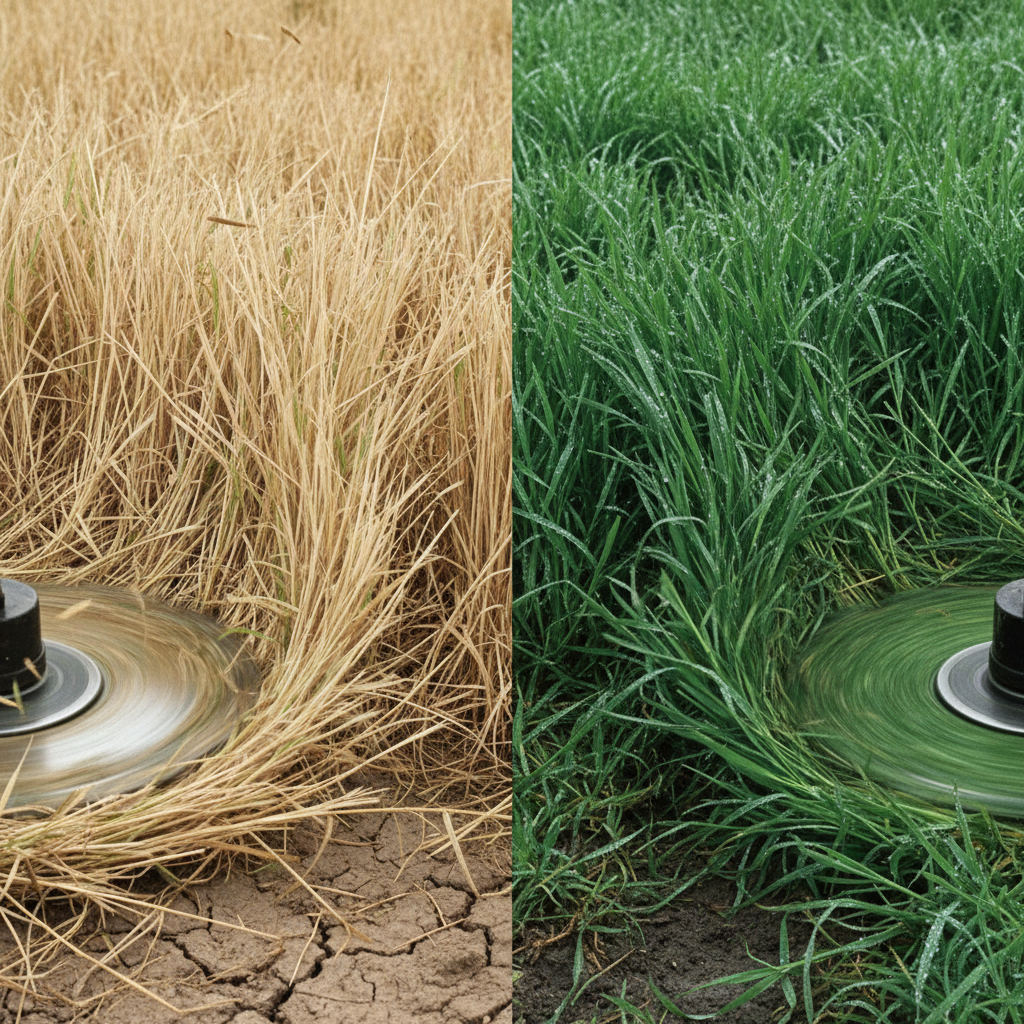
Mowing wet grass creates three immediate problems: poor cut quality, equipment damage, and safety risks.
Mower Deck Clogging
When grass is wet, clippings stick together and clump inside the mower deck instead of being discharged cleanly. This buildup reduces blade efficiency, forces the motor to work harder, and can completely jam the discharge chute. The wet clippings mat together rather than flowing through the system, causing the mower to stall or shut down. Over time, this repeated stress damages the blade bearings, belt, and motor.
Poor Cut Quality
Wet grass bends and compresses under the mower blade rather than standing upright. This causes the blade to tear or crush the grass stem instead of making a clean cut. Ragged, torn grass blade tips turn brown within days as the plant heals from the damaged edge. This creates an uneven, thin appearance across your lawn and leaves grass more vulnerable to disease and pest damage.
Safety Hazards
Wet grass and muddy soil create slip hazards, especially around the mower’s wheels and deck. Operator footing becomes unstable, increasing the risk of falls. Wet conditions also reduce traction, making it harder to control the mower on slopes. Additionally, wet grass can conduct electricity more effectively, creating a heightened electrocution risk if you use an electric mower.
How Wet Grass Damages Your Lawn Long-Term
Fungal Disease Promotion
Mowing wet grass spreads fungal spores across your lawn. Common turf diseases like anthracnose, dollar spot, and brown patch thrive in wet conditions. When you mow wet grass, you’re moving moisture and fungal spores from one area to another on the blade and deck, effectively planting disease throughout your lawn. The torn grass edges created by wet mowing are also more susceptible to fungal infection because the damaged tissue cannot heal effectively.
Soil Compaction
Wet soil is more compactible than dry soil. When you mow over wet ground, the mower’s weight presses down harder, compacting the soil and reducing air space that roots need to grow. This compaction persists even after the soil dries, limiting water infiltration and root development for weeks. Repeated wet mowing in the same patterns creates visible wheel ruts and strips of stunted growth.
Uneven Growth and Weak Turf
The combination of torn grass edges, compacted soil, and disease promotion creates weak spots in your lawn. These areas recover slowly and may be invaded by weeds or bare patches. A lawn weakened by wet mowing becomes thinner and more susceptible to drought stress, disease, and pest damage throughout the season.
How to Tell If Your Lawn Is Ready to Mow
Timing After Rain
After a rain or heavy dew, wait at least 24-48 hours before mowing. Light morning dew typically evaporates within 2-4 hours of sunlight, while rain requires longer. The exact timing depends on temperature, humidity, soil type, and grass thickness. Sandy soils drain faster than clay soils. Thick, dense turf retains moisture longer than sparse lawns.
The Shoe Test
Walk across your lawn in your shoes. If your footprints leave wet marks or if moisture squelches under your feet, the grass is too wet to mow. If your shoes stay mostly dry and footprints disappear quickly, the lawn is likely ready. This simple test accounts for your local conditions without guesswork.
Visual and Touch Assessment
Look at the grass blade tips. If they’re shiny or beaded with water droplets, wait longer. Run your hand along a blade—if it feels slick or wet, delay mowing. The underside of the grass should feel slightly cool but not wet or muddy. Your lawn is typically ready to mow when the surface layer has dried but the soil retains adequate moisture for grass health.
Mower Type Considerations
Rotary Mowers and Wet Grass
Standard rotary mowers are most affected by wet conditions because clippings cling to the curved blade housing. The discharge chute is prone to clogging, and wet grass tends to wrap around the spindle. Rotary mowers require the driest conditions before mowing.
Reel Mowers
Reel mowers (push or powered) can tolerate slightly wetter conditions better than rotary mowers because they use scissor-action blades and are designed for cleaner cuts on well-maintained turf. However, wet grass still tears on reel mowers and clumps in the catch basket. Wait for similar drying times before using a reel mower.
Hover Mowers
Hover mowers (electric hover or cushioned designs) handle wet grass somewhat better because they don’t have enclosed decks where clippings accumulate. The grass passes under the blade and falls freely. However, hover mowers still produce poor cuts on wet grass and create the same safety and disease risks. Wet operation can also damage the hover mechanism or motor.
Robotic Lawn Mowers
Most robotic mowers are designed for dry to slightly damp conditions. Prolonged operation on wet grass can damage the sensors and electrical components. Many manufacturers recommend waiting until the lawn has dried before resuming robotic mowing schedules. Check your specific model’s manual, as specifications vary.
When You Might Need to Break the Rule
Extended Rainy Periods
If rain is forecast for several days or your climate is consistently humid, you may face pressure to mow despite damp conditions. In this scenario, mow when conditions are closest to dry—typically late morning after dew has evaporated but before evening moisture returns. Mow in the driest available window, even if grass isn’t ideal, rather than allowing your lawn to become overgrown.
Managing Humid Climates
In high-humidity regions, morning dew may persist much longer than in dry climates. Waiting 48 hours after rain is often necessary. Some homeowners in consistently humid areas mow on a fixed schedule (e.g., Wednesday mornings) and accept minor wet-grass challenges rather than trying to hit perfect conditions. To minimize damage: mow at the highest blade setting, avoid using the mulching mode (which recirculates wet clippings), and clean the deck thoroughly afterward.
Damage Minimization If You Must Mow Wet
If mowing wet grass becomes unavoidable, follow these precautions:
- Raise the blade to its highest setting to reduce stress on wet grass
- Use bagging mode instead of mulching to prevent wet clippings from being recirculated
- Mow slowly to allow the blade to cut cleanly rather than tear
- Clean the mower deck immediately after mowing to prevent rust and fungal growth on the equipment
- Disinfect the blade with a 10% bleach solution to kill spores and prevent disease spread
- Allow extra drying time between passes if mowing large areas
- Avoid steep slopes where slipping hazards are highest
Frequently Asked Questions
How long does grass take to dry after rain?
Grass typically dries within 24-48 hours after rain, depending on rainfall amount, temperature, humidity, soil type, and grass thickness. Light rain may dry in 12-24 hours during warm, sunny weather with low humidity. Heavy rain or cool, humid conditions can require 48+ hours. The shoe test is more reliable than time estimates for your specific conditions.
Is morning dew enough reason to skip mowing?
Light morning dew is not usually a reason to skip mowing. Dew typically evaporates within 2-4 hours of sunlight. You can safely mow once the dew has dried, usually by mid-morning. However, if you mow very early before dew has evaporated and your shoes get wet, postpone mowing and try again in a few hours.
Can I mow wet grass if I clean the deck afterward?
Cleaning the deck removes clippings but doesn’t prevent the damage that happens during mowing—torn grass edges, soil compaction, fungal spore spread, and equipment stress. While cleaning the deck is good maintenance practice, it doesn’t solve the underlying problems of wet-grass mowing. It’s better to wait for dry conditions than to mow wet and clean afterward.
What if my lawn is growing too fast and it rains frequently?
Frequent rain combined with fast growth is a common challenge. Raise your mowing blade height by one setting to reduce stress on wet grass if you must mow in damp conditions. Mow more frequently on a shorter schedule so each cut removes less grass and creates less clipping volume. Mow during the driest available windows—often late morning after dew has evaporated. If growth outpaces safe mowing windows, accept a slightly higher cut for a few weeks rather than repeatedly mowing wet grass, which damages turf long-term.
Key Takeaways
- Wait 24-48 hours after rain or until morning dew has evaporated before mowing
- Wet grass clogs mower decks, produces poor cuts, and spreads fungal disease
- Use the shoe test to determine if your lawn is dry enough
- Different mower types tolerate wet conditions slightly differently, but none are ideal for wet mowing
- If you must mow wet grass, raise blade height, bag clippings, and disinfect the deck afterward
- Mowing wet grass causes long-term lawn damage through disease, compaction, and weak turf recovery