Direct Answer: Lawn Mower Battery Amp-Hours
Most residential cordless lawn mower batteries are rated between 2.0 and 5.0 amp-hours (Ah), with 4.0 Ah being the standard capacity for mid-range cordless models. Battery voltage varies by manufacturer—typically 18V, 20V, 40V, or 48V—and larger commercial mowers may have batteries rated 6.0 Ah or higher. The term “amps” on a lawn mower battery usually refers to amp-hours (Ah), which measures energy capacity, not the continuous amperage draw during operation.
What Are Amp-Hours and Why They Matter
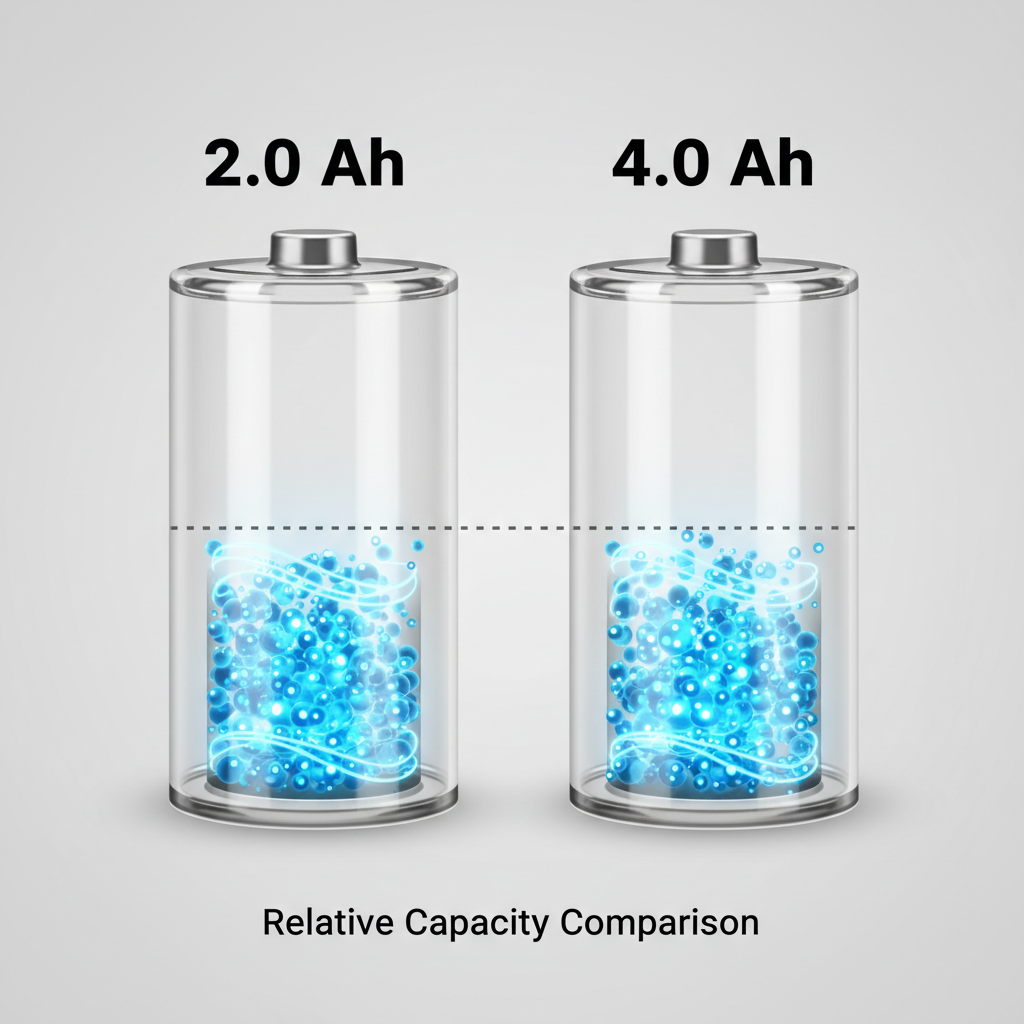
When you see a battery labeled “4.0 Ah,” that number represents amp-hours, a measure of how much charge the battery can store. One amp-hour equals one ampere of current delivered over one hour. Think of it like a gas tank: a larger amp-hour rating means the battery holds more energy, similar to how a larger gas tank holds more fuel.
Amp-hours directly affect mowing runtime. A 4.0 Ah battery will generally provide longer continuous operation than a 2.0 Ah battery in the same mower, assuming the mower’s power consumption remains constant. However, runtime also depends on cutting conditions—dense grass requires more power than sparse lawn, so actual mowing time will vary.
Important distinction: Amp-hours (Ah) are different from amperage (amps). Amperage refers to the continuous electrical current the mower draws during operation. A mower might draw 5–8 amps while cutting, but its battery is rated in amp-hours (total capacity). Understanding both helps you assess whether a battery will power your mower long enough and whether it can supply the current the mower demands.
Typical Battery Capacity by Mower Type
| Mower Type | Typical Ah Range | Common Voltage | Best For |
|---|---|---|---|
| Residential Cordless (Small Lot) | 2.0–3.0 Ah | 18V–20V | Small lawns under 1/4 acre; light to moderate use |
| Residential Cordless (Mid-Range) | 3.0–4.0 Ah | 20V–40V | Medium lawns 1/4 to 1/2 acre; regular homeowner use |
| Residential Cordless (Large/Premium) | 4.0–6.0 Ah | 40V–48V | Large lawns 1/2+ acres; frequent mowing |
| Commercial/Professional | 5.0+ Ah | 48V–80V | High-demand professional landscaping; all-day operation |
For most homeowners with quarter- to half-acre yards, a 4.0 Ah battery at 20V–40V provides a good balance of runtime and reasonable charge time. Smaller lots can get by with 2.0–3.0 Ah, while larger properties benefit from 5.0+ Ah or dual-battery systems.
How Voltage and Amp-Hours Work Together
Battery performance isn’t determined by amp-hours alone. Voltage and amp-hours combine to create total energy, measured in watt-hours (Wh). The formula is simple:
Watt-Hours (Wh) = Voltage (V) × Amp-Hours (Ah)
For example:
- A 20V × 4.0 Ah battery = 80 Wh
- A 40V × 2.0 Ah battery = 80 Wh
Both batteries store the same total energy, but they behave differently. The 40V battery can deliver the same power with a smaller amp-hour capacity, making it lighter and more efficient. A higher-voltage system typically produces more cutting force and runs the motor faster, which is why professional mowers favor 40V–48V systems even when they don’t have the highest amp-hour ratings.
Practical implication: A 40V × 2.0 Ah battery may outperform a 20V × 3.0 Ah battery in cutting performance, even though the latter has higher amp-hours, because the 40V system delivers power more efficiently.
Understanding Battery Runtime and Real-World Performance
Amp-hour ratings don’t directly translate to mowing time because actual runtime depends on multiple factors:
- Cutting conditions: Thick, overgrown grass demands more power than a well-maintained lawn, reducing runtime.
- Mower efficiency: Different mower models draw different amounts of current. A lightweight push mower may use 3–5 amps, while a self-propelled or heavier model uses 8–12 amps.
- Deck width: Wider cutting decks typically consume more power.
- Battery age and temperature: Older batteries deliver less usable capacity, and cold temperatures temporarily reduce performance.
- Throttle setting: Running at full power drains the battery faster than half-throttle operation.
As a rough estimate, a typical residential mower drawing 6–8 amps on a 4.0 Ah battery at 20V should provide 30–45 minutes of runtime under normal lawn conditions. A 40V system with the same 4.0 Ah rating may deliver slightly longer runtime because the higher voltage means lower current draw for the same power output.
How to Find Your Mower’s Battery Specifications
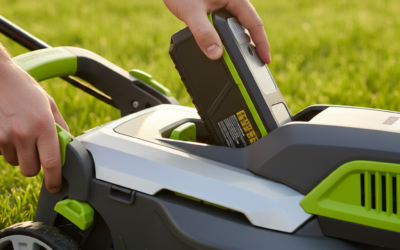
Check the battery label: The battery itself displays voltage (V) and amp-hours (Ah). For example, “20V 4.0 Ah” is clearly marked on the casing.
Review the owner’s manual: The manual lists compatible battery models and their specifications, plus the mower’s recommended amp-hour range for optimal performance.
Look at the mower’s nameplate: Usually mounted on the deck or handle, it specifies compatible battery models and voltages. Never use a battery outside the recommended voltage range.
Check the manufacturer’s website: Battery compatibility charts are often available online, showing which batteries work with your specific mower model.
Visit the retailer: If you know your mower brand and model, a retailer can confirm which batteries are approved replacements.
Battery Compatibility: Can You Use a Different Amp-Hour Battery?
Yes, but only with caution. You can use a different amp-hour battery from the same manufacturer in the same voltage system. For example, if your 20V mower originally came with a 2.0 Ah battery, you can typically upgrade to a 4.0 Ah battery from the same brand. The mower will simply run longer per charge.
Do not mix voltage systems. A 40V battery will not fit or work safely in a mower designed for 20V. Mismatched voltages can damage the mower or battery, create safety hazards, or void warranties.
Cross-brand compatibility is limited. Most major manufacturers use proprietary battery connectors. DeWalt, Makita, Milwaukee, and Ryobi batteries are not interchangeable. Stick with your mower’s original brand for safety and compatibility.
Battery Degradation Over Time
Lithium-ion batteries, used in most cordless lawn mowers, gradually lose capacity with age and charge cycles. A battery rated 4.0 Ah when new may deliver only 3.5–3.7 Ah after 2–3 years of regular use. After 5+ years or 500+ charge cycles, capacity may drop to 80% or lower.
Signs of battery degradation include:
- Noticeably shorter mowing runtime
- Slower motor performance or reduced cutting power
- Longer charging times
- Battery gets warm during use or charging
If your battery shows these signs, it’s time to replace it. Most manufacturers warrant batteries for 2–3 years; consult your manual for details.
Comparing Amp-Hours Across Brands
Amp-hour ratings are standardized, so a 4.0 Ah battery from one brand stores the same amount of energy as a 4.0 Ah battery from another—in theory. However, real-world performance varies due to different motor efficiency and battery management systems. A well-engineered mower with a 3.0 Ah battery might outperform a poorly designed mower with a 4.0 Ah battery.
When comparing mowers, consider:
- Total watt-hours (voltage × Ah), not just amp-hours alone
- Motor efficiency and cutting performance in reviews
- Brand warranty and customer support
- Battery charging time (higher amp-hour batteries take longer to charge)
- Availability and price of replacement batteries
Frequently Asked Questions
What does “Ah” stand for on a lawn mower battery?
“Ah” stands for “amp-hours,” a unit that measures how much electrical charge a battery can store and deliver over time. One amp-hour means the battery can deliver one ampere of current for one hour. A 4.0 Ah battery can theoretically deliver 4 amperes for 1 hour, or 2 amperes for 2 hours, assuming the mower draws a constant current.
Is a higher amp-hour battery always better?
Not necessarily. A higher amp-hour battery will provide longer runtime, which is beneficial for large lawns. However, a lower amp-hour battery at a higher voltage may deliver better cutting performance and is lighter to handle. The “best” battery depends on your lawn size and mowing frequency. For most residential use, 4.0 Ah is a practical sweet spot.
How long does a cordless mower battery take to charge?
Charging time varies by charger and battery capacity. A 2.0 Ah battery might charge in 30–45 minutes with a standard charger. A 4.0 Ah battery typically takes 1–1.5 hours. High-speed chargers can reduce this time by half. Always consult your manual for the recommended charging time and charger specifications.
Can I use two batteries to extend mowing time?
Yes. Many cordless mowers accept battery swaps, allowing you to mow with one battery while another charges. Some professional-grade systems support two batteries installed simultaneously, doubling your total capacity. Check your mower’s manual to see if it supports dual-battery configuration.
Why does my battery not deliver the stated amp-hours?
Batteries naturally lose capacity over time due to aging and charge cycles. Cold temperatures also temporarily reduce performance. Additionally, real-world usage conditions—such as mowing thick grass at high throttle—draws power faster, making runtime shorter than theoretical calculations suggest. If your battery is new and severely underperforming, contact the manufacturer about a warranty replacement.