How Much Oil Does Your Honda Lawn Mower Need?
Most Honda push mowers require 0.6 to 0.7 quarts of SAE 10W-30 oil for routine maintenance. Riding mowers typically need 1.1 to 1.5 quarts. The exact capacity depends on your specific model, engine size, and generation. Always consult your owner’s manual for your particular mower’s requirements, as specifications vary across Honda’s product line.
Standard Oil Capacity by Honda Mower Type
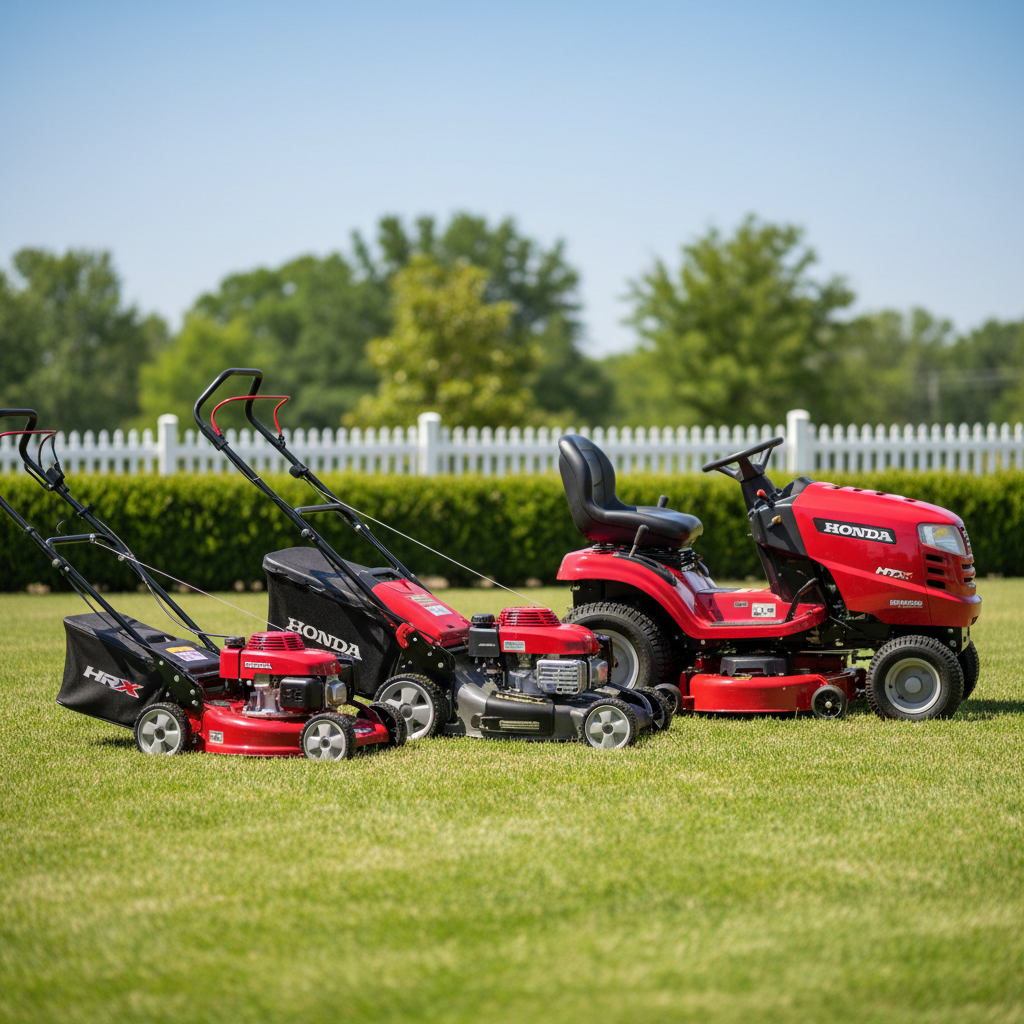
Honda manufactures several categories of lawn mowers, each with different oil capacities. Understanding your mower type helps you identify the ballpark amount you’ll need.
Push Mowers
Standard walk-behind push mowers from Honda typically hold 0.6 quarts (about 20 ounces) or 0.7 quarts (about 23 ounces) of oil. Some smaller, lightweight models may hold slightly less—around 0.5 quarts—while commercial-grade push mowers might hold up to 0.8 quarts. The variation depends on the engine displacement and cooling system design.
Popular Honda push mower models like the HRX and HRS series fall into this range. If you own a basic, entry-level Honda push mower, assume 0.6 to 0.7 quarts unless your manual specifies otherwise.
Self-Propelled Mowers
Self-propelled models—which feature a transmission to power the wheels—often require slightly more oil than basic push mowers, typically 0.7 to 0.8 quarts. The additional capacity accounts for the slightly larger engine needed to provide self-propulsion. Models like the Honda HRX and FG series fall into this category.
Riding Mowers
Riding lawn mowers have larger engines and require significantly more oil. Most Honda riding mowers need 1.1 to 1.5 quarts of oil. Larger commercial riding mowers may require up to 2 quarts. The increased capacity reflects the bigger engine displacement in riding mower models.
Commercial and Professional Mowers
Heavy-duty or commercial-grade Honda mowers may have different specifications. Some commercial walk-behind models hold up to 1 quart, while commercial zero-turn riders can require 2+ quarts. These mowers are built for intensive use and have larger cooling systems.
Why Oil Type and Grade Matter
Using the correct oil type and SAE grade is as important as using the right capacity. The wrong oil can affect engine performance, fuel efficiency, and equipment longevity.
Understanding SAE 10W-30
SAE 10W-30 is the recommended oil grade for most Honda lawn mowers. Here’s what that designation means:
- SAE = Society of Automotive Engineers, which sets viscosity standards
- 10W = The oil’s viscosity (thickness) in cold temperatures. The lower the number, the thinner the oil flows in winter. “W” stands for “winter.”
- 30 = The oil’s viscosity at operating temperature (212°F). Higher numbers indicate thicker oil at engine operating temperature
SAE 10W-30 is a multi-grade oil, meaning it flows easily when the engine is cold but maintains adequate protection when the engine is hot. This makes it suitable for year-round use in most climates.
Alternative Oil Grades for Climate
While SAE 10W-30 is the standard recommendation, some regions or conditions may call for alternatives:
- SAE 10W-40: Slightly heavier oil; may be recommended in very hot climates or for older equipment
- SAE 5W-30: Flows more easily in cold climates; sometimes recommended for winter storage or use in very cold regions
- Straight 30W: Single-grade oil (no “W” designation); mostly used in warm-weather regions or for seasonal mowers
Do not use straight weight oils (like 30W or 40W) unless your manual specifically permits it, as they may not flow adequately in cold starts.
Synthetic vs. Conventional Oil
Most Honda lawn mower manuals permit both conventional and synthetic oils that meet the SAE grade requirement. Synthetic oils offer benefits like better cold-start performance and extended drain intervals, but they are more expensive. Conventional mineral oil is adequate for standard residential use and more affordable. Check your manual to confirm whether synthetic is acceptable and whether it affects the oil change interval.
How to Find Your Model’s Exact Oil Capacity
Because Honda makes dozens of mower models across different generations, the only way to be certain of your exact requirements is to consult authoritative sources.
Check Your Owner’s Manual
Your owner’s manual is the definitive source for your specific model’s oil capacity and grade. The manual typically includes a specifications section listing:
- Oil capacity in both quarts and milliliters
- Recommended SAE grade(s)
- Oil change interval
- Dipstick or sight-glass location
Look for sections titled “Specifications,” “Maintenance,” or “Engine Oil.” The capacity is often listed as “Oil Capacity” or “Crankcase Capacity.”
Locate Your Manual Online
If you’ve lost your physical manual, Honda provides digital versions online:
- Visit Honda’s official support website and navigate to their manuals section
- Enter your mower’s model number (found on a label near the engine or under the deck)
- Download the PDF manual for your specific year and model
Many retailer websites (like Home Depot or Lowe’s) also archive manufacturer manuals for popular models.
Identify Your Mower Model
To find the correct manual, you’ll need your exact model number. This information appears on a label or sticker on your mower, typically located:
- On the engine block itself
- Under the cutting deck
- On the fuel tank or chassis
- On the handle or frame
The model number often begins with letters (like “HRX” or “FG”) followed by numbers indicating the year and specific variant. Write down the complete model number before searching for documentation.
When Model Information Is Unclear
If you cannot locate your model number or manual:
- Contact Honda customer service with your mower’s year, approximate engine size, and any visible details
- Visit a Honda-authorized dealer or service center; staff can identify your model and provide specifications
- Use a safe starting point of 0.6 quarts for push mowers or 1.2 quarts for riding mowers, then verify before adding more
Step-by-Step Guide to Checking and Adding Oil
Proper oil maintenance keeps your Honda mower running smoothly. Follow these steps to safely check and add oil.
Before You Start
- Place the mower on a flat, level surface
- Allow the engine to cool for at least 5 minutes if it has been running
- Gather supplies: appropriate oil type, a clean funnel, paper towels, and a rag
Checking the Oil Level
Locate the dipstick or sight glass. Most Honda mowers use a dipstick (a rod that screws into the crankcase). Some newer models have a sight-glass window on the side of the engine block.
For dipstick models:
- Unscrew the dipstick by turning it counterclockwise
- Wipe it clean with a rag or paper towel
- Reinsert it fully, screwing it back in until snug (do not overtighten)
- Remove it again and read the oil level
- The oil should reach the “full” or upper mark. If it’s below the minimum mark, oil needs to be added
For sight-glass models:
- Look at the level indicator on the engine block side
- The oil level should be between the minimum and maximum marks
- If below the minimum, add oil as described below
Adding Oil
Select the correct oil. Use the SAE grade specified in your manual (typically SAE 10W-30 for Honda mowers).
- Place a funnel in the oil filler cap opening
- Slowly pour oil into the filler tube, checking the dipstick frequently
- Add oil in small increments—typically 0.2 to 0.3 quarts at a time—to avoid overfilling
- After each addition, wait 30 seconds for the oil to settle, then recheck with the dipstick
- Stop when the level reaches the full mark
- Reinsert and secure the dipstick or filler cap
Avoiding Common Mistakes
- Do not overfill. Excess oil can cause smoking, fouled spark plugs, and engine damage. If you overfill, drain the excess through the drain plug or siphon it out
- Do not underfill. Running on insufficient oil causes inadequate lubrication and accelerates engine wear
- Check on a level surface. Checking oil on an incline gives an inaccurate reading
- Do not check while the engine is hot. Hot oil expands, giving a false high reading. Wait several minutes after running before checking
Oil Change Intervals
Most Honda mowers require an oil change every 50 to 100 operating hours or annually, whichever comes first. For residential users who mow weekly, this typically means one oil change per mowing season. Commercial or heavy-use mowers may need more frequent changes. Always refer to your manual for the specific interval.
Model-Specific Variations to Consider
Because Honda has manufactured lawn mowers across multiple decades with various engine sizes and configurations, specifications can vary significantly between models.
Differences Between Generations
Older Honda mowers (pre-2000s) may have different oil capacities than current models. Engine design and cooling systems have evolved, affecting oil volume. A 1990s-era Honda push mower might hold 0.5 quarts, while a modern model holds 0.7 quarts. If you own an older mower, locating the original manual is especially important for accurate specifications.
Engine Size Impact
Oil capacity correlates with engine displacement (measured in cubic centimeters or cc). A Honda mower with a 160cc engine typically holds less oil than one with a 200cc engine. Higher-displacement engines have larger crankcases and require proportionally more oil. Your manual will specify the engine displacement; if you see a larger cc rating, expect a correspondingly larger oil capacity.
Push vs. Riding Mower Differences
The engineering differences between push and riding mowers directly affect oil capacity. Riding mowers have larger, more powerful engines positioned horizontally under the seat, with larger oil pans and cooling systems. Push mowers have compact, vertical-shaft engines, resulting in smaller crankcases. This is why riding mower capacity is roughly double that of push mowers.
Commercial-Grade Equipment
Honda’s professional-grade mowers (often found at landscaping companies or rental centers) have different specifications than residential models. These mowers are engineered for extended run times and heavier use, so they may have larger oil capacities or require more frequent changes. If you rent or borrow commercial equipment, ask the rental center or operator for specification details rather than assuming residential capacity applies.
Frequently Asked Questions
Can I use the same oil in my Honda lawn mower as in my car?
Yes, if it meets the SAE grade requirement. SAE 10W-30 motor oil sold for automobiles is the same oil suitable for most Honda lawn mowers. However, avoid oils with detergents or additives not suitable for small engines, and never use synthetic blends unless your manual approves synthetic oil. For maximum compatibility, use oil labeled as suitable for small engine use.
What happens if I add the wrong amount of oil?
Overfilling causes excessive oil to reach the piston, creating smoke, fouling the spark plug, and potentially damaging the engine. Underfilling results in inadequate lubrication, causing accelerated wear, overheating, and eventual engine seizure. Both conditions reduce equipment life and can lead to costly repairs. Always check the dipstick after adding oil to confirm you’re within the specified range.
How do I dispose of used lawn mower oil?
Used oil is hazardous waste and must be disposed of responsibly. Take it to a local recycling center, auto parts store (many accept free drop-off), or hazmat facility. Never pour it down a drain, into soil, or into a storm drain, as it contaminates groundwater and harms ecosystems.
Do I need to change the oil before storing my mower for winter?
If your mower will sit unused for more than a month, changing the oil before storage is beneficial. Fresh oil removes contaminants and moisture that accumulate during the season. However, it is not strictly necessary if the oil level is adequate. If you do not change it, at least verify the level is correct before restarting the mower in spring.
Key Takeaways
- Most Honda push mowers require 0.6 to 0.7 quarts of SAE 10W-30 oil
- Riding mowers typically need 1.1 to 1.5 quarts
- Always consult your owner’s manual for your specific model to confirm exact capacity
- Check oil on a level surface with a cool engine before each mowing season
- Add oil in small increments to avoid overfilling, which damages the engine
- Use the correct SAE grade specified in your manual; SAE 10W-30 is standard for year-round use in most climates