Field-Verified Equipment & Replacement Hardware
Our editorial team’s recommended OEM-grade replacement parts and heavy-duty equipment selections to ensure optimal reliability and performance.

Pros
- Lightweight 37.47 lb build facilitates easy maneuvering in tight spaces
- Brushless motor provides efficient cordless cutting performance
- 2-in-1 design supports both mulching and rear bagging
- 6-position cutting height adjustment from 1.5 to 3.15 inches
- Battery is compatible with the Greenworks 60V tool ecosystem
Cons
- Narrow 17-inch deck requires more passes on larger lawns
- Up to 40-minute stated runtime may limit single-session coverage
- 90-minute battery recharge time pauses mowing if depleted
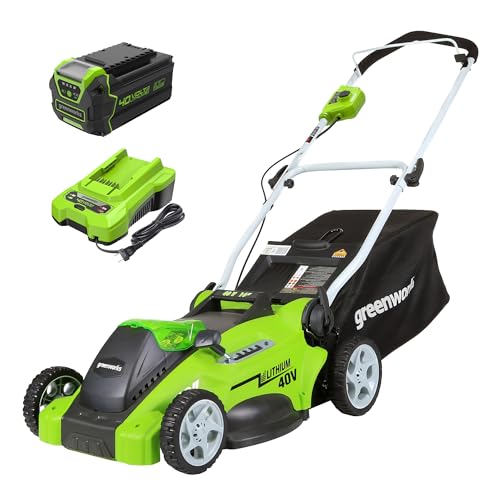
Pros
- Extremely lightweight design for easy pushing and storage
- No gas or oil needed with zero emissions for cleaner operation
- Instant push button start and quiet performance
- Versatile mulch or rear bag collection in one unit
- Simple 5-position single lever height control
Cons
- Push-only operation without self-propulsion requires more manual effort
- Runtime limited to roughly 1/3 acre depending on grass and technique
- 16-inch deck width may require extra passes on wider areas
The Greenworks 40V 16" Cordless Lawn Mower is a compact push model built for residential yards. Its ultra lightweight frame feels noticeably easier to handle than traditional steel deck mowers and creates a practical first impression for users wanting an electric option free of gas smells and mess.
Performance centers on the included 4.0Ah battery that supports cutting up to 1/3 acre, with results varying by grass density and mowing style. The single lever 5-position height adjuster lets operators dial in the desired cut quickly, while the 2-in-1 system switches between mulching and rear bagging for tidy results. Instant push button start, quiet running, and zero emissions make it a low-maintenance choice that still delivers solid power for typical home use. Compatibility with the broader 40V tool family adds further value.
Drawbacks to consider include the pure push design that demands physical effort without self-propel assistance, plus the relatively narrow 16-inch deck that can increase pass counts on larger or irregular lawns. Battery capacity is also finite, so properties exceeding 1/3 acre will need spare batteries or multiple charges.
This Greenworks mower is an excellent fit for homeowners with smaller lawns who prioritize lightweight handling, quiet electric operation, and system expandability. Those seeking self-propelled convenience or larger cutting decks may want to explore other options in the lineup.
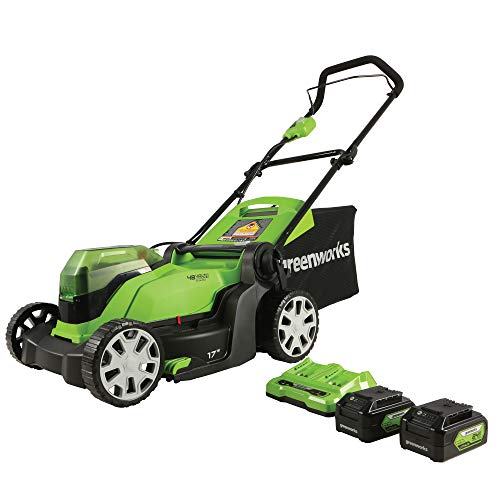
Pros
- Up to 45 minutes of cordless runtime from two included 4.0Ah batteries
- Lightweight rust-resistant 17-inch poly deck for easy handling
- Virtually maintenance-free with no gas, oil, or emissions
- Quiet operation and simple push-button start
- Versatile 2-in-1 mulch and rear bag capability with 5 height settings
Cons
- Push-only design requires more physical effort than self-propelled models
- 17-inch cutting deck is better suited for smaller lawns than large properties
- Runtime can drop below 45 minutes depending on grass thickness and terrain
The Greenworks 48V (24V x 2) 17" Cordless Push Lawn Mower is a compact electric walk-behind mower built for homeowners seeking gas-free convenience. It features a durable yet lightweight poly deck that resists rust and makes the unit easy to handle during storage or transport. Immediate impressions highlight the clean cordless design and inclusion of two 4.0Ah batteries plus a dual port rapid charger for ready-to-use performance.
In real-world use the dual battery system supplies up to 45 minutes of runtime that varies with grass conditions and operator technique. The single lever 5-position height adjustment and 2-in-1 mulch or rear bag system provide flexible cutting options while the quiet electric motor delivers gas-like power without fumes or pull cords. Compatibility with over 200 Greenworks 24V tools adds long-term value to the battery platform.
Key considerations include the push-only configuration which demands more physical effort on slopes or thick turf compared to self-propelled alternatives. The 17-inch deck covers ground efficiently on small to medium yards but may feel limiting on expansive properties. Storage and operation are restricted to temperatures between 32°F and 113°F.
Overall this Greenworks 48V 17" cordless push mower is an excellent choice for eco-conscious owners of modest lawns who prioritize low maintenance, quiet operation, and a versatile battery ecosystem. Those with very large areas or who prefer powered propulsion may want to explore larger or self-propelled options within the same brand lineup.
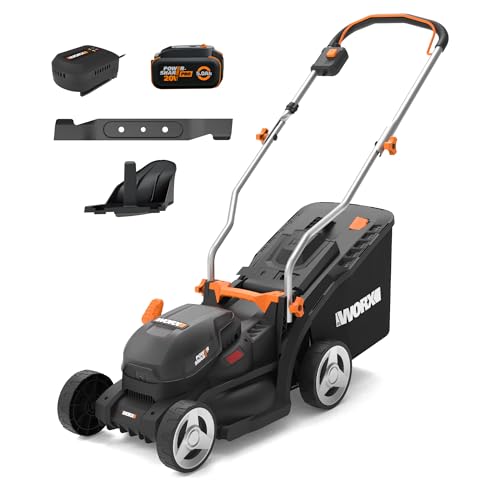
Pros
- True 2-in-1 mulching and bagging capability for versatile yard maintenance
- Brushless motor delivers efficient power and longer potential runtime
- 5.0 Ah battery and charger included for ready-to-use cordless convenience
- Single-lever 6-position height adjustment from 1 to 3 inches for quick setup
- Cut-to-edge design enables precise cutting along borders and obstacles
Cons
- 14-inch cutting width limits efficiency on larger lawns requiring more passes
- Manual push operation lacks self-propulsion, increasing physical effort
- No specified runtime data means battery may need recharging for bigger jobs
The WORX WG733.1 is a 14-inch cordless electric walk-behind lawn mower built for homeowners seeking a lightweight alternative to gas-powered models. Its compact design and included 5.0 Ah battery plus charger create an immediate impression of convenience and readiness for small yard maintenance without cords or fumes.
Performance centers on practical features that shine in everyday use. The 2-in-1 mulching and bagging system lets users switch modes easily for either nutrient return or clean collection. The cut-to-edge design allows closer trimming along fences and beds, while the brushless motor supports efficient operation. A single-lever control provides six cutting heights from 1 to 3 inches to match varying lawn conditions, and the PowerShare compatibility extends the battery's value across other WORX tools.
Drawbacks stem from the core specifications. The smaller 14-inch deck requires more time on larger properties, and as a pure push mower it demands continuous manual effort without self-propel assistance. Available data does not detail runtime, so users of bigger areas should plan for potential battery swaps or recharges.
This mower delivers the most value to owners of small to medium lawns who prioritize easy storage, quiet cordless operation, and simple adjustments. It is especially appealing for those already using WORX tools or looking for an affordable entry into battery-powered lawn care.
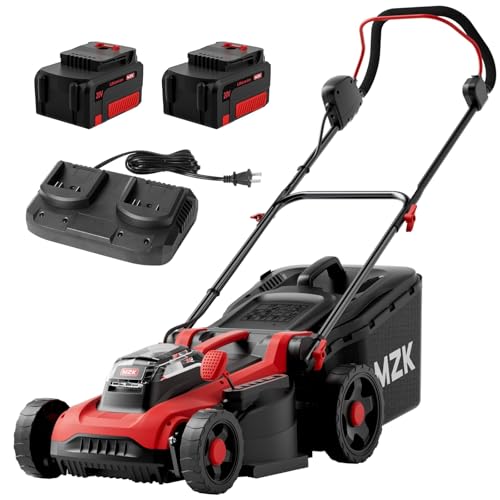
Pros
- Brushless motor provides cutting speeds up to 3400 RPM
- Includes two 20V 4.0Ah batteries and a dual-port charger
- Versatile 2-in-1 capability supports mulching and rear bagging
- 5-position single adjustment ranges from 1.4 to 3 inches
- Generous 40-liter (approx. 11-gallon) grass collection bag
Cons
- Manual push design lacks self-propelled drive
- Actual battery life varies depending on grass height and terrain

Pros
- Brushless 3,000 RPM motor providing up to 1,200W maximum output
- 17-inch cutting deck with 6 height adjustments from 1 to 3 inches
- Dual 20V 4.0Ah batteries covering up to 5,380 sq. ft. per charge
- Lightweight 30 lb (14 kg) design simplifies transport and storage
- Simple push-button and pull-bar starting mechanism
Cons
- Up to 40-minute runtime may limit coverage on larger properties

Pros
- Brushless motor delivers quiet operation with low maintenance
- Single lever offers 5 cutting height settings from 1 to 2.5 inches
- Quick-fold handle allows compact storage in tight sheds or garages
- Included 5.0Ah battery doubles as a portable device power bank
- Includes a 9-gallon grass catcher bag for quick cleanup
Cons
- 14-inch cut width requires more passes than larger mowers
- Up to 30 minutes of runtime per charge limits yard coverage
- Maximum 2.5-inch cutting height may not suit taller turf

Pros
- 13-inch cutting width and 3400 RPM motor enable easy handling in small yards and tight garden spaces
- Five height settings from 1 to 2.5 inches plus 8-gallon collection bag for versatile clean mowing
- Lightweight foldable design with carrying handle simplifies transport and storage in limited areas
- Included 4.0Ah universal battery offers series compatibility and multi-device charging flexibility
- Low-noise high-performance motor ensures quieter operation with reduced maintenance needs
Cons
- Continuous runtime limited to about 15 minutes per full charge, requiring pauses for larger jobs
- 13-inch deck size means more passes needed compared to wider mowers on bigger lawns
- Maximum cutting height of 2.5 inches may not suit very tall or dense grass types
The Litheli U20 Handy+ is a 13-inch cordless walk-behind electric lawn mower from the LiTHELi brand, built for garden, yard, and farm use. Its lightweight construction pairs with an adjustable folding handle and carrying handle to create a portable tool that stores easily in tight spaces while promoting comfortable posture during operation. The overall design focuses on cordless freedom and simplicity for everyday users.
In performance, this mower relies on a high-performance 20V motor spinning at 3400 RPM to handle medium-sized lawns up to 1,300 sq. ft. on a single charge. Users can select from five height adjustments between 1 inch and 2.5 inches and capture clippings in the 8-gallon bag for a tidy finish. The low-noise, low-maintenance motor delivers smooth running, while the included 4.0Ah lithium-ion battery powers 15 minutes of continuous work and integrates with the broader Litheli series plus emergency charging for phones, tablets, and computers.
Key considerations include the relatively short 15-minute continuous runtime that may call for recharging on larger properties, the compact 13-inch width that increases the number of passes required, and the height range capped at 2.5 inches which could limit options for taller grass. These factors stem directly from the core specifications and suit users with modest lawn sizes best.
Overall, the Litheli U20 Handy+ offers solid value for homeowners with small to medium gardens who want an easy-to-store, battery-powered alternative to gas or corded mowers. It is especially practical for those seeking quiet operation, multi-tool battery versatility, and straightforward maintenance supported by a 3-year machine warranty and 2-year battery coverage.

Pros
- Versatile 3-in-1 design for seamless mowing, trimming, and edging tasks
- Powerful 6.5 amp motor delivering speeds up to 8000 RPM for strong cutting performance
- Automatic Feed Spool enables uninterrupted work without manual spool adjustments
- Lightweight build with adjustable features for enhanced user comfort and control
- Includes essential accessories such as detachable mower deck, AF-100 spool, auxiliary handle, and guard
Cons
- Corded design requires proximity to a power outlet which limits mobility on larger areas
- 12-inch cutting width is optimized only for small lawns and compact spaces
- No cordless battery option available, relying fully on continuous electrical supply
The BLACK+DECKER BESTA512CM is a compact 3-in-1 corded electric tool that combines lawn mowing, weed eating, and edging functions in one unit. Its lightweight construction with adjustable handle and height positions creates a user-friendly design suited for precision tasks. The package includes the string trimmer, MTD100 detachable mower deck, AF-100 spool, auxiliary handle, and guard for immediate readiness.
Performance centers on the 6.5 amp motor with POWERDRIVE Transmission that handles tough weeds and thick grass effectively at speeds up to 8000 RPM. The Automatic Feed Spool system allows uninterrupted cutting, while the 12-inch width and 1.6-inch height support accurate results in small areas. Cord retention helps maintain consistent power flow during use.
Key considerations include the corded operation that ties the tool to electrical outlets and reduces free range. The compact size focuses on small lawns, so it may require more passes on bigger properties.
This product delivers solid value for owners of small lawns seeking a simple multi-purpose electric solution with reliable features and a 2 year limited warranty. It works best for those prioritizing versatility and ease over heavy-duty coverage in expansive yards.

Pros
- Brushless electric motor is completely maintenance-free with no oil changes or spark plugs needed
- Lightweight construction and adjustable handle make it easy to push and store for users of all ages
- Cordless 5.0Ah battery offers fade-free runtime up to 30 minutes covering mid-sized lawns without cords or gas
- Grass collection bag and multi-height settings produce a clean finish while reducing cleanup effort
- Battery also functions as a power bank for emergency outdoor device charging
Cons
- Maximum cutting height of only 2.5 inches may struggle with overgrown or taller grass varieties
- 14-inch cutting deck suits small to mid yards but requires more passes on larger properties
- Approximately 30-minute runtime per charge means larger jobs may need a mid-session recharge
The LiTHELi Cordless Lawn Mower is a compact 14-inch walk-behind push mower built for effortless maintenance of small to mid-sized yards. Its lightweight frame, adjustable ergonomic handle, and quick-fold design create an immediate impression of user-friendly storage and comfortable operation, especially for women and seniors seeking a healthy posture during use.
Performance & Key Features stand out through the upgraded brushless motor that delivers reliable power without noise, emissions, or traditional upkeep. The included 5.0Ah battery and charger support coverage up to 3000 sq. ft. with roughly 30 minutes of runtime, while the single-lever 5-position height adjustment from 1 to 2.5 inches and 9-gallon grass bag enable customized clean cuts that minimize raking. The battery uniquely doubles as a power bank for outdoor device charging, adding practical versatility backed by a 3-year tool and 1-year battery warranty.
Drawbacks & Considerations include the limited maximum cutting height of 2.5 inches, which may not handle very tall or dense growth effectively. The 14-inch deck, while highly maneuverable, covers less ground per pass than larger models, and the 30-minute battery window could require recharging for bigger areas. As a pure push design without self-propulsion, users should expect moderate physical effort on slopes or thick turf.
Verdict: This mower is an excellent value for homeowners with lawns up to 3000 sq. ft. who prioritize quiet cordless convenience, zero maintenance, and compact storage. It delivers the most benefit to casual users, seniors, and those upgrading from corded or gas models seeking simple reliable performance.
Why Regular Oil Changes Matter for Lawn Mower Performance
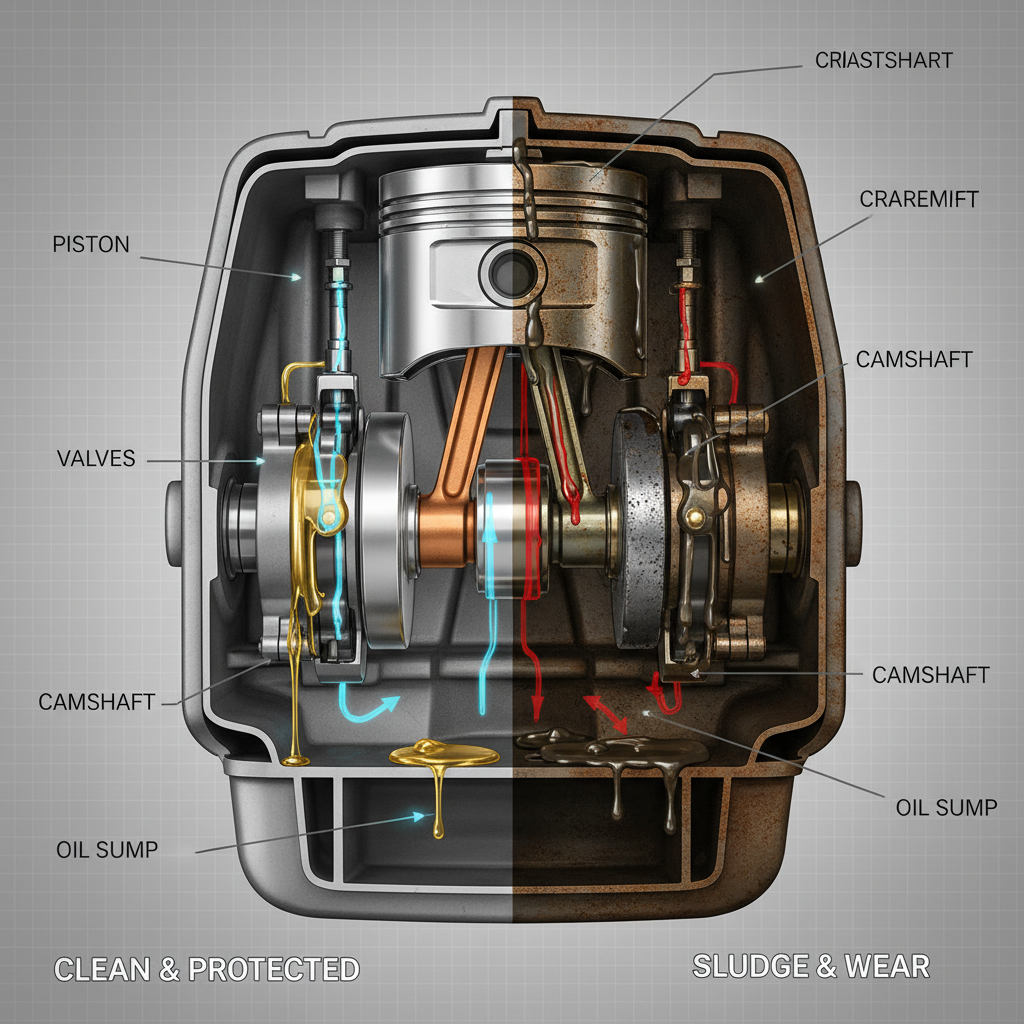
Engine oil lubricates moving parts, reduces friction, and helps dissipate heat in your lawn mower’s engine. Over time, oil breaks down from heat and contamination, losing its ability to protect the engine. Regular oil changes extend engine life, improve fuel efficiency, and prevent costly repairs.
John Deere recommends changing oil annually or every 50 operating hours, whichever comes first. If you use your mower frequently during mowing season, you may need to change oil more often. Neglecting oil changes can lead to engine sludge buildup, increased wear, and eventual engine failure.
Tools and Materials You’ll Need
Before starting, gather these items:
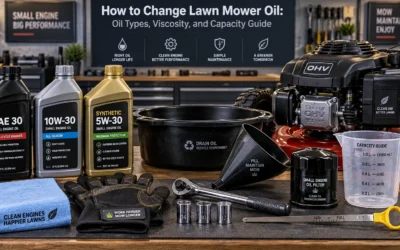
- Socket wrench or adjustable wrench – for removing the drain plug
- Oil filter wrench – if your mower has an oil filter (riding mowers typically do; walk-behind mowers may not)
- Oil drain pan – to catch draining oil (capacity: at least 2–3 quarts)
- Fresh oil – John Deere engines typically use SAE 10W-30 or 5W-30; check your owner’s manual
- Oil filter – if applicable to your model
- Dipstick or sight glass – to check oil level after refilling
- Ramps or jack – optional, for better access to the drain plug on riding mowers
- Work gloves and old rags – for cleanup
Oil capacity varies by model: Walk-behind mowers typically hold 0.5–1.5 quarts, while riding mowers hold 1.5–3 quarts. Always check your owner’s manual for the exact capacity and oil type for your specific John Deere model.
Safety Precautions Before You Start
- Warm the engine first: Run the mower for 2–3 minutes to warm the oil, which helps it drain faster and more completely. Warm oil flows better than cold oil.
- Turn off the engine: Stop the engine and allow it to cool for 5–10 minutes before draining. Hot oil can cause burns. Never drain oil immediately after mowing.
- Disconnect the spark plug wire: Pull the wire off the spark plug to prevent accidental starting while you work.
- Work on level ground: Place the mower on flat, level ground to ensure accurate oil level readings.
- Use proper ventilation: Work outdoors or in a well-ventilated garage to avoid inhaling fumes.
- Wear protective gear: Use work gloves and old clothes, as spilled oil stains permanently.
Step-by-Step Oil Change Process
Step 1: Locate the Oil Drain Plug
The oil drain plug is typically located on the underside or bottom of the engine. On walk-behind mowers, you may need to tip the mower on its side to access it (tip toward the carburetor side if possible, not the air filter). On riding mowers, the plug is usually visible beneath the engine block. If you cannot locate it, consult your owner’s manual or the John Deere service manual for your specific model.
Step 2: Drain the Old Oil
Place your oil drain pan beneath the drain plug. Using a wrench, slowly unscrew the plug counterclockwise. Once loose, carefully unscrew it by hand—old oil may still be warm. Allow the oil to drain completely into the pan; this may take several minutes. Wipe the drain plug clean with a rag before reinstalling.
Step 3: Replace the Oil Filter (If Equipped)
Many riding mowers have an oil filter, while most walk-behind mowers do not. If your mower has a filter, use an oil filter wrench to unscrew it counterclockwise. Position your drain pan to catch residual oil. Before installing the new filter, apply a thin layer of new oil to the rubber gasket on the filter cap. Screw the new filter on by hand until snug, then tighten an additional three-quarter turn. Do not over-tighten.
Step 4: Reinstall the Drain Plug
Screw the drain plug back in by hand first, then use a wrench to tighten it securely. Do not over-tighten, as this can strip the threads. A snug, secure fit is all that’s needed.
Step 5: Refill with Fresh Oil
Locate the oil filler cap on top of the engine (usually marked with an oil can symbol). Remove the cap and use a funnel to pour in the recommended amount of fresh oil. Most walk-behind mowers require 0.5–1.5 quarts; riding mowers typically need 1.5–3 quarts. Pour slowly to avoid overfilling.
Step 6: Check the Oil Level
Wait 30 seconds for the oil to settle. If your mower has a dipstick, remove it, wipe it clean, reinsert it fully, then remove it again to check the level. The oil should reach the “full” mark. If it has a sight glass (transparent window on the side of the engine), the oil should reach the full line. Add small amounts of oil as needed until the level is correct. Do not overfill—excess oil can damage the engine.
Step 7: Reinstall the Oil Cap
Screw the oil filler cap back on securely.
Step 8: Test Run
Reconnect the spark plug wire, start the engine, and let it run for 1–2 minutes. Check for leaks around the drain plug and filter (if applicable). If you see oil dripping, stop the engine, allow it to cool, and tighten the plug or filter further. Turn off the engine and wait 5 minutes, then check the oil level one final time to ensure it remains at the full mark.
Model-Specific Variations (Walk-Behind vs. Riding Mowers)
Walk-Behind Mowers
Walk-behind John Deere mowers (models like the JX75C or JS26) typically have smaller engines with lower oil capacity (0.5–1.5 quarts). Most walk-behind models do not have oil filters; instead, they rely on an internal mesh screen. To access the drain plug, you’ll need to tip the mower on its side. Always tip it toward the carburetor side to prevent oil from entering the air filter. The drain plug is usually a simple bolt on the bottom of the crankcase.
Riding Mowers
Riding mowers (John Deere 100 Series, 300 Series, X-Series) have larger engines with higher oil capacity and typically include spin-on oil filters. These mowers are easier to service because you can access the drain plug and filter without tipping the machine. Riding mowers usually have oil capacities ranging from 1.5 to 3 quarts, depending on engine displacement.
| Mower Type | Typical Oil Capacity | Oil Filter | Oil Type |
|---|---|---|---|
| Walk-Behind (100 cc–200 cc) | 0.5–1.5 quarts | No (mesh screen only) | SAE 10W-30 or 5W-30 |
| Riding Mower—100 Series (16–18 hp) | 1.5–2 quarts | Yes (spin-on) | SAE 10W-30 or 5W-30 |
| Riding Mower—300 Series (19–23 hp) | 2–2.5 quarts | Yes (spin-on) | SAE 10W-30 or 5W-30 |
| Riding Mower—X-Series (25+ hp) | 2.5–3 quarts | Yes (spin-on) | SAE 10W-30 or 5W-30 |
Oil Disposal and Environmental Considerations
Never pour used oil down the drain or into the trash. Used lawn mower oil is a hazardous waste that can contaminate soil and groundwater. Instead, take your used oil to a recycling center, auto parts store, or municipal hazardous waste facility. Many retailers like AutoZone, Advance Auto Parts, and Walmart accept free oil recycling. Oil filters can also be recycled at most of these locations.
Store used oil in a sealed container away from children and pets. Many communities have collection days for hazardous waste; contact your local waste management office for details.
Common Mistakes to Avoid
- Overfilling the oil: Too much oil can cause excessive pressure, damage seals, and reduce engine performance. Always fill to the “full” mark on the dipstick or sight glass, not above it.
- Using the wrong oil type: John Deere engines are designed for SAE 10W-30 or 5W-30 oil in most cases. Using a different viscosity (thickness) can reduce protection and fuel efficiency. Check your owner’s manual to confirm the correct grade.
- Skipping the oil filter replacement: If your mower has an oil filter, replace it every time you change the oil. The filter removes contaminants; a clogged filter reduces protection.
- Draining cold oil: Cold oil is thick and slow to drain. Warming the engine first ensures more complete drainage and removal of contaminants.
- Not checking the level after refilling: Always verify the oil level with the dipstick or sight glass after filling. An incorrect level can damage the engine.
- Over-tightening the drain plug or filter: Stripped threads are difficult to repair. Tighten these components securely but not excessively.
Buyer FAQs: How To Change Oil In A John Deere Lawn Mower Solved
How often should you change the oil in a John Deere lawn mower?
John Deere recommends changing oil annually or every 50 operating hours, whichever comes first. If you mow frequently or in dusty conditions, change the oil more often. For occasional users (less than 50 hours per year), an annual change in spring before mowing season is sufficient.
Can you use synthetic oil in a John Deere lawn mower?
Yes, synthetic 10W-30 or 5W-30 oil is compatible with John Deere lawn mowers and often provides superior protection, especially in extreme temperatures. Synthetic oil lasts longer and reduces sludge buildup. However, always follow your owner’s manual recommendations. Some older mowers may require conventional oil; check the manual to be sure.
What should you do if you accidentally overfill the oil?
If you overfill the oil, stop the engine immediately and remove the excess oil. Use a siphon pump or turkey baster to extract oil until the level reaches the full mark on the dipstick. Excess oil can cause pressure buildup, foam in the oil, and engine damage if left uncorrected.
Do all John Deere lawn mowers have an oil drain plug?
Yes, all John Deere lawn mowers have an oil drain plug, but access varies by model. Walk-behind mowers require tipping the machine to reach the plug, while riding mowers provide easier access. Consult your owner’s manual for the exact location and procedure for your specific model.