Quick Answer: How to Use Starting Fluid on a Lawn Mower
Remove the air filter, spray a 1–2 second burst of starting fluid directly into the carburetor throat or air intake, replace the air filter, then immediately attempt to start the mower. Repeat no more than 2–3 times total. If the engine fires briefly then dies, the starting fluid confirmed a fuel-delivery problem — not an ignition failure — and the real fix is cleaning or rebuilding the carburetor or replacing stale fuel.
What Is Starting Fluid and What Does It Actually Do?
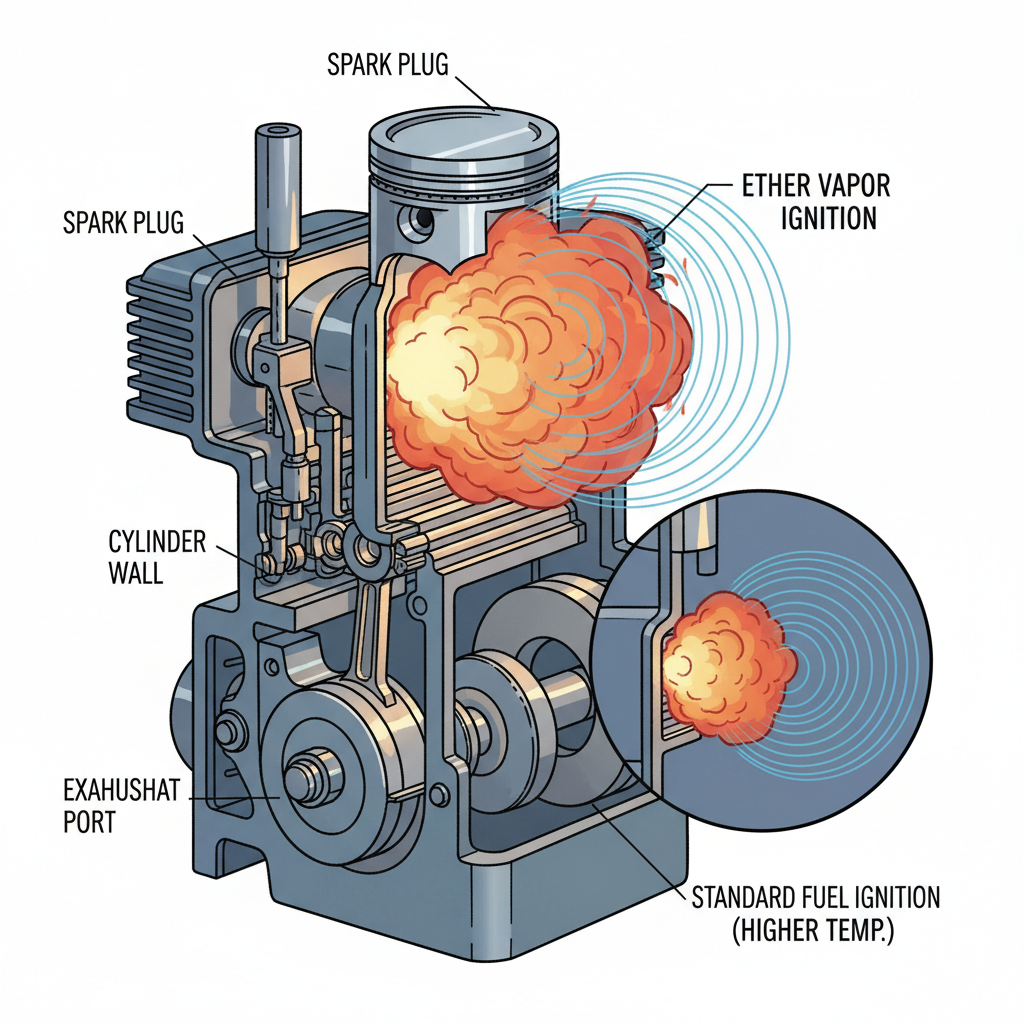
Starting fluid is an ether-based aerosol (the active ingredient is typically diethyl ether) sold in pressurized spray cans. Ether has a significantly lower ignition temperature than gasoline, which means it ignites under compression conditions that are too marginal for a normal air-fuel mixture — such as a cold engine, a fuel-starved carburetor, or degraded gasoline left over from winter storage.
When sprayed into the combustion chamber via the air intake, starting fluid provides a combustible charge that can initiate the first combustion cycle. That initial firing spins the crankshaft, which in turn activates the fuel system. Starting fluid is therefore a diagnostic and cold-start aid, not a repair. It confirms whether an engine is mechanically capable of firing — it does not correct the underlying condition causing the hard start.
Is Starting Fluid the Same as Carburetor Cleaner?
No — these are chemically distinct products with different purposes, and substituting one for the other risks engine damage. Starting fluid (diethyl ether) is designed to combust inside the cylinder. Carburetor cleaner is a solvent blend formulated to dissolve fuel varnish and deposits in carburetor passages; it is not designed for combustion and can damage cylinder-wall coatings or O-rings if sprayed into the intake as a starting aid. Always check the label before use.
Is Starting Fluid Safe for 4-Stroke and 2-Stroke Engines?
4-stroke engines (the engine type in most push mowers and riding mowers): starting fluid is conditionally safe when used sparingly. Ether is a solvent and can wash the thin oil film from cylinder walls, accelerating wear if overused. Two to three short bursts is the established safe limit cited on most product labels and by small-engine repair authorities.
2-stroke engines (found in some older or lightweight walk-behind mowers): starting fluid is generally not recommended by 2-stroke engine manufacturers. Two-stroke cylinder lubrication depends entirely on oil pre-mixed with fuel; ether can strip that oil film from the cylinder wall during the brief window before the oil-fuel mixture reaches the combustion chamber, increasing the risk of scoring the cylinder or seizing the piston. If a 2-stroke mower won’t start, the correct first step is verifying fuel mixture ratio and spark plug condition, not reaching for starting fluid.
When Should (and Shouldn’t) You Use Starting Fluid on a Lawn Mower?
Appropriate Use Cases
- Stale fuel after long-term storage: Gasoline degrades within 30–60 days without a fuel stabilizer. Ethanol-blended fuel absorbs moisture over winter and can leave varnish deposits that prevent the carburetor from drawing fuel. Starting fluid can fire the engine long enough to confirm the block and ignition are functional before you drain and replace the fuel.
- Cold-weather starting: In low ambient temperatures, fuel vaporization is reduced, making it harder for the carburetor to produce a combustible mixture. A short burst of ether lowers the ignition threshold and assists the first combustion cycle.
- Diagnosing a fuel-delivery problem: If the engine fires and immediately dies after starting fluid is applied, that result isolates the fault to the fuel system (carburetor, fuel line, fuel filter, or fuel itself) rather than the ignition system.
Situations Where Starting Fluid Will Not Help
- Faulty or fouled spark plug: Starting fluid delivers combustible vapor to the cylinder, but if the spark plug cannot produce a reliable spark, that vapor will not ignite. No amount of starting fluid compensates for an ignition failure. Test the spark plug first by removing it, grounding the electrode against the engine block, and pulling the start cord — a strong blue spark indicates the ignition system is functional.
- Hydrolocked engine: If water has entered the cylinder (common after a mower tips over with oil in the crankcase, or after flooding), the cylinder cannot complete its compression stroke. Spraying starting fluid into a hydrolocked engine will not produce combustion and risks damaging a connecting rod. Drain the cylinder via the spark plug hole before any start attempt.
- Seized or mechanically failed engine: If the crankshaft will not turn, starting fluid is irrelevant. Attempt to rotate the blade (with the spark plug wire disconnected) — if it won’t move freely, the engine has a mechanical failure requiring disassembly.
- Empty or clogged fuel system where ignition is intact: If spark is confirmed good and compression is adequate, the correct repair path is cleaning the carburetor, replacing the fuel filter, or draining stale fuel — not repeated applications of starting fluid.
What You Need Before You Start (Tools and Safety Precautions)
Starting fluid is highly flammable. Diethyl ether has a flash point of approximately −45 °C (−49 °F), meaning it ignites at room temperature in the presence of a spark or open flame. Observe the following precautions without exception:
- Work outdoors or in a well-ventilated area. Ether vapor is heavier than air and accumulates at ground level.
- Never spray starting fluid near an open flame, lit cigarette, pilot light, or any ignition source other than the engine’s own spark plug.
- Apply starting fluid only to a cool or cold engine. A hot exhaust manifold or muffler can ignite residual ether vapor on contact. If the engine has been running recently, allow it to cool completely before applying starting fluid.
- Never spray into a running engine or onto any moving part.
- Wear nitrile or work gloves; ether is a skin defatting agent and a mild anesthetic at high vapor concentrations.
- Store the can away from heat sources and out of direct sunlight.
Items Required
- One can of starting fluid (ether-based aerosol — confirm the label states diethyl ether as active ingredient)
- Flathead screwdriver or wing nut wrench to open the air filter housing (varies by mower model)
- Nitrile gloves
- Clean rag
How to Use Starting Fluid on a Push Mower (Step-by-Step)
The following procedure applies to 4-stroke, single-cylinder walk-behind push mowers, which represent the majority of residential push mowers sold in North America.
- Disconnect the spark plug wire. Pull the rubber boot off the spark plug tip. This prevents accidental engine firing while your hands are near the blade or air intake during setup.
- Locate the air filter housing. On most push mowers, the air filter housing is a rectangular or round plastic box mounted directly to the side of the carburetor, typically on the left or right side of the engine block when facing the mower from behind. It is secured by one or two screws, a wing nut, or a snap-fit tab.
- Remove the air filter cover and air filter. Set both aside on a clean surface. Inspect the filter — a severely clogged filter may itself be the cause of the hard start. If the filter is oil-soaked or heavily fouled, replace it before proceeding.
- Identify the carburetor throat. With the air filter removed, you will see the open bore of the carburetor — a round or oval opening that leads directly into the engine’s intake manifold. This is where starting fluid is applied.
- Set the choke to the OPEN (run) position. With starting fluid providing an enriched combustible charge, the choke should be open so the engine receives adequate air. Using full choke while applying starting fluid risks over-richening the mixture and can cause flooding or a backfire.
- Reconnect the spark plug wire. The engine must be able to fire when you pull the cord.
- Spray a 1–2 second burst of starting fluid into the carburetor throat. Hold the nozzle 2–3 inches from the opening. A short burst is sufficient — ether is highly concentrated, and more is not better. Excessive application floods the cylinder and washes cylinder-wall oil film.
- Immediately pull the start cord. Starting fluid disperses quickly. Attempt to start the mower within 3–5 seconds of spraying. On electric-start push mowers, engage the starter immediately after spraying.
- Observe the result. If the engine fires and runs, the starting fluid procedure is complete — allow the engine to warm up and investigate the underlying fuel or choke issue. If the engine fires briefly and dies, see the diagnostic section below. If nothing happens, wait 30 seconds, reapply one more burst, and try again.
- Limit total attempts to 2–3 bursts. Exceeding this risks cylinder-wall oil washdown and potential scoring of the piston rings.
- Replace the air filter and housing once the engine is running. Never run the engine long-term without the air filter — unfiltered air introduces abrasive particles into the cylinder.
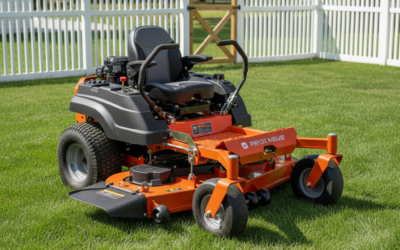
How to Use Starting Fluid on a Riding Mower (Step-by-Step)
The procedure for a riding mower follows the same principles but differs in engine access, safety-system requirements, and, on twin-cylinder engines, intake configuration.
- Engage the parking brake and disengage the mower deck (PTO off). Most riding mowers have a seat safety switch and a brake interlock that prevent the starter from engaging unless the brake is set and the deck is disengaged. Confirm both are active before proceeding.
- Open the engine hood or access panel. On most residential riding mowers, the engine is located under a front hood. Lift the hood and secure it in the open position.
- Disconnect the spark plug wire(s). Single-cylinder riding mowers have one plug; twin-cylinder engines have two. Disconnect all of them before opening the air filter housing.
- Locate and open the air filter housing. The air filter housing on a riding mower is typically a larger rectangular box bolted to the top or side of the carburetor. It is usually secured with a single wing nut or two screws. Remove the cover and extract the air filter. Inspect it — a dirty filter is a common cause of hard starting on riding mowers.
- Identify the carburetor throat or intake manifold opening. On single-cylinder engines, the procedure is identical to the push mower: one carburetor throat, one spray point. On twin-cylinder (V-twin) engines, many designs use a single carburetor feeding a shared intake manifold, so one spray point at the carburetor throat still applies. Some designs use individual carburetors per cylinder — in that case, apply a brief burst to each throat and keep total volume conservative.
- Set the throttle to the full or fast position and choke to OPEN (run). Same reasoning as push mowers — starting fluid provides the enrichment; choke should be open to supply sufficient air.
- Reconnect the spark plug wire(s).
- Spray a 1–2 second burst into the carburetor throat. Distance: 2–3 inches from the opening. Keep the can upright; most aerosol starting fluid cans do not spray reliably when tilted beyond 45 degrees.
- Move to the operator seat immediately and attempt to start. On electric-start riding mowers, turn the key to the start position within 3–5 seconds of applying starting fluid. The engine must be cranking while the ether vapor is still present in the intake.
- Observe the result and limit to 2–3 total attempts. Same diagnostic logic as the push mower procedure applies.
- Replace the air filter and close the hood before operating the mower.
What to Do If the Mower Still Won’t Start After Using Starting Fluid
The result of the starting fluid test tells you which system has failed. Use this decision tree:
| Result After Applying Starting Fluid | What It Means | Next Step |
|---|---|---|
| Engine fires briefly, then dies | Ignition and compression are functional. The engine cannot sustain combustion because fuel is not reaching the cylinder. Root cause: stale fuel, clogged carburetor jet, failed fuel pump, or blocked fuel filter. | Drain old fuel, replace with fresh gasoline, then clean or rebuild the carburetor. Replace the fuel filter if it has not been changed recently. |
| Engine fires and continues running | Starting fluid corrected a cold-start or vapor-lock condition. Monitor for recurrence. | Allow engine to warm fully. If the problem recurs on subsequent starts without cold conditions, inspect the choke mechanism and carburetor for partial blockage. |
| No response at all — engine does not fire on any attempt | Ignition failure or lack of compression. Starting fluid has introduced combustible vapor that should ignite even with marginal compression; no response indicates the spark plug is faulty, the ignition coil has failed, or compression is absent. | Remove and inspect the spark plug. Check electrode gap and look for fouling, cracking, or carbon buildup. Replace if in doubt — spark plugs are a low-cost diagnostic step. If a new plug also produces no result, test compression with a gauge and inspect the ignition coil. |
| Grinding noise, engine won’t crank, or blade won’t rotate freely | Mechanical failure — seized piston, hydrolocked cylinder, or failed internal component. | Stop all start attempts. Remove the spark plug and check for fluid in the cylinder. If the crankshaft will not rotate by hand with the plug removed, the engine requires professional disassembly and inspection. |
Do not exceed 3 total starting fluid applications regardless of outcome. Repeated ether exposure washes lubricating oil from cylinder walls, risks hydraulic lock if liquid ether pools in the cylinder, and can cause a backfire through the carburetor if the mixture becomes excessively rich. If the mower has not fired after three attempts, the solution lies in diagnosis and repair, not more starting fluid.
Frequently Asked Questions About Starting Fluid and Lawn Mowers
Can I use carburetor cleaner instead of starting fluid on my lawn mower?
No. Carburetor cleaner is a solvent formulated to dissolve varnish deposits in carburetor passages — it is not designed for combustion inside a cylinder. Spraying carburetor cleaner into the intake as a starting aid can damage cylinder-wall coatings, degrade rubber intake components, and in some formulations produce harmful combustion byproducts. The products have different Material Safety Data Sheet profiles and different intended applications. Use starting fluid (ether-based aerosol) for ignition assistance, and use carburetor cleaner exclusively for cleaning carburetor components outside or inside the carburetor body per the manufacturer’s instructions.
What is the best starting fluid for a lawn mower?
Any starting fluid product whose label lists diethyl ether as the primary active ingredient and is rated for small 4-stroke gasoline engines is appropriate. Look for products that also include a small amount of oil in the formulation — some starting fluid products add a light lubricant specifically to partially offset the cylinder-wall oil-washing effect of ether. Avoid starting fluid products formulated exclusively for diesel engines, as the additive package differs. Beyond those criteria, brand is less important than correct product type.
Can starting fluid be used on a 2-stroke lawn mower engine?
Most 2-stroke engine manufacturers do not recommend starting fluid. Two-stroke cylinder lubrication is delivered entirely through oil pre-mixed with the fuel charge; ether can strip the thin oil film present on the cylinder wall during the brief window before the oil-fuel mixture reaches the combustion zone, increasing the risk of scoring. If a 2-stroke mower won’t start, verify the fuel-to-oil mixture ratio is correct, inspect the spark plug, and confirm the fuel is fresh. If starting fluid is used as a last-resort diagnostic on a 2-stroke, use the shortest possible burst (under 1 second) and do not repeat.
How long does a can of starting fluid last once opened?
Starting fluid is a pressurized aerosol. Once opened and used, the remaining contents are stable as long as the nozzle is cleared after each use (brief invert-and-spray to clear the straw) and the can is stored upright, away from heat sources and direct sunlight. The propellant and ether will remain effective through multiple seasons if the can seal is intact. Discard any can that has lost pressure, sprays inconsistently, or shows rust on the valve. Do not store starting fluid in vehicles or enclosed spaces where ambient temperature can exceed 120 °F (49 °C).