Direct Answer: Murray is a good lawn mower for homeowners with small-to-medium, flat yards on a tight budget. Since MTD Products took over the brand in 2012, build quality has stabilized at a reliable entry-level standard. Murray mowers are not suited for large properties, steep terrain, or heavy-duty use — but within the budget segment, they deliver competitive value per cut.
What Kind of Brand Is Murray — and Who Makes It Now?

Murray has been through two ownership changes that directly explain why reviews of the brand are so inconsistent across forums and retail sites.
The original Murray Ohio Manufacturing Company produced lawn and garden equipment from the 1940s onward and built a reputation for durable, American-made mowers. That version of Murray filed for bankruptcy, and Briggs & Stratton acquired the Murray brand in 2005. Under Briggs & Stratton, the lineup was retooled and simplified, but the transition period generated mixed reliability reports. MTD Products then acquired Murray from Briggs & Stratton in 2012 and has manufactured the brand ever since.
MTD Products is one of the largest outdoor power equipment manufacturers in North America. Its brand portfolio includes Troy-Bilt, Yard Machines, Cub Cadet, and Remington — all built on shared production platforms. Murray sits at the entry-level tier of that family, positioned below Troy-Bilt and well below Cub Cadet.
The practical implication: negative reviews written before 2012 do not reflect current Murray mowers. Post-2012 units benefit from MTD’s parts network, standardized engineering, and consolidated quality control. If you read a forum thread calling Murray junk, check the date — it likely predates the MTD era.
Today, Murray is manufactured alongside Yard Machines under MTD’s production platform, sharing many components, engine sourcing relationships, and the same parts distribution infrastructure.
What Types of Murray Lawn Mowers Are Available?
Murray produces three main product categories, and quality perception differs meaningfully across them.
Push Walk-Behind Mowers
Murray’s core product line. These are basic gas-powered walk-behind mowers with cutting decks typically ranging from 20 to 21 inches. They are manual-propelled — the operator provides all the forward momentum. Engines are sourced from Briggs & Stratton (entry-level series) and occasionally Powermore (MTD’s own engine brand). Push mowers represent Murray’s strongest value case: simple mechanically, easy to service, and appropriately priced for what they do.
Self-Propelled Walk-Behind Mowers
Murray offers front-wheel-drive self-propelled models in its lineup. These add a drive system that pulls the mower forward, reducing operator effort on larger flat lawns. The drive mechanism is functional on level ground but receives recurring criticism for insufficient torque on inclines — a known limitation of front-wheel-drive systems in the budget segment, not unique to Murray. If your yard has meaningful slopes, this is a significant consideration.
Murray Riding Mowers
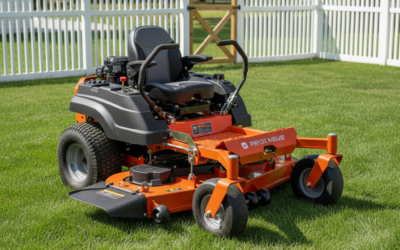
Murray riding mowers are entry-level tractors with cutting decks in the 30–42 inch range. They are built for residential use on properties up to roughly one acre of flat terrain. Engines are typically Briggs & Stratton single-cylinder units. Murray riding mowers are mechanically simpler than mid-tier competitors and carry lower price points, but they reflect that simplicity in build material choices — particularly in deck construction and transmission durability over multi-season use.
The verdict differs by category: Murray push mowers punch closest to their weight class. Riding mowers serve their purpose for the right yard but carry more quality trade-offs relative to step-up brands like Troy-Bilt or Husqvarna.
How Does Murray Perform on the Key Quality Factors?
Cutting Performance
On flat, maintained residential lawns with standard grass types (fescue, bluegrass, Bermuda), Murray mowers cut cleanly and consistently. Cutting height adjustment is straightforward, and the blade engagement mechanism is simple to operate. Performance degrades noticeably in tall, wet, or thick grass — Murray’s engine displacement and blade tip speed are calibrated for regular-interval residential mowing, not reclamation or heavy overgrowth.
Engine Reliability
Post-2012 Murray mowers use Briggs & Stratton entry-level engines or Powermore engines, both of which are well-understood, widely serviced, and reliable when maintained correctly. Basic maintenance — annual oil change, air filter replacement, fresh fuel with no ethanol or stabilized fuel — keeps these engines running across multiple seasons. Engine reliability is not the weak point of a Murray mower.
Build Durability and Deck Construction
This is where Murray’s budget positioning shows most clearly. Plastic deck construction is a recurring durability concern cited in user reviews. Murray’s entry-level push mowers use polymer decks rather than the steel decks found on mid-tier competitors. Polymer decks resist rust but crack under impact, and they flex more than steel under sustained stress. For a homeowner mowing a clean residential lawn, this is a manageable trade-off. For anyone regularly hitting roots, edging against pavement, or mowing rough terrain, deck longevity becomes a real concern within two to four seasons.
Riding mower decks on Murray models are typically stamped steel, which improves durability relative to push models but remains thinner gauge than comparable Troy-Bilt or Craftsman decks at slightly higher price points.
Ease of Maintenance
Murray’s mechanical simplicity is a genuine advantage. With fewer electronic components and standardized parts, basic service tasks — blade sharpening or replacement, oil changes, air filter swaps, belt replacement — are accessible to a confident DIY homeowner. Service manuals and parts diagrams are available through MTD’s support infrastructure.
Parts Availability
Replacement parts for Murray mowers are available through MTD’s parts network, which includes both the MTD direct parts portal and major retailers such as Amazon, Home Depot, and Lowe’s. Because Murray shares components with Yard Machines and, in some cases, Troy-Bilt, parts cross-compatibility is broader than a niche brand would offer. This is a practical advantage: a Murray mower bought today will have accessible parts for the foreseeable future.
How Does Murray Compare to Other Budget Lawn Mower Brands?
Benchmarking Murray against Honda or Husqvarna is not a useful comparison — those brands occupy a different price tier and deliver correspondingly different build standards. The relevant comparison set is Poulan, Yard Machines, and Craftsman entry-level models.
| Brand | Manufacturer | Deck Material (Push) | Price Range (Entry Push) | Parts Network | Best For |
|---|---|---|---|---|---|
| Murray | MTD Products | Polymer / Steel (varies) | $200–$350 | MTD network — wide | Small flat yards, first-time buyers |
| Yard Machines | MTD Products | Steel | $220–$370 | MTD network — wide | Small to medium yards, light inclines |
| Poulan | Husqvarna Group | Steel | $230–$380 | Husqvarna network | Small to medium yards |
| Craftsman (entry) | Stanley Black & Decker | Steel | $270–$420 | Craftsman / SBD network | Small to large yards depending on model |
Murray vs. Yard Machines: Both are MTD products sharing production infrastructure. Yard Machines more commonly ships with steel decks at a modest price premium. If deck durability matters and the budget allows a $20–$40 step-up, Yard Machines edges ahead. If the price difference is the deciding factor, Murray’s polymer deck performs adequately on clean residential lawns.
Murray vs. Poulan: Poulan, now manufactured by the Husqvarna Group, typically offers steel deck construction at a comparable price point. Poulan’s access to Husqvarna’s parts network is a slight long-term advantage. Performance on flat residential lawns is similar between the two. Brand preference and retailer availability often drive the decision at this tier more than meaningful performance differences.
Murray vs. Craftsman entry-level: Craftsman’s entry models are priced modestly higher but generally offer steel decks and broader retailer support through Lowe’s. For a buyer comfortable spending $50–$80 more, Craftsman entry-level is a reasonable step up. For the most price-sensitive buyer, Murray delivers comparable basic performance at a lower initial outlay.
Within the budget segment, Murray holds its own on value per cut. It does not lead the segment on build materials, but it competes on price, parts access, and mechanical simplicity.
Is a Murray Lawn Mower Right for Your Yard? (Buyer-Fit Breakdown)
The honest answer to whether Murray is right for you depends on three variables: yard size, terrain, and how frequently you mow.
Yard Size
- Under ¼ acre (small yard): Murray push mowers are well-matched. Mowing time is short, engine and deck stress are low, and the value case is strong.
- ¼ to ½ acre (medium yard): A Murray self-propelled model is workable on flat ground. Mow in regular intervals to avoid overloading the engine with tall grass.
- Over ½ acre: A Murray riding mower enters the picture, but consider stepping up to Troy-Bilt or Craftsman mid-tier. Murray riding mowers manage this acreage but carry more durability trade-offs over multi-season use on larger properties.
Terrain Type
- Flat to gently sloping: Murray performs reliably. This is the intended use case.
- Moderate inclines: Murray self-propelled models struggle. Front-wheel-drive systems lose traction on hills, and engine power is not sized for sustained slope work. Consider a rear-wheel-drive self-propelled mower from a step-up brand.
- Steep or highly uneven terrain: Murray is not the right tool. Invest in a more capable machine to protect both the equipment and the operator.
Mowing Frequency and Use Intensity
- Once every 1–2 weeks (standard residential schedule): Murray handles this without issue. Regular mowing at appropriate grass height keeps engine and blade stress minimal.
- Twice weekly or more: Murray holds up at high frequency provided the grass is not excessively tall or thick. Maintenance intervals should be followed carefully under heavy-use schedules.
- Commercial or semi-commercial use: Murray is not engineered for commercial application. Commercial use will exceed the durability envelope of the deck and drivetrain within a single season.
Budget Expectations
Murray push mowers are priced in the $200–$350 range at major retailers (verify current pricing at time of purchase, as prices shift seasonally). Riding mowers sit higher depending on deck size and configuration. At these price points, Murray represents genuine value for the stated use case — the expectation should be entry-level performance and build quality, not premium-tier longevity.
What Do Real Murray Lawn Mower Owners Say?
Synthesizing user review patterns from retail platforms and lawn care forums surfaces consistent themes on both sides of the ledger.
Recurring Praise
- Price-to-performance ratio: The most consistent positive across reviews is that Murray delivers functional, clean cuts at a price point that does not overextend a tight budget. First-time homeowners and renters transitioning to ownership cite this repeatedly.
- Easy starting: Briggs & Stratton and Powermore engines on Murray mowers are frequently praised for reliable cold starts, particularly when owners use fresh fuel and follow basic pre-season prep.
- Simplicity of operation: Murray’s uncomplicated controls and lightweight build make it accessible for first-time mower owners or users who want a no-fuss machine.
- Parts and service accessibility: Owners report that finding replacement blades, belts, and filters through online retailers or local hardware stores is straightforward.
Recurring Complaints
- Plastic deck durability: The most cited negative. Owners report cracking along the deck skirt after impacts, and some note flexing under stress over multiple seasons. This complaint is most common on push mower models with polymer decks.
- Self-propel performance on inclines: Front-wheel-drive self-propelled models consistently receive criticism for wheel spin and loss of drive on even moderate slopes. This is a design-level limitation, not a manufacturing defect.
- Riding mower transmission longevity: Some multi-season owners of Murray riding mowers report transmission wear earlier than expected on properties at the upper edge of the recommended size range.
- Bag and chute quality: Grass collection bags and discharge chutes are reported to feel flimsy relative to those on step-up brands — a minor but repeated point.
Expected Lifespan
With standard maintenance — annual oil and filter service, blade sharpening, fuel stabilizer use during storage — Murray push mowers realistically deliver five to eight seasons of residential service for the average homeowner. Riding mowers vary more widely depending on property size, terrain, and maintenance discipline. Owners who push the equipment beyond its intended use case or defer maintenance report shorter useful lives, which is consistent across all budget-tier brands, not a Murray-specific outcome.
Frequently Asked Questions
Who makes Murray lawn mowers today?
MTD Products manufactures Murray lawn mowers. MTD acquired the brand from Briggs & Stratton in 2012. MTD also manufactures Troy-Bilt, Yard Machines, and Cub Cadet, and Murray shares production infrastructure with those brands at the entry-level tier.
Are Murray lawn mowers reliable?
Post-2012 Murray mowers are reliably functional for their intended use case — residential mowing on small-to-medium flat lawns. Engine reliability is solid given Briggs & Stratton and Powermore sourcing. The primary durability concern is deck construction on polymer-deck push models, not mechanical reliability.
Is Murray better than Yard Machines?
Both are MTD products at similar price points. Yard Machines more frequently uses steel deck construction, which is a durability advantage. Murray typically prices slightly lower. If your budget allows the step-up and deck longevity matters, Yard Machines is the marginal improvement. For the most price-sensitive buyer on a flat lawn, Murray performs comparably in practice.
Can a Murray mower handle hills?
Murray push mowers can navigate gentle slopes safely with operator effort. Murray self-propelled models struggle on moderate inclines due to front-wheel-drive traction limitations. Murray riding mowers are not rated for steep terrain. For significant slope work, a rear-wheel-drive self-propelled walk-behind or a purpose-rated riding mower from a mid-tier brand is a more appropriate match.