The Short Answer: Yes, But Only at the Right Time of Day
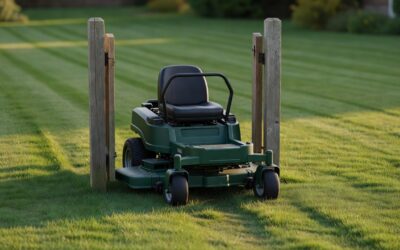
Yes, you can water your lawn after mowing — but the timing of that watering determines whether it helps or harms your grass. Freshly cut grass blades act as open wounds, temporarily more vulnerable to fungal infection and heat stress. Watering immediately after mowing on a hot afternoon compounds that stress. The safest rule by mow time: mow in the morning, water that evening; mow at midday, skip watering that day; mow in the evening, water the following morning.
Every recommendation in this article flows from that core rule. The sections below explain why, and what to do if your lawn is a special case — newly seeded, drought-stressed, or a different grass type.
Why Timing Matters: What Happens to Grass When You Mow
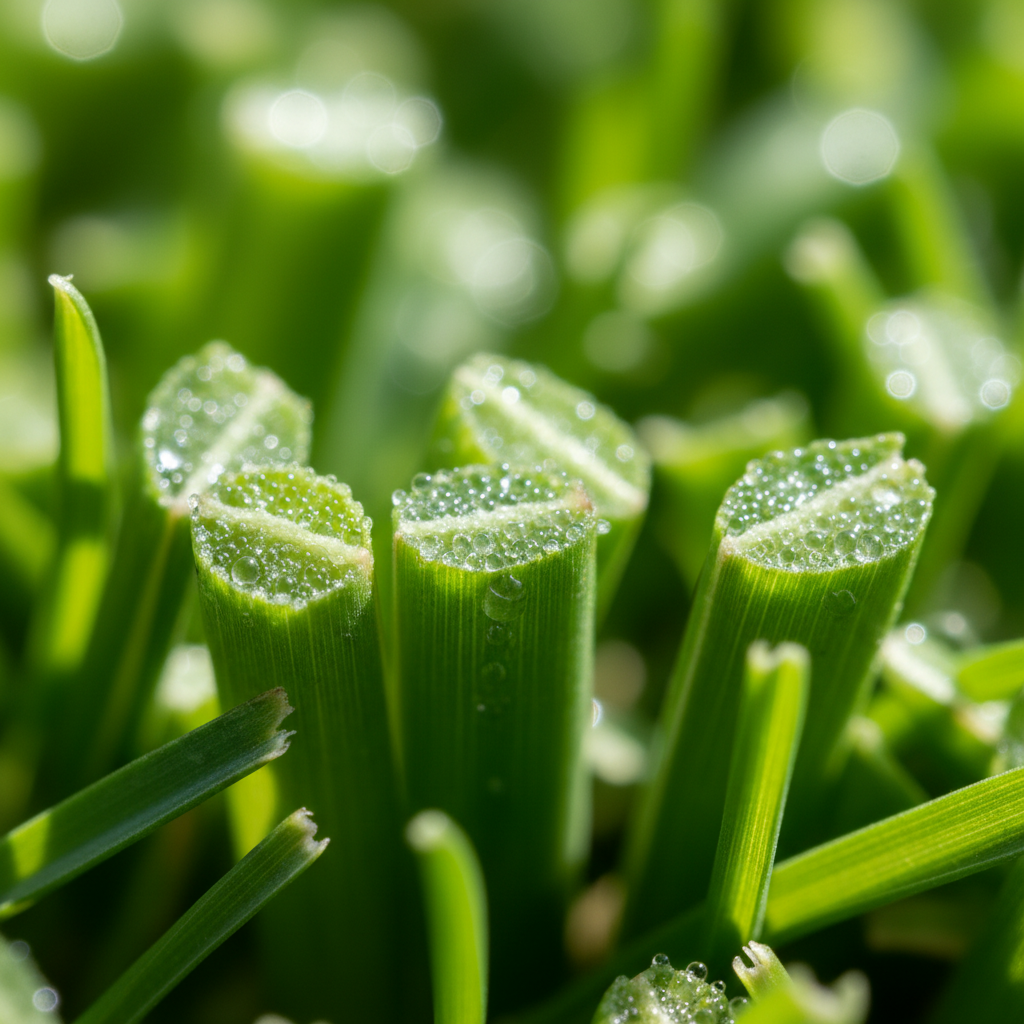
Mowing is a controlled stress event. Each blade cut removes a portion of the leaf tissue the plant uses for photosynthesis, and the exposed cut surface loses moisture rapidly. The plant responds by diverting energy toward recovery — closing the wound tissue, pushing new leaf growth, and managing water loss through the cut ends.
During this recovery window, freshly cut grass is more susceptible to two compounding problems:
- Heat stress: Cut blades lose moisture faster than intact blades. On a hot day, this desiccation accelerates, and the plant’s ability to regulate temperature drops. Applying water in peak midday heat does not always offset this — it can create a warm, humid microclimate at the soil surface that stresses rather than soothes.
- Fungal infection: The cut surface is an entry point. Fungal spores present in any lawn environment exploit warm, moist conditions on stressed turf. Watering at the wrong time — particularly in the evening after an evening mow — keeps those cut surfaces wet overnight, which is exactly the condition fungi require to establish.
Timing your watering correctly does not eliminate either risk entirely, but it reduces both significantly. The goal is to water when the soil can absorb moisture efficiently and the grass surface can dry before nightfall.
Watering After a Morning Mow: Water That Evening
Morning mowing — typically before 10 a.m. — is the most widely recommended mow window, and it pairs well with an evening watering schedule.
After a morning mow, the grass spends the rest of the day recovering in progressively warming temperatures. The cut surfaces dry quickly in the morning air, reducing the fungal entry window. By evening — generally after 4 p.m. once temperatures begin to fall — the grass has had several hours to stabilize, and watering at this point delivers moisture without trapping heat.
Best practice: Water in the late afternoon to early evening after a morning mow. Target the soil, not the blades. Aim for the moisture to soak into the root zone (typically the top 6 inches) before full dark so the surface has some time to begin drying.
One caveat: if evening watering is a persistent habit regardless of mowing, monitor your lawn for early signs of fungal activity — discolored patches, a matted or slimy texture in the morning, or irregular brown rings. Evening watering is lower-risk than overnight-wet cut blades, but it is not risk-free in humid climates.
Watering After a Midday Mow: Skip Watering That Day
Midday mowing — between roughly 10 a.m. and 2 p.m. — is the highest-risk window, both for the grass and for your post-mow watering decision.
Peak heat coincides with the freshest cut wounds. Applying water immediately after a midday mow creates a warm, moist surface environment that elevates fungal risk without providing meaningful cooling benefit — the water evaporates too quickly to reach the root zone efficiently and may instead heat the crown of the plant as it sits on hot soil.
Best practice: Skip watering entirely on midday-mow days. Resume your normal watering schedule the following morning. If your lawn is visibly wilting or showing drought stress signs (a blue-gray tint, footprints that remain pressed in the turf), prioritize lawn health over the timing rule and water in the early morning the next day — not that afternoon.
Midday mowing is generally avoidable. If schedule constraints force it occasionally, the skip-and-resume approach is the lowest-risk response.
Watering After an Evening Mow: Water the Next Morning
Evening mowing — after 5 or 6 p.m. — leaves freshly cut grass sitting through the night. Overnight temperatures drop, dew forms, and humidity rises. This is the single highest-fungal-risk combination: wounded blades plus prolonged moisture with no evaporation window.
Adding irrigation on top of that compounds the problem significantly. Do not water the same evening after an evening mow.
Best practice: Water the following morning, ideally between 6 a.m. and 10 a.m. Morning watering is the recommended default for established lawns regardless of mowing — it gives grass time to absorb moisture before peak heat, and the surface dries through the day, minimizing overnight fungal conditions. After an evening mow, morning watering also gives the cut blades several dry overnight hours before moisture is reintroduced.
Fungal Disease Risk: The Main Reason Post-Mow Watering Can Go Wrong
Fungal disease is the primary reason post-mow watering timing is not arbitrary. Two of the most common turf fungi — dollar spot (Clarireedia jacksonii) and brown patch (Rhizoctonia solani) — both thrive when warm, moist conditions persist on stressed turf.
- Dollar spot produces small, silver-dollar-sized brown spots and is most active when night temperatures stay above 50°F and the turf surface remains wet. It spreads readily through mowing equipment and foot traffic on infected turf — meaning mowing an affected area and then watering is an efficient way to distribute spores.
- Brown patch causes larger irregular brown rings or patches and is most destructive when temperatures are between 70°F and 90°F with high humidity. Evening or overnight moisture on freshly cut warm-season grass in summer is a near-ideal condition for brown patch establishment.
Both fungi exploit the combination of cut wound surfaces, moisture, and warmth that poorly timed post-mow watering creates. Neither requires exotic conditions — they are present in most lawns as latent spores waiting for the right environment.
Prevention is straightforward: follow the timing rules above, maintain mower blade sharpness (dull blades tear rather than cut cleanly, creating larger wound surfaces), and avoid overwatering in general. If fungal symptoms appear, a targeted fungicide labeled for the specific disease can interrupt an active infection, but correcting the watering schedule is the sustainable long-term fix.
Cool-Season vs. Warm-Season Grass: Does Grass Type Change the Advice?
Grass type modulates how urgently post-mow watering is needed, though it does not change the core timing rules.
Cool-season grasses — including tall fescue, Kentucky bluegrass, and perennial ryegrass — grow most actively in spring and fall when temperatures are between 60°F and 75°F. During summer, they often enter partial dormancy and require less frequent watering overall. Post-mow watering urgency is lower in peak summer for these species; skipping a watering cycle after a midday mow is unlikely to cause lasting damage to an otherwise healthy cool-season lawn.
Warm-season grasses — including Bermuda grass, zoysia, and St. Augustine — peak in summer heat and are actively growing when fungal pressure is also highest. They generally tolerate heat stress better than cool-season species, but their active summer growth period means watering cannot be skipped as casually. The timing rules apply strictly: do not water immediately after a midday mow on Bermuda or St. Augustine in July.
One practical distinction: warm-season grasses in humid southern climates face significantly higher brown patch pressure than cool-season grasses in northern climates. If you grow St. Augustine or zoysia in a humid region, evening watering after any mow — morning, midday, or evening — carries more risk than the same practice on a Kentucky bluegrass lawn in a drier northern climate.
Special Cases: New Lawns, Drought-Stressed Grass, and Seasonal Differences
The standard timing rules assume an established, healthy lawn. Three situations warrant adjusted guidance:
Newly Seeded or Sodded Lawns
New grass — whether seeded, sprigged, or laid as sod — requires consistent moisture to establish root contact and support germination. A newly seeded lawn cannot follow the same delay rules as an established lawn. Water newly seeded areas lightly and frequently (often twice daily in warm weather) regardless of mowing schedule. Once the lawn is established and mowing has begun at a normal frequency, transition to the standard timing guidance.
Drought-Stressed Grass
A lawn showing active drought stress — blue-gray coloration, footprints that do not spring back, rolled or folded blades — is already in physiological distress. In this case, withholding water to observe a timing rule causes more damage than the fungal risk of watering at a non-ideal time. Prioritize hydration, but water as early in the morning as possible rather than immediately post-mow at midday. If the lawn is severely drought-stressed, consider whether mowing at all is advisable — cutting stressed grass removes photosynthetic capacity the plant needs for recovery.
Winter and Cool-Season Dormancy
Dormant grass — whether cool-season grass in summer heat or warm-season grass in winter — has minimal active water demand. Watering after mowing dormant turf in winter is rarely necessary and can contribute to soil compaction and fungal issues in cold, wet conditions. Unless your climate is unusually dry in winter and your grass is actively growing, skip post-mow watering entirely during the dormant period.
Quick Reference: Post-Mow Watering Schedule by Scenario
| When You Mow | When to Water | Key Reason |
|---|---|---|
| Morning (before 10 a.m.) | That evening (after 4 p.m.) | Blades dry through the day; evening water reaches roots before dark |
| Midday (10 a.m. – 2 p.m.) | Skip; resume next morning | Peak heat + fresh cuts + moisture = maximum fungal and heat stress risk |
| Evening (after 5 p.m.) | Next morning (6–10 a.m.) | Overnight wet cuts invite fungal disease; morning watering allows daytime drying |
| New lawn (any time) | Light, frequent watering as needed | Establishment requires consistent moisture; timing rules apply after full establishment |
| Drought-stressed lawn | Next morning as early as possible | Active stress overrides timing caution; hydration takes priority |
| Dormant lawn (winter) | Skip unless actively growing | Dormant grass has minimal water demand; watering risks soil and fungal issues |
Frequently Asked Questions
How long should I wait to water after mowing?
There is no single waiting period — the right interval depends on when you mow. After a morning mow, wait until evening (roughly 6–8 hours). After an evening mow, wait until the following morning. After a midday mow, skip watering that day entirely and resume the next morning. The goal is to avoid combining fresh cut wounds with peak heat or prolonged overnight moisture.
Can I water my lawn right after mowing if it is very hot outside?
No. Peak heat is the worst time to water freshly mowed grass. The combination of high temperatures, cut blade surfaces, and surface moisture creates ideal conditions for heat stress and fungal disease. Skip watering on hot midday-mow days and resume the next morning when temperatures are lowest and soil absorption is most efficient.
Does watering after mowing cause lawn fungus?
Poorly timed post-mow watering significantly raises fungal disease risk, particularly for dollar spot and brown patch. Both fungi thrive when moist, warm conditions persist on stressed turf — exactly what evening or midday post-mow watering creates. Following the timing rules above (morning mow → evening water; evening mow → next-morning water; midday mow → skip) substantially reduces that risk without denying the lawn the hydration it needs.
Should I water my lawn before or after mowing?
Watering the day before mowing is generally preferable to watering immediately after. Pre-mow watering ensures the soil is hydrated and the grass is turgid, which produces a cleaner cut and reduces the stress the plant experiences during mowing. Watering on a wet lawn is also inadvisable — mowing wet grass produces uneven cuts, clumps clippings, and increases the risk of soil compaction from foot and equipment traffic. The ideal sequence: water the evening before, mow the following morning, then water again that evening if needed.