Direct Answer: Use fresh, unleaded gasoline rated at minimum 87 octane (AKI) with no more than 10% ethanol (E10). Never use E15 or E85 — both degrade rubber fuel lines and corrode carburetors in small engines. 4-stroke engines use straight gasoline; 2-stroke engines require gasoline pre-mixed with 2-stroke oil at the ratio specified in your owner’s manual (commonly 50:1).
The Short Answer: What Gas Does a Lawn Mower Take?
Most lawn mowers run on regular, unleaded pump gasoline — the same 87-octane fuel sold at any gas station. The two non-negotiable requirements are octane rating and ethanol content:
- Octane rating: Minimum 87 AKI (the number displayed on the yellow pump label in the US)
- Ethanol content: 10% maximum — meaning E10 is acceptable, E15 and E85 are not
- Fuel freshness: Gasoline degrades in roughly 30 days; always use fresh fuel or treat stored fuel with a stabilizer
Engine type creates the single biggest split in fueling requirements. A 2-stroke engine needs an oil-gas premix; a 4-stroke engine takes straight gasoline with no oil added. Using the wrong fuel type in either engine will cause immediate or progressive engine damage.
2-Stroke vs. 4-Stroke Lawn Mower Engines: Why It Changes Everything
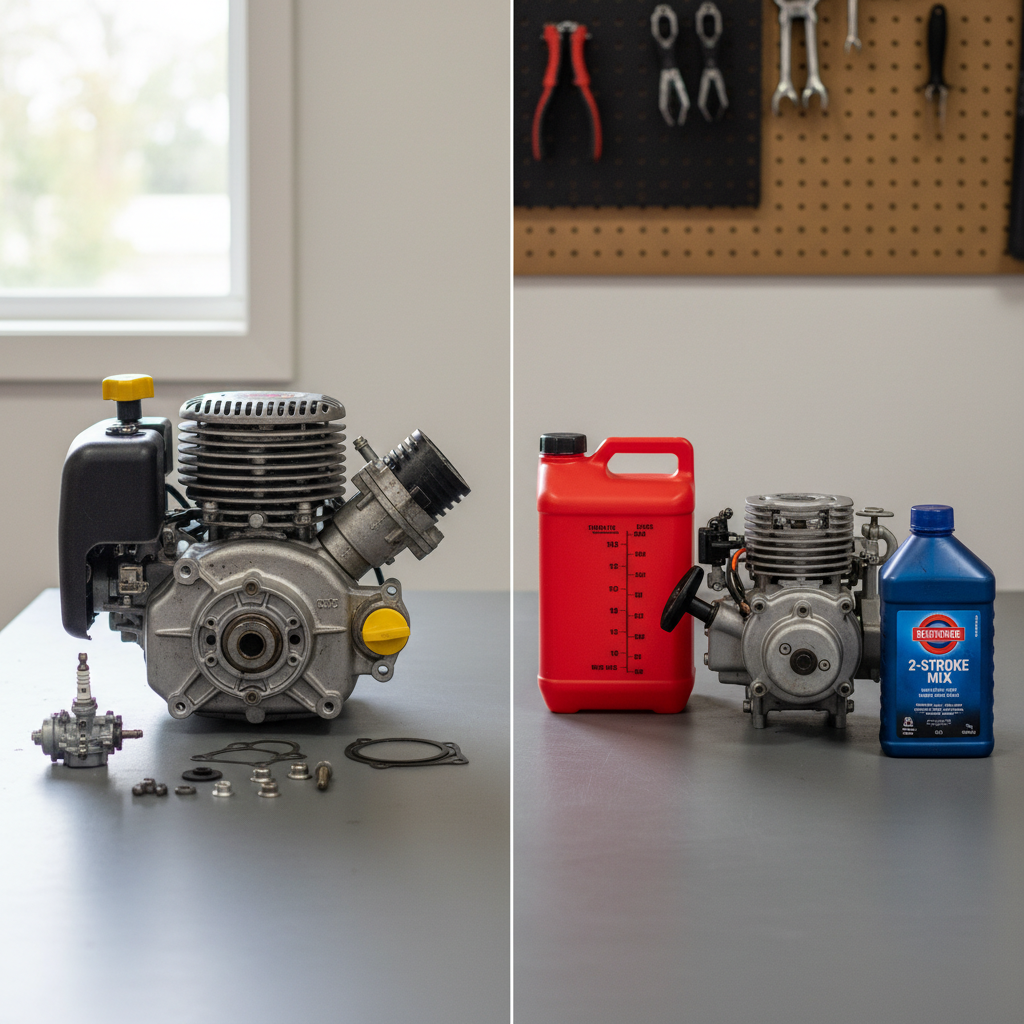
How to Identify Your Engine Type
Check the engine housing, owner’s manual, or the manufacturer’s label on the mower deck:
- One fill cap labeled “Gas” or “Fuel” — almost certainly a 4-stroke engine
- No separate oil dipstick or oil fill port — strong indicator of a 2-stroke engine
- Manual says “pre-mix” or lists an oil-to-gas ratio — 2-stroke engine confirmed
Most modern walk-behind push mowers sold in the US and Canada use 4-stroke engines. 2-stroke lawn mowers still exist — particularly older models and some lightweight trimmer-style units — but they are less common than they were two decades ago.
4-Stroke Engines: Straight Gasoline Only
4-stroke engines (also called 4-cycle) have a dedicated crankcase oil reservoir separate from the fuel tank. They lubricate themselves internally. Fuel goes in the gas tank; oil goes in the crankcase. Never add oil to the fuel tank of a 4-stroke engine — it will foul the carburetor and may require professional cleaning.
Correct fuel: Fresh, unleaded 87-octane gasoline with ≤10% ethanol.
2-Stroke Engines: Premixed Fuel Required
2-stroke engines (also called 2-cycle) have no separate oil reservoir. They rely on oil mixed directly into the gasoline for lubrication. Running a 2-stroke engine on straight gasoline causes rapid bearing and piston seizure — often within minutes.
Common mix ratios (always verify with your specific engine manual):
- 50:1 — 50 parts gasoline to 1 part 2-stroke oil (most common for modern 2-stroke small engines, including many Husqvarna and Echo models)
- 40:1 — used by some older or heavier-duty 2-stroke engines
- 32:1 — found on some older Stihl and Homelite specifications
Mix the fuel in a clean, approved fuel container — never inside the mower’s tank. Use fresh 87-octane E10 gasoline and manufacturer-approved 2-stroke engine oil for the mix. Husqvarna, Echo, and Stihl each publish explicit fuel-mix documentation specifying approved oil types and ratios for their 2-stroke engines.
Ethanol in Lawn Mower Gas: Why E10 Is the Limit
Ethanol is an alcohol-based fuel additive blended into most US pump gasoline. At low concentrations (up to 10%), it is tolerated by small-engine fuel systems. Above 10%, it causes multiple failure modes:
- Carburetor corrosion: Ethanol accelerates corrosion of aluminum and zinc carburetor components, gumming jets and restricting fuel flow
- Fuel line degradation: Rubber and certain plastic fuel lines swell, crack, or dissolve when exposed to high-ethanol blends
- Phase separation: Ethanol-blended fuel absorbs atmospheric moisture. When water content exceeds a threshold, the ethanol separates from the gasoline and sinks to the bottom of the tank as a water-ethanol layer. This layer enters the carburetor and causes misfires, stalling, and corrosion. Phase separation risk increases with higher ethanol content and longer storage periods.
- Warranty voidance: The Outdoor Power Equipment Institute (OPEI) and most major engine manufacturers explicitly state that use of fuel with more than 10% ethanol voids the engine warranty.
Reading the Pump: How to Check Ethanol Content
- E10 — 10% ethanol. Acceptable. Standard at most US pumps labeled “Regular Unleaded.”
- E15 — 15% ethanol. Not safe for small engines. The EPA exempts small engines (including lawn mowers) from E15 use; the label at the pump reflects this restriction.
- E85 — Up to 85% ethanol. Flex-fuel blend. Never use in any lawn mower engine.
- Ethanol-free (E0): Available at some stations, marinas, and as pre-mixed canned fuel (e.g., TruFuel, VP Small Engine Fuel). Optimal for small engines, particularly for equipment in seasonal storage.
If the pump label does not specify ethanol content, look for the small yellow “Contains up to 10% Ethanol” or “May Contain up to 15% Ethanol” sticker required by federal labeling rules. When in doubt, select fuel explicitly labeled E10 or less.
Is Ethanol-Free Gas Worth It for Lawn Mowers?
Ethanol-free gasoline eliminates phase-separation risk, extends fuel shelf life, and reduces carburetor corrosion — making it the preferred choice for seasonal equipment. The trade-off is cost: ethanol-free pump gas and pre-mixed canned fuels carry a significant price premium. For a mower used weekly through a full season and refueled regularly with fresh E10, ethanol-free fuel is a preference, not a requirement. For equipment stored for 60 or more days, ethanol-free fuel or E10 plus a quality fuel stabilizer is strongly advisable.
What Octane Rating Does a Lawn Mower Need?
87 octane (regular unleaded) is the correct and sufficient octane rating for virtually all consumer lawn mower engines. Higher octane fuel — 89 (mid-grade) or 91–93 (premium) — provides no performance benefit in small, low-compression engines and costs more for zero gain.
Octane rating measures a fuel’s resistance to pre-ignition (knock). Small 4-stroke lawn mower engines operate at compression ratios well below those of automobile engines that require premium fuel. Briggs & Stratton, Honda, and Toro all specify 87 octane as the correct grade in their consumer engine documentation. Using premium fuel does not clean the engine, does not increase power output, and does not extend engine life in a small-engine application.
What happens with the wrong octane? Using fuel below 87 octane in a small engine designed for 87 can cause engine knock (pre-detonation), which stresses internal components over time. Using higher octane causes no active damage but wastes money. The practical takeaway: always use 87 — never go lower, and never pay more for higher grades.
Manufacturer Fuel Specifications: Honda, Briggs & Stratton, Husqvarna and Others
General guidance applies broadly, but manufacturer documentation always takes precedence. The fuel specification is printed in the engine owner’s manual and often on a decal near the fuel cap.
Briggs & Stratton
Briggs & Stratton — the engine used in many Craftsman, Troy-Bilt, and Snapper mowers — officially recommends clean, fresh, unleaded gasoline with a minimum 87 octane rating and a maximum 10% ethanol content. Their documentation explicitly states that fuels containing more than 10% ethanol (E15, E20, E85) are not approved and may damage the fuel system and engine. Briggs & Stratton also recommends using a fuel stabilizer if the mower will be stored for more than 30 days.
Honda Small Engines
Honda specifies regular unleaded gasoline with a pump octane rating of 87 or higher and ethanol content not exceeding 10%. Honda’s GCV and GX series engine manuals note that use of fuel containing more than 10% ethanol is not recommended and may cause performance issues or damage. Honda also permits ethanol-free fuel and advises draining the carburetor or adding a fuel stabilizer before storage.
Husqvarna
Husqvarna produces both 4-stroke and 2-stroke outdoor power equipment. For 4-stroke mowers, the specification matches industry consensus: 87-octane unleaded, maximum E10. For 2-stroke equipment, Husqvarna specifies a 50:1 fuel-to-oil mix using Husqvarna-branded or equivalent high-quality 2-stroke oil, with the same 87-octane E10 base gasoline. Husqvarna also offers pre-mixed ethanol-free fuel in canned form for its 2-stroke equipment.
Where to Find Your Mower’s Fuel Requirements
- Owner’s manual: Primary source — check the “Fueling” or “Specifications” section
- Engine decal: Many engines print fuel type and oil capacity on a label near the fuel filler or oil cap
- Manufacturer website: Enter the model number in the support section for a digital manual download
Riding Mower vs. Push Mower: Does Fuel Type Differ?
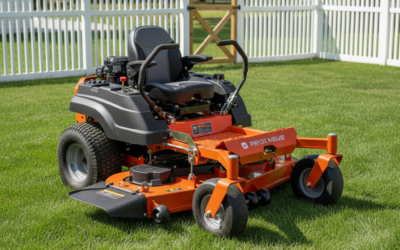
For fuel type, the engine specification matters — not the mower’s size. The vast majority of riding mowers sold for residential use are powered by single-cylinder or twin-cylinder 4-stroke gasoline engines. They use the same 87-octane, maximum E10 unleaded fuel as a push mower’s 4-stroke engine.
Key distinctions by mower category:
- Walk-behind push mowers (4-stroke): 87-octane E10 straight gasoline. Engine displacement typically 140–190cc.
- Walk-behind push mowers (2-stroke, older models): 87-octane E10 pre-mixed with 2-stroke oil per the ratio on the engine label.
- Residential riding mowers and zero-turns: 87-octane E10 straight gasoline. Larger fuel tank capacity (1–3+ gallons) makes fuel freshness more important — stale fuel is a more common problem with larger tanks that sit for weeks between uses.
- Commercial or large-displacement engines: Some commercial riding mower engines (e.g., Kawasaki FX series, Kohler Command PRO) may specify 87 octane as the minimum but can accept higher grades if the manual permits. Check the manual — the general 87-octane floor still applies.
The practical difference between a push mower and a riding mower for fueling purposes is volume and storage management, not fuel grade. A riding mower holds more fuel, which means stale fuel risk is higher if the mower sits unused for extended periods.
Fuel Freshness and Storage: When to Use a Fuel Stabilizer
Gasoline begins to degrade through oxidation within 30 days of purchase. Degraded fuel leaves behind gum and varnish deposits that clog carburetor jets, restrict fuel flow, and cause hard-starting or no-start conditions — the most common complaint at the start of each mowing season.
The 30-Day Rule
If you will not use the fuel within 30 days, add a fuel stabilizer at the time of purchase or at first fill. Do not add stabilizer to already-degraded fuel — stabilizer preserves fresh fuel; it does not restore old fuel. Fuel-stabilizer manufacturers including STA-BIL and Sea Foam document a treated fuel life of 12–24 months depending on storage conditions (cool, sealed container, away from direct sunlight).
Seasonal Storage (Winterization)
Two accepted methods exist for storing a mower over winter (or any period exceeding 30 days):
- Add fuel stabilizer and run the engine briefly: Add stabilizer to the tank, run the mower for 2–3 minutes to circulate treated fuel through the carburetor, then store. This leaves treated fuel in the system and prevents varnish buildup.
- Drain the fuel system completely: Run the engine until it stalls from fuel starvation, then drain the tank and carburetor bowl. Leaves no fuel to degrade. Preferred in very cold climates where condensation in a partially filled tank accelerates fuel breakdown.
Ethanol-blended fuel (E10) is particularly prone to phase separation during storage — the ethanol absorbs ambient moisture and separates from the gasoline layer, causing corrosion and starting problems when the season resumes. Ethanol-free fuel in storage significantly reduces this risk.
Quick-Reference Lawn Mower Fuel Chart
| Engine Type | Correct Fuel | Octane (Min) | Max Ethanol | Oil-Gas Mix? | Stabilizer Needed? |
|---|---|---|---|---|---|
| 4-Stroke (most push & riding mowers) | Regular unleaded | 87 AKI | 10% (E10) | No — straight gas only | If storing >30 days |
| 2-Stroke (older push mowers, some trimmers) | Regular unleaded + 2-stroke oil | 87 AKI | 10% (E10) | Yes — 50:1 or per manual | If storing >30 days |
| Residential Riding Mower (4-stroke) | Regular unleaded | 87 AKI | 10% (E10) | No — straight gas only | Strongly advised for large tanks |
| Any Engine — Seasonal Storage | Ethanol-free (E0) preferred | 87 AKI | 0% ideal; 10% max | Per engine type | Yes — add before storage |
| ❌ Never Use | E15, E85, or diesel | — | >10% | — | — |
Frequently Asked Questions
Can I use E15 gas in my lawn mower?
No. E15 — gasoline blended with 15% ethanol — is not approved for use in lawn mowers or any small off-road engine. The EPA itself exempts small engines from E15 use, and pump labeling reflects this restriction. E15 degrades rubber fuel lines, corrodes carburetor components, and voids most small-engine warranties. Use E10 or ethanol-free fuel only.
Should I use premium gas in my lawn mower?
No. Premium (91–93 octane) fuel provides no performance benefit in the low-compression engines used in lawn mowers. Briggs & Stratton, Honda, and Husqvarna all specify 87 octane (regular unleaded) as the correct grade. Using premium wastes money without improving power, fuel efficiency, or engine longevity.
How long can gas sit in a lawn mower before it goes bad?
Untreated gasoline degrades in approximately 30 days. After that point, oxidation and evaporation produce gum and varnish deposits that clog the carburetor and fuel system. For storage beyond 30 days, add a fuel stabilizer to fresh fuel before storing, or drain the fuel system completely. Ethanol-blended fuel (E10) degrades faster than ethanol-free fuel, particularly in humid conditions where phase separation accelerates.
What happens if I accidentally put E85 in my lawn mower?
Drain the tank immediately — do not run the engine if you catch the mistake before starting. If the engine has already run on E85, rinse the tank with a small amount of fresh gasoline, drain again, refill with correct E10 fuel, and inspect the carburetor and fuel lines for damage before next use. Running E85 even briefly can corrode carburetor jets and degrade fuel line materials. If the mower ran for an extended period on E85, professional carburetor cleaning or replacement may be necessary.