Quick Answer: Most gas-powered lawn mowers run on regular unleaded gasoline rated at 87 octane or higher, with no more than 10% ethanol (E10). 4-stroke engines — found on the vast majority of modern push and riding mowers — use straight gasoline. 2-stroke engines require gasoline pre-mixed with 2-stroke oil at the ratio specified in the owner’s manual. Never use E15 or E85; ethanol above 10% corrodes small-engine carburetors, fuel lines, and gaskets, and voids most manufacturer warranties.
What Type of Gas Do Lawn Mowers Take?
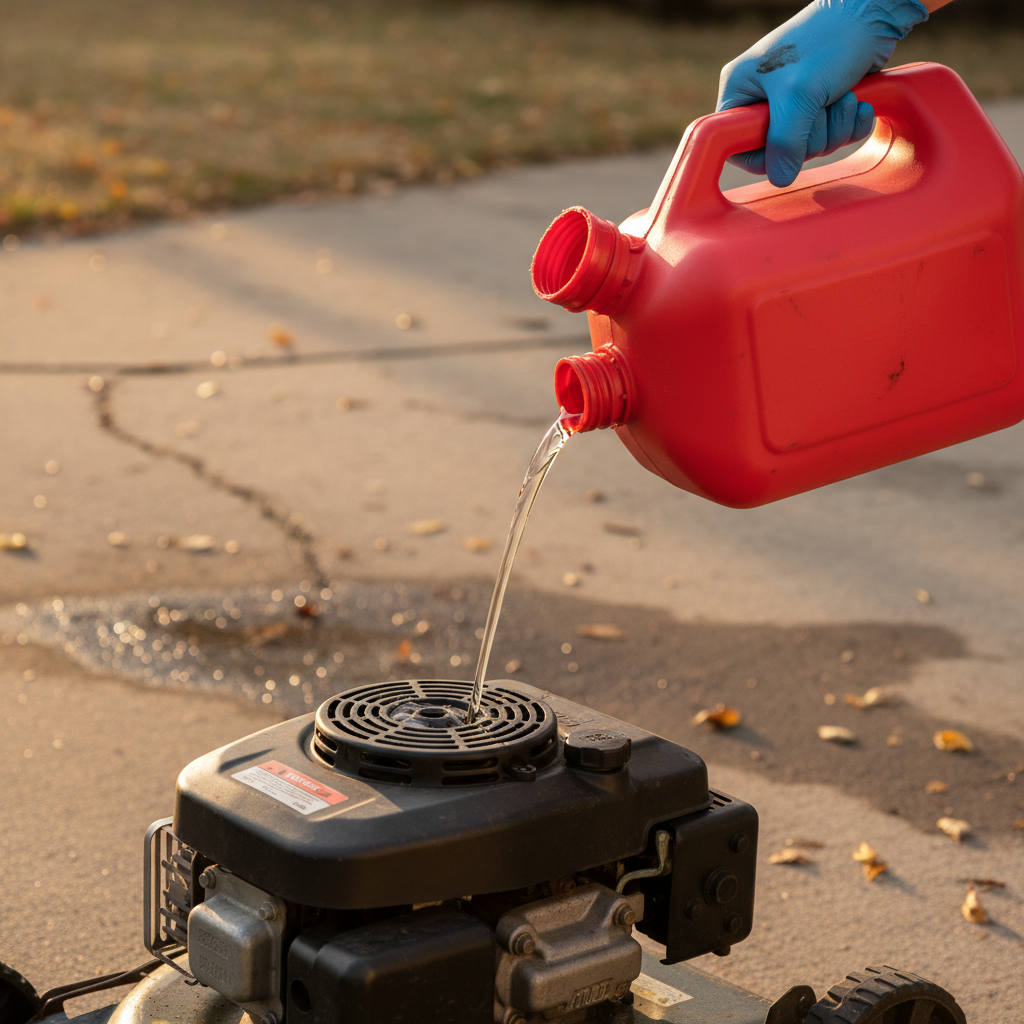
The universal rule for nearly every residential gas-powered lawn mower: fresh, clean, regular unleaded gasoline with a minimum 87 octane rating and an ethanol content at or below 10% (labeled E10). That single answer covers the overwhelming majority of push mowers, self-propelled mowers, and riding mowers sold in North America.
Two conditions complicate that rule:
- Engine type — 4-stroke engines take straight gasoline; 2-stroke engines require a gasoline-and-oil premix. Using the wrong fuel type in a 2-stroke will destroy the engine within minutes because the gas itself carries the only lubrication those internal parts receive.
- Ethanol content — Pump fuel labeled E15 or E85 contains more ethanol than small engines can tolerate. Ethanol above 10% absorbs moisture, phase-separates in the tank, and chemically degrades the rubber and plastic components inside a carburetor. The EPA does not approve E15 or higher blends for use in non-road small engines such as lawn mowers.
Everything else — octane selection, stabilizer use, riding vs. push differences — flows from those two starting points.
4-Stroke vs. 2-Stroke Lawn Mower Engines: Why the Fuel Difference Matters
Identifying your engine type is the single most important step before fueling a mower for the first time.
4-Stroke Engines (the standard on modern mowers)
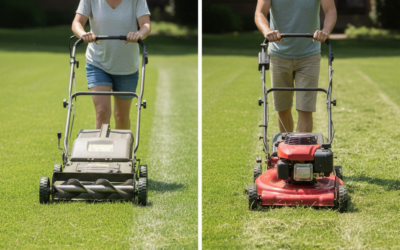
Virtually every push mower, self-propelled mower, and riding mower manufactured after the mid-1990s runs a 4-stroke (also called 4-cycle) engine. Briggs & Stratton, Honda, Kawasaki, Kohler, and Tecumseh all produce 4-stroke small engines as their primary residential lineup. These engines have a separate oil reservoir with a dipstick — you check and change the oil independently, just as you would in a car. The fuel tank takes straight gasoline only: 87 octane, max E10.
2-Stroke Engines (older or lightweight equipment)
2-stroke (2-cycle) engines are more common on handheld equipment — string trimmers, chainsaws, leaf blowers — but some older or budget push mowers use them. The definitive identification method: a 2-stroke engine has no separate oil fill port or dipstick. There is one combined fuel cap only. These engines receive lubrication entirely through oil dissolved in the gasoline, so the fuel must be a premix.
Common premix ratios for 2-stroke lawn mower engines:
| Engine / Manufacturer Spec | Gas-to-Oil Ratio | Oil per 1 gallon of gas |
|---|---|---|
| Most modern 2-stroke small engines | 50:1 | 2.6 fl oz |
| Some older or high-wear designs | 40:1 | 3.2 fl oz |
| Certain vintage engines | 32:1 | 4.0 fl oz |
Always verify the exact ratio in your owner’s manual. Running a leaner ratio than specified (more gas, less oil) starves the engine of lubrication. Running a richer ratio (less gas, more oil) causes fouled spark plugs, excess smoke, and carbon buildup. Use only 2-stroke engine oil rated for air-cooled engines — not automotive motor oil.
How to Tell Which Engine You Have
- Look for a separate oil dipstick or oil fill cap on the engine block → 4-stroke, use straight gas.
- Only one fuel cap, no dipstick anywhere on the engine → 2-stroke, use premix.
- Check the model number on the engine shroud and look up the manufacturer spec sheet — the definitive source.
- Consult the owner’s manual; the fuel section will explicitly state “gasoline only” or specify a mix ratio.
Octane Rating for Lawn Mowers: Is 87 Always Enough?
Yes — for the overwhelming majority of lawn mowers, 87 octane regular unleaded is the correct and sufficient choice. Small engines operate at lower compression ratios than automotive engines, so they do not require the knock-resistance premium octane provides. Filling a standard mower with 91 or 93 octane fuel wastes money and delivers zero measurable benefit in power output, fuel economy, or engine longevity.
Why Premium Gas Doesn’t Help Small Engines
Octane rating measures a fuel’s resistance to pre-ignition (knock). High-compression automotive performance engines need that resistance. A typical residential mower engine runs at compression ratios of roughly 6:1 to 8.5:1 — well below the threshold where knock becomes a problem. Pouring 93 octane into such an engine is the mechanical equivalent of buying industrial-grade bolt cutters to open a padlock.
Rare Exceptions: When 89 Octane Is Specified
A small number of high-output commercial or semi-commercial engines — certain Kawasaki FX-series or Kohler Command Pro configurations — spec a minimum of 89 octane due to higher compression ratios designed for sustained heavy-load operation. If your engine manual specifies 89, use 89. If it specifies 87, premium does not improve on that. The owner’s manual is the authoritative source; this article provides the general rule.
Ethanol-Free Gasoline and Octane
Ethanol-free fuel (pure gasoline, sometimes labeled “recreation fuel” or “non-oxygenated”) is sold at some marinas, airports, and select gas stations. It is universally safe for small engines and eliminates all ethanol-related risk. Its octane rating is typically 90–91 at retail. While not required, it is the preferred choice of many small-engine technicians and is especially recommended for equipment stored seasonally. The higher cost per gallon is offset by reduced carburetor maintenance over the equipment’s life.
Ethanol in Lawn Mower Gas: E10, E15, and E85 Explained
Ethanol content is the most consequential fuel decision for small-engine owners — and the most common source of preventable carburetor failure.
What the Labels Mean
- E10: Contains up to 10% ethanol. The standard blend at most U.S. pumps. Acceptable for small engines.
- E15: Contains 10.5–15% ethanol. Approved by the EPA only for model-year 2001 and newer automobiles. Not approved for small non-road engines, motorcycles, boats, or generators.
- E85: Contains 51–83% ethanol. Designed exclusively for flex-fuel vehicles. Will destroy a small engine rapidly.
What Ethanol Does to a Small Engine
Ethanol is hygroscopic — it actively absorbs water from ambient air. In a small engine fuel system, that causes four distinct failure modes:
- Phase separation: Ethanol and absorbed water separate from the gasoline and sink to the bottom of the tank. The engine then draws this water-ethanol layer, causing lean-burn conditions, misfires, and stalling.
- Carburetor corrosion: Ethanol reacts with zinc, aluminum, and brass alloys used in small-engine carburetors, causing pitting and gumming of jets and needle valves.
- Fuel line and gasket degradation: Ethanol softens and cracks the rubber and plastic components in fuel lines, primer bulbs, and float bowl gaskets — parts designed and validated to tolerate E10, not higher concentrations.
- Gum and varnish deposits: Ethanol-blend fuel degrades faster than pure gasoline, leaving sticky deposits in the carburetor that block fuel flow — the leading cause of a mower that starts in spring but won’t stay running.
The EPA confirms that E15 and higher ethanol blends are not approved for use in non-road small engines. Briggs & Stratton, Honda, Kawasaki, and Kohler each explicitly state in their warranty documentation that use of fuel exceeding E10 voids the engine warranty.
Ethanol-Free Gas: Is It Worth It?
For mowers used heavily throughout a long season and stored over winter, ethanol-free fuel is the lower-maintenance choice. It degrades more slowly, doesn’t phase-separate, and is gentler on carburetor internals. The practical tradeoff: it costs more per gallon and is not available at every station. Use the Pure Gas station locator to find ethanol-free fuel near you.
Riding Mower vs. Push Mower: Any Fuel Differences?
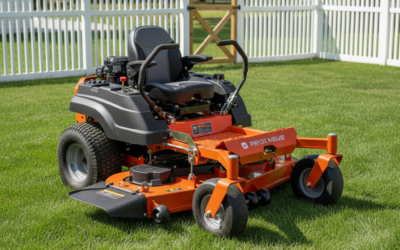
The fuel type is identical: 87 octane regular unleaded, maximum E10, for both riding mowers and push mowers. Engine displacement is larger on a riding mower, but the fuel specification does not change based on tank or engine size for standard residential equipment.
Practical Differences That Do Matter
- Tank size: Riding mower tanks typically hold 1.5–3 gallons versus 0.1–0.25 gallons for push mowers. Larger tanks left with fuel over winter carry a proportionally larger carburetor-gumming risk — making fuel stabilizer more important, not optional, for riding mowers stored seasonally.
- Fuel filter replacement: Many riding mowers have an inline fuel filter that requires periodic replacement (typically annually). Neglecting it restricts flow and mimics fuel-starvation symptoms.
- Propane-powered commercial mowers: A niche segment of commercial zero-turn and stand-on mowers run on liquid propane (LP). These are purpose-built propane units — a standard residential mower cannot be converted without an engineered kit and presents a safety risk if improvised. If you’re operating commercial equipment and need to confirm fuel type, the fuel inlet connection is physically different and the engine shroud will be labeled LP or Propane.
How to Store Lawn Mower Gas and When to Use Fuel Stabilizer
Fuel management at the end of the mowing season is where most carburetor failures begin. Stale gasoline is the single most common cause of a mower that cranks but won’t start the following spring.
How Fast Does Gasoline Go Bad?
- Untreated E10 pump gasoline: Begins to degrade and lose volatility in as little as 30 days. After 60–90 days in a mower tank or small container, it can leave varnish deposits capable of gumming a carburetor.
- Untreated ethanol-free gasoline: More stable; typically usable for 3–6 months without treatment.
- Treated gasoline (with fuel stabilizer): Quality stabilizers such as STA-BIL or Sea Foam extend fuel life to 12–24 months, per manufacturer data.
How to Use Fuel Stabilizer Correctly
- Add the stabilizer to fresh gasoline — not to fuel already showing signs of degradation. Stabilizer preserves fresh fuel; it does not restore old fuel.
- Follow the dosage on the stabilizer label (typically 1 oz per 2.5 gallons of fuel).
- Fill the tank as full as practical (to minimize air space that allows moisture ingress), then run the mower for 5–10 minutes to circulate treated fuel through the carburetor.
- Store the mower with the treated fuel in the tank, or drain completely — both are valid approaches. The risk of draining is that residual varnish from evaporated fuel can still clog jets; the risk of not draining is any untreated fuel left behind.
Should You Drain the Gas for Winter?
Both approaches are defensible; manufacturer guidance varies:
- Drain completely: Run the mower until it stalls from fuel starvation, then use a hand pump or turkey baster to remove remaining fuel from the tank. This eliminates any degradation risk but leaves some residual fuel in the carburetor bowl, which can still varnish.
- Store with stabilized fuel: The approach recommended by Briggs & Stratton’s own storage guidance. Treated fuel in the system keeps gaskets and seals from drying out and prevents varnish formation throughout the off-season.
Either way, never store a mower for winter with untreated pump-gas E10 in the tank. That single habit accounts for the majority of spring carburetor rebuilds.
Fuel Container Storage
- Store gasoline in an approved, sealed container rated for fuel — not repurposed water or food containers.
- Keep containers in a cool, dry, well-ventilated space away from ignition sources.
- Label containers with the fill date. Treat any container of pump gas you plan to keep beyond 30 days.
- Never store gasoline containers inside a living space or attached garage with an HVAC air handler that could ignite vapors.
Frequently Asked Questions
Can I use E15 gas in my lawn mower?
No. The EPA does not approve E15 for use in small non-road engines, including lawn mowers. Most major small-engine manufacturers — including Briggs & Stratton, Honda, and Kawasaki — explicitly void engine warranties when fuel with more than 10% ethanol is used. E15 accelerates corrosion of carburetor components and degrades fuel lines and gaskets faster than they are designed to tolerate. Use E10 or ethanol-free gasoline only.
Is premium gas better for a lawn mower engine?
No. Standard residential lawn mower engines operate at compression ratios too low to benefit from the knock-resistance that premium octane provides. Using 91 or 93 octane in a mower that specifies 87 wastes money without improving performance, fuel efficiency, or engine life. Use 87 octane unless your engine’s owner’s manual explicitly states a higher minimum — which is rare and limited to certain high-compression commercial engines.
How do I know if my lawn mower needs mixed gas or straight gas?
Check the engine for a separate oil dipstick or oil fill port. If one exists, your mower has a 4-stroke engine and takes straight gasoline — no oil mixed in. If the engine has only one combined fuel fill cap and no dipstick, it is a 2-stroke engine requiring a gasoline-and-2-stroke-oil premix at the ratio listed in the owner’s manual (commonly 50:1). When in doubt, look up the engine model number on the manufacturer’s website.
How long can gas sit in a lawn mower before it goes bad?
Untreated E10 pump gasoline can begin to degrade in as little as 30 days and cause carburetor gumming after 60–90 days. Ethanol-free gas lasts 3–6 months untreated. Adding a fuel stabilizer to fresh gasoline extends its viable life to 12–24 months depending on the product. Always treat fuel intended for off-season storage, or drain the tank completely before storing the mower for winter.