The Short Answer: What Gas Does a Lawn Mower Take?
Regular unleaded 87-octane gasoline — the standard grade at virtually every gas station — is the correct fuel for the vast majority of residential lawn mowers. Small engines operate at low compression ratios that do not require or benefit from higher-octane premium fuel. The ethanol content of the fuel matters more than the octane grade: ethanol above 10% corrodes rubber fuel lines, degrades carburetor seals, and voids manufacturer warranties on nearly all residential small engines.
Two factors determine the precise fuel your mower needs: engine type (4-stroke vs. 2-stroke) and ethanol content. Both are covered in detail below.
4-Stroke vs. 2-Stroke Lawn Mower Engines: Why It Changes Everything
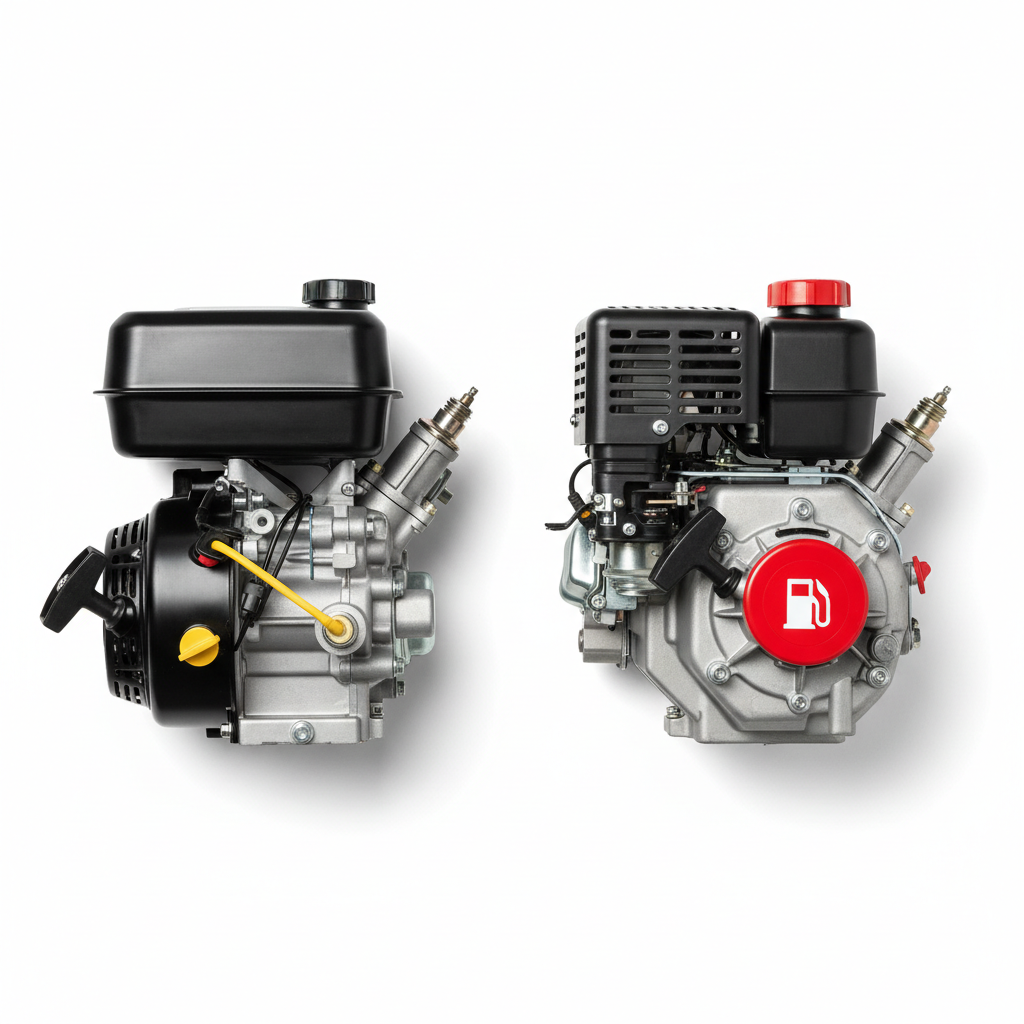
The single most important variable in answering “what gas does my lawn mower use” is whether the engine is 4-stroke or 2-stroke. Putting the wrong fuel in a 2-stroke engine causes immediate, often catastrophic engine seizure.
How to Identify Your Engine Type
- 4-stroke (4-cycle): Has a separate oil fill cap or dipstick distinct from the fuel cap. This is standard on virtually all walk-behind push mowers, self-propelled mowers, riding mowers, and zero-turn mowers sold in the U.S. today. Brands include Honda, Briggs & Stratton, Kawasaki, Kohler, and Toro.
- 2-stroke (2-cycle): Has only one fill point — fuel and oil are mixed together before filling. Common in older walk-behind mowers, handheld string trimmers, and some commercial equipment. The engine label or owner’s manual will state “2-cycle” or show a fuel-mix ratio (e.g., 50:1).
Fuel Rules by Engine Type
| Engine Type | Fuel Required | Oil Handling |
|---|---|---|
| 4-stroke | Straight 87-octane unleaded gasoline (max E10) | Oil is separate — checked and changed via dipstick |
| 2-stroke | Pre-mixed gasoline + 2-stroke oil at specified ratio | Oil is mixed into the fuel before filling |
What happens if you put straight gas in a 2-stroke engine? The engine runs without lubrication. Metal-on-metal contact destroys the piston and cylinder wall within minutes. The damage is typically irreversible and not covered under warranty.
Gas-Oil Mix Ratios for 2-Stroke Lawn Mowers
If your mower has a 2-stroke engine, the gasoline must be pre-mixed with 2-stroke engine oil before it goes into the tank. The ratio specifies how many parts gasoline per one part oil by volume.
Common 2-Stroke Mix Ratios
| Ratio | Oil per 1 Gallon of Gas | Common Applications |
|---|---|---|
| 50:1 | 2.6 oz (77 ml) | Most modern 2-stroke small engines (Husqvarna, Echo, Stihl) |
| 40:1 | 3.2 oz (96 ml) | Some older or heavier-duty 2-stroke engines |
| 32:1 | 4.0 oz (118 ml) | Older equipment; less common in current production |
Always confirm the ratio in your owner’s manual before mixing. Husqvarna and Echo specify 50:1 for their 2-stroke handheld equipment; older equipment from various manufacturers may call for 40:1 or 32:1. Using too little oil causes engine seizure; using too much causes excessive carbon buildup, fouled spark plugs, and smoke.
Use only oil labeled “2-stroke,” “2-cycle,” or “JASO FD / ISO-L-EGD certified” for air-cooled small engines. Automotive motor oil is not a substitute.
Ethanol in Lawn Mower Gas: E10, E15, and E85 Explained
Ethanol content is the most consequential — and most misunderstood — fuel variable for small engines. Most pump gasoline in the U.S. contains some ethanol. Knowing the safe threshold prevents engine damage and warranty voids.
What the Labels Mean
- E10: 10% ethanol, 90% gasoline. The maximum ethanol concentration approved for use in small engines by virtually all residential mower manufacturers. Safe for 4-stroke mowers and acceptable (in the gasoline portion) for 2-stroke mixes.
- E15: 15% ethanol. The EPA granted E15 approval for vehicles model year 2001 and newer — but this exemption explicitly does not extend to small engines, including lawn mowers, generators, and outdoor power equipment. E15 is not approved for and damages small engines.
- E85: Up to 85% ethanol. A flex-fuel formulation for purpose-built flex-fuel vehicles only. E85 in a standard lawn mower engine causes immediate fuel system failure.
- Ethanol-free (E0): Pure gasoline with no ethanol. The premium option for small engines — available at some marinas, aviation fuel suppliers, and select gas stations. Provides the longest fuel shelf life and eliminates ethanol-related corrosion risk.
Why Ethanol Above 10% Damages Small Engines
Ethanol is hygroscopic — it absorbs water from the atmosphere. At concentrations above 10%, ethanol-water mixtures cause phase separation in the fuel tank, dropping a corrosive water-ethanol layer to the bottom where the fuel pickup sits. This layer corrodes aluminum carburetor components, degrades rubber fuel lines and diaphragms, and gums fuel passages. Briggs & Stratton, Honda, Kawasaki, and Kohler all explicitly state in their warranty documentation that engine damage caused by fuel containing more than 10% ethanol is not covered under warranty.
Fuel Freshness and Storage: The 30-Day Rule
Gasoline is a refined product that begins to degrade immediately after refining. For small engines — which often sit unused for weeks or months between mowing seasons — fuel freshness is a primary cause of starting failures and carburetor damage.
How Long Does Gas Last in a Lawn Mower?
- Untreated gasoline: Degrades noticeably within 30 days. Oxidation and evaporation of light volatile compounds leave behind a varnish-like residue that clogs carburetor jets and fuel passages.
- Gasoline with fuel stabilizer: Remains viable for 12–24 months, depending on the stabilizer product and storage conditions. Briggs & Stratton, STA-BIL, and similar manufacturers publish shelf-life extension ratings on product labeling.
- Ethanol-free gasoline: Slightly more stable than ethanol-blended fuel but still subject to oxidation; stabilizer is still recommended for storage beyond 30 days.
What Happens If You Leave Old Gas in a Mower?
Stale gasoline deposits a gummy, varnish-like film on carburetor components. Symptoms include hard starting, rough running, and complete failure to start. In severe cases, the carburetor requires disassembly and cleaning or full replacement — a repair that costs more than preventive stabilizer use. Always drain the fuel tank or add stabilizer before storing a mower for the season.
Fuel Storage Best Practices
- Store gasoline in a clean, sealed, fuel-rated container away from heat and sunlight.
- Add fuel stabilizer at the correct ratio when filling a storage container.
- Run the mower for 2–3 minutes after adding stabilizer so treated fuel circulates through the carburetor.
- Never store a mower with untreated gasoline in the tank for more than 30 days.
What Gas Do Major Lawn Mower Brands Recommend?
Each major engine and equipment manufacturer publishes explicit fuel specifications. Deviating from these specifications can void the warranty and damage the engine.
| Brand | Octane Rating | Max Ethanol | Brand-Specific Notes |
|---|---|---|---|
| Honda | 87 AKI minimum | E10 | Honda explicitly prohibits E15 and E85; recommends ethanol-free fuel for best performance. E15 use voids the Honda warranty on small engines. |
| Briggs & Stratton | 87 AKI minimum | E10 | Explicitly states E15 and higher void the warranty. Recommends Briggs & Stratton Advanced Formula Fuel Stabilizer for storage. |
| Kawasaki | 87 AKI minimum | E10 | Commercial engine documentation states ethanol above 10% causes fuel system deterioration not covered under warranty. |
| Kohler | 87 AKI minimum | E10 | Kohler engines approved for up to E10 only. Fuel containing methanol in any concentration is explicitly prohibited. |
| Husqvarna | 87 AKI minimum (89 for some models) | E10 | Husqvarna recommends ethanol-free fuel for 2-stroke equipment where available; for 4-stroke riding mowers, E10 is the stated maximum. |
Consult your specific model’s owner’s manual for the authoritative fuel specification. The table above reflects general published brand guidance; individual model requirements may differ.
Premium vs. Regular Gas: Is Higher Octane Worth It for Lawn Mowers?
No. Premium gasoline (91–93 octane) provides zero performance benefit in standard residential lawn mower engines and is a waste of money.
Octane rating measures a fuel’s resistance to premature detonation (engine knock) under compression. High-compression engines — typically found in performance automobiles — require high-octane fuel to prevent knock. Small lawn mower engines operate at low compression ratios (typically 6:1 to 8.5:1 for 4-stroke small engines). At those compression levels, 87-octane regular unleaded combusts correctly without detonation. Running 91-octane premium in a low-compression small engine produces no additional power, no fuel efficiency gain, and no engine protection benefit.
Honda, Briggs & Stratton, Kawasaki, and Kohler all specify 87 AKI (Anti-Knock Index) as the correct octane grade. Using premium where 87 is specified is an unnecessary expense — roughly 20–30 cents more per gallon — with no engineering justification for small engines.
The one exception: if your owner’s manual specifically requires 89 or higher octane for a particular high-performance or commercial engine, follow that specification. For the overwhelming majority of residential mowers, 87 regular unleaded is correct.
What About Propane and Alternative Fuels in Lawn Mowers?
Some users searching “what gas to use in a lawn mower” are actually asking about propane (LP gas) — a legitimate but distinct category.
Propane (LP-gas) mowers exist and are common in commercial lawn care and fleet operations. Propane-powered mowers offer lower emissions, consistent fuel quality (propane does not degrade like gasoline), and lower per-hour fuel cost at commercial scale. However, they require purpose-built propane engines or certified conversion kits — you cannot run propane through a standard gasoline engine without engine-specific modifications.
Residential propane mowers are niche products. If you own one, your owner’s manual and propane supplier are the authoritative sources for fuel specifications. Standard LP propane used in residential grills (HD5 propane) is the typical fuel grade used in propane mower conversions.
For the vast majority of homeowners with standard residential mowers: the answer remains 87-octane unleaded gasoline with a maximum of 10% ethanol.
Other alternative fuels — including E85, biodiesel, and natural gas — are not compatible with standard residential lawn mower engines and should not be used.
Frequently Asked Questions
Can I use E15 gas in my lawn mower?
No. E15 (15% ethanol) is not approved for use in any small engine, including lawn mowers. The EPA’s approval of E15 for on-road vehicles explicitly excludes outdoor power equipment and small engines. Using E15 corrodes rubber fuel system components, damages carburetor parts, and voids the manufacturer warranty on virtually all residential lawn mower engines. Use E10 or ethanol-free (E0) gasoline only.
How do I know if my lawn mower needs a gas-oil mix?
Check for a separate oil fill cap or dipstick on the engine. If one exists, you have a 4-stroke engine — fill the fuel tank with straight gasoline and service the oil separately. If there is only one fill point and no dipstick, you have a 2-stroke engine that requires pre-mixed fuel. The owner’s manual or engine label will also state the engine cycle type and, for 2-stroke engines, the required mix ratio.
What happens if I use old gas in my lawn mower?
Gasoline older than 30 days (without stabilizer) degrades into a varnish-like residue that clogs carburetor jets and fuel passages. Symptoms include hard starting, rough idle, sputtering under load, and failure to start. In severe cases, the carburetor requires professional cleaning or replacement. Drain stale fuel before storage and always start the season with fresh gasoline.
Is ethanol-free gas better for lawn mowers?
Yes, where available and cost-effective. Ethanol-free (E0) gasoline eliminates the risk of phase separation, carburetor corrosion, and fuel line degradation caused by ethanol-water absorption. It also has a longer shelf life than ethanol-blended fuel. Ethanol-free gasoline is available at some marinas, small engine dealers, and select gas stations. It typically costs more per gallon than E10 pump gasoline — whether the premium is worth it depends on how long fuel sits in the mower between uses.