Quick Answer: How to Use a Lawn Mower
To use a lawn mower: complete a pre-mow safety check, set the blade height to remove no more than one-third of the grass blade, fuel or charge the mower, start the engine using the correct method for your mower type, mow in overlapping parallel rows, then shut down, clean the deck, and store the mower after each session. The exact steps vary by mower type — gas push, electric corded, cordless battery, riding, and robotic mowers each have a distinct startup and operating procedure covered in full below.
Types of Lawn Mowers and What Each One Requires
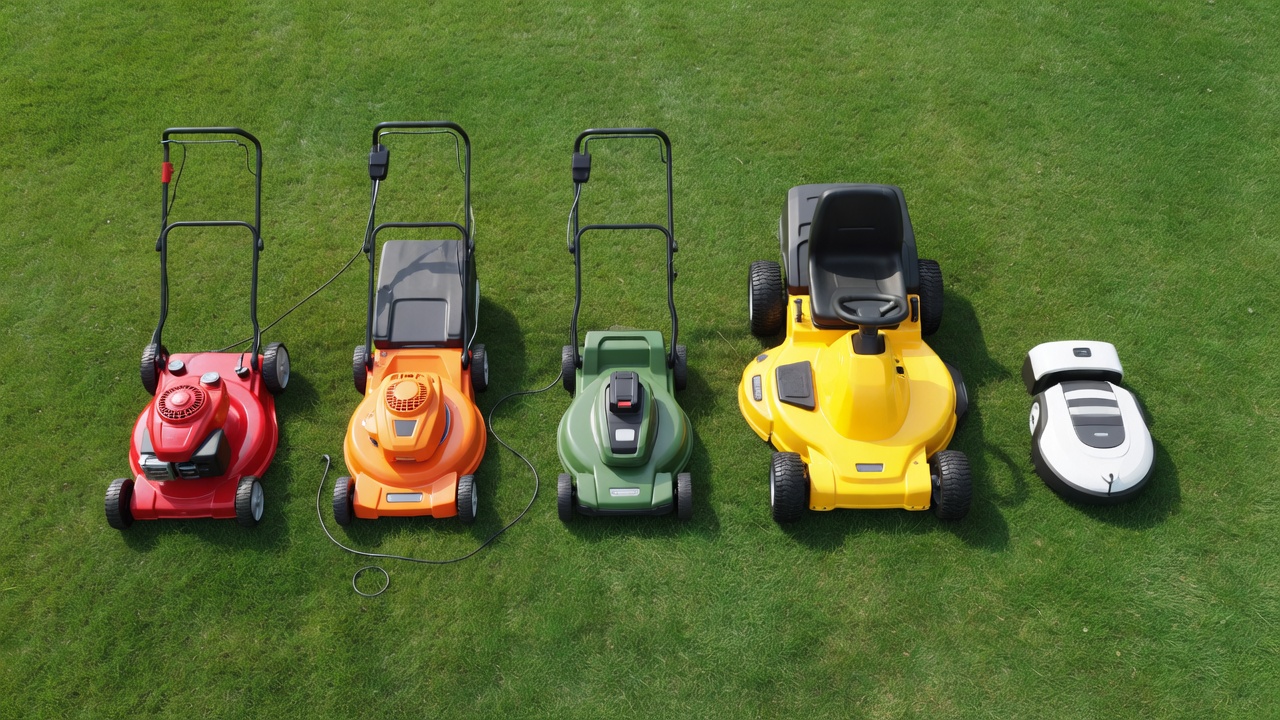
Identifying your mower type before you start determines every step that follows — fuel source, startup sequence, and maintenance schedule all differ.
- Gas push mower: Uses a gasoline engine. Requires fuel checks, oil monitoring, primer bulb priming, choke adjustment, and a pull cord start. Most common for small-to-medium residential lawns.
- Electric corded mower: Plugs into a standard outlet via an extension cord. No fuel, no oil. Start with a power switch. Range is limited by cord length — suited for small, flat lawns.
- Cordless battery mower: Runs on a rechargeable lithium-ion battery pack. No fuel or cord. Requires a charged battery before each use. Start with a key or button. Run time typically 30–60 minutes per charge.
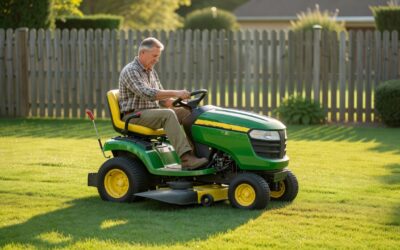
- Riding mower / zero-turn mower: Operator sits on the machine. Requires a seat safety switch, ignition key start, and awareness of slope limits. Suited for lawns over half an acre.
- Robotic mower: Operates autonomously within a boundary wire or GPS zone. Requires initial boundary setup and app configuration. Minimal hands-on operation once installed.
Pre-Mow Safety Checklist (Do This Before Every Use)
Skipping pre-mow checks is the leading cause of mowing injuries and equipment damage. Run through this checklist before every session.
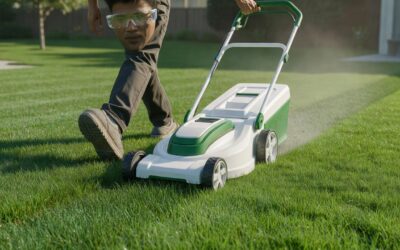
- Wear PPE for mowing: Closed-toe shoes (ideally steel-toe boots), long trousers, safety glasses, and hearing protection for gas mowers.
- Clear the lawn of debris: Walk the entire mowing area and remove rocks, sticks, toys, hoses, and any hard objects. Blades eject debris at high velocity.
- Inspect the blade guard and safety guard: Confirm the rear discharge guard or blade guard is intact and not bent or missing. Never operate a mower with a damaged guard.
- Check fuel and oil levels (gas mowers): Fill the tank with fresh gasoline — fuel older than 30 days can cause starting problems. Check engine oil with the dipstick and top up if below the minimum mark.
- Check battery charge (cordless mowers): Confirm the battery pack is fully charged. A partially charged battery may not complete the mow.
- Assess ground conditions: Avoid mowing wet grass — wet turf increases the risk of fungal disease spread and significantly reduces traction, raising slip-and-fall risk. Assess slopes: the U.S. Consumer Product Safety Commission advises extra caution on any slope exceeding 15 degrees for riding mowers.
- Check for bystanders: Keep children and pets indoors and well clear of the mowing area before starting the engine.
How to Adjust Blade Height Before You Mow
Blade height adjustment is the single most consequential setting before each mow. Cutting too low stresses the lawn; cutting too little means more frequent sessions.
The One-Third Rule
Never remove more than one-third of the grass blade in a single mowing session. Removing more than one-third shocks the plant, exposes the soil to sunlight (promoting weed germination), and weakens the root system. This guidance is consistently supported by turfgrass research from university cooperative extensions including Penn State Extension and Purdue Extension.
Target Heights by Grass Type
| Grass Type | Recommended Mowing Height | Season |
|---|---|---|
| Kentucky bluegrass (cool-season) | 2.5 – 3.5 inches | Spring / Fall |
| Tall fescue (cool-season) | 3 – 4 inches | Spring / Fall |
| Bermudagrass (warm-season) | 0.5 – 1.5 inches | Summer |
| St. Augustinegrass (warm-season) | 2.5 – 4 inches | Summer |
| Zoysia (warm-season) | 1 – 2 inches | Summer |
How to Adjust the Cutting Height
On most push mowers, a lever on each wheel or a single central lever raises or lowers the deck. On riding mowers, a deck-height dial or lever near the operator seat controls height. Move the adjustment lever to the desired notch, confirm all four wheels are at the same setting, and check the actual blade-to-ground distance with a ruler on a flat surface before mowing.
Scalping Avoidance
Scalping — cutting so low that bare soil is exposed — damages turf permanently on the spot. On uneven terrain, raise the deck one notch higher than your target height to prevent the blade from contacting high spots in the ground.
How to Start a Lawn Mower: Step-by-Step by Mower Type
Gas Push Mower
- Place the mower on a flat, stable surface.
- Check fuel level and engine oil before starting.
- Press the primer bulb 3 times slowly to draw fuel into the carburetor.
- Set the choke to the closed (choke) position for a cold engine. Skip this step if the engine is already warm.
- Move the throttle to the fast or run position.
- Squeeze and hold the blade control bar (dead-man handle) against the handle.
- Pull the pull cord briskly in one smooth motion. Repeat up to 3–5 times if the engine does not start on the first pull.
- Once the engine runs, move the choke to the open position within 30 seconds.
Electric Corded Mower
- Connect a heavy-duty outdoor extension cord to the mower’s power inlet.
- Plug the extension cord into an outdoor GFCI outlet.
- Drape the cord over your shoulder or to the side to keep it behind you and away from the blade path.
- Squeeze the blade control bar, then press and hold the power switch or button to start.
Cordless Battery Mower
- Confirm the battery pack is fully charged.
- Insert the battery pack into the mower’s battery port until it clicks securely.
- Insert the safety key (if your model uses one).
- Squeeze the blade control bar, then press the start button to engage the blade motor.
Riding Mower / Zero-Turn Mower
- Sit fully in the operator seat — the seat safety switch must be engaged or the mower will not start.
- Set the parking brake.
- Disengage the blade (PTO switch to off).
- Set the throttle to the start position.
- Turn the ignition key to start. Hold for no more than 5 seconds per attempt.
- Once running, release the parking brake and engage the blade only after you are in the mowing area.
Robotic Mower
- Install the boundary wire around the perimeter of the mowing zone per manufacturer instructions.
- Pair the mower with the manufacturer app via Bluetooth or Wi-Fi.
- Set the mowing schedule, blade height, and zone exclusions in the app.
- Place the mower on its charging dock and confirm it has a full charge before the first run.
- Press start on the mower panel or via the app. The mower returns to its dock automatically when the session ends or the battery is low.
How to Mow Your Lawn: Technique, Patterns, and Problem Conditions
Basic Mowing Pattern: Overlapping Rows
Mow in straight, parallel rows from one end of the lawn to the other. Overlap each pass by 2–3 inches to avoid leaving uncut strips. At the end of each row, make a wide arc to turn and align with the next strip rather than a sharp pivot, which tears turf.
Alternating Direction Each Session
Change your mowing direction — horizontal one week, vertical the next, or diagonal — each mowing session. Alternating direction reduces soil compaction and prevents grass blades from permanently leaning in one direction. University cooperative extension programs consistently recommend this practice for lawn health.
Mowing on a Slope
- Push mower on a slope: Mow across the slope (horizontally), not up and down. Mowing up and down a slope increases the risk of the mower rolling back onto the operator.
- Riding mower on a slope: Mow up and down the slope (not across). Riding mowers are top-heavy; mowing across a slope increases rollover risk. The CPSC identifies slopes steeper than approximately 15 degrees as high-risk for riding mower rollovers.
- For slopes too steep to mow safely, consider ground cover plantings or professional landscaping.
Mowing an Overgrown Lawn
Do not attempt to cut an overgrown lawn to the target height in one pass. Apply the one-third rule progressively: cut to the highest deck setting first, allow 2–3 days of recovery, then lower the deck one notch and mow again. Repeat until you reach the target height. Removing too much at once stresses the root system and invites weeds and disease.
Wet Grass
Avoid mowing wet grass where possible. Wet clippings clump under the deck and block discharge chutes, wet turf reduces traction and increases slip risk, and research in turfgrass pathology demonstrates that mowing wet grass spreads fungal diseases more readily than mowing dry turf. If you must mow wet grass, raise the deck one notch, mow slowly, and clean the deck immediately after the session.
How to Shut Down and Clean Your Lawn Mower After Use
Shutdown Sequence
- Move the throttle to the idle or slow position and allow the engine to cool for 30 seconds before shutting off (gas mowers).
- Release the blade control bar or disengage the PTO — the blade must stop before you approach the deck.
- Turn off the engine or power switch. Remove the ignition key on riding mowers. Remove the battery pack on cordless mowers.
- Wait for all moving parts to come to a complete stop before approaching the underside of the mower.
Post-Use Cleaning
- Empty the grass catcher / bag attachment and dispose of or compost clippings.
- Clean the underside of the mower deck: Tip the mower back (spark plug side up on gas mowers to prevent oil flooding the cylinder) or use a deck washout port if your model has one. Use a stiff plastic scraper and a garden hose to remove compacted clippings. Clipping buildup restricts airflow, reduces cut quality, and promotes rust.
- Inspect the blade: Look for nicks, bends, or uneven wear. A damaged blade throws off mowing balance and cuts unevenly.
- Wipe down the exterior and store the mower in a dry, sheltered location away from direct rainfall.
Basic Lawn Mower Maintenance to Keep It Running
Spark Plug (Gas Mowers)
Inspect the spark plug at the start of each mowing season. A fouled or cracked plug causes hard starting and misfires. Replace the plug annually or every 25 hours of use — the engine manufacturer’s manual specifies the correct plug gap and type.
Air Filter (Gas Mowers)
Check the air filter every 25 hours of operation or once per season. A clogged air filter starves the engine of air, reduces power, and increases fuel consumption. Paper filters can be tapped clean; foam filters can be washed and re-oiled. Replace the filter if visibly damaged.
Blade Sharpening
Sharpen the blade every 25 hours of use or at least once per season. A dull blade tears grass rather than cutting it cleanly, leaving ragged brown tips that are more susceptible to disease. Always disconnect the spark plug wire or remove the battery before removing the blade for sharpening.
Oil Changes (Gas Mowers)
Change the engine oil after the first 5 hours of use on a new mower, then every 50 hours or once per season thereafter. Use the oil grade specified in the operator’s manual — SAE 30 is standard for most four-stroke small engines in warm weather. Drain old oil into a sealed container and dispose of at a designated used-oil recycling location.
Battery Storage (Cordless and Electric Mowers)
At the end of the mowing season, store lithium-ion battery packs at approximately 50% charge in a dry location between 50°F and 80°F. Storing a fully depleted or fully charged battery long-term degrades cell capacity. Consult the battery manufacturer’s storage guidance for model-specific instructions.
End-of-Season Fuel Stabilizer (Gas Mowers)
If storing the mower for more than 30 days, add a fuel stabilizer to the gas tank and run the engine for 2 minutes to distribute the stabilizer through the fuel system. Alternatively, drain the fuel tank completely. Stale gasoline is the leading cause of spring starting failures in gas push mowers.
Frequently Asked Questions About Using a Lawn Mower
How long does it take to mow a lawn?
A typical quarter-acre residential lawn takes 30–45 minutes with a standard 21-inch push mower at a walking pace. A half-acre lot takes 45–60 minutes. A riding mower or zero-turn mower can cut the same area in roughly one-third the time. Obstacles such as trees, flower beds, and tight corners increase total time.
How do I know when my lawn needs mowing?
Mow when your grass reaches the upper limit of its recommended height range — typically when it is about one-third taller than your target mowing height. For most cool-season lawns maintained at 3 inches, that means mowing when grass reaches 4 to 4.5 inches. Most lawns require mowing every 5–10 days during peak growing season.
What is the best direction to mow your lawn?
There is no single best direction — the key is to change direction each session. Alternating between horizontal, vertical, and diagonal passes prevents grass from leaning permanently in one direction, reduces wheel-rut formation, and minimizes soil compaction under the mower wheels.
Is it better to mow in the morning or evening?
Mid-morning (8–10 a.m.) is the optimal mowing window. Morning dew has dried, reducing wet-grass risk, but the heat of midday has not yet peaked — mowing in intense afternoon heat stresses freshly cut turf. Evening mowing leaves cut grass wet overnight, increasing disease pressure. Avoid mowing in the hottest part of the afternoon (noon–3 p.m.) during summer.