Quick Answer: How to Start an Electric Lawn Mower
To start an electric lawn mower, identify whether it is a corded or cordless model. For corded mowers, plug the power cord into a grounded outlet, then engage the safety lever on the handle and press the power button. For cordless mowers, confirm the battery pack is fully charged and firmly seated, engage the safety lever, then press the start button. Always consult the manufacturer’s manual for model-specific steps before operating the machine.
Understanding Electric Lawn Mower Types: Corded vs. Cordless
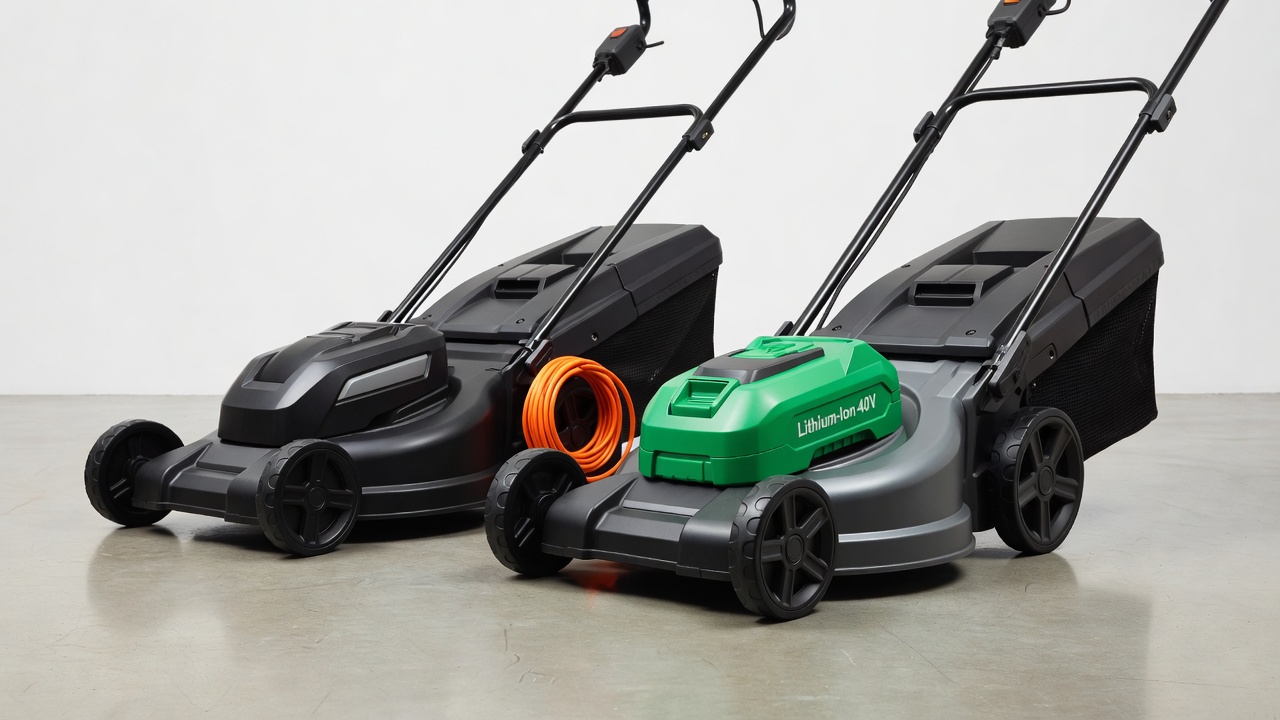
Before starting any electric lawn mower, identify which type you own. The two models differ fundamentally in their power source, and each requires a distinct startup procedure.
Corded Electric Lawn Mowers
A corded electric lawn mower draws power directly from a household electrical outlet through an extension cord. These models deliver consistent power with no risk of a battery dying mid-job, making them reliable for smaller yards. The tradeoff is limited range — your mowing area is constrained by cord length — and the need to manage the cord carefully to avoid running it over.
- Power source: Standard household outlet (typically 120V in North America)
- Ideal yard size: Up to half an acre, depending on cord length
- Startup requirement: A properly grounded outlet and a heavy-duty outdoor-rated extension cord
- Key identifier: A power cord port at the rear or side of the mower housing
Cordless Electric Lawn Mowers
A cordless electric lawn mower is powered by a rechargeable lithium-ion battery pack that slots into a compartment on the mower deck or handle. These models offer greater freedom of movement and are quieter than corded units, but runtime depends on battery capacity (measured in amp-hours) and the mowing conditions.
- Power source: Removable, rechargeable battery pack (commonly 40V, 56V, or 80V)
- Ideal yard size: Up to three-quarters of an acre per charge, depending on voltage and terrain
- Startup requirement: A fully charged battery installed in the correct orientation
- Key identifier: A battery slot or dock with visible battery release tabs on the deck or handle
Essential Safety Precautions Before Starting
Electric lawn mowers are safer than gas-powered alternatives, but they still carry real risks — including electric shock, blade contact, and projectile debris. Run through these checks before every use.
The Safety Lever: Why It Matters
Every electric lawn mower is equipped with a safety lever (also called a blade control bar or deadman switch) mounted on the upper handle. This lever must be held down continuously during operation. Safety levers are designed to automatically stop the motor if released, preventing accidental starts and stopping the blade within seconds when you let go. This is the single most important safety mechanism on the machine — never bypass or tape it down.
Pre-Start Inspection Checklist
- Clear the mowing area: Remove rocks, sticks, toys, and debris that could become dangerous projectiles under the blade.
- Inspect the blade: Check for cracks, bends, or excessive wear. A damaged blade must be replaced before operation.
- Check the power cord (corded models): Look for cuts, fraying, or exposed wiring. Do not use a damaged cord.
- Check the battery connection (cordless models): Ensure the battery pack is seated completely and the locking tab has clicked into place.
- Verify the extension cord rating (corded models): Use only heavy-duty, outdoor-rated extension cords — a minimum of 14 AWG for cords up to 100 feet. An undersized cord can overheat and cause a fire hazard.
- Wear appropriate PPE: Closed-toe shoes, long pants, and safety glasses are minimum requirements.
- Dry conditions only: Never operate an electric lawn mower on wet grass or in rain. Water and electricity create an electrocution risk.
Step-by-Step Guide: Starting a Corded Electric Lawn Mower
Follow these steps in order. Skipping steps — particularly the safety lever engagement — can result in injury or equipment damage.
- Select an appropriate outdoor extension cord. Match the cord’s amperage rating to your mower’s requirements (check the label on the mower or its manual). Use an outdoor-rated, three-prong grounded cord. Corded electric lawn mowers must be plugged into outlets with proper grounding to avoid electrical hazards.
- Connect the extension cord to the mower. Most corded mowers have a cord-retention hook or loop near the power port. Thread the extension cord through this loop before plugging it in — this prevents accidental disconnection mid-mow if you tug on the cord.
- Plug the extension cord into a grounded outlet. Use an outlet protected by a Ground Fault Circuit Interrupter (GFCI) whenever possible, especially for outdoor use. Do not use a two-prong adapter on a three-prong cord.
- Position the mower on a flat, dry surface. Confirm the area ahead of the mower is clear of people, pets, and debris.
- Grip the handle firmly and squeeze the safety lever. Hold the safety lever (blade control bar) against the handle with a firm, continuous grip. The mower will not start unless this lever is engaged.
- Press and hold the power button or start button. On most corded models, the power button is located near the handle or on the top of the mower deck. Press and hold it for one to two seconds until the motor engages. Some models use a key-turn switch instead of a button.
- Confirm the motor is running before moving. You will hear the blade spinning and feel light vibration through the handle. Begin mowing only once the motor sound is steady.
To stop: Release the safety lever. The blade will stop within three to five seconds. For full shutdown, unplug the extension cord from the outlet.
Step-by-Step Guide: Starting a Cordless Electric Lawn Mower
Cordless startup requires one additional preparatory step — battery verification — before the physical startup sequence begins.
- Charge the battery pack fully before first use and after each storage period. Battery packs for cordless mowers should be charged using manufacturer-approved chargers to maintain battery health and safety. Using third-party chargers risks overcharging, cell damage, and in extreme cases, battery fires. Most chargers have an indicator light that turns green or solid when charging is complete.
- Inspect the battery pack for damage. Look for cracks in the casing, swelling, or any discoloration. A swollen or cracked battery must not be used — dispose of it according to local lithium-ion battery recycling regulations.
- Install the battery pack into the mower. Align the battery with the dock on the mower deck or handle. Slide it firmly into position until you hear or feel a distinct click. Tug gently to confirm it is locked. A loose battery can disconnect during operation and cause the blade to stop unexpectedly.
- Check the battery charge indicator. Most cordless mowers have an LED charge display on the battery or dashboard. Confirm at least half charge before starting a mowing session. A very low charge may cause the mower to cut out partway through.
- Position the mower on a flat, dry surface with the area ahead clear of people, pets, and debris.
- Grip the handle and squeeze the safety lever firmly. As with corded models, the safety lever must be held down throughout operation. Releasing it stops the blade immediately.
- Press and hold the power button. On most cordless models, the power button is on the handle or mower deck. Hold it for one to two seconds. Some models require you to press a separate unlock or key button simultaneously before the start button activates — this is a deliberate secondary safety mechanism. Refer to your manual for the exact button combination.
- Wait for the motor to reach full speed before moving. Listen for a steady motor tone, then begin mowing.
To stop: Release the safety lever. For full shutdown, press the power button again to cut motor power, then remove the battery pack if storing the mower.
Troubleshooting Common Starting Issues
If the mower does not start after following the correct steps, work through these common causes before contacting a service technician.
Mower Does Not Start at All
| Symptom | Likely Cause | Solution |
|---|---|---|
| No sound, no motor response | Safety lever not fully engaged | Squeeze the safety lever firmly against the handle before pressing start |
| No response (corded) | Outlet has no power or tripped breaker | Test the outlet with another device; reset the circuit breaker or GFCI outlet |
| No response (corded) | Extension cord not fully connected | Unplug and reconnect both ends of the extension cord securely |
| No response (cordless) | Battery pack not seated correctly | Remove the battery, re-insert until you hear the click, confirm the latch is locked |
| No response (cordless) | Dead battery | Place the battery on the charger; wait for a full charge indicator before retrying |
| Clicking but no motor | Battery charge too low to start motor | Charge the battery fully — some mowers require a minimum charge threshold to initiate startup |
Dead Battery Troubleshooting (Cordless Models)
A dead battery is the most common reason a cordless mower will not start. Follow this sequence:
- Remove the battery pack from the mower and place it on the manufacturer-approved charger.
- Check the charger’s indicator light. If the light does not illuminate at all, the battery may be in deep discharge protection mode — leave it on the charger for 30 minutes. Some chargers have a recovery mode for deeply discharged packs.
- If the charger shows a fault or error code (typically a flashing red light), the battery may have reached the end of its usable life. Lithium-ion batteries in lawn mowers typically last 300 to 500 charge cycles depending on usage and storage conditions.
- If the battery is within its expected lifespan and still will not hold a charge, contact the manufacturer — many brands offer warranty replacement for defective battery packs.
Mower Starts Then Immediately Stops
- Safety lever released too soon: Maintain firm grip on the lever throughout operation.
- Battery charge too low: Charge the battery fully before restarting.
- Thermal overload protection triggered: The mower has built-in overheating protection. If the motor overheated on a previous use or was run in very tall, thick grass, allow the mower to cool for 15 to 30 minutes before restarting.
- Blade obstruction: Turn the mower off, unplug (or remove the battery), tilt it safely, and clear any debris wrapped around the blade shaft.
Best Practices for Reliable Starts and Maintenance
Consistent maintenance reduces the likelihood of startup failures and extends the service life of both the mower and its battery.
Regular Maintenance Routine
- Clean the underside of the deck after each use. Grass clippings and moisture trapped under the deck accelerate corrosion and can clog the blade mechanism. Use a hose or plastic scraper — always with the battery removed or cord unplugged first.
- Inspect and sharpen the blade once per season. A dull blade tears grass rather than cutting it cleanly, which increases motor strain and can cause overheating and startup failures.
- Check and tighten all bolts and connections seasonally. Vibration loosens hardware over time. A loose blade bolt is a serious safety hazard.
- Keep the battery terminals clean and dry. Wipe the battery contacts with a dry cloth if you notice any dirt or corrosion buildup. Corroded contacts prevent proper electrical connection and cause startup failures.
- Test the safety lever mechanism periodically. The lever should spring back immediately when released. If it sticks or moves sluggishly, clean the pivot point and inspect for damage.
Storage Best Practices
- For cordless mowers: Store the battery pack partially charged — between 40% and 80% charge — in a cool, dry indoor location. Storing a lithium-ion battery fully discharged or fully charged for extended periods degrades cell capacity. Avoid garages or sheds that experience extreme heat or freezing temperatures.
- For corded mowers: Coil the power cord loosely without tight bends, which can crack the insulation over time. Store indoors or in a weatherproof container.
- Clean and dry the mower completely before storage. Moisture causes rust on the blade and deck, which creates additional resistance for the motor and can cause difficulty starting after a storage period.
- Store in an upright position. Tilting the mower for extended periods can stress the motor housing and, on some models, cause motor lubricant to migrate.
Frequently Asked Questions
Do I need to prime or warm up an electric lawn mower before use?
No. Electric lawn mowers do not have carburetors, fuel lines, or combustion engines, so there is no priming or warm-up procedure required. Once the safety lever is engaged and the start button is pressed, the motor reaches full operating speed within one to two seconds. This is one of the key advantages of electric models over gas-powered mowers.
Can I start my electric lawn mower in the rain or on wet grass?
Never operate an electric lawn mower — corded or cordless — on wet grass or in rain. Water contact with the motor, battery terminals, or power cord creates a serious electrocution hazard. Additionally, wet grass clumps and clogs the blade deck, overloads the motor, and can trigger thermal shutdown. Wait until conditions are dry before mowing.
Why does my cordless mower start but lose power quickly?
Rapid power loss after startup usually indicates a battery nearing end of life, an under-charged battery, or mowing conditions that exceed the battery’s capacity — such as very tall or wet grass. Charge the battery fully and test again. If the runtime remains significantly shorter than the manufacturer’s specification, the battery pack likely needs replacement. Most manufacturers sell replacement batteries separately.
Is it safe to use any extension cord with a corded electric lawn mower?
No. Use only outdoor-rated, three-prong grounded extension cords with a wire gauge appropriate for your mower’s amperage draw. For most corded mowers, a 14 AWG cord is the minimum for runs up to 100 feet; use 12 AWG for longer runs. An undersized cord creates excess resistance, causes voltage drop, reduces motor performance, and poses a fire risk from overheating. Check your mower’s manual for the manufacturer’s specific cord recommendations.